Health
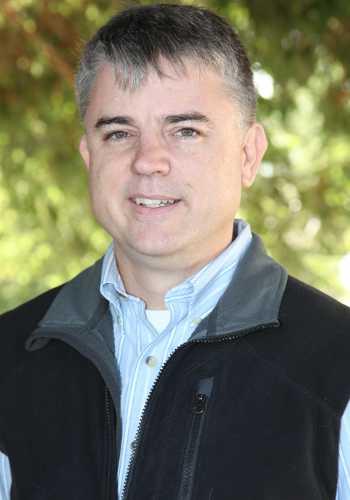
UKIAH, Calif. – Pristine beauty and a feeling of home is one reason pediatrician Brynn Sterling, M.D., has chosen to practice at the pediatrics office at the Ukiah Valley Rural Health Center (UVRHC) in Ukiah.
“This was the perfect opportunity for my wife and I to move closer to our families,” saidDr. Sterling.
Starting his medical career as a family practice physician, Dr. Sterling returned to medical school at Loma Linda University in Southern California to become a pediatrician.
When asked why he decided to become a pediatrician Dr. Sterling responded, “I have a real passion for working with kids and their families. I also enjoy sharing the benefits of a healthy diet and how it can help prevent a whole host of problems in the future.”
Another reason for attracting Dr. Sterling to the Ukiah community is his love of music, the outdoors and hobby of photography.
Dr. Sterling is now accepting new pediatric patients at the UVRHC at 260 Hospital Drive, suite 204 in Ukiah, call 707-463-7459 to schedule an appointment today.
- Details
- Written by: Editor
Exercise and healthy eating reduce body fat and preserve muscle in adults better than diet alone, according to a study funded and conducted by National Institute of Diabetes and Digestive and Kidney Diseases (NIDDK), part of the National Institutes of Health.
The study was recently published online in Obesity and will be in a future print edition.
NIDDK senior investigator Kevin Hall, Ph.D., analyzed the individual effects of daily strenuous exercise and a restricted diet by examining data from 11 participants from the reality television program “The Biggest Loser.”
The program shows obese adults losing large amounts of weight over several months. Participants were initially isolated on a ranch followed by an extended period at home.
“By including the show’s contestants as voluntary study participants, this research took advantage of a cost-efficient opportunity to study a small group of obese individuals already engaged in an intensive lifestyle intervention,” said Hall, who has no financial ties and no other affiliation to the show.
Researchers measured body fat, total energy expenditure and resting metabolic rate – the energy burned during inactivity – three times: at the start of the program, at week six, and at week 30, which was at least 17 weeks after participants returned home.
Participation in the program led to an average weight loss of 128 pounds, with about 82 percent of that coming from body fat, and the rest from lean tissue like muscle.
Preserving lean tissue, even during rapid and substantial weight loss, helps maintain strength and mobility and reduces risk of injury, among other benefits.
Hall used a mathematical computer model of human metabolism – currently intended for research conducted by scientists and health professionals – to calculate the diet and exercise changes underlying the observed body weight loss.
Because the TV program was not designed to directly address how the exercise and diet interventions each contributed to the weight loss, the computer model simulated the results of diet alone and exercise alone to estimate their relative contributions.
At the competition’s end, diet alone was calculated to be responsible for more weight loss than exercise, with 65 percent of the weight loss consisting of body fat and 35 percent consisting of lean mass like muscle.
In contrast, the model calculated that exercise alone resulted in participants losing only fat, and no muscle. The simulation of exercise alone also estimated a small increase in lean mass despite overall weight loss.
The simulations also suggest that the participants could sustain their weight loss and avoid weight regain by adopting more moderate lifestyle changes – like 20 minutes of daily vigorous exercise and a 20 percent calorie restriction – than those demonstrated on the television program.
More than two-thirds of U.S. adults age 20 and older are overweight or obese, and more than one-third of adults are obese.
Excess weight can lead to type 2 diabetes, heart disease, high blood pressure, stroke and certain cancers.
“This study reinforces the need for a healthy diet and exercise in our daily lives,” said NIDDK Director Dr. Griffin P. Rodgers. “It also illustrates how the science of metabolism and mathematical modeling can be used to develop sound recommendations for sustainable weight loss – an important tool in the treatment of obesity – based on an individual’s unique circumstances.”
- Details
- Written by: Editor
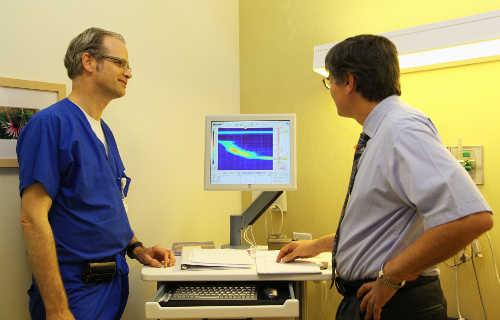
UKIAH, Calif. – Ukiah Valley Medical Center recently acquired new esophageal manometry and 24 hour pH study equipment.
Patients who used to have to travel out of the area can now stay close to home for this state-of-the-art test.
“Our new equipment gives doctors more accurate results for prescribing treatment methods for a host of GI issues,” said Michele Ford-Berarra, GI nurse navigator.
Harry B. Matossian, M.D. local gastroenterologist is particularly excited by the arrival of the new testing equipment.
“Essentially the test which will be conducted at the Ukiah Valley Outpatient Pavilion is a wonderful tool and asset to our community,” he said. “With the esophageal manometry (EM) testing equipment we’ll be able to more accurately diagnose all kinds of swallowing disorders, and issues related to acid reflux. Another benefit is that this is the only facility in Mendocino and Lake counties which provides this testing.”
This is especially appealing to Brian Hanson, M.D. “I used to send patients south for this type of testing and then have to wait for the results,” Hanson said. “Now I can perform the test here and read the results myself, providing patients with a consistent care experience.”
Dr. Hanson, echoed comments made by Dr. Matossian, affirming his sentiments about the EM testing, “I’m excited to offer this procedure to our patients which will help us to more accurately diagnose everything from gastroesophageal reflux disease or GERD, esophagus related chest pain, swallowing disorders, and other disorders associated with the esophagus.”
Regarding the 24 hour pH test Berarra added, “This test is performed by hooking patients up to a monitor they wear at home. It tests the pH in the patient’s stomach and esophagus while they do their normal daily activities, like working, eating, and even watching TV. After the 24 hour test is performed the results are then loaded into a computer where the doctors can read the results.
To find out if EM testing is right for you please contact Dr. Matossian or Dr. Hanson by calling 1-800-540-3611.
Ukiah Valley Medical Center is part of Adventist Health, a faith-based, not-for-profit integrated health care delivery system serving communities in California, Hawaii, Oregon and Washington. Visit www.uvmc.org for more information.
- Details
- Written by: Editor
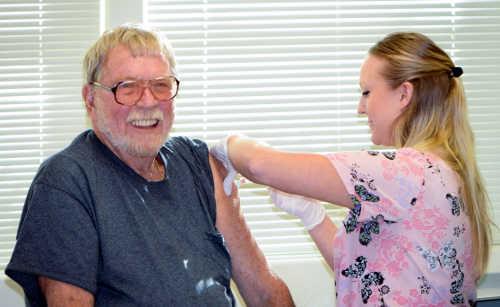
NORTH COAST, Calif. – In February, Neal Bennett was in his late 70s, overweight, and suffering from high blood pressure and high cholesterol.
He was running out of money for cholesterol medicine, and wasn’t sure what to do, so he made an appointment at Mendocino Community Health Clinic’s (MCHC) Hillside Health Center in Ukiah.
When he finished his medical appointment, the provider asked him to stay in the treatment room while a nurse educator came in.
“Jessica [the nurse] brought me in a whole diet thing,” Bennett said.
Licensed Vocational Nurse (LVN) Jessica Toste is a care manager, and she provided Bennett with a list of foods that would help him meet his health goals of losing weight, lowering his blood pressure and lowering his cholesterol.
“I knocked off all red meat. Now I’m on fish, turkey, and beans twice a week,” Bennett said. “I lost 16 pounds the first two months, 12 pounds the second two months, and 13 pounds the last two months – that’s 41 pounds in six months! I didn’t do as well this visit, but that’s because I had family visiting,” he said of his October appointment.
MCHC shifted its practice to a more patient-centered, team-based approach this year, and the patients are reaping the rewards.
“The care wraps around the patient. If they are depressed, we bring in a behavioral health provider. If they need a pap, we schedule an appointment with Care for Her. If they need to lose weight, we provide education so they know how. We encourage patients to be more active in their own health and wellness,” Toste said.
With Toste’s guidance and encouragement, Bennett took the weight loss goal seriously. He called a family member who works at Whole Foods in Santa Rosa to obtain the foods on his list (even though they’re available at any grocery store). “I went to Whole Foods just to get started,” he said.
He also increased his activity level. He’s a woodworker “on the go,” as he puts it. “I don’t sit around. I’m opening a workshop in Nice, and I’ll be having a booth at the arts and crafts fair this weekend,” he said.
Toste admitted that since MCHC began this more holistic approach to care, she and some of her nurse co-workers have also improved their own health.
“We need to set a good example. We can’t be overweight and then ask our patients to lose weight,” she said. Toste and fellow LVN Sara Holmes began running to improve their health and have been entering in 5K events. “It feels great,” she said.
Toste also explained how the patient-centered, team approach has helped her work to the top of her LVN license.
“We are all more involved with the patients since we started the new approach. We make decisions together with the provider, so the patients have a lot more people directly involved in their care,” she said. Bennett’s opinion of the MCHC staff is clear, “They’re fantastic. What else is there to say?”
In addition to one-on-one attention, MCHC is offering free Healthy Habits workshops to help patients manage chronic health conditions like arthritis, diabetes, heart disease, high blood pressure and lung disease. The next series will take place beginning in late October (six classes total).
Mendocino Community Health Clinic has locations in Ukiah, Willits and Lakeport.
For details, call Darca at 707-462-3547.
- Details
- Written by: Editor