Health
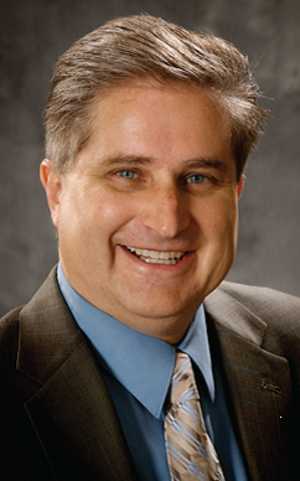
ST. HELENA, Calif. – Carlton Jacobson has been appointed vice president of finance for Adventist Health’s St. Helena Region, according to Buck McDonald, senior vice president of finance and chief financial officer for the Northern California Network.
Jacobson fills the position vacated by Paul Selivanoff at St. Helena Hospital Napa Valley. Jacobson brings a wealth of knowledge and experience in financial operations to his new position.
“We are pleased to welcome Carlton to an expanded role in the St. Helena Region,” said McDonald. “His expertise in finance and operations will aid our organization as we move forward in a challenging health care environment.”
Prior to 1987, Jacobson worked in the accounting and business fields, in laboratories, nursing homes and retirement centers.
He began his career in hospitals, accepting a position as controller with Valley Community Hospital, a 70 bed acute care hospital in Santa Maria, Calif.
In 1993, Jacobson became controller with Simi Valley Hospital and Health Care Services, a 225 bed acute facility.
In 2000, Jacobson relocated to Northern California. He assumed the position of chief financial officer and vice president of finance with Frank R. Howard Memorial Hospital, a 25 bed Critical Access Hospital in Willits where he was responsible for all financial operations including patient financial services, as well as information systems, materials management, maintenance, laboratory and dietary.
In addition, Jacobson currently holds the role of vice president of finance with St. Helena Hospital Clear Lake.
Born in Subic Bay, Philippines, Jacobson was raised in South Lancaster, Mass. He received a bachelor of science degree in business administration and a bachelor of science degree in computer science at Pacific Union College in 1982.
Jacobson will be based at the St. Helena Hospital Napa Valley campus. A search is under way to identify a financial leader for Frank R. Howard Memorial Hospital.
- Details
- Written by: Editor
LUCERNE, Calif. – A caregiver support group for families dealing with memory loss or other cognitive impairments will meet on Thursday, Oct. 18.
The group meets from 1 p.m. to 2:30 p.m. at the First Lutheran Church at 3863 Country Club Lane across from the Lucerne Alpine Senior Center.
The group facilitator is social worker Jenny Johnson.
The groups are sponsored by Redwood Caregiver Resource Center (1-800-834-1636) and the Social Day Programs of Lake County.
Respite is provided by the centers at no charge.
Please call Caroline Denny, 707-263-9481, or Jenny Johnson, 707-350-3030, for further information.
- Details
- Written by: Editor
LAKE COUNTY, Calif. – It’s “flu” season and the Lake County Public Health Division is happy to announce its 2012-13 community influenza shot clinics.
In addition to flu shots, we will also be offering the Tdap (Tetanus, Diptheria and Pertussis) vaccine – also known at the whooping cough vaccine.
Getting vaccinated is a great way to avoid getting the flu. Being careful to use good hygiene is another way to protect yourself and those around you.
If you cough or sneeze, cover your nose and mouth with a tissue or the crook of your arm instead of your hands. A virus can easily be passed from your hands to the things you touch.
Wash your hands often and use an alcohol-based hand sanitizer when soap and water aren’t available. Try not to touch your face with your hands. A virus can enter your system through the membranes of your eyes, nose and mouth. Protect yourself by avoiding close contact with anyone who is sick.
Choosing a healthful lifestyle can also help to keep you well. Getting enough sleep, eating nutritious foods, drinking plenty of water and staying physically active can help to maintain a healthy immune system. Together, we can help to decrease the spread of influenza in our community.
The symptoms of the flu include a temperature of over 100 degrees F combined with a cough, sore throat, body aches, headache and a lack of energy. If you are ill, stay home to keep from infecting others.
Each year the Lake County Public Health Division receives state-funded seasonal flu vaccine. For the 2012-13 season, 1,660 doses have been provided.
Although anyone 6 months of age or older is encouraged to get a flu vaccine, the eligibility criteria for the state-provided flu vaccine gives priority to adults over 60 years of age.
In addition, priority is given to vaccinating children 6 months to 5 years of age, people with certain chronic illnesses, those who live with or care for persons at high risk for flu, and pregnant women. Please notify the nurse if you are pregnant, before you receive a flu shot. Pregnant women receive a different vaccine formulation.
The Tdap vaccine is required for all children entering the seventh grade and is recommended for all adults who have not yet received a dose. It is especially important to vaccinate adults who are around small infants.
Seasonal flu shots are $2.
Lake County Public Health Clinic schedule for the seasonal flu shots is as follows:
Lakeport
- Monday, Oct. 15, 9 a.m. to noon, Seventh Day Adventist Church, 3500 Hill Rd. East, Lakeport. During the first hour (9 a.m. to 10 a.m.), flu vaccines are limited to seniors over the age of 60 years ONLY.
- Tuesday, Oct. 30, 10 a.m. to noon, at the Public Health Division, 922 Bevins Court, Lakeport.
- Tuesday, Nov. 6, from 1 p.m. to 3 p.m. at the Public Health Division, 922 Bevins Court, Lakeport.
Clearlake
- Wednesday, Oct. 17, 9 a.m. to noon, Highlands Senior Community Center, 3245 Bowers Ave., Clearlake. During the first hour (9 a.m. to 10 a.m.), flu vaccines are limited to seniors over the age of 60 years ONLY.
Lucerne
- Tuesday, Oct. 23, from 10 a.m. to noon, Lucerne Alpine Senior Center, 10th and Country Club Drive, Lucerne.
Middletown
- Wednesday, Oct. 24, from 10 a.m. to noon, Calpine Geothermal Visitors Center, 15500 Central Park Road, Middletown.
Flu vaccinations also are available in a variety of locations such as your primary care provider and local pharmacies.
The Lake County Public Health Division wishes the community a healthy and happy fall and winter season.
Call the Lake County Public Health Division, 1-800-794-9291 or 707-263-1090, with questions or concerns.
- Details
- Written by: Editor
MINNEAPOLIS – Eating tomatoes and tomato-based foods is associated with a lower risk of stroke, according to new research published in the Oct. 9 print issue of Neurology, the medical journal of the American Academy of Neurology.
Tomatoes are high in the antioxidant lycopene.
The study found that people with the highest amounts of lycopene in their blood were 55 percent less likely to have a stroke than people with the lowest amounts of lycopene in their blood.
The study involved 1,031 men in Finland between the ages of 46 and 65. The level of lycopene in their blood was tested at the start of the study and they were followed for an average of 12 years. During that time, 67 men had a stroke.
Among the men with the lowest levels of lycopene, 25 of 258 men had a stroke. Among those with the highest levels of lycopene, 11 of 259 men had a stroke.
When researchers looked at just strokes due to blood clots, the results were even stronger. Those with the highest levels of lycopene were 59 percent less likely to have a stroke than those with the lowest levels.
“This study adds to the evidence that a diet high in fruits and vegetables is associated with a lower risk of stroke,” said study author Jouni Karppi, PhD, of the University of Eastern Finland in Kuopio. “The results support the recommendation that people get more than five servings of fruits and vegetables a day, which would likely lead to a major reduction in the number of strokes worldwide, according to previous research.”
The study also looked at blood levels of the antioxidants alpha-carotene, beta-carotene, alpha-tocopherol and retinol, but found no association between the blood levels and risk of stroke.
The study was supported by Lapland Central Hospital.
To learn more about stroke, visit www.aan.com/patients .
- Details
- Written by: Editor