Health
- Details
- Written by: Editor
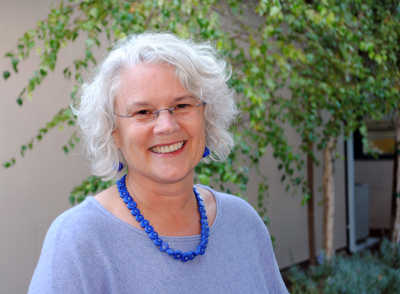
Larry Poaster, PhD, of Modesto was elected chair and Richard Van Horn of Los Angeles was elected vice chair. The new leadership team was selected by unanimous votes.
Poaster, has been a member of the commission for more than three years as a mental health professional and previously served as the vice chair for the MHSOAC.
He has an extensive background in health care and behavioral health. He served as a private consultant to government agencies in the field of health care delivery by public entities since 2002 and previously served as the director of Behavioral Health Services for the Stanislaus County Department of Behavioral Health Services from 1980 to 2002.
Dr. Poaster also was the director of Clinical Services for that department from 1970 to 1980 and served as president of the California Conference of Mental Health Directors, twice president of the California Mental Health Directors Association, and president of the Board of Directors of the California Institute of Mental Health.
MHSOAC Vice-Elect Richard Van Horn of Los Angeles also brings a great deal of knowledge and experience to the commission, serving as president and chief executive officer of Mental Health America, Los Angeles (MHALA) for nearly 30 years. Van Horn currently serves MHALA as president emeritus.
He also is a member of the board for the California Institute for Mental Health, the California Council Community Mental Health Agencies, and the National Council for Community Behavioral Health (NCCBH).
Van Horn is also a current member of the National Board of Directors of Mental Health America and serves as vice chair for its executive committee.
On behalf of Mental Health America, Mr. Van Horn has testified before the Congress of the United States regarding issues affecting people with mental illnesses. He also served for six months as principal consultant for the new MHSOAC in 2005. Van Horn fills the seat of designee of the State of Superintendent of Public Instruction.
The 16-member MHSOAC was formed by the passage of Proposition 63, the Mental Health Services Act (MHSA), in November 2004. The MHSOAC is responsible for overarching oversight and accountability for implementation of the MHSA.
- Details
- Written by: Editor
The PCIP is one of the first major provisions of national health care reform to take effect and is designed to bridge the gap between now and 2014, when insurers will no longer be allowed to decline health coverage or charge higher premiums to individuals with pre-existing conditions.
The action “is a major achievement in implementing health care reform in California,” said Governor Schwarzenegger.
He added, “Operating the high-risk insurance plan is a win-win for our state because we can maximize federal funds while providing more affordable coverage to individuals who desperately need health insurance.”
Earlier this year, the governor announced the state would contract with the federal government to operate a temporary health insurance program for medically uninsured individuals with preexisting medical conditions and tasked the Managed Risk Medical Insurance Board (MRMIB) with implementing the new program.
The administration submitted its proposal over the summer to establish and operate the PCIP through a public-private partnership with contracted vendors, which will be overseen by MRMIB.
In order to expand affordable health coverage to uninsured Californians with pre-existing medical conditions and implement the PCIP, the governor also recently signed legislation creating the Federal Temporary High Risk Health Insurance Fund to receive $761 million in federal funding.
The PCIP will be supported solely through this federal funding and subscriber premiums. It is expected to provide health care coverage to cover up to 23,000 hard-to-insure Californians at any given time.
“Now that PCIP has opened its doors, we will be working to make sure that all Californians are aware of this valuable new coverage option,” said Kim Belshé, chair of Governor Schwarzenegger’s Health Care Reform Implementation Task Force and Secretary of the Health and Human Services Agency. “We are dedicated to providing this more affordable option for our hard-to-insure residents.”
Coverage under the PCIP is available to Californians who have been without health coverage for at least six months and have been declined coverage from a carrier due to their pre-existing condition or have been offered coverage at a rate higher than the preferred provider premium rate of the state’s high risk pool, the Major Risk Medical Insurance Program.
Californians interested in coverage under the PCIP are encouraged to visit www.pcip.ca.gov or call 1-877-428-5060 for more information.
Schwarzenegger and his administration has been working since federal health care reform passed to implement key elements before the 2014 start date. The governor also formed a Health Care Reform Task Force to implement key reform provisions and programs under health care reform this year, including the PCIP.
Last month the governor took action on another major component of federal health care reform and made California the first state in the nation to enact legislation creating a health benefit exchange.
The California Health Benefit Exchange will make it easier for individuals and employees of small businesses to compare plans and buy health insurance in the private market using federal tax subsidies to make health coverage more affordable.
For more information on federal health care reform and the changes that will happen in California, please visit www.healthcare.ca.gov.
- Details
- Written by: Editor

- Details
- Written by: Editor