Health
- Details
- Written by: Kara Manke
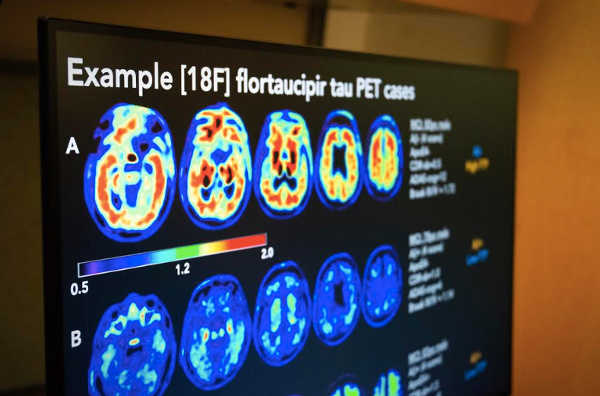
The University of California, Berkeley announced Monday that it has received a five-year grant expected to total $47 million from the U.S. National Institute on Aging, or NIA, to incorporate advanced brain imaging into the Alzheimer’s Association’s groundbreaking clinical trial, the U.S. Study to Protect Brain Health Through Lifestyle Intervention to Reduce Risk, or U.S. POINTER, to determine whether lifestyle changes can protect memory in people at risk of developing dementia.
The expanded study will be the first large-scale investigation of how lifestyle interventions, including exercise, diet, cognitive stimulation and health coaching, affect well-known biological markers of Alzheimer’s and dementia in the brain.
U.S. POINTER is a $35 million Alzheimer’s Association-led two-year clinical study to test whether lifestyle interventions focused on combining healthy nutrition, physical activity, social and intellectual challenge, and increased medical monitoring of vascular and metabolic conditions can protect cognitive function in older adults (60-79 years old) who are at increased risk for cognitive decline later in life. U.S. POINTER is the first study to examine these combined multidimensional interventions in a large-scale U.S.-based population.
The new award of $47 million from the NIA, part of the U.S. National Institutes of Health, (NIH grant number R01AG062689) will support the U.S. POINTER Neuroimaging Ancillary Study, which will use advanced brain imaging techniques (amyloid positron emission tomography, or PET, tau PET and magnetic resonance image, or MRI, scans) to assess the biological effects of these lifestyle interventions on brain health, including overall and regional brain shape, size and blood flow, and on indicators of heart health risk and small vessel disease.
Susan Landau, Ph.D., a research neuroscientist at UC Berkeley’s Helen Wills Neuroscience Institute, is principal investigator of the add-on study.
“A healthy diet and lifestyle are generally recognized as good for health, but U.S. POINTER is the first large randomized controlled trial to look at whether lifestyle changes actually influence Alzheimer's disease-related brain changes,” said Landau. “Lifestyle modification is a non-drug option that is accessible to people and may reduce the likelihood of developing Alzheimer's.”
“The U.S. POINTER trial gives us an opportunity to ask whether diet and exercise can actually change the brain, and ultimately the risk of Alzheimer’s and other dementias,” Landau added.
The proposed study responds to the 2018 NIA Research Summit recommendations that encourage rigorous investigations of lifestyle change as a disease-modifying therapy to prevent Alzheimer’s and other dementias.
“This groundbreaking project is an unparalleled examination of how lifestyle ‘therapies’ may change our brain in ways that are related to Alzheimer’s disease, vascular dementia and overall brain health,” said Maria C. Carrillo, Ph.D., Chief Science Officer of the Alzheimer’s Association.
“U.S. POINTER is designed to determine what lifestyle interventions have a tangible impact on our brains. The addition of brain imaging is an important component that could provide the roadmap for brain health to reduce the risk of dementia before symptoms have a chance to appear,” Carrillo said.
Public health implications
According to the Alzheimer’s Association 2019 Alzheimer’s Disease Facts and Figures report, an estimated 5.8 million Americans of all ages are living with Alzheimer’s dementia, and Alzheimer’s is the sixth-leading cause of death in the U.S. Barring the development of medical breakthroughs, the number may nearly triple to 13.8 million by 2050.
Previous results suggest that the benefits of lifestyle changes on brain health in older adults are potentially larger than pharmacological treatments tested to date. In addition, healthful lifestyle modification is an affordable and accessible approach with health benefits that extend beyond brain health.
The Finnish Geriatric Intervention Study to Prevent Cognitive Impairment and Disability, or FINGER, showed that in at-risk adults, lifestyle intervention improved cognitive function by 25 percent relative to adults randomized to health education.
The success of FINGER led to the initiation of U.S. POINTER and multiple additional national studies based on that model, now being coordinated through an interdisciplinary global network known as World Wide FINGERS.
A critical feature of the U.S. POINTER trial is its recruitment approach, which aims to include a geographically and racially/ethnically diverse population. This can help ensure the intervention will be applicable to a large proportion of older individuals.
Four sites – Winston-Salem, NC; Houston, TX; Davis, CA, and Chicago, IL – have been chosen for U.S. POINTER, with one more site planning to come online later this year.
Just over one-half of the U.S. POINTER Study participants (up to 1,250 out of 2,000) will be assessed with PET imaging at study start and at two years to measure the buildup of amyloid and tau, two proteins whose accumulation in the brain has been linked to Alzheimer’s dementia, and MRI at baseline, one year, and two years to measure the size of brain regions, identify lesions related to strokes or other vascular changes, and observe changes in brain blood flow.
Landau notes, “Brain markers of dementia, when measured at the beginning of the study, may predict who will respond best to the interventions, which could inform future precision medicine approaches to healthcare.”
- Details
- Written by: Elizabeth Larson
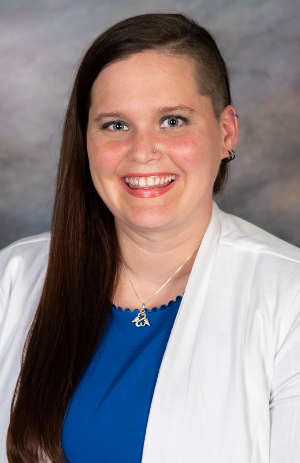
LAKEPORT, Calif. – MCHC Health Centers welcomes Charissa Barsos, a family nurse practitioner who loves to listen.
“When people tell me something’s wrong, they’re usually right. People may not know medicine, but they know their bodies and what they have to say is valid,” she explained.
As a child, Barsos experienced health problems and says she did not always feel her input was valued by medical personnel, so she decided to become a healthcare professional who paid attention and really listened to patients, be they young or old. “I became a nurse to help others. This is where I’m meant to be,” she said.
She grew up in Illinois and earned her nursing degree from Millikin University in Decatur. She then worked as a Cardiac Vascular Medical Surgical nurse at the Carle Foundation Hospital in Urbana for six years before earning her advanced degree and becoming a family nurse practitioner, or FNP.
As an FNP, she cared for patients of all ages at Carle Clinic in Champaign for several years. She especially enjoyed working with geriatric patients because she finds their wisdom and life experience interesting and she enjoys solving complex medical problems, which are more common as we age. The other age group she particularly enjoyed were young adults because they offer a fresh perspective.
After a few years at the clinic, it was time to make a change, “so when Kelly Kesey [MCHC recruiter] reached out and told me about the opportunity in California, I thought, ‘Why not?’” she said. She and her husband grew up in a rural area, so although they had never been to California, the rural nature of Lake County ended up being a great fit.
Barsos is now seeing patients at Lakeview Health Center in Lakeport. She enjoys interacting with patients, providing primary care, and working with the other healthcare teams at MCHC to provide whole-person care, including behavioral health, dentistry, and specialty care such as obstetrics/gynecology.
In Illinois, Barsos was active in her community, and she hopes to connect with community-minded individuals here, too. Her 12-year-old son is a Boy Scout from a long line of Eagle Scouts and Barsos has been a Scout leader for years. She is also interested in assisting with emergency responders in the event of a crisis, having been a member of the Medical Reserve Corps in Illinois.
For those interested in establishing care with Barsos, they can contact Lakeview Health Center online at www.lakeviewhealthcenter.org or by calling 707-263-7725.
MCHC Health Centers is a local, nonprofit, federally qualified health center offering medical, dental and behavioral health care to people in Lake and Mendocino counties.
- Details
- Written by: California Attorney General’s Office
Together, the settlements will result in these pharmaceutical companies making a nearly $70 million payment to the state.
These settlements include the largest pay-for-delay settlement received by any state and are also the only ones to secure injunctive relief for a state against future pay-for-delay agreements.
Pay-for-delay agreements allow a brand name drug company to continue its monopoly of a branded drug after its patent expires and to charge consumers higher prices.
The first settlement with Teva addresses anticompetitive pay-for-delay agreements that delayed a generic narcolepsy drug, Provigil, from entering the market for almost six years.
The three other settlements with Teva, Endo Pharmaceuticals, and Teikoku address similar practices that prevented a generic version of the drug Lidoderm, a shingles medication, from entering the market for almost two years.
Pay-for-delay agreements are costly to consumers and the healthcare market, causing consumers to pay as much as 90 percent more for drugs shielded from competition.
“These dark, illegal, collusive agreements that drug companies devise not only choke off price competition but burden our families and patients – they force every Californian to shoulder higher prices for life-saving medication. It’s nothing less than playing with people’s lives,” said Attorney General Becerra. “Californians shouldn’t have to pay an arm and leg to afford their prescriptions. That’s why I am vigorously advocating for stronger laws, like AB 824 by Assemblymember Jim Wood, to deter this conduct and build on enforcement actions like the ones I’m announcing today. Together, these actions will help us push back on greedy drug companies and fight for California families.”
Pay-for-delay agreements occur when name brand and generic drug companies avoid litigation by agreeing that the brand name will compensate the generic to keep it from entering the marketplace with its generic version of the brand name drug for a period of time. The four settlements announced today, include:
Provigil settlement: Attorney General Becerra argued that Teva delayed entry of generic competition through four pay-for-delay agreements that illegally maintained its monopoly over Provigil sales between 2006 and 2012. This resulted in artificially high costs of Provigil for consumers. As a result, Attorney General Becerra secured $69 million for California and a 10-year injunction prohibiting Teva from entering into pay-for-delay agreements. As part of the $69 million settlement, a $25,250,000 consumer fund will be created for California residents who purchased Provigil, Nuvigil or Modafinil during this timeframe. Consumers can learn more details here. In addition, the money from the settlement will be used to strengthen Attorney General Becerra’s investigative and enforcement work in cases like these to protect affordable, quality healthcare for all Californians.
Lidoderm settlements: Attorney General Becerra argued that Teva, Endo Pharmaceuticals, and Teikoku entered into pay-for-delay agreements regarding Lidoderm, a medical patch to relieve shingles pain. In June 2019, Attorney General Becerra settled with Endo Pharmaceuticals, securing an eight-year injunction against further pay-for delay agreements and payment of $760,000. Attorney General Becerra also secured a 20-year injunction against Teikoku, a partner in the production of Lidoderm with Endo.
Californians who believe they are victims of Teva’s alleged misconduct may file a form available at www.oag.ca.gov/report, and they will be notified when the claims process has been established.
The settlement agreement can be found here.
- Details
- Written by: Elizabeth Larson
Direct and indirect contact with the animals could put individuals at risk of developing Shiga-toxin producing Escherichia coli O157 (STEC O157) and other infections.
"Visiting animals can be one of the highlights of the fair," said Dr. Charity Dean, California Department of Public Health acting State Public Health Officer. "It is important to remember to practice good hygiene when working with or visiting animals."
Every year, infections and illnesses in children and adults after exposure to animals at county fairs, petting zoos, and farms have been reported to public health.
These have included bacterial infections such as STEC O157 and Salmonella, viruses such as swine influenza virus, and parasites such as Cryptosporidium.
There are steps you can take to protect you and your family at the fair, petting zoo, or other settings where farm animals are present:
· Wash your hands with soap and running water after touching animals or being in areas where animals are housed or exhibited, even if you did not touch the animal.
· Do not eat, drink, or put anything in your mouth while in an area where animals are housed or exhibited.
· Avoid touching your eyes, nose, or mouth until you have exited the animal area and washed your hands with soap and running water.
· Do not take toys, pacifiers, cups, baby bottles, strollers, or similar items into animal areas.
· Always supervise children around animals and supervise handwashing for young children.
· Don’t let children sit or play on the ground in animal areas.
· Avoid contact with animals that look or act ill.
People in high-risk groups should take extra care around animals. These include senior citizens, children under five, pregnant women, and people with a weakened immune system or chronic health conditions.
“We want all California families to enjoy their local community fair, but it is important for them to know good common sense precautions and be sure to wash their hands after contact with animals,” said CDFA Secretary Karen Ross.
If you develop any illness after visiting animal exhibits, including fever, vomiting/diarrhea, or flu-like symptoms, see your health care provider and inform them of your animal contacts.
For more information on how to stay healthy at animal exhibits, visit this Centers for Disease Control and Prevention web page.
Additional information about STEC infections may be found on the California Department of Public Health and Centers for Disease Control and Prevention websites.