Health
- Details
- Written by: Elizabeth Larson
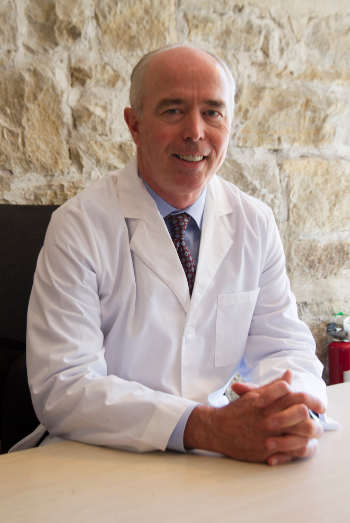
Dr. John A. Sundin, a board-certified general surgeon, is available to see patients immediately.
Dr. Sundin is a graduate of the University of Virginia and the Medical College of Virginia. He performed his residency at Yale, then worked in Rwanda, Haiti and Sri Lanka as a volunteer with Doctors Without Borders and the American Red Cross.
People Magazine noted him as a Hero of the Year in 1994 for his work during the height of the African genocide; Doctors Without Borders won a Nobel Peace Prize in 1999 for their work in Rwanda.
He has more than 25 years of private practice experience, having previously practiced in Key West, Florida and Cortez, Colorado.
“General surgeons are masters of surgery, skilled in abdominal, hernia, laparoscopic, endoscopic and skin surgeries,” says Sundin. “My philosophy of care is to treat the whole person, both surgical problems and adaptation to a healthier lifestyle. The essence of a surgeon is determining when a patient needs surgery versus when he or she doesn’t. Sometimes that means adjusting diet and lifestyle for a healthier digestive tract. I evaluate and diagnose abdominal problems – and solutions.”
Dr. Sundin, whose wife is an RN in San Francisco, considers himself a dual resident of both the big city and the quiet country. “Lake County is an enchanted community nestled amongst the mountains of a prehistoric volcano.”
And while he enjoys sport fishing, his hobbies are few and far between. “I don’t have hobbies,” he jokes. “I’m too busy being a surgeon.”
Sutter Lakeside Medical Practice is located at 987 Parallel Drive, Suite C in Lakeport. The practice includes primary care, podiatric (foot) care, internal medicine, tele psychiatry and routine medical office procedures.
The practice is open Monday through Friday from 8 a.m. to 5 p.m.
To inquire about booking an appointment with Dr. Sundin, please call 707-262-5088.
- Details
- Written by: Elizabeth Larson
“Strong and healthy communities are foundational for prosperity in rural America,” Hazlett said. “Under the leadership of President Trump, we are committed at USDA to building innovative partnerships and driving more effective and efficient use of our resources to address the opioid misuse crisis at the local level.”
McCance-Katz said, “We know that the opioid crisis has hit rural communities hard, and we need to leverage all possible partnerships to support these communities. Housing plays a vital part in the recovery process for those living with opioid use disorders.”
USDA and HHS formalized their partnership through an official memorandum of understanding, or MOU. Nonprofit organizations will be able to purchase homes from USDA and convert them to transitional housing for people recovering from opioid misuse.
USDA Rural Development and HHS Substance Abuse and Mental Health Services Administration, or SAMHSA, will coordinate efforts to sell USDA’s Real Estate Owned single-family housing properties at a discount to non-profit organizations that provide housing, treatment, job training and other key services for people in substance misuse treatment and recovery.
This will further enhance the two organizations’ formal collaboration. It began in 2018 with SAMHSA’s supplementing of USDA Cooperative Extension grants to expand technical assistance and training on opioid use disorder prevention and treatment.
President Donald J. Trump has mobilized his entire Administration to address opioid misuse by directing the declaration of a nationwide Public Health Emergency.
To help local leaders respond to this epidemic, USDA has worked to build infrastructure for prevention, treatment and recovery, facilitate partnerships, and drive innovation in rural communities.
In 2018, USDA worked with the Office of National Drug Control Policy to establish a White House Rural Opioid Federal Interagency Working Group which is improving the coordination of federal resources in rural America. In December, USDA launched the Community Opioid Misuse Toolbox. This initiative includes the Community Resource Guide, a comprehensive directory of federal resources that can help rural communities address the opioid crisis, and the Community Assessment Tool, an interactive database to help community leaders assess how and why the opioid epidemic is impacting their regions.
USDA Rural Development provides loans and grants to help expand economic opportunities and create jobs in rural areas. This assistance supports infrastructure improvements; business development; housing; community facilities such as schools, public safety and healthcare; and high-speed internet e-Connectivity in rural areas. For more information, visit www.rd.usda.gov.
- Details
- Written by: Elizabeth Larson
It is predicted that in 2019 to 2020, there will be a rise in pertussis.
Pertussis begins with a cough and runny nose lasting for one to two weeks, followed by weeks of “coughing fits.”
Most people with pertussis do not have a fever. Anyone with these symptoms should see their health care provider.
Anyone can get pertussis. However, young children and the elderly are at the greatest risk of complications. The best way to protect yourself against pertussis is to be vaccinated.
The childhood vaccine against pertussis is called “DTaP” and the pertussis booster vaccine for adolescents and adults is called “Tdap”. Both vaccines also protect against tetanus and diphtheria.
Vaccine recommendations:
· It is recommended that children get 5 doses of DTaP vaccine at 2 months, 4 months, 6 months, 15 to 18 months, and 4 to 6 years.
· For adolescents, a booster dose of Tdap is recommended at 11 to 12 years of age.
· Adults are recommended to receive a Tdap every 10 years.
· Pregnant women are recommended to get a Tdap booster during each pregnancy, no matter when they received their last dose. When a mother gets the booster during the 27 to 36 weeks of pregnancy, the baby is protected until they are old enough to get their first dose of DTaP.
The best place to get vaccinated is at your primary health care provider or clinic.
To find vaccine locations in Lake County use https://vaccinefinder.org or contact Lake County Health Services Department, Public Health Division at 707-263-1090.
- Details
- Written by: Adventist Health
CLEARLAKE, Calif. – February is Heart Month, and as part of its celebrations Adventist Heart & Vascular Institute is pleased to offer a free patient education seminar in Clearlake on Thursday, Feb. 21, on the topic of peripheral vascular disease.
The seminar will take place at the Clearlake Senior Community Center, 3245 Bowers Ave. in Clearlake.
It begins with refreshments and small bites at 5:30 p.m. with the presentation at 6 p.m.
Peripheral vascular disease, or PVD, occurs when you do not get enough blood from your heart due to blocked arteries.
Symptoms may include pain and cramping in your legs when you walk, leg ulcers that take a long time to heal and varicose veins.
PVD can be a precursor to serious heart complications or stroke.
At the seminar, attendees will learn about new advances in treatment options, from lifestyle changes to medications and minimally invasive interventions, and a free screening offered in Clearlake called Dare to C.A.R.E. that can help you understand your risk and if treatment is right for you.
The seminar will be presented by internationally renowned physician Dr. John Laird, an interventional cardiologist and vascular medicine specialist.
Dr. Laird earned his medical degree from Albany Medical College. He completed a residency at Madigan Army Medical Center followed by a fellowship at Walter Reed Army Medical Center. Dr. Laird is board certified in internal medicine, cardiovascular disease and interventional cardiology.
“As we are all too aware, cardiovascular disease is one of the most pervasive problems facing our patients today,” says Dr. Laird, who is also medical director for the Adventist Heart & Vascular Institute. “Early intervention, prevention and education are key to improving the heart and vascular health of our local community.”
The Adventist Heart & Vascular Institute spans six counties, four hospitals and multiple clinic locations, including five clinics right here in Lake County.
The multispecialty team provides comprehensive cardiac care, bringing together some of the most talented cardiac health professionals and cutting-edge technology on the West Coast.
The free seminar is open to all. Register by calling 877-596-0644.