Health
- Details
- Written by: Covered California
There was a 7.5 percent increase in the number of existing consumers renewing their coverage and a 23.7 percent drop in the number of new consumers signing up for 2019.
“Covered California’s overall enrollment has held steady, but recent actions at the federal level appear to be causing large drops in enrollment that will lead to more uninsured and higher premiums for all Californians,” said Covered California Executive Director Peter V. Lee. “The federal removal of the individual mandate penalty appears to have had a substantial impact on the number of new consumers signing up for coverage.”
The total number of net plan selections for 2019 is 1,513,883, which reflects 1,217,903 consumers having their coverage renewed and 295,980 consumers who newly signed up for coverage during open enrollment .
Overall, there is a difference of 7,641 fewer plan selections compared to 2018, a decrease of 0.5 percent.
“While we end open enrollment in line with the number of plan selections we saw at this time last year, it is too early to draw any conclusions,” Lee said. “We have seen the impact that federal decisions have had on new enrollment, and we do not yet know how that will play out for renewing consumers down the road.
In addition to the impact of the penalty, Covered California conducted analysis and has released an issue brief, “Covered California 2019 Open Enrollment: Early Observations and Analysis,” that examines its open enrollment plan-selection demographic compared to last year.
Covered California found larger differences in the share of Bronze consumers, unsubsidized consumers and those populations in which English is not the preferred spoken language. However, other demographics do not appear to be a factor.
“With the reduction being relatively evenly spread across demographics, the primary driver of the loss of new enrollees appears to be removal of the individual mandate penalty,” Lee said.
In August, Covered California shared analysis from national experts that projected that the removal of the penalty could lead to a reduction in enrollment ranging from 7 to 26 percent across the entire individual market.
As part of its budgeting process, Covered California projected that the federal removal of the individual mandate penalty would reduce effectuated enrollment at the end of fiscal year 2018 to 2019 by between 7 and 18 percent, with the midpoint estimate of 12 percent. When combined with other factors, this would result in approximately 162,000 fewer consumers insured at the end of June 2019.
“The drop in new enrollment affirms the leadership Gov. Gavin Newsom has taken to propose an individual mandate and enhanced subsidies aimed at making coverage more affordable for Californians,” Lee said.
In addition to the federal removal of the mandate penalty, other potential factors affecting new enrollment could include the continued challenges of affordability and Covered California’s previous success in signing up healthy consumers.
“California has done tremendous work in building one of the healthiest consumer pools in the country,” Lee said. “One impact of successfully enrolling so many healthy Californians in previous years is that there may be fewer people newly eligible in California to enroll in this period – meaning that those who can sign up are more susceptible to being influenced by the federal removal of the penalty.”
While plan selections in Covered California have remained steady over the past four years, the number of consumers in federally facilitated marketplace, or FFM, states newly enrolling continues to drop, from 9.6 million in 2016 to 8.4 million in 2019.
In addition, during the past three years that the current federal administration has made policy decisions to dramatically cut back on promoting enrollment, one result has been a substantial decrease in the number of new enrollees signing up for coverage: declining 49 percent from 4 million in 2016 to 2.1 million in 2019.
“When the federal government pulled back on marketing and cut their enrollment period in half, they shut the door on hundreds of thousands of Americans,” Lee said. “The data shows that going into 2019, almost 1.5 million Americans who could have enrolled through FFM states were already priced out of coverage or opted not to enroll.”
Among the other major findings of the Covered California issue brief are:
– Covered California’s drop in new enrollment is higher than the average 15.8 percent drop of the 39 states served by the federally facilitated marketplace this year. The difference is likely explained by the fact that the FFM states have already experienced sharp decreases in new enrollment in each of the past four years, putting their decrease on top of an already diminished pool of healthy consumers opting out of coverage. California has maintained strong new enrollment in each of the prior four years, leaving it more susceptible to drops in new enrollment due to the loss of the penalty and other factors.
– In addition to the impact of the penalty on Covered California’s new enrollment, early analysis also indicates that affordability remains a key obstacle for many, especially those who do not receive subsidies.
– The analysis also found that enrollment by other demographics, including age and income level for those receiving subsidies, did not appear to be substantially different.
While open enrollment is over, consumers can still sign up for health care coverage if they experience a life-changing event, such as losing their health insurance, getting married, having a child or moving.
For more information on special-enrollment rules, visit https://www.coveredca.com/individuals-and-families/getting-covered/special-enrollment/.
Eligible consumers who are interested in signing up can visit Covered California’s Web site where they can get help enrolling, explore their options and find out if they qualify for financial help by using the Shop and Compare Tool.
- Details
- Written by: Elizabeth Larson
The new “What’s Covered” app lets people with Original Medicare, caregivers and others quickly see whether Medicare covers a specific medical item or service.
Consumers can now use their mobile device to more easily get accurate, consistent Original Medicare coverage information in the doctor’s office, the hospital, or anywhere else they use their mobile device.
In addition to the “What’s Covered” app, through Blue Button 2.0 the agency is enabling beneficiaries to connect their claims data to applications and tools developed by innovative private-sector companies to help them understand, use, and share their health data.
“eMedicare is one of several initiatives focused on modernizing Medicare and empowering patients with information they need to get the best value from their Medicare coverage,” said CMS Administrator Seema Verma. “President Trump is delivering on his commitment to Medicare by modernizing tools that deliver health information in the most convenient way possible. This new app is the next in a suite of products designed to give consumers more access and control over their Medicare information.”
CMS created the app to meet the needs of the growing population of people with Medicare. The Medicare population is projected to increase almost 50 percent by 2030 – from 54 million beneficiaries in 2015 to more than 80 million beneficiaries in 2030.
As of 2016, about two-thirds of Medicare beneficiaries indicate they use the Internet daily or almost daily (65 percent).
Questions about what Medicare covers are some of the most frequent inquiries that CMS receives. There are approximately 15 million page views annually for coverage-related content on Medicare.gov and 1-800 MEDICARE receives over three million coverage-related calls each year.
CMS launched the eMedicare initiative in 2018 to empower beneficiaries with cost and quality information.
Other tools in the eMedicare suite include:
• Enhanced interactive online decision support to help people better understand and evaluate their Medicare coverage options and costs between Medicare and Medicare Advantage.
• A new online service that lets people quickly see how different coverage choices will affect their estimated out-of-pocket costs.
• New price transparency tools that let consumers compare the national average costs of certain procedures between settings, so people can see what they’ll pay for procedures done in a hospital outpatient department versus an ambulatory surgical center.
• A new webchat option in the Medicare Plan Finder.
• New easy-to-use surveys across Medicare.gov so consumers can continue to tell us what they want.
The eMedicare initiative expands and improves on current consumer service options. People with Medicare will continue to have access to paper copies of the Medicare & You handbook and Medicare Summary Notices.
The What’s Covered app is available for free in both Google Play and the Apple App Store. The app is available in Google Play at: https://play.google.com/store/apps/details?id=gov.medicare.coverage, and is available in the Apple App Store at: https://itunes.apple.com/us/app/whats-covered/id1444143600?mt=8.
- Details
- Written by: Kara Manke
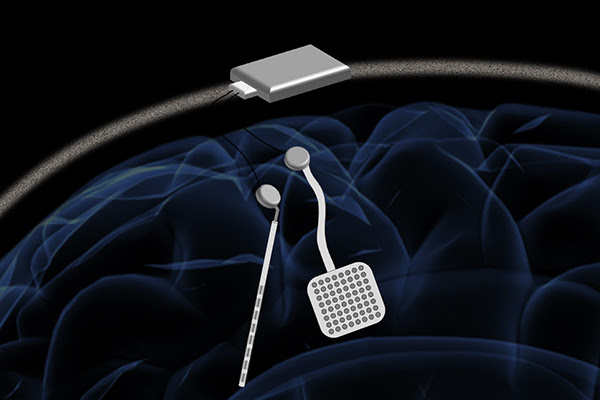
BERKELEY, Calif. – A new neurostimulator developed by engineers at the University of California, Berkeley, can listen to and stimulate electric current in the brain at the same time, potentially delivering fine-tuned treatments to patients with diseases like epilepsy and Parkinson’s.
The device, named the WAND, works like a “pacemaker for the brain,” monitoring the brain’s electrical activity and delivering electrical stimulation if it detects something amiss.
These devices can be extremely effective at preventing debilitating tremors or seizures in patients with a variety of neurological conditions. But the electrical signatures that precede a seizure or tremor can be extremely subtle, and the frequency and strength of electrical stimulation required to prevent them is equally touchy. It can take years of small adjustments by doctors before the devices provide optimal treatment.
WAND, which stands for wireless artifact-free neuromodulation device, is both wireless and autonomous, meaning that once it learns to recognize the signs of tremor or seizure, it can adjust the stimulation parameters on its own to prevent the unwanted movements. And because it is closed-loop — meaning it can stimulate and record simultaneously — it can adjust these parameters in real-time.
“The process of finding the right therapy for a patient is extremely costly and can take years. Significant reduction in both cost and duration can potentially lead to greatly improved outcomes and accessibility,” said Rikky Muller assistant professor of electrical engineering and computer sciences at Berkeley. “We want to enable the device to figure out what is the best way to stimulate for a given patient to give the best outcomes. And you can only do that by listening and recording the neural signatures.”
WAND can record electrical activity over 128 channels, or from 128 points in the brain, compared to eight channels in other closed-loop systems. To demonstrate the device, the team used WAND to recognize and delay specific arm movements in rhesus macaques. The device is described in a study that appeared December 31 in Nature Biomedical Engineering.
Ripples in a pond
Simultaneously stimulating and recording electrical signals in the brain is much like trying to see small ripples in a pond while also splashing your feet — the electrical signals from the brain are overwhelmed by the large pulses of electricity delivered by the stimulation.
Currently, deep brain stimulators either stop recording while delivering the electrical stimulation, or record at a different part of the brain from where the stimulation is applied — essentially measuring the small ripples at a different point in the pond from the splashing.
“In order to deliver closed-loop stimulation-based therapies, which is a big goal for people treating Parkinson’s and epilepsy and a variety of neurological disorders, it is very important to both perform neural recordings and stimulation simultaneously, which currently no single commercial device does,” said former UC Berkeley postdoctoral associate Samantha Santacruz, who is now an assistant professor at the University of Texas in Austin.
Researchers at Cortera Neurotechnologies, Inc., led by Rikky Muller, designed the WAND custom integrated circuits that can record the full signal from both the subtle brain waves and the strong electrical pulses. This chip design allows WAND to subtract the signal from the electrical pulses, resulting in a clean signal from the brain waves.
Existing devices are tuned to record signals only from the smaller brain waves and are overwhelmed by the large stimulation pulses, making this type of signal reconstruction impossible.
“Because we can actually stimulate and record in the same brain region, we know exactly what is happening when we are providing a therapy,” Muller said.
In collaboration with the lab of electrical engineering and computer science professor Jan Rabaey, the team built a platform device with wireless and closed-loop computational capabilities that can be programmed for use in a variety of research and clinical applications.
In experiments lead by Santacruz while a postdoc at UC Berkeley, and by and electrical engineering and computer science professor Jose Carmena, subjects were taught to use a joystick to move a cursor to a specific location. After a training period, the WAND device was capable of detecting the neural signatures that arose as the subjects prepared to perform the motion, and then deliver electrical stimulation that delayed the motion.
“While delaying reaction time is something that has been demonstrated before, this is, to our knowledge, the first time that it has been demonstrated in a closed-loop system based on a neurological recording only,” Muller said.
“In the future we aim to incorporate learning into our closed-loop platform to build intelligent devices that can figure out how to best treat you, and remove the doctor from having to constantly intervene in this process,” said Muller said.
Andy Zhou and Benjamin C. Johnson of UC Berkeley join Santacruz as co-lead authors on the paper. Other contributing authors include George Alexandrov, Ali Moin and Fred L. Burghardt of UC Berkeley. This work was supported in part by the Defense Advanced Research Projects Agency (W911NF-14- 2- 0043) and the National Science Foundation Graduate Research Fellowship Program (Grant No. 1106400). Authors Benjamin C. Johnson, Jan M. Rabaey, Jose M. Carmena and Rikky Muller have financial interest in Cortera Neurotechnologies, Inc., which has filed a patent application on the integrated circuit used in this work.
- Details
- Written by: Hillside Health Center
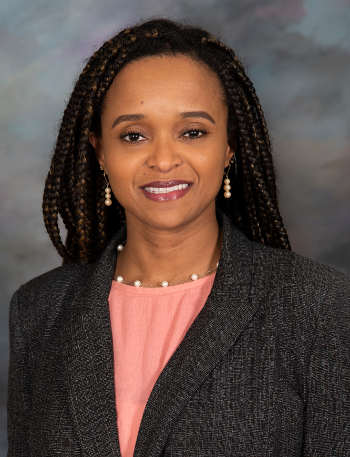
UKIAH, Calif. – With the addition of nurse practitioner Lily Robison, Hillside Health Center has once again expanded access to family medicine in Ukiah.
Robison, originally from the Democratic Republic of Congo, left the war-torn nation at age 16 and arrived in Salt Lake City, Utah. She spoke no English but hoped to follow her passion for medicine, nonetheless.
As a little girl, she set her sights on becoming a doctor, but when her life was upended with a move to the United States, she began adjusting her plans. After high school, she worked as a pharmacy technician while earning a bachelor’s degree in biology from the University of Utah.
During that time, the pharmacist she worked for recommended Robison pursue nursing school, which would allow her to fulfill her interest in caring directly for patients.
She achieved her bachelor’s degree in nursing in 2012, graduating as a member of the nursing honor society Sigma Theta Tau.
During nursing school, she enjoyed the patient interaction, but she yearned for a deeper, longer-term relationship with patients, and she could see the physical toll bedside nursing took, so she pursued a master’s degree in nursing and became a family medicine nurse practitioner.
Being a family nurse practitioner allows Robison to meet her personal and professional goals.
On the personal side, as the mother of two small children, Robison enjoys the regular schedule that comes with being a nurse practitioner because it allows her to spend time at home.
On the professional side, being a nurse practitioner allows her to work in a field she has always wanted to work in and to build the relationships she finds rewarding.
“It’s so satisfying seeing patients,” she said. “Regardless of our backgrounds, we all have problems, family challenges. To be in medicine, you must have empathy and you have to really listen to your patients.”
Robison decided to move across the country to work at MCHC Health Centers because she liked the people there, and the practice style felt like a good fit. She also liked the area. Her husband is from a small town in Wyoming and they wanted to raise their children in a similar environment.
Robison describes herself as family-oriented, conservative, and hard-working. “I’m quiet until you get to know me; then I talk a mile a minute,” she admitted.
Hillside Health Center is part of MCHC Health Centers – a local, nonprofit, federally qualified health center offering medical, dental and behavioral health care to people in Lake and Mendocino counties.