Health
- Details
- Written by: Yasmin Anwar
But new research led by the University of California, Berkeley, suggests this big-data approach may be wildly off the mark.
That’s largely because emotions, behavior and physiology vary markedly from one person to the next and one moment to the next. So averaging out data collected from a large group of human subjects at a given instant offers only a snapshot, and a fuzzy one at that, researchers said.
The findings, published in the Proceedings of the National Academy of Sciences journal, have implications for everything from mining social media data to customizing health therapies, and could change the way researchers and clinicians analyze, diagnose and treat mental and physical disorders.
"If you want to know what individuals feel or how they become sick, you have to conduct research on individuals, not on groups," said study lead author Aaron Fisher, an assistant professor of psychology at UC Berkeley. "Diseases, mental disorders, emotions, and behaviors are expressed within individual people, over time. A snapshot of many people at one moment in time can’t capture these phenomena."
Moreover, the consequences of continuing to rely on group data in the medical, social and behavioral sciences include misdiagnoses, prescribing the wrong treatments and generally perpetuating scientific theory and experimentation that is not properly calibrated to the differences between individuals, Fisher said.
That said, a fix is within reach: "People shouldn't necessarily lose faith in medical or social science," he said. "Instead, they should see the potential to conduct scientific studies as a part of routine care. This is how we can truly personalize medicine."
Plus, he noted, "modern technologies allow us to collect many observations per person relatively easily, and modern computing makes the analysis of these data possible in ways that were not possible in the past."
How they conducted the research
Fisher and fellow researchers at Drexel University in Philadelphia and the University of Groningen in the Netherlands used statistical models to compare data collected on hundreds of people, including healthy individuals and those with disorders ranging from depression and anxiety to post-traumatic stress disorder and panic disorder.
In six separate studies they analyzed data via online and smartphone self-report surveys, as well as electrocardiogram tests to measure heart rates. The results consistently showed that what’s true for the group is not necessarily true for the individual.
For example, a group analysis of people with depression found that they worry a great deal. But when the same analysis was applied to each individual in that group, researchers discovered wide variations that ranged from zero worrying to agonizing well above the group average.
Moreover, in looking at the correlation between fear and avoidance – a common association in group research – they found that for many individuals, fear did not cause them to avoid certain activities, or vice versa.
"Fisher’s findings clearly imply that capturing a person's own processes as they fluctuate over time may get us far closer to individualized treatment," said UC Berkeley psychologist Stephen Hinshaw, an expert in psychopathology and faculty member of the department’s clinical science program.
In addition to Fisher, co-authors of the study are John Medaglia with the Drexel University and Bertus Jeronimus of the University of Groningen.
Yasmin Anwar writes for the UC Berkeley News Center.
- Details
- Written by: Robert Sanders

BERKELEY, Calif. – Shuttering coal- and oil-fired power plants lowers the rate of preterm births in neighboring communities and improves fertility, according to two new University of California, Berkeley, studies.
The researchers compared preterm births and fertility before and after eight power plants in California closed between 2001 and 2011, including San Francisco’s Hunters Point plant in 2006.
Overall, the percentage of preterm births – babies born before 37 weeks of gestation – dropped from 7 percent in a year-long period before plant closure to 5.1 percent for the year after shutdown. Rates for non-Hispanic African-American and Asian women dropped even more: from 14.4 percent to 11.3 percent.
Preterm births, which can often result in babies spending time in a neonatal intensive care unit, contributes to infant mortality and can cause health problems later in life.
The World Health Organization estimates that the cost of preterm births, defined as births between 32 and 37 weeks of gestation, accounts for some $2 billion in healthcare costs worldwide.
The 20- to 25-percent drop in preterm birthrates is larger than expected, but consistent with other studies linking birth problems to air pollution around power plants, said UC Berkeley postdoctoral fellow Joan Casey, the lead author of a study to be published today in the American Journal of Epidemiology.
Another paper published May 2 in the journal Environmental Health used similar data and found that fertility – the number of live births per 1,000 women – increased around coal and oil power plants after closure.
“We were excited to do a good news story in environmental health,” Casey said. “Most people look at air pollution and adverse health outcomes, but this is the flip side: We said, let's look at what happens when we have this external shock that removes air pollution from a community and see if we can see any improvements in health.”
Retiring fossil fuel power plants
The findings, she said, could help policy makers in states like California more strategically plan the decommissioning of power plants as they build more renewable sources of energy, in order to have the biggest health impact.
We believe that these papers have important implications for understanding the potential short-term community health benefits of climate and energy policy shifts and provide some very good news on that front,” said co-author Rachel Morello-Frosch, a UC Berkeley professorof environmental science, policy and management and of public health and a leading expert on the differential effects of pollution on communities of color and the poor. “These studies indicate short-term beneficial impacts on preterm birth rates overall and particularly for women of color.”
In a commentary accompanying the AJE article, Pauline Mendola of the Eunice Kennedy Shriver National Institute of Child Health and Human Development said: “Casey and colleagues have shown us that retiring older coal and oil power plants can result in a significant reduction in preterm birth and that these benefits also have the potential to lower what has been one of our most intractable health disparities. Perhaps it’s time for the health of our children to be the impetus behind reducing the common sources of ambient air pollution. Their lives depend on it.”
The researchers compared preterm birth rates in the first year following the closure date of each power plant with the rate during the year starting two years before the plant’s retirement, so as to eliminate seasonal effects on preterm births. They also corrected for the mother’s age, socioeconomic status, education level and race/ethnicity.
Dividing the surrounding region into three concentric rings 5 kilometers (3 miles) wide, Casey delved into state birth records to determine the rate of preterm births in each ring.
Those living in the closest ring, from zero to 5 kilometers from the plant, saw the largest improvement: a drop from 7 to 5.1 percent. Those living in the 5-10 kilometer zone showed less improvement. Those living in the 10-20 km zone were used as a control population.
They also considered the effects of winds on preterm birth rates, and though downwind areas seemed to exhibit greater improvements, the differences were not statistically significant.
As a control, they replicated their analysis around eight power plants that had not closed, and found no before-versus-after difference, which supported the results of their main analyses.
There did not appear to be any effect on births before 32 weeks, which Casey said may reflect the fact that very early births are a result of problems, genetic or environmental, more serious than air pollution.
Casey noted that the study did not break out the effects of individual pollutants, which can include particulate matter, sulfur dioxide, nitrogen oxides, benzene, lead, mercury and other known health hazards, but took a holistic approach to assess the combined effect of a mix of pollutants.
“It would be good to look at this relationship in other states and see if we can apply a similar rationale to retirement of power plants in other places,” Casey said.
Other co-authors of the AJE paper are Deborah Karasek, Kristina Dang and Paula Braveman of UC San Francisco, Elizabeth Ogburn of the Johns Hopkins University Bloomberg School of Public Health in Baltimore and Dana Goin of UC Berkeley.
This research was supported by the UC San Francisco California Preterm Birth Initiative, which is funded by Marc and Lynne Benioff. Additional support was provided by grants from the National Institute of Environmental Health Sciences (K99ES027023, P01ES022841, R01ES027051) and the U.S. Environmental Protection Agency (RD-83543301).
Robert Sanders writes for the UC Berkeley News Center.
- Details
- Written by: Adventist Health
A TMVR is a less invasive alternative that offers hope for patients with severe degenerative mitral valve regurgitation who were previously faced with only one treatment option – open heart surgery.
The first procedure was performed in the cardiac catheterization lab at the hospital on May 9.
Mitral valve regurgitation, which is caused by a leaky heart valve that separates the upper and lower chambers on the left side of the heart, can place serious burdens on quality of life.
Degenerative mitral valve regurgitation is usually caused by a structural abnormality of the valve or valve leaflets. The disease affects one in 10 Americans over the age of 75.
These patients may experience fatigue, shortness of breath and fainting and an increased risk of developing a rhythm disorder called atrial fibrillation. If it is not treated, mitral regurgitation can also cause other serious problems, such as heart failure.
Until now, patients who were not eligible for traditional open heart surgery for repair had only medical therapies to help prevent or delay their disease progression. Medical therapy can treat the symptoms of degenerative mitral regurgitation, but does not treat the disease itself.
The TMVR procedure is less invasive than open heart surgery, and patients can expect a faster recovery and shorter hospital stay with minimal pain.
“This procedure is a breakthrough for the many Americans who suffer from mitral valve regurgitation,” explained Dr. Steven Herber, president at Adventist Health St. Helena. “I am proud of our team’s continued hard work to bring the latest innovations in heart and vascular care to communities throughout the North Bay.”
The valve team at the Adventist Heart & Vascular Institute previously performed the North Bay’s first transcatheter aortic valve repair, or TAVR, in 2016.
Transcatheter mitral valve repair is a surgery-free advance in the field of cardiology performed by accessing the mitral valve via veins using a catheter through the groin.
A specially designed clip grasps the mitral valve leaflets, bringing them together and closing the “leak,” allowing blood to pump efficiently through the heart and to the body.
The TMVR procedure was performed by a team of highly-trained interventional and general cardiologists, including Dr. Monica Divakaruni, Dr. Mark Gardner and Dr. John Laird and cardiothoracic surgeon Dr. Gan Dunnington.
“Much like our work with the transcatheter aortic valve replacement procedure, we are among the first hospitals in Northern California outside of the San Francisco Bay Area and Sacramento to introduce this procedure,” explained Dr. Monica Divakaruni. “The physicians and other clinicians at the Adventist Heart & Vascular Institute are proud to be pioneers in our region and to partner with providers in our community to offer the best cardiovascular care to patients.”
The multidisciplinary heart valve team at the Adventist Heart Institute is made up of cardiothoracic surgeons, interventional cardiologists, a dedicated nurse coordinator, highly skilled cardiac nurses, anesthesiologists and imaging professionals that collaborate to evaluate, diagnose and treat patients with valvular heart disease.
Together, they are unified by a vision to help patients access new advances in treating aortic stenosis and improve their quality of life.
Patients or physicians interested in learning more about the TMVR procedure can call the Adventist heart & Vascular Institute at 707-963-6322 or can visit www.adventistheart.org.
- Details
- Written by: Adventist Health Clear Lake
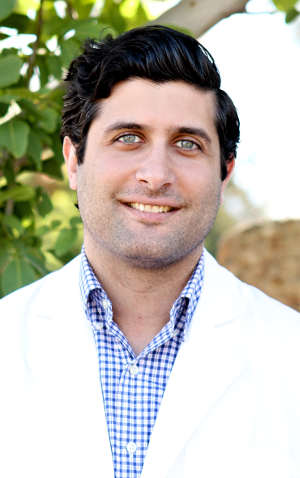
CLEARLAKE, Calif. – Adventist Health Clear Lake is introducing general surgeon, Hassan S. Moghaddas to the community.
Dr. Moghaddas graduated from Lund University in Sweden and completed his residency at Santa Barbara Cottage Hospital. He also spent time at St. Luke’s Roosevelt Hospital in New York, researching and practicing tracheal bioengineering.
He is a skilled surgeon with previous experience serving rural communities. He understands the complexities that come with practicing in rural communities and is looking forward serving the Clearlake community.
As a general surgeon Dr. Moghaddas performs a wide range of surgeries a few of these procedures include, abdominal wall reconstruction, minimally invasive gallbladder and common bile duct surgery, endoscopy/colonoscopy, dialysis access, fistula creation, dialysis access, surgical treatments for breast cancer, disease of the thyroid and parathyroid, foregut and reflux disease.
“Dr. Moghaddas is a welcomed addition to our team. I knew immediately upon meeting him that our community would love him. He brings a personable approach to health care and strives for the best possible patient outcomes,” said Brent Dupper, executive director for physician and outpatients services.
If you are interested in scheduling an appointment with Dr. Moghaddas or referring a patient you can call 707-461-7986.
Dr. Moghaddas is currently seeing patients in two locations, 15322 Lakeshore Drive, Clearlake and 15230 Lakeshore Drive, Clearlake.