Health
- Details
- Written by: Adventist Health Clear Lake
Adventist Health Clear Lake offers the screenings at its medical offices in Clearlake and Middletown.
The American Cancer Society estimates that in the 2018, about 13,240 new cases of invasive cervical cancer will be diagnosed and about 4,170 women will die from cervical cancer.
Cervical cancer was once one of the most common causes of cancer death for American women.
The cervical cancer death rate dropped significantly with the increased use of the pap test. This screening procedure can find changes in the cervix before cancer develops. It can also find cervical cancer early, when it's small and easier to cure.
The American Cancer Society recommends that women have their first pap test at age 21. If results are normal, women can wait three years for their next pap test.
At age 30, if test results are normal it is advised that women continue to be screened every three years, or get both the pap test and HPV test (which tests for the human papillomavirus, the virus that causes cell changes that can lead to cervical cancer) every five years. Women can stop being screened at age 65 if they have had normal pap tests results for many years.
Pap tests are unnecessary for women who have had their cervix removed during surgery for a non-cancerous condition, such as fibroids.
The Pap test takes approximately five minutes, and results are usually available within one to three weeks. This preventative screening is covered by most insurance plans, including Partnership HealthPlan of California.
To schedule an appointment at the Adventist Health Clear Lake Medical Office – Clearlake, call 707-995-4537.
To schedule an appointment at the Adventist Health Clear Lake Medical Office – Middletown, call 707-987-3311.
- Details
- Written by: California Department of Public Health
The act, which became law June 9, 2016, allows qualified individuals diagnosed with a terminal disease to obtain and self-administer aid-in-dying drugs.
The act requires CDPH to provide annual reports, including information on the number of prescriptions written and the number of known individuals who died using aid-in-dying drugs.
Additionally, the report includes demographic information on these individuals, including age and underlying illness.
In this report, for the year Jan. 1 to Dec. 31, 2017, 577 individuals received aid-in-dying drugs under the act, and 374 people died following ingestion of the prescribed drugs.
Of the 374 individuals, 90.4 percent were more than 60 years of age, 95.2 percent were insured and 83.4 percent were receiving hospice and/or palliative care.
Data in the report comes from act-mandated physician reporting forms and California death certificates.
This is the first full year of data reported. The first report contained data from June 9, 2016, to Dec. 31, 2016.
For more information about the End of Life Option Act and to read the report, visit CDPH’s Web site.
- Details
- Written by: Lake County News Reports
The health issues include noise-induced hearing loss, upper extremity disorders and fatigue possibly associated with sleep apnea.
The study began in early 2015 when Torie Baker, Alaska Sea Grant Marine Advisory agent in Cordova, and members of Cordova District Fishermen United invited 600 salmon gillnet permit holders to answer health questions before and during the fishing season.
Dr. Debra Cherry, a physician and injury prevention and treatment researcher with the University of Washington Department of Epidemiology, led the effort.
The research is one of the first of its kind in the United States, according to the study’s authors. The peer-reviewed study was published in April 2018 in the Journal of Agromedicine.
Evidence of noise-induced hearing loss in the study is striking. About 80 percent of physical exam participants had hearing loss, compared to the 15 percent norm for Americans.
In addition to engine noise while fishing, most fishermen reported exposure to noise during off-season activities, such as snowmachining, hunting and construction jobs.
Researchers also found evidence of rotator cuff problems in 40 percent of physical exam participants compared to the norm of 8-14 percent.
The potentially high prevalence of obstructive sleep apnea, captured via standardized survey questions, is also concerning, say the authors. Less sleep combined with poor quality sleep may exacerbate fatigue during the fishing season.
Worldwide, fishermen are exposed to noise, ultraviolet radiation from the sun, long and irregular work hours and physical strain. Prior studies show that fishermen have a higher prevalence of hearing loss, actinic keratosis (a precancerous skin condition), leukemia, fatigue and musculoskeletal injuries.
Because poor health in fishermen can result in urgent medical evacuation, countries such as Italy and Poland require fitness-for-duty exams.
The U.S. National Institute for Occupational Safety and Health funded the Cordova, Alaska, research through the Pacific Northwest Agricultural Safety and Health Center. While injuries and fatalities in the U.S. fishing industry have dropped significantly between 1990 and 2009, NIOSH saw a need to evaluate chronic health risks.
Sixty-six Cordova-area fishermen participated in the preseason online survey, and 38 responded to the midseason survey. Some were outfitted with Fitbits to track activity and sleep habits before and during the fishing season, and 25 fishermen had a complete physical exam including medical history, a hearing screening and a 3-minute step test to assess fitness during the fishing season.
Most participants were white males, at an average age of 49 with 27 years of fishing experience. Only three percent smoked tobacco. Some 70 percent of the participants were overweight or obese. During the off-season, more than half reported vigorous weekly exercise and six to eight hours of sleep. During the fishing season most worked longer hours and had less sleep and less aerobic exercise compared to off-season.
At the conclusion of the study, researchers sent a letter to each participant with their individual survey, exam and FitBit results, recommendations for follow-up and a summary of study findings. In Cordova, Cherry presented study findings at two community meetings in fall 2015.
The outcomes of the fishermen’s health study continue to spur interest among locals, said Baker, who is a faculty member at the University of Alaska Fairbanks College of Fisheries and Ocean Sciences and a partner in the study. Responding to that interest, she provided free hearing screenings this past April at the Cordova Community Health Fair.
“Partnering with our public health nurse from Juneau, we provided hearing screenings for 62 people in just four hours. We were very surprised at this response. It was an excellent opportunity to assist folks with tracking an often missed or lower priority health condition,” said Baker.
The Cordova health study researchers say they are eager to increase the study size to further explore their results, and to alert health care providers in other fishing ports as to fishermen’s specific health needs and challenges.
- Details
- Written by: Adventist Health Clear Lake
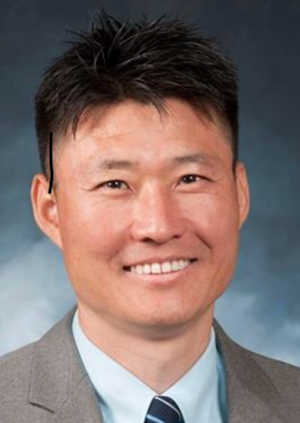
CLEARLAKE, Calif. – Adventist Health Clear Lake is welcoming KyungHoon Chung, DDS, MD, to its provider team.
Dr. Chung is a board certified oral and maxillofacial surgeon who will see patients and perform procedures in Clearlake.
“We are proud to bring this much-needed service and excellent provider to Lake County. Previously, patients would have to travel to other counties to access oral and maxillofacial surgery services,” said Brent Dupper, executive director of physician and outpatient services. “Dr. Chung’s surgical skills and mission-minded approach to care will make him a valuable member of our medical community.”
Chung previously served at Primary Children’s Hospital as an oral and maxillofacial surgeon and craniofacial surgery fellow and has trained internationally in surgical techniques.
He was recognized by the American Dental Association for humanitarian service to people of foreign countries and is actively involved in international medical mission trips to treat children with cleft lip and palate.
He is board certified by the American Board of Oral & Maxillofacial Surgery and performs procedures including corrective jaw surgery, dental implants, extractions, bone grafting, surgical treatments for snoring and sleep apnea and cleft lip and palate surgery.
“Serving in the community that has not had local access to oral surgery services gives me the opportunity to touch the lives of those I work with and it allows me to witness the long-lasting impact of transformation,” Dr. Chung states. “I look forward to serving patients in Lake County and working alongside the clinic and surgical teams at Adventist Health Clear Lake.”
Dr. Chung completed his dental training at Loma Linda University in Southern California and worked as a dentist at a rural health clinic in Yakima, Washington.
He then went on to complete medical school and surgery residency at the University of Missouri, Kansas City, and Craniofacial surgery fellowships at Chang Gung Memorial Hospital in Taoyuan, Taiwan and the Craniofacial Foundation of Utah in Salt Lake City, Utah. He completed undergraduate studies nearby in Napa County and enjoys outdoor activities.
He looks forward to returning to the beautiful landscape and friendly people of this area of Northern California.
Patients may schedule an appointment with Dr. Chung at the Adventist Health Clear Lake Medical Office in Clearlake by calling 707-995-4540.
The clinic is located at 15230 Lakeshore Drive in Clearlake and accepts Partnership HealthPlan of California, Medi-Cal, Medicare and most private insurances.
In addition to dental and surgical care, the clinic offers pediatric and primary care services, pain management, eye care, obstetric and gynecological care, behavioral medicine and more.