Health
- Details
- Written by: Editor
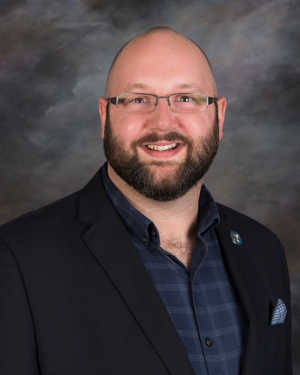
UKIAH, Calif. – MCHC Health Centers is pleased to announce the addition of its newest board member: Corrigan Gommenginger, the chief executive officer of Hospice Services of Lake County.
Originally from Montana, Gommenginger arrived in Lake County via the Seattle area, where he served in several health care-related positions.
He provided accounting services for a number of non-profit organizations before becoming the finance director for a health policy organization and then the chief operating officer of a hospital.
In 2009 to 2010, recognizing the trend of reductions in healthcare reimbursement, he helped his hospital reduce costs and “worked myself out of a job,” he explained.
At that time, he started a consulting firm to help other healthcare organizations optimize operations and reduce costs. One of his clients, Hospice of Kitsap County, was so impressed with his work that they asked him to become their chief financial officer and eventually their CEO, and that is how Gommenginger got into the hospice business.
In January 2015, Gommenginger moved to Lake County to become the CEO of Hospice Services of Lake County.
Like most people who relocate, Gommenginger needed to establish a primary care provider, but he struggled to find one.
“I wanted a male provider and, of course, I had to find someone accepting new patients,” he said.
He met Dr. Jerry Douglas, who became a personal friend, and when Dr. Douglas became the chief medical officer for MCHC Health Centers, Gommenginger asked about MCHC providers.
Gommenginger was connected with Dr. Mario Espindola and he was instantly impressed.
“I’m a millennial, so I fully expect that a doctor will be typing into a computer while talking to me, but after a quick glance at the computer screen, Dr. Espindola turned to me, looked me in the eye and said, ‘Tell me how I can help you today.’ He spent time listening to me, really paying attention and connecting the dots,” Gommenginger said.
Gommenginger’s work in hospice has given him a deep appreciation for the needs of patients and families at the end of life.
He noted that many healthcare organizations struggle to “get it right,” as he put it. “A lot of doctors don’t have those hard, end-of-life conversations until it’s too late. This robs people of important choices and opportunities.”
He noted that MCHC Health Centers is an exception in this area. “MCHC providers do a good job of helping patients and their families prepare as the end approaches,” he said.
Gommenginger explained that the more he learns about MCHC Health Centers, the more impressed he becomes, from its quality of care to its leadership.
“It is clear from the board meetings I’ve attended that the leadership team has a lot of mutual trust and respect. When problems arise, [CEO] Carole [Press] shares them with us along with thoughtful, well-considered solutions. Meetings are focused and directed, and board members seem to be there for the good of the organization—no egos or side agendas. I’m honored to be part of this group,” he said.
MCHC Health Centers is a local nonprofit organization providing access to comprehensive healthcare for people in Ukiah, Willits and Lakeport.
All MCHC health centers accept Medi-Cal, Medicare, Covered California insurance and other insurance. Learn more at www.mchcinc.org .
- Details
- Written by: California Department of Public Health
The raw oysters are linked to an outbreak of norovirus illnesses.
In California, as of April 27, approximately 100 individuals have reported illness after they consumed raw British Columbian oysters sold by restaurants and retailers throughout the state.
Laboratory testing has confirmed norovirus infection in several patients from both California and Canada. Although the number of reported new illnesses has decreased during the last week, the investigation is ongoing.
Canada has reported 172 cases of gastrointestinal illness linked to consumption of raw oysters.
Four oyster farms in the south and central Baynes Sound area of British Columbia that were linked to illnesses were closed between March 23 and April 13, 2018, and remain closed at this time.
Restaurants and retailers should not distribute or serve oysters from these farms, which can be recognized by the following landfile numbers located on the shellfish tags: CLF #1402060, CLF #1411206, CLF #1400483, and CLF #278757.
Restaurants and retailers are encouraged to check Canada’s above website for closure statuses and notices of reopening.
Anyone who eats raw oysters should visit their doctors if they become ill, and should report the incident to the local health department.
“Avoid eating raw and undercooked shellfish, including oysters, to reduce your risk of illness,” said CDPH Director and State Public Health Officer Dr. Karen Smith. “If you do eat shellfish, cook it until it reaches an internal temperature of at least 145°F. Quick steaming isn't sufficient to kill norovirus.”
Norovirus is highly contagious and can spread easily from person-to-person through contaminated surfaces, and by eating contaminated food, including raw or undercooked oysters.
Symptoms of norovirus usually begin 12 to 48 hours after a person has come in contact with the virus, and can last for 1 to 3 days.
Common symptoms include vomiting, diarrhea, nausea, and stomach cramps. People who develop symptoms of norovirus infection should consult their health care providers. For more information on norovirus, please see CDPH’s Norovirus Web page.
The most current information on shellfish advisories and quarantines are available at CDPH’s toll-free Shellfish Information Line at 800-553-4133. For additional information, please visit the CDPH Marine Biotoxin Monitoring Web page.
- Details
- Written by: Editor
The Medical Cannabis Worker Protections Act, AB 2069 by Assemblymember Rob Bonta (Oakland), would treat medical cannabis in the same way that current law treats prescription opiates and other drugs, by according it “reasonable accommodation” under the state Fair Employment and Housing Act.
The bill exempts employers who are subject to federal regulations, such as the transportation industry, and further disallows any impairment on the job during hours of employment.
Under present FEHA law, employees who use opiates and other prescription drugs – but not medical cannabis – may ask to be excused from positive drug tests if their employer determines that such use doesn’t impair workplace safety or the ability to do their job.
As a result, many workers are allowed to use RX opiates, tranquilizers, sleeping aids and other drugs, but are not free to use medical cannabis, even though it is safer, less addictive and often more effective.
AB 2069 is cosponsored by California NORML, the United Food and Commercial Workers (UFCW), and Service Employees International Union (SEIU), all of whom have heard innumerable complaints from workers who have been fired or denied jobs due to medical cannabis use despite an excellent employment record.
Other supporters include AFSCME (American Federation of State, County and Municipal Employees), CELA (California Employment Lawyers Association), BALIF (Bay Area Lawyers for Individual Freedom), CCBA (The California Conference of Bar Assns.), the Hispanic and Black chambers of commerce, CMG Caliva, Supernova Woman, Americans for Safe Access, and the Drug Policy Alliance.
In presenting the bill, Bonta noted that twelve other states already have laws protecting workers’ rights to medical cannabis.
“California is often on the cutting edge. Here we’re not,” he remarked. AB 2069 would reverse a California Supreme Court ruling, Ross v RagingWire, which determined that Prop 215 does not protect employment rights. In 2008, the legislature passed a bill by then-Assemblymember Mark Leno to reverse the decision, but it was vetoed by Gov. Schwarzenegger.
Testifying in favor of AB 2069, labor attorney Alan Crowley noted that FEHA’s “reasonable accommodation” provisions give employers wide latitude to disallow drug use that would impair workplace safety. Workers are obliged to notify their employers of their drug use beforehand in order to qualify for “reasonable accommodation,” and even then employers can decide that such use makes them unfit for the job.
Veterans' advocate and medical cannabis patient Ryan Miller testified about how he had been locked into a low-level blue collar job because of drug testing after he returned home from military service, and urged the committee to pass AB 2069 “if it is serious about economic empowerment of vets.”
Opponents of the bill were led by the Chamber of Commerce and other employers, who worried about exposure to liability and workplace safety. The chamber thanked Bonta for responding with amendments improving the bill, but remained in opposition to the present version. The chamber was joined in opposition by the California Building and Construction Trades Council, which asked for their industry to be exempted from the bill on account of safety concerns.
Bonta promised to keep working with the Chamber and construction trades to iron out problems in the bill if it passed out of committee.
Also testifying against AB 2069 was a representative from Quest Diagnostics, a leading drug testing firm, who mendaciously claimed that medical marijuana is “addictive,” that it shouldn’t be equated with opiates, and that its use caused a noticeable increase in workplace injuries.
A recent exhaustive report by the National Academy of Sciences found no good evidence that cannabis use in general is a cause of occupational injuries – let alone the use of cannabis specifically for medical purposes. The 15 safest states with fewest workplace fatalities (including California at #5), have legal medical marijuana; 13 of the bottom 15 prohibit it.
Opponents focused on the lack of a definitive test for cannabis impairment. Bonta noted that no such tests exist for opiates or other legal drugs, with the sole exception of alcohol.
Many employers currently rely on urine tests, which don’t relate to impairment because they don’t measure marijuana’s active component THC, but rather inactive urine metabolites that reside in the system for days and weeks.
Advocates say that employers would be better served by computer-based performance tests that can detect actual impairment from drugs or other causes. Alternatively, as part of the “reasonable accommodation” process, they recommend blood or oral fluid tests, which detect recent active THC for a few hours after use, making them a good indicator of whether workers have used on the job, which is forbidden by AB 2069.
Committee members voiced concerns about the bill before voting to approve it on the recommendation of Committee Chair Tony Thurmond (Richmond) with the understanding that Bonta would continue to work with opponents. Thurmond admitted "some discomfort over the safety issue,” but said it "must be balanced with accommodation.”
“This not a simple issue,” commented Assemblymember Ash Kalra (San Jose), “But does cannabis have medical benefits? It does.” “
This is not black and white, it’s gray,” agreed Assemblymember Kevin McCarty (Sacramento), who asked for more information about states with similar laws.
Assemblymember Lorena Gonzalez Fletcher (San Diego) said she “agreed with both sides,” but would like to hear more from the construction trade unions.
Assemblymember Melissa Melendez (Lake Elsinore) said she couldn’t vote one way or another, because the bill “wasn’t cooked yet.”
Assemblymember Reggie Jones-Sawyer (L.A.), noted that cannabis regulation had taken a long time to develop and that he wanted the bill “fully baked,” provoking laughs in the room.
The final committee vote was 5-1-1, with Republican vice-chair Heath Flora (Modesto) the only “No” vote and Melendez abstaining.
AB 2069 next heads to the Assembly floor, where it can be further amended and voted on.
- Details
- Written by: Editor
The funding would be focused on screening of opioid and methamphetamine addiction when patients see their doctors.
The funding will allow for all Medi-Cal patients to receive screening from their providers, which would ask them about any potential drug use. This results-driven practice is not currently deployed in California for the state’s more than 7 million Medi-Cal patients, 21 and older.
If this funding is secured, when a patient goes to their doctor for a regular visit, they would receive a questionnaire asking if they use any opioid prescriptions or illicit drugs to help them sleep, relax, calm down, feel better or lose weight. Their answers could lead to additional drug screening, counseling and substance abuse treatment.
“The opioid crisis has impacted communities big and small all across our country, and rural California has been hit especially hard,” said McGuire. “We know that early intervention and screening is a powerful tool for Californians to get the help they need to combat their addiction. We’re fighting to secure $2.58 million in state funds, which will be matched with more than two times that amount in federal dollars – $5.82 million – to expand screening and counseling for overuse of opioids and other drugs like heroin and methamphetamine, to get people the help they need as early as possible.”
McGuire has officially requested that the budget committee advance an allocation from the state’s general fund to cover the costs of this data-driven screening program. This would include allocating $8.4 million ($2.58 million from the state general fund/$5.82 million in matching dollars from the federal financial participation).
The screening dollars, if secured, would be invested with the Department of Health Care Services (DHCS) to expand the Medi-Cal benefit for Alcohol Misuse, Screening and Counseling (AMSC) to include screening for overuse of opioids and other illicit drugs.
Routine screenings for excessive alcohol use in California, followed by brief intervention or counseling and referral to treatment has helped countless Californians get the help they need to combat their addiction.
The program, Screening Brief Intervention, Referral and Treatment (SBIRT), has been in place in emergency rooms, public hospitals and federally qualified health centers across California for 15 years focused solely on alcohol. Now, Sen. McGuire wants to take this same results driven process and apply it to opioid use and methamphetamine.
“Expanding screening to detect use of opioids and other drugs is an important step in combating our current crisis and to save lives. We need to build on the state’s ongoing commitment to high-quality drug treatment resources for all Californians by allocating $8.4 million to implement drug screening and referrals for all ages,” Senator McGuire stated in the letter.
This request is supported by the County Behavioral Health Directors Association of California.