Health
- Details
- Written by: Editor
WASHINGTON, D.C. – U.S. Rep. Mike Thompson (CA-5) on Tuesday hosted an educational forum on substance abuse and the dangers of self-medication.
The forum brought together a panel of leaders in the effort to better understand and more effectively treat substance abuse at the federal, state and local level as well as by community organizations.
Panelists provided an overview of the current trends and research of substance abuse and identified resources where community members and their families can go for help.
Panelists included Sonoma County Supervisor Shirlee Zane; Melissa Jones, regional director for the U.S. Department of Health and Human Services; Don Braegar, chief of the Substance Use Disorder Program with the Policy and Fiscal Division of the California Department of Health Care Services; Dr. Marina Tolou-Shams of the University of California, San Francisco; Cathy Boe, clinical supervisor with Aldea Behavioral Health Services’ Wolfe Center; and Garen Staglin, founder of One Mind Institute and IMHRO.
“Substance abuse burdens our country’s health care system and impacts the lives of our family members, friends and neighbors,” said Thompson. “We need to do all that we can to better understand, treat and prevent substance abuse. Today’s forum allowed for the collaboration that is needed between all levels of government and community organizations so that we can make meaningful progress to address this issue.”
Sonoma County Supervisor Shirlee Zane said, “Long term use or misuse of opioids hijack the brain’s reward system causing permanent alterations in how the brain works. We need to approach and treat addiction like all other chronic diseases. Today’s forum was an invaluable opportunity to collaborate with stakeholders about how we can more effectively address addiction.”
Melissa Jones, regional director for the U.S. Department of Health and Human Services said, “The administration is working to reduce the prevalence of substance use disorders through prevention, increasing access to treatment, and helping individuals recover from the disease of addiction. And we do this best when we all work together to develop and deliver innovative programs. I was fortunate to get to hear about the collaborative efforts by state and local government officials as well as other stakeholders doing exactly that.”
In regard to his presentation, Don Braeger, chief of the DHCS Substance Use Disorder Program, Policy and Fiscal Division said, “Under this waiver, Medi-Cal members with substance use disorders will get the treatment they need at the right time and in the right place. This organized delivery system will improve treatment and recovery success for these patients.”
Cathy Boe, clinical supervisor with Aldea Behavioral Health Services’ Wolfe Center said, “It's important to remember that people with substance use problems are doing the best they can, and we need to help them do better. By bringing together leaders in that effort for a collaborative discussion, today’s forum was an important step.”
Dr. Marina Tolou-Shams said, “In nationwide surveys, California continues to rank among states reporting the highest rates of illicit drug use; critical forums such as these provide a unique opportunity for us to collectively and collaboratively address a local mounting adolescent and adult public health crisis.”
Garen Staglin said, “Brain Health is the nation’s most important unmet medical need. Substance Abuse and addiction are the result of lack of proper care, treatments, and accessibility. Panels such as this will help us raise awareness to get the actions necessary to fill these needs.”
The National Institute on Drug Abuse estimates the impact of substance abuse on our health care system to be around $700 billion annually.
Recent reports indicate that in Sonoma County drugs led to over 900 emergency room visits, over 200 hospitalizations and 23 deaths. Opioids were responsible for almost 200 visits to the emergency room and over 80 hospitalizations.
In Napa County, drugs were responsible for almost 200 emergency room visits, 45 hospitalizations and 12 deaths. Opioids led to 40 visits to the emergency room and 20 hospitalizations.
In Lake County, drugs led to over 200 emergency room visits, almost 100 hospitalizations and 23 deaths. Opioids led to 50 visits to the emergency room and 52 hospitalizations.
In Solano County, drugs were responsible for almost 800 visits to the emergency room, over 140 hospitalizations and 21 deaths. Opioids led to 150 emergency room visits and almost 50 hospitalizations.
In Contra Costa County, drugs led to over 2,000 emergency room visits, over 550 hospitalizations and 93 deaths. Opioids led to 348 visits to the emergency room and almost 200 hospitalizations.
Congressman Mike Thompson represents California’s Fifth Congressional District, which includes all or part of Contra Costa, Lake, Napa, Solano and Sonoma counties.
- Details
- Written by: Editor
ST. HELENA, Calif. – The heart valve team at the Adventist Heart Institute at St. Helena Hospital Napa Valley has successfully completed the North Bay’s first Transcatheter Aortic Valve Replacement (TAVR) procedure, a less invasive alternative that offers hope for patients with severe aortic stenosis who were previously accustomed to only one treatment option – open heart surgery.
The TAVR procedure is performed by advancing a fully collapsible replacement valve by catheter through the groin or through a small incision in the chest to the heart.
Once placed in the correct position, the replacement valve is opened and it begins to regulate proper blood flow.
The procedure takes one to two hours and because it is less invasive by nature, patients can expect a faster recovery, shorter hospital stay and very minimal pain.
Caused by a buildup of calcium deposits that cause the valve to narrow and stiffen, aortic stenosis is the most prevalent heart valve disease and the third most common cardiovascular condition after coronary artery disease and hypertension.
It affects up to 1.5 million people in the United States and approximately 250,000 of these patients suffer from severe symptomatic aortic stenosis, often developing debilitating symptoms that can restrict normal day-to-day activities, such as walking short distances or climbing stairs.
Until now, patients who were not eligible for a traditional open heart aortic valve replacement surgery had no effective, long-term treatment option to prevent or delay their disease progression.
Without aortic valve replacement, studies show patients have about a 50-percent chance of living two years and a 20-percent chance of living five years.
TAVR is proven to have success rates as high as 95 percent.
“This is a game-changing breakthrough for patients with severe aortic stenosis. Patients who previously had an open heart procedure, or have additional health issues complicating their condition were often not eligible for an open chest surgery," explained Dr. Steven Herber, president and chief executive officer at St. Helena Hospital. “Now they have a treatment option that extends and improves their quality of life.”
The multidisciplinary heart valve team at the Adventist Heart Institute is made up of cardiothoracic surgeons, interventional cardiologists, a dedicated nurse coordinator, highly skilled cardiac nurses, anesthesiologists and imaging professionals that collaborate to evaluate, diagnose and treat patients with valvular heart disease.
Together, they are unified by a vision to help patients access new advances in treating aortic stenosis and improve their quality of life.
Patients or physicians interested in learning more about the TAVR procedure can call the Adventist Heart Institute at 707-963-7200.
- Details
- Written by: Morgen Wells
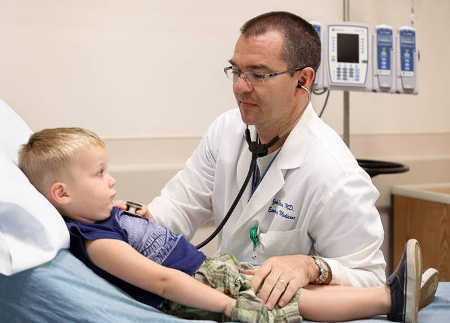
LAKEPORT, Calif. – Across the country, hospitals are experiencing an emergency room overload, and Northern California facilities are no different.
After almost a year of strategic planning, Sutter Lakeside Hospital is proud to announce a reorganization of existing rooms in the emergency department to drastically cut patient wait times.
Patients whose cases are not urgent now wait in rooms equipped with chairs instead of beds and are treated by mid-level providers.
“Our goal is to see all patients in a timely manner, regardless of acuity,” said Nicole Lamm, RN, emergency department manager. “Patients whose needs can be met quickly don’t need to lie in a bed for hours. Waiting is sometimes inevitable, as we treat the most critical cases first, but we hope to reduce the time between when a patient is evaluated by a triage nurse and discharge.”
The emergency department is also taking steps to connect patients with primary care providers across Lake County, as the lack of established care greatly contributes to low-acuity ED visits.
For eight hours on Saturdays, Patient Navigator Christen Goetz helps emergency department patients communicate with insurance providers and schedule follow-up appointments.
“I help patients walk through the resources that are available to them that they may not be aware of,” said Goetz. “Often, communication between insurance providers and patients is unclear, so a patient may not know that he or she has primary care. I help improve the relationship between patients and providers so that patients can access care before they need to take a trip to the emergency department.”
Sutter Lakeside Hospital sought input from physicians, nurses, administrators, and patients.
Ken Saderlund, a community member, saw an opportunity to use his experiences with Sutter Lakeside to improve emergency department processes. He also participated in the strategic planning of the emergency department to develop a better atmosphere for patients.
“We shared ideas, dissected pros and cons, and took the best parts of ideas that would work,” said Saderlund. “I’ve been to meetings during my career where nothing changes. Sutter Lakeside was different; I saw the benefits working immediately. This hospital is serious about improving the patient experience.”
Saderlund, who continues to volunteer his time on the Patient Experience Council, felt valued.
“The administrators want to hear patients’ stories so the next patient has a positive experience. I’m impressed with the changes that affect patients, and the campaign to continually improve. I’m proud to be a part of that. Sutter Lakeside is starting a new chapter and investing in the future. It’s an investment that will benefit the community for years to come.”
“By preventing a logjam and managing capacity, we’re able to provide a level of service more in line with what patients expect and deserve,” said Dr. John Stein, MD, director of emergency medicine. “Seeing the Emergency Room through a patient’s eyes has allowed us to strip away many of the small barriers that had built up. Ken Saderlund’s input was invaluable.”
Stein, who has worked at Sutter Lakeside for 18 months, noticed the difference in Sutter’s workplace atmosphere immediately.
“As a physician, I can better care for patients because of the environment that Sutter creates, and that is extremely rewarding. I look forward to continually improving the way we practice medicine.”
- Details
- Written by: Morgen Wells
LAKEPORT, Calif. – Falls are on the rise. Each year, millions of Americans experience a fall that leads to serious harm, such as a broken bone or head injury, according to the Centers for Disease Control and Prevention.
Hospitalized patients are especially at risk for falls, due to new medication, being in an unfamiliar environment, or post-surgery conditions.
On Wednesday, Sutter Lakeside Hospital started construction to install mechanical ceiling lifts in its 18 medical surgical inpatient rooms.
Ceiling lifts have slings connected to an electric track mounted on the ceiling and help patients move safely, which reduces the risk of injury due to a fall.
The Intensive Care Unit has used ceiling lifts in its four rooms for the last two years.
“The lifts can hold up to 500 pounds,” said Pauline Orr, RN, Intensive Care Unit nurse manager. “The lifts are crucial in providing the best care for patients who are dependent on our staff for movement, like stroke patients. Getting patients moving earlier reduces the risk of complications because the earlier a patient moves, the stronger they are. Earlier movement means healthier patients.”
The lifts also reduce the risk of health care workers injuring themselves, according to the Association of Canadian Ergonomists.
“Because of the lifts, we’ve seen an improvement in job satisfaction among nurses,” said Orr. “The lifts are convenient because the equipment is available any time it’s needed and does all of the heavy lifting.”
Nurses regularly move patients to prevent bed sores, improve circulation, and reduce the number of falls.
The installation of ceiling lifts is the latest initiative to improve patient experience. Sutter Lakeside Hospital also uses special lifts to help at-risk patients in and out of vehicles, as well as standing aids that can act as a wheelchair or walker.
“Updating our inpatient rooms is a priority because of its impact on both our patients and staff,” said Siri Nelson, chief administrative officer, Sutter Lakeside Hospital. “Equipping our nurses with the latest equipment translates to excellent care for our patients.”
The refurbished rooms will also include updated bathrooms, new floors, a fresh coat of paint and new blinds.
To learn more about Sutter Lakeside, or schedule a tour, please visit www.sutterlakeside.org/ or call 707-262-5121.