Health
- Details
- Written by: Morgen Wells
LAKEPORT, Calif. – In celebration of Diabetes Awareness Month, Sutter Lakeside Hospital will be hosting a Diabetes Awareness Day in the hospital conference room on Tuesday, Nov. 17, from 11:30 a.m. to 1:30 p.m.
Registered nurses, registered dietitians and pharmacists will be available to test blood sugar, and discuss diabetes management, prevention and medication.
The Food and Nutrition Services department will demonstrate cooking a healthy meal and will provide healthy snacks for attendees.
Informational handouts and posters will also be provided, as well as a test to find out if you are at risk for developing diabetes.
Attendees are encouraged to bring his or her medication to the event.
Diabetes, a disease that affects nearly 30 million children and adults in the U.S., is on the rise. 86 million Americans show signs of pre-diabetes and are at risk of developing type 2 diabetes.
While type 1 is a chronic condition in which the pancreas produces little or no insulin, the more common type 2 diabetes develops over time when the body becomes resistant to insulin or doesn’t make enough insulin, according to the Mayo Clinic. Diagnosed diabetes costs $245 billion annually, with more diagnoses predicted.
California is home to more than 3 million diabetics, with a 38 percent increase in cases from 1998 to 2007, according to the Diabetes Coalition of California.
Eight percent of Lake County residents have type 2 diabetes which is the leading cause of blindness, amputation and kidney failure, and increases the risk of death by 200 percent compared to non-diabetics of the same age.
Symptoms of diabetes include frequent urination, extreme thirst or hungry even while eating or drinking, blurry vision, slow healing bruises or cuts, extreme fatigue, weight loss (type 1), or tingling, pain or numbness in the hands or feet (type 2).
Complications of type 2 diabetes include nerve damage, skin dryness, ulcers, poor circulation, stroke, kidney disease, high blood pressure and gastro paresis (the stomach taking too long to empty its contents).
Type 1 diabetes is typically diagnosed in children and young adults when the pancreas produces no insulin, and is not preventable, according to the American Diabetes Association.
Type 1 diabetes accounts for 5 percent of all diabetes diagnoses. Type 2 diabetes is largely preventable with a healthy diet of foods that are low in fat and calories and high in fiber, such as fruits, vegetables and whole foods. 30 minutes of moderate exercise a day, maintaining a healthy weight and body mass index, and not smoking also help prevent type 2 diabetes.
Healthy choices, such as losing 7 percent of total body weight if you’re overweight, can prevent a pre-diabetes diagnosis from becoming type 2 diabetes.
Sutter Lakeside Hospital is located at 5176 Hill Road East, Lakeport. Visit the hospital online at http://www.sutterlakeside.org/ .
- Details
- Written by: Morgen Wells
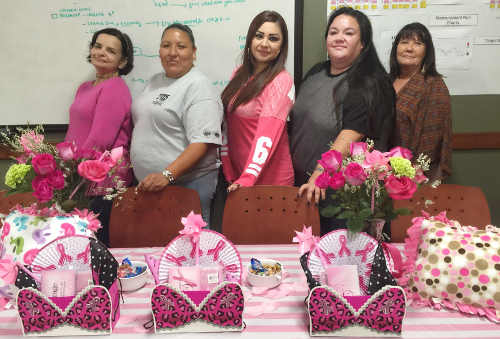
LAKEPORT, Calif. – For three hours the day before Halloween, any American Indian woman who got a mammogram at Sutter Lakeside Hospital could enjoy a peaceful retreat in the hospital conference room.
There, a full spread of hot cider, coffee, French toast bread pudding, roasted vegetable frittata, pumpkin hummus, pasta salad, and fruit and cheese awaited, catered by Rosey Martin.
“Native women often don’t think to get mammograms,” said Esperanza Briones, a community health representative for Lake County Tribal Health Consortium and member of the Pomo community. “We want to pamper them after they get their mammograms. We remind them they have to take care of themselves before they can care for others; a woman today told me this was her first mammogram in five years because she hadn’t thought to get one in that long.”
Tribal Health scheduled seventeen mammograms and provided transportation for women who needed it.
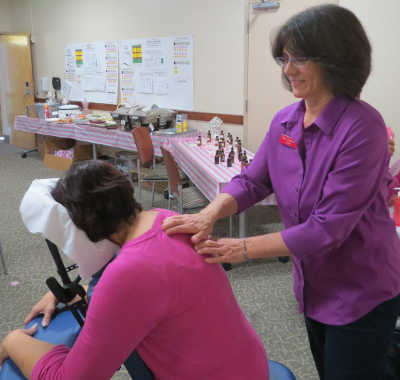
The conference room, decorated in pink for breast cancer awareness, housed gift bags, aromatherapy kits, and a craft area where women could make beaded bracelets and fleece pillows. Certified massage practitioner Debi Freeland offered her services for free as well.
“I love to help women feel one hundred percent and see a smile on their faces,” said Freeland, who has been a certified massage practitioner since 2001. “It’s nice to serve the Pomo community.”
Lake County Tribal Health was established to improve the physical, mental, spiritual, emotional and social health statues of the American Indians of Lake County through the provision of culturally sensitive health care services, according to its Web site.
“We work with well-respected elders to build relationships in the Pomo community,” said Briones, who has been with Tribal Health since June of this year. “We host a women’s health day as well.”
“We advocate on behalf of patients for clear communication with providers,” said Earlene Drapeau, Tribal Health community health representative and member of Sutter Lakeside Hospital’s Patient Experience Council. “We make appointments for patients as well as help with medication management and proper labeling.”
Tribal Health’s team also included Monica Horse, community health representative; Michaela John, transportation; and Rhonda Boyle, LVN.
“Sutter Lakeside is proud to partner with Tribal Health to provide a relaxing environment for Native women,” said Siri Nelson, chief administrative officer, Sutter Lakeside Hospital. “Early detection is vitally important in the fight against breast cancer. We’re excited to collaborate with Tribal Health to reach a portion of the population that may otherwise miss this essential service.
- Details
- Written by: Editor
SACRAMENTO – California Department of Public Health (CDPH) Director and State Public Health Officer Dr. Karen Smith is warning consumers about the risks associated with wearing decorative contact lenses without proper consultation with an eye care professional.
Decorative contact lenses are lenses that do not correct vision and are intended to temporarily change the appearance of the eye. Use of these lenses can carry serious risks, including permanent eye injury that may lead to blindness.
Advertised as color, cosmetic, fashion and theatrical contact lenses, they are especially popular around Halloween. These decorative contact lenses are typically sold at beauty supply stores and novelty stores.
All decorative contact lenses currently approved or cleared under the federal Food, Drug and Cosmetic Act are classified as prescription medical devices and, therefore, may be sold only to or on the prescription of a licensed practitioner.
Wearing any kind of contact lens, including decorative lenses, can cause serious injury if not used correctly.
The risks include infection, ulcers, decreased vision, cuts or scratches to the surface of the eye, itchiness or redness. If these conditions are left untreated, the injuries can progress rapidly. In most severe cases, blindness and eye loss can occur.
Consumers who have experienced any injury or illness with decorative contact lenses should contact their health care provider or contact CDPH at 1-800-495-3232.
- Details
- Written by: Editor
SACRAMENTO – California Department of Public Health (CDPH) Director and State Public Health Officer Dr. Karen Smith has announced the results of a CDPH study that shows additional benefits of prenatal pertussis vaccination.
Vaccination of pregnant women against pertussis (whooping cough) has been found to prevent whooping cough in their infants, however no vaccine is 100 percent effective and some infants of vaccinated women develop pertussis.
The study found that infants were significantly less likely to have severe illness or die from pertussis if their mother had received the Tdap (tetanus, diphtheria and pertussis) vaccine during pregnancy.
“Prior studies have demonstrated that prenatal Tdap vaccination reduces the risk of whooping cough among infants less than two months of age,” Dr. Smith said. “However, this is the first study that CDPH is aware of that has evaluated the impact of Tdap vaccine during pregnancy on the outcomes of infants who do become infected with pertussis. This study provides more evidence that getting the Tdap vaccine is the best way for pregnant mothers to protect their babies from pertussis and its complications.”
CDPH’s Immunization Branch conducted the study among 690 California infants younger than two months of age who had pertussis.
The study showed that infants with whooping cough whose mothers received Tdap vaccine during pregnancy were less likely to be hospitalized or admitted to an intensive care unit.
Researchers also found that infants whose mothers received Tdap vaccine during pregnancy had significantly shorter hospital stays when hospitalization was needed.
In addition, there were no deaths among infants whose mothers were vaccinated with Tdap.
Pregnant women should receive the whooping cough vaccine at 27 weeks, the start of the third trimester of each pregnancy.
When pregnant women are vaccinated, maternal antibodies are transferred to the fetus and help protect young infants until they are old enough to receive their own vaccination against pertussis. This is the only way to provide direct protection to infants.
Whooping cough continues to spread at above-normal levels in California following a major epidemic in 2014, when the number of reported cases was the highest seen since the 1950s. Disease rates and the risk of hospitalization and death are highest for infants younger than three months of age.
Classic whooping cough in children and adults starts with a cough and runny nose for one-to-two weeks, followed by weeks to months of rapid coughing fits that sometimes end with a whooping sound and vomiting. Fever is rare.
Symptoms of whooping cough vary by age and vaccination history. Infants often do not have typical whooping cough symptoms and may not appear to cough. Instead, they may have difficulty breathing, their face may turn purple, and they may even stop breathing.
CDPH is working closely with local health departments, schools, media outlets, and other partners to inform providers and the public about the importance of vaccination against whooping cough, especially for pregnant women during the third trimester of every pregnancy.
CDPH also reminds parents that Tdap vaccination is a requirement for advancement into the 7th grade. Tdap vaccinations are widely available at doctors’ offices, clinics, and pharmacies.
To find a vaccination clinic or pharmacy near you, visit the HealthMap Vaccine Finder Web site.
Pertussis data, including the number of cases in each county, can be found on the CDPH Web site.