Health
- Details
- Written by: Editor
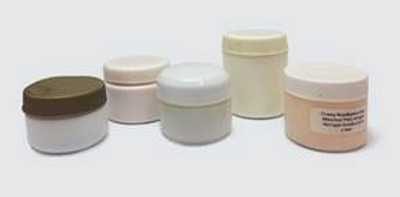
SACRAMENTO – The California Department of Public Health (CDPH) is warning consumers to avoid using skin creams in unlabeled or hand-labeled containers brought from Mexico, after reports of mercury poisoning associated with these products.
These creams are used for lightening the skin, fading freckles, blemishes and age spots, and treating acne.
They come in containers without labels or with hand-made labels. Some creams are light in color and turn dark grey/green after prolonged exposure to light.
Some of them have contained more than 200,000 times the legal limit of mercury.
In the last four years, at least 60 people in California have been affected by the use of these creams. They include children and babies who became very sick from contact with the mercury contamination in their homes or through skin contact with family members who used the products.
Children and pregnant women are especially sensitive to the toxic effects of mercury.
In addition to this consumer warning, CDPH is also working with its local, state and federal public health partners to warn people in California and Mexico about this serious health risk.
CDPH has sent an alert to health care professionals, advising them to be aware of the symptoms of mercury poisoning.
CDPH also has created a one-page fact sheet that is available in English, http://www.ehib.org/papers/MercuryCream_5_1_14_for_Mexico_En.pdf , and Spanish, http://www.ehib.org/papers/MercuryCream_5_1_14_for_Mexico_Sp.pdf , for sharing with patients or the general public.
Common signs of mercury poisoning in adults include irritability or depression, nervousness, difficulty concentrating, fatigue, shaking or weakness, tingling or numbness in hands, feet, or around the mouth.
In children, common signs and symptoms of mercury poisoning include irritability, anorexia, sleeplessness, poor muscle tone or weakness, leg cramps, hypertension, rash, excessive salivation or thirst, peeling skin, pink hands and feet, and gingivitis.
If you or your children have any of these symptoms and are using a skin-lightening or acne cream from Mexico, stop using the cream immediately and consult your health care provider about being tested for mercury poisoning.
For free medical advice in English or Spanish, call California Poison Control at 1-800-222-1222. Poison Control experts can also advise you on how to safely dispose of these creams.
More information about mercury poisoning from homemade skin creams, including materials in English and Spanish, is available on the CDPH Web site, www.cdph.ca.gov .
- Details
- Written by: Editor
CLEARLAKE, Calif. – As part of its commitment to helping the community learn about health, on May 7, St. Helena Hospital Clear Lake sponsored a free Get Your Health Back seminar at the Middletown Senior Center.
The seminar featured three highly skilled physicians presenting the newest advances in two subjects of critical concern for citizens of Lake County, weight management and chronic pain.
Over the course of two hours, 64 community members had an opportunity to listen to and talk with some of the area’s top physicians in these fields.
“This is not only about quality of life, but also longevity of life,” said David Santos, vice president of operations at St. Helena Hospital Clear Lake. “The good news is that people can make huge improvements in their overall health just by making simple lifestyle changes. Our goal is to help people learn what steps they can take today, so they can feel better and live longer.”
Corey Warner, MD, an internal medicine specialist from St. Helena Medical Specialties in Hidden Valley Lake, discussed the challenges and importance of weight loss, and explained the difference a medically supervised weight management program can make.
Highly regarded by his peers, Dr. Warner has helped hundreds of patients regain their health and a sense of control over their lives through a whole-person approach to weight management.
For those who have tried traditional weight loss efforts without success, Richard Parent, MD, presented the latest information on surgical options for weight loss.
A general surgeon who specializes in general, laparoscopic and bariatric surgery, Dr. Parent also has an extensive background in diabetes.
His presentation focused on new advances in weight loss surgery, including the gastric bypass, sleeve gastrectomy, and gastric banding, and how these procedures can be a crucial step to resolving health issues and regaining quality of life.
Pari Azari, MD, a specialist in physical medicine and rehabilitation and pain management, presented on ways to prevent chronic pain – migraines, back pain, injuries, joint damage, or chronic illness – from limiting activity and taking over life.
From dietary and medical options to rehabilitation and minimally invasive treatments, her presentation outlined practical ways to relieve pain and return to an active life.
This seminar is just one of many steps St. Helena Hospital Clear Lake is taking to help the community learn about health and the steps they can take to live a healthier life.
For more information visit www.StHelenaHospitals.org .
- Details
- Written by: Editor
Covered California and the California Department of Health Care Services (DHCS) announced that from Oct. 1, 2013, to March 31, 2014, under the Patient Protection and Affordable Care Act, 49,665 consumers in mostly rural Northern California counties enrolled in subsidized and non-subsidized Covered California health insurance plans.
The new total represents a nearly 50 percent increase from the 33,111 enrollments recorded through Feb. 28.
The open-enrollment period for health insurance plans in Covered California’s marketplace ended March 31.
Although open enrollment has ended, consumers who experience a qualifying life event can still enroll in a health insurance plan through Covered California.
Qualifying life events include losing health coverage through a job, getting married or entering into a domestic partnership, having or adopting a child, changing where a person permanently lives or gaining citizenship. For a list of common types of qualifying events, visit www.CoveredCA.com .
The next open-enrollment period will be in the fall of 2014. Also, Californians can enroll in Medi-Cal year-round.
The Northern California counties of Alpine, Amador, Butte, Calaveras, Colusa, Del Norte, Glenn, Humboldt, Lake, Lassen, Mendocino, Modoc, Nevada, Plumas, Shasta, Sierra, Siskiyou, Sutter, Tehama, Trinity, Tuolumne and Yuba represent about 4 percent of the statewide enrollment.
The local total includes 45,042 consumers eligible for financial subsidies. These counties encompass Covered California pricing region 1.
For the six-month period that ended March 31, 1,395,929 consumers enrolled in plans statewide.
The statewide total increased 58.6 percent from the 880,082 consumers who enrolled by the end of Feb. 28. Covered California reached 1 million consumers enrolled on March 14.
- Details
- Written by: Editor
The California Department of Public Health (CDPH) has issued four penalties to three California hospitals along with fines totaling $275,000 after investigations found the facilities’ noncompliance with licensing requirements caused, or was likely to cause, serious injury or death to patients.
The following hospitals received penalties, please click on the link below for specific incident information:
– Alta Bates Summit Medical Center-Alta Bates Campus, Berkeley, Alameda County: The hospital failed to ensure the health and safety of a patient when it did not follow established policies and procedures for safe distribution and administration of medication. The penalty is $75,000. This is the hospital’s second administrative penalty.
– Alta Bates Summit Medical Center-Alta Bates Campus, Berkeley, Alameda County: The hospital failed to ensure the health and safety of a patient when it did not follow established policies and procedures related to patient evaluation and safety. The penalty is $100,000. This is the hospital’s third administrative penalty.
– Desert Regional Medical Center, Palm Springs, Riverside County: The hospital failed to ensure the health and safety of a patient when it did not follow established policies and procedures regarding fall prevention. The penalty is $50,000. This is the hospital’s first administrative penalty.
– Sutter General Hospital, Sacramento, Sacramento County: The hospital failed to ensure the health and safety of a patient when it did not follow established policies and procedures regarding fall prevention. The penalty is $50,000. This is the hospital’s first administrative penalty.
Administrative penalties are issued under authority granted by Health and Safety Code section 1280.1. Incidents that occurred prior to 2009 carry a fine of $25,000.
On Jan. 1, 2009, the fines increased for incidents that occurred in 2009 or later. Under this provision, an administrative penalty carries a fine of $50,000 for the first violation, $75,000 for the second, and $100,000 for the third or subsequent violation by the licensee.
When hospitals receive their survey findings, they are required to provide CDPH with a plan of correction to prevent future incidents.
Hospitals can appeal an administrative penalty by requesting a hearing within ten calendar days of notification. If a hearing is requested and the penalty upheld following an appeal, the penalties must be paid.
All hospitals in California are required to be in compliance with applicable state and federal laws and regulations governing general acute care hospitals, acute psychiatric hospitals, and special hospitals.
The hospitals are required to comply with these standards to ensure quality of care.