Health
- Details
- Written by: Jeff Ribordy, MD
Lead poisoning has been a public health issue for centuries.
During the Roman Empire, it was caused by lead in aqueducts, water pipes and drinking vessels. In fact, the word plumber comes from “plumbum,” the Latin word for lead. The medical term for lead poisoning is plumbism.
During the Middle Ages, lead was used in alchemy. During the Renaissance, lead was used to make weapons of war, printing presses, and other items.
By the 1900s the U.S. was the largest producer of lead in the world. It was used commonly in water pipes, paint and as a gasoline additive.
In 1904, however, it was recognized as dangerous to children. The first reports came from Dr. Gibson in Australia who linked lead paint to lead poisoning cases. In 1914 the first case of childhood lead poisoning was published in the United States.
Through the 1920s and 1930s, more cases surfaced and the evidence mounted. But many physicians did not recognize the symptoms of lead poisoning. Not until after 1940 was a blood test developed to measure blood lead levels (BLL).
More and more physicians recognized the toxic nature of lead ingestion on children. Many other countries in the 1920s and 1930s passed legislation restricting or banning the use of lead paint indoors or in items such as cribs.
However lead paint continued to be used in households in the U.S. until it was first banned in 1970. In 1978 the maximum allowable lead limit was lowered to 0.06 percent. (The previous industry standard was 1 percent even though many paints had levels up to 10 percent!)
Why is lead poisoning such an issue for children? Because of their growing and developing brains along with a tendency for kids to place everything in their mouths.
No minimum safe lead level (other than zero) has ever been discovered. For decades the Centers for Disease Control used a BLL of 10 µg/dl as a “level of concern.” They recently reduced this to 5 µg/dl.
Studies have shown brain damage (like loss of IQ points) even at levels less than 10. At higher levels, people can have abdominal pain. If exposure continues, seizures, coma, and even death can result.
At low blood levels, children may have no symptoms. Their exposure can only be found by routine BLL screening. Current recommendations are to screen all children at 1 and 2 years of age.
Any BLL > 5 should be investigated for a source in the home. This may be done by the local public health departments. Many older homes may still have lead paint. If paint is peeling or remodeling taking place, lead paint dust can be in the environment.
Lead has also been found occasionally in toys, imported candy, and sometimes folk remedies from other countries (Greta or Azarcon in Latino cultures, Ghasard from India, or Ba-baw-san from China)
The take home message? Be sure to have your children’s blood level checked at ages 1 and 2.
Dr. Jeff Ribordy is a regional medical director of Partnership HealthPlan of California (PHC).
- Details
- Written by: Editor
Secondhand smoking is linked with pregnancy loss, including miscarriage, stillbirth and tubal ectopic pregnancy, according to new research from scientists at Roswell Park Cancer Institute (RPCI) and the University at Buffalo (UB).
The study findings, published online by the journal Tobacco Control, mark a significant step toward clarifying the risks of secondhand smoke exposure.
“This study demonstrated that pregnancy outcomes can be correlated with secondhand smoking. Significantly, women who have never smoked but were exposed to secondhand smoke were at greater risk for fetal loss,” said the study's lead investigator, Andrew Hyland, PhD, Chair of RPCI's Department of Health Behavior.
While there was previously some evidence that smoking during pregnancy was associated with the three outcomes of fetal loss studied here – spontaneous abortion or miscarriage (loss of a fetus before 20 weeks of gestation), stillbirth (loss of a fetus after 20 or more weeks of gestation) and tubal ectopic pregnancy – such evidence for secondhand smoke (SHS) exposure had been limited.
This study is significant in two ways: One, it considered lifetime SHS exposure rather than only during pregnancy or reproductive years, taking into consideration smoke exposure in participants' childhood and adult years. Two, the comparison group of never-smokers was limited to women without any SHS exposure, producing a truer control group compared to previous studies.
The large sample size and comprehensive assessment of SHS exposure added strength to the findings. Historical reproductive data, current and former smoking status, and details about SHS exposure over lifetime were collected from the Women's Health Initiative Observational Study. This allowed for a study group of 80,762 women.
“The statistical power gained from the large cohort of women that was available is noteworthy,” added co-author Jean Wactawski-Wende, PhD, Professor in the Departments of Social and Preventive Medicine and Obstetrics and Gynecology, and Vice Provost for Research Advancement and Strategic Initiatives at UB. “As a result of the Women's Health Initiative Observational Study, participants came from a broad range of geographic areas and had multiple ethnic, educational and socio-economic backgrounds. This allowed for a comprehensive assessment of detailed information on exposures, outcomes and potential confounders.”
Women with the highest levels of SHS exposure – despite never having smoked themselves – had significantly greater estimates of risk for all three adverse pregnancy outcomes, and these risks approached the risk seen among women who smoke (those who smoked more than 100 cigarettes in their lifetime).
The highest levels of lifetime SHS exposure were defined by childhood exposure for longer than 10 years, adult home exposure for more than 20 years and adult work exposure for more than 10 years.
“This study offers new information for women regarding the lifetime impact secondhand smoke can have on reproductive outcomes and their ability to successfully bring a pregnancy to full term,” says Dr. Hyland. “The strength of the study also provides public-health professionals and others with information upon which to base health guidelines about the significant consequences of secondhand smoke.”
- Details
- Written by: Editor
LAKE COUNTY, Calif. – Community Care, a nonprofit agency in Lower Lake, will provide free, anonymous HIV testing on two upcoming dates.
The first testing will take place from 10 a.m. to 2 p.m. Friday, March 14, at the Yuba College Clear Lake Campus, Room 901, 15880 Dam Road Extension in Clearlake.
Another testing will take place from 11 a.m. to 3 p.m. Tuesday, April 15, at the Bridge Peer Support Center, 14954 Burns Valley Road in Clearlake.
Individuals interested in testing will have an opportunity to meet with a test counselor before and after testing.
Counseling before and after a HIV test is important because it provides critical information about HIV itself and about the testing process.
The oral swab test will provide results in 20 minutes. Once the results are available, individuals will be given the results in private and in person.
More than 1.1 million people in the United Stated are living with HIV infection and almost one in six are unaware of their infection.
Early diagnosis and treatment saves lives.
For more information call Community Care at 707-995-1606.
- Details
- Written by: Editor
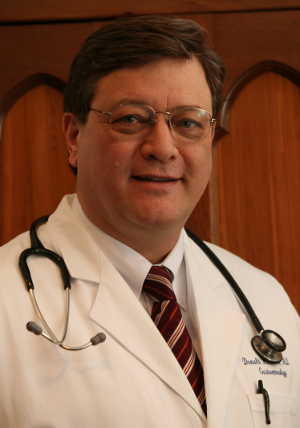
UKIAH, Calif. – When Donald J. Hermens, M.D., gastroenterologist, left Northern California for medical school he never dreamt he would be gone so long – 33 years in fact.
“I have always wanted to return to the Bay Area,” said Dr. Hermens, who continued, “But after living in a small town in the Midwest my opinion has changed about returning to a large metropolitan area. My wife and I have come to find smaller communities more appealing, so when we discovered the need for a gastroenterologist in Ukiah, we thought it would be the perfect fit.”
Dr. Hermens has fond memories of his childhood vacationing in Ukiah, “My family and I vacationed here every year growing up,” said Dr. Hermens, “I have also brought my kids through the area on several camping trips. When the practice opportunity became available in Ukiah I couldn’t help but feel excited!”
As a gastroenterologist, Dr. Hermens specializes in caring for and treating digestive disorders and diseases.
“I treat intestinal disorders from top to bottom, including the liver, bile ducts, gallbladder and pancreas which are all part of the digestive system and included in the practice of gastroenterology. Diseases of the liver are an especially large part of my practice,” he said.
“Most people know that endoscopic procedures of the upper and lower digestive system are one of the primary means for evaluation and management of digestive diseases,” Hermens added. “I also rely on esophageal motility testing, esophageal pH testing and capsule endoscopy to assess problems of the esophagus and small bowel respectively. One of the things I like best about gastroenterology is the wide spectrum of problems I am able to diagnose and treat.”
Hermens said gastroenterology is mostly a consultative specialty. Most patients are referred by their primary care doctors for help with specific GI problems.
“In my office we manage patient's GI problems in coordination with their primary care physicians who still remain in charge of their overall medical care,” he said. “Some GI conditions can be addressed in one or two visits, such as patients with abnormal liver functions or difficult acid reflux disease. Other patients may require ongoing care, such as those with inflammatory bowel disease or chronic hepatitis.”
When asked what a patient can expect from him, Dr. Hermens responded, “My most important patient is the one in front of me. I give each patient my full, undivided attention in the time that I am seeing them. I want anyone who enters my office to be treated with courtesy and respect from the time they step up to the reception desk until the time they walk out the door. No one can guarantee that every problem can be diagnosed or that every illness can be fixed, but I can promise that I will evaluate, manage and care for every patient to the best of my ability.”
While not seeing patients Dr. Hermens enjoys spending time with his family. “I like playing sports with my son and watching him play. I also enjoy reading philosophy, painting landscapes, and yard work. I love being outdoors, and truly love Northern California.”
Dr. Hermens is now accepting new patients at the Ukiah Valley Medical Specialties Gastroenterology office at 415 Hospital Drive in Ukiah.
To schedule an appointment please call 707-467-5275.