Health
- Details
- Written by: Editor
Partnership HealthPlan of California (PHC) will contract with Beacon Health Strategies to assist in PHC’s administration of behavioral health benefits.
“We couldn’t be more pleased to be working with Beacon Health Strategies,” said Jack Horn, chief executive officer of Partnership HealthPlan of California. “Now that the Medi-Cal program is able to provide more robust behavioral health benefits to members, Beacon’s expertise and proven track record will be a tremendous asset to PHC in enhancing our provider network, connecting members with care, managing billing services and providing care management.”
Beacon Health Strategies has a long history of working closely with local community health centers, counties, community based organizations, and individual providers. Beacon is fully accredited by both the National Committee for Quality Assurance and the Utilization Review Accreditation Commission.
The behavioral health services Beacon will manage for PHC include: psychotherapy, psychological testing when clinically indicated, psychiatric consultation for medication management, screening and brief intervention, outpatient lab, supplies and supplements, and drugs (excluding anti-psychotic drugs which are covered by Medi-Cal Fee-For-Service).
PHC began operating in 1994 and serves Medi-Cal recipients in 14 northern California counties: Del Norte, Humboldt, Lake, Lassen, Marin, Mendocino, Modoc, Napa, Shasta, Siskiyou, Solano, Sonoma, Trinity and Yolo.
Additional information can be found at www.partnershiphp.org .
- Details
- Written by: Editor
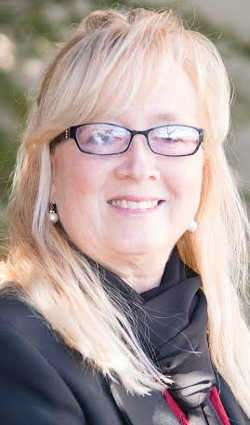
LAKEPORT, Calif. – In early December, Kimberly Tangermann began her tenure as Mendocino Community Health Clinic’s Lakeside Health Center site manager.
Tangermann is no stranger to health care in Lake County, having spent the past five years as associate director of clinic services of St. Helena Family Health Center in Clearlake.
She said she looks forward to helping MCHC provide Lake County communities with the health care they need.
“I love health care, and Lake County is my home,” Tangermann said. “When I found out about this position, I knew it was meant to be.”
In her short time with Lakeside, she said the employees have impressed her with their dedication and knowledge.
She sees her role as integrating the health center more with the local community, partnering with organizations who serve the same population.
“I’m excited to build connections so we can support each other, and in so doing, support our patients,” she said.
Tangermann wasn’t always in health care, but she certainly has a passion for it now.
She explained that when one of her sons was 16 years old, his appendix burst. While he was hospitalized, she marveled at the passion of everyone who cared for him, from the doctors and nurses to the chaplain to the housekeepers.
“I thought to myself, ‘I have got to figure out a way to do this,’” she said.
She began in health care working in patient registration, and moved up as a result of her hard work and a knack for solving problems.
She served as a clinic manager, then a program director for the Live Well Program. After that, she took on the challenge of associate director of clinic services and helped to manage multiple clinics.
Tangermann noted that Lakeside Health Center’s recent remodel makes the facility even more inviting.
As a federally qualified health center, Lakeside is held to high quality standards and does not refuse care based on a patient’s ability to pay.
The health center provides medical, dental, and behavioral health care and accepts Medi-Cal and other insurance.
Lakeside Health Center is owned and operated by Mendocino Community Health Clinic. To learn more, visit www.mchcinc.org or call 707-263-7725.
- Details
- Written by: Editor
Drivers eat, reach for the phone, text, or otherwise take their eyes off the road about 10 percent of the time they are behind the wheel, according to a study using video technology and in-vehicle sensors.
Risks of distracted driving were greatest for newly licensed teen drivers, who were substantially more likely than adults to be involved in a crash or near miss while texting or engaging in tasks secondary to driving, according to the researchers from the National Institutes of Health and Virginia Tech.
“Anything that takes a driver's eyes off the road can be dangerous,” said study co-author Bruce Simons-Morton, Ed.D., M.P.H., of the Eunice Kennedy Shriver National Institute of Child Health and Human Development, the NIH institute where the study was conducted. “But our study shows these distracting practices are especially risky for novice drivers, who haven't developed sound safety judgment behind the wheel.”
The study of drivers in the Washington, D.C., area and in southwestern Virginia appears in the Jan. 2 New England Journal of Medicine.
Experienced adults were more than twice as likely to crash or have a near miss when dialing a cell phone as when they did not dial and drive, but did not have an increased risk while engaging in other tasks secondary to driving.
However, the researchers found that distracted driving substantially increased the risks for new drivers. Compared to when they were not involved in secondary tasks, novice teen drivers were:
- eight times more likely to crash or have a near miss when dialing
- seven to eight times more likely when reaching for a phone or other object,
- almost four times more likely when texting, and
- three times more likely when eating.
Talking on a cell phone did not increase risk among the adult or teenage drivers. However, because talking on a cell phone is preceded by reaching for the phone and answering or dialing – which increase risk greatly – the study authors concluded that their results provide support for licensing programs that restrict electronic device use, particularly among novice drivers. They also stressed the need for education about the danger of distracted driving.
Citing earlier studies, the researchers noted that about 6 percent of drivers are 15 to 20 years old. Further, these younger drivers are involved in 11 percent of accident fatalities and 14 percent of reported crashes that result in injury.
The study authors concluded that these data and their results indicate distraction appears to be an important contributor to this increased crash risk.
Dr. Simons-Morton collaborated with first author Sheila G. Klauer, Ph.D., Feng Guo, Ph.D., Suzie E. Lee, Ph.D., and Tom A. Dingus, Ph.D., all of the Virginia Tech Transportation Institute in Blacksburg, and Marie Claude Ouimet, Ph.D., now at the University of Sherbrooke in Canada.
To conduct the study, the researchers analyzed video from cameras installed in the cars of about 150 drivers. About one-quarter of the drivers were novices, having had their license for no more than three weeks. The remaining drivers had, on average, 20 years of experience and ranged in age from 18 to 72.
Footage was taken whenever the cars were in motion, over a period of 12 to 18 months. Sensors recorded acceleration, sudden braking or swerving, drifting from a lane and other data.
When a crash occurred, or drivers had a near miss, the researchers documented whether the drivers were engaged in a distracting activity.
They identified episodes when drivers talked, dialed or reached for a cell phone, reached for another object in the car, adjusted the car's temperature or radio controls, ate, drank, looked at a crash or something else outside the car, or adjusted a mirror, seatbelt or window in the car.
The researchers also compared the frequency of these activities when a crash or near miss occurred to their frequency during segments of uneventful driving.
“Our data support the current trend in implementing restrictions on texting and cell phone use in vehicles,” said Dr. Simons-Morton. “As new forms of technology increasingly are available in cars, it's important that drivers don't feel compelled to answer every incoming call or text. For young drivers' safety, parents can model this habit when they are at the wheel, and also let their children know that they should wait until the vehicle is stopped before taking a call – even when it's from mom or dad.”
- Details
- Written by: Editor
Some 30 minutes of meditation daily may improve symptoms of anxiety and depression, a new Johns Hopkins analysis of previously published research suggests.
“A lot of people use meditation, but it's not a practice considered part of mainstream medical therapy for anything,” said Madhav Goyal, M.D., M.P.H., an assistant professor in the Division of General Internal Medicine at the Johns Hopkins University School of Medicine and leader of a study published online Jan. 6 in JAMA Internal Medicine. “But in our study, meditation appeared to provide as much relief from some anxiety and depression symptoms as what other studies have found from antidepressants.” These patients did not typically have full-blown anxiety or depression.
The researchers evaluated the degree to which those symptoms changed in people who had a variety of medical conditions, such as insomnia or fibromyalgia, although only a minority had been diagnosed with a mental illness.
Goyal and his colleagues found that so-called “mindfulness meditation” – a form of Buddhist self-awareness designed to focus precise, nonjudgmental attention to the moment at hand – also showed promise in alleviating some pain symptoms as well as stress.
The findings held even as the researchers controlled for the possibility of the placebo effect, in which subjects in a study feel better even if they receive no active treatment because they perceive they are getting help for what ails them.
To conduct their review, the investigators focused on 47 clinical trials performed through June 2013 among 3,515 participants that involved meditation and various mental and physical health issues, including depression, anxiety, stress, insomnia, substance use, diabetes, heart disease, cancer and chronic pain.
They found moderate evidence of improvement in symptoms of anxiety, depression and pain after participants underwent what was typically an eight-week training program in mindfulness meditation.
They discovered low evidence of improvement in stress and quality of life. There was not enough information to determine whether other areas could be improved by meditation. In the studies that followed participants for six months, the improvements typically continued.
They also found no harm came from meditation.
Meditation, Goyal noted, has a long history in Eastern traditions, and it has been growing in popularity over the last 30 years in Western culture.
“A lot of people have this idea that meditation means sitting down and doing nothing,” Goyal said. “But that's not true. Meditation is an active training of the mind to increase awareness, and different meditation programs approach this in different ways.”
Mindfulness meditation, the type that showed the most promise, is typically practiced for 30 to 40 minutes a day. It emphasizes acceptance of feelings and thoughts without judgment and relaxation of body and mind.
He cautioned that the literature reviewed in the study contained potential weaknesses.
Further studies are needed to clarify which outcomes are most affected by these meditation programs, as well as whether more meditation practice would have greater effects.
“Meditation programs appear to have an effect above and beyond the placebo,” Goyal said.