Health
- Details
- Written by: Editor
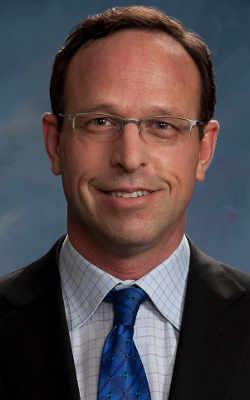
UKIAH, Calif. – Ukiah Valley Medical Center (UVMC) is pleased to welcome cardiologist David R. Ploss, M.D. to the medical staff.
Dr. Ploss will be joining Adventist Heart Institute in Ukiah, serving residents of Mendocino, Lake, Northern Sonoma and Humboldt counties with invasive cardiology and electrophysiology, a specialty used to treat heart rhythm and electrical abnormalities of the heart.
Dr. Ploss is relocating from Eureka where he led the Pacific Heart Group in Eureka to become the largest cardiology practice in Humboldt County.
When asked what attracted him to UVMC and the Ukiah community, Dr. Ploss said, “I enjoy practicing medicine in a smaller community where I have the opportunity to get to know my patients on a personal level. From a clinical standpoint I admire how Adventist Heart Institute has brought together a team of cardiologists with different areas of expertise from general cardiology to advanced interventions. This means my patients will experience a coordinated continuum of care that doesn’t exist in many other areas of Northern California.”
“Dr. Ploss is not only bringing a great deal of skill and expertise to UVMC, both with invasive cardiology and cardiac electrophysiology – services that are needed in our community; he’s also very personable with his patients and likes to work with each of them on an individual level,” said UVMC Chief Medical Officer Marvin Trotter.
UVMC Chief Executive Officer Gwen Matthews added, “We are delighted that Dr. Ploss has chosen Ukiah. He and Charlene will be a great addition to our medical staff and to our community.”
Dr. Ploss also believes that learning and leveraging his colleagues’ knowledge and talents helps him provide better care.
“I’m a perpetual student, and believe that by working with my colleagues regardless of their discipline [area of medicine] we can learn from each other,” he said. “Leveraging others’ skills and talents helps me to provide better outcomes for each community member. I am honored and humbled each time a person and their family members place themselves in my care.”
When not seeing patients, Dr. Ploss enjoys traveling, local politics and the arts, and previously served as President of the Redwood Art Association.
Adventist Heart Institute is an integrated heart center made up of a team of experienced cardiologists and cardiovascular surgeons who provide a coordinated continuum of care to patients in Lake, Mendocino and Napa counties. To learn more, visit www.AdventistHeart.org .
Dr. Ploss is now accepting new patients at 115 Hospital Dr. in Ukiah. To schedule an appointment, please call 707-463-2400.
- Details
- Written by: Editor
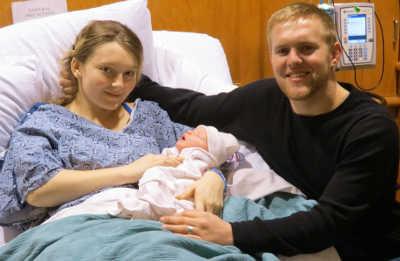
LAKEPORT, Calif. – Sutter Lakeside Hospital is pleased to announce the arrival of Josiah Blake Lemoin Sneathen, the first 2014 baby born in the Family Birth Center.
Born to parents Ashley and Brandon Sneathen on Jan. 3 at 2:57 p.m., Josiah weighed 9 pounds 1 ounce and measured 21.75 inches long.
The Family Birth Center gave the happy family a basket full of gift items to commemorate their baby’s arrival.
The family also is the very first recipient of a 2014 Imagination Library membership certificate.
Members of Imagination Library receive a book in the mail each month to read, enjoy and keep.
The first 100 babies born in 2014 in the Family Birth Center at Sutter Lakeside Hospital will receive a year-long scholarship to enroll in Imagination Library.
This program is sponsored by a partnership between Sutter Lakeside, the Lake County Office of Education and the Lake County Literacy Task Force.
“Imagination Library is in its second year in Lake County and we’re very pleased with the momentum we’re seeing the program experience in our community,” said Lake County Superintendent of Schools Wally Holbrook.
Holbrook wished little Josiah Baby Sneathen a lifetime of reading.
Jackie Rad, RNC, nurse manager of the Family Birth Center, added, “Our birth center is always busy. The New Year’s baby always makes us pause, celebrate and remember how much we love what we do here at Sutter Lakeside.”
- Details
- Written by: Editor
Seventy year olds who don't frequently visit the doctor have something unexpected in common – most played high school sports.
They were active on a team over 50 years ago and are more likely to be active into their late 70s.
The new study, titled “Fit in 50 Years,” was published in BMC Public Health looked at what factors of behavior, background, and personality impact the healthfulness of men over 70.
The study was conducted by researchers Brian Wansink PhD of Cornell University's Food and Brand Lab and Simone Dohle PhD of the Swiss Federal Institute of Technology, Zurich.
The study tracked 712 World War II veterans who were healthy as young men – they had passed a rigorous physical exam when being screened for the military – and surveyed them 50 years later at average of 78 years.
The most surprising result was that those who had played a high school sport in the 1930s or early 1940s, reported visiting their doctor fewer times a year.
Also, the best predictor of whether a healthy young man would regularly exercise 50 years later was simply whether he had played a team or individual sport in high school. Many of those who played a high school sport were still active compared to those who didn't.
Decreased physical activity among youth is a rising concern in the US. Inactive children are more likely to be obese and suffer from mental and physical health problems.
One way to further assess the importance of physical activity in children and adolescents is to look at the long-term impacts of physical activity on overall health and wellbeing, as this study did.
The results emphasize the necessity of encouraging youths to regularly engage in athletic programs and other exercise activities such as swimming or dance.
Physical activity programs are often hurt by budget cuts, leaving children with fewer or no opportunities to be active on a regular basis.
This study provides evidence that can be used to inform schools, youth centers, and program funders about the long-term, hugely positive impact of providing opportunities for children and adolescents to engage in physical activities.
- Details
- Written by: Editor
SACRAMENTO – High levels of “good” cholesterol and low levels of “bad” cholesterol are correlated with lower levels of the amyloid plaque deposition in the brain that is a hallmark of Alzheimer's disease, in a pattern that mirrors the relationship between good and bad cholesterol in cardiovascular disease, UC Davis researchers have found.
“Our study shows that both higher levels of HDL – good – and lower levels of LDL – bad – cholesterol in the bloodstream are associated with lower levels of amyloid plaque deposits in the brain,” said Bruce Reed, lead study author and associate director of the UC Davis Alzheimer's Disease Center.
The relationship between elevated cholesterol and increased risk of Alzheimer's disease has been known for some time, but the current study is the first to specifically link cholesterol to amyloid deposits in living human study participants, Reed said.
“Unhealthy patterns of cholesterol could be directly causing the higher levels of amyloid known to contribute to Alzheimer's, in the same way that such patterns promote heart disease,” he said.
The study, “Associations Between Serum Cholesterol Levels and Cerebral Amyloidosis,” is published online today in JAMA Neurology.
In the United States, cholesterol levels are measured in milligrams (mg) of cholesterol per deciliter (dL) of blood. For HDL cholesterol, a level of 60 mg/dl or higher is best. For LDL cholesterol, a level of 70 mg/dL or lower is recommended for people at very high risk of heart disease.
Charles DeCarli, director of the Alzheimer's Disease Center and an author of the study, said it is a wake-up call that, just as people can influence their late-life brain health by limiting vascular brain injury through controlling their blood pressure, the same is true of getting a handle on their serum cholesterol levels.
“If you have an LDL above 100 or an HDL that is less than 40, even if you're taking a statin drug, you want to make sure that you are getting those numbers into alignment,” DeCarli said. “You have to get the HDL up and the LDL down.”
The study was conducted in 74 diverse male and female individuals 70 years and older who were recruited from California stroke clinics, support groups, senior facilities and the Alzheimer's Disease Center.
They included three individuals with mild dementia, 33 who were cognitively normal and 38 who had mild cognitive impairment.
The participants' amyloid levels were obtained using a tracer that binds with amyloid plaques and imaging their brains using PET scans.
Higher fasting levels of LDL and lower levels of HDL both were associated with greater brain amyloid – a first-time finding linking cholesterol fractions in the blood and amyloid deposition in the brain. The researchers did not study the mechanism for how cholesterol promotes amyloid deposits.
Recent guidelines instituted by the American College of Cardiology, the American Heart Association and the National Heart, Lung, and Blood Institute have suggested abandoning guidelines for LDL targets. Reed said that recommendation may be an instance in which the adage that “what's good for the heart is good for the brain” does not apply.
“This study provides a reason to certainly continue cholesterol treatment in people who are developing memory loss regardless of concerns regarding their cardiovascular health,” said Reed, a professor in the UC Davis Department of Neurology.
“It also suggests a method of lowering amyloid levels in people who are middle aged, when such build-up is just starting,” he said. “If modifying cholesterol levels in the brain early in life turns out to reduce amyloid deposits late in life, we could potentially make a significant difference in reducing the prevalence of Alzheimer's, a goal of an enormous amount of research and drug development effort.”