Health
In a new article in the September issue of “Health Affairs,” the leading journal of health policy, researchers from the University of California, Berkeley, UCLA, and the Economic Policy Institute are calling for expanded educational efforts to ensure that consumers signing up for health coverage under the Affordable Care Act (ACA) take maximum advantage of possible tax credits while avoiding repayments to the IRS.
In “Large Repayments of Premium Subsidies May Be Owed to the IRS If Family Income Changes Are Not Promptly Reported,” researchers explain that subsidies for health insurance premiums offered under the ACA are classified as refundable tax credits.
These credits can be taken when taxes are filed or in advance, as reductions in monthly premiums. Recipients who take subsides in advance will receive tax refunds if their subsidies were too small, but will have to make repayments if their subsidies were too high.
The authors predict that many individuals will need to repay all or part of their insurance premium subsidy to the Internal Revenue Service if they fail to report income changes during the year.
The researchers estimate that if no income changes are reported during the year, 38 percent of subsidy recipients would owe repayments at the time they file taxes, with a median repayment of $857.
If all changes are reported and subsidies are adjusted in a timely manner, that number would fall to 23 percent with a median repayment of only $343.
The greatest risk is for subsidy recipients in families of four that make $95,000 a year or more – families that start off the year eligible for subsidies, but end up over the threshold.
The researchers recommend that the insurance exchanges educate consumers on the process and provide tools to help enrollees determine the advance subsidy amounts they should receive.
“The subsidy was designed to ensure access to affordable health care,” said Ken Jacobs, lead author of the article and chair of the Center for Labor Research and Education (CLRE) at the University of California, Berkeley. “Exchanges can take simple steps like educating consumers about how tax credits work, informing them about the importance of promptly reporting changes in income, family size or tax filing status, and through exploring additional methods of periodically reminding enrollees to report any changes that have occurred beyond what is already required under federal regulations.”
The article was co-authored by Economic Policy Institute Director of Health Policy Research Elise Gould; Dave Graham-Squire, a CLRE research associate; and Dylan Roby, a University of California, Los Angeles, assistant professor of health policy and management at the Fielding School of Public Health.
Roby also directs the Health Economics and Evaluation Research Program at UCLA’s Center for Health Policy Research.
Kathleen Maclay writes for the UC Berkeley News Center.
- Details
- Written by: Kathleen Maclay
SACRAMENTO – Bills authored by Assemblymember Mariko Yamada (D-Davis) and Sen. Fran Pavley (D-Agoura Hills) that address ongoing problems with resident and employee safety at California developmental centers and state hospitals are now headed to the governor’s desk.
Assembly Bill (AB) 602 and Senate Bill (SB) 651 received unanimous bipartisan support in both houses of the Legislature.
AB 602 requires employees at these state facilities to report serious assault and abuse incidents directly to outside law enforcement agencies within two hours.
Currently, those reports are only made internally within two days and reporting to outside law enforcement is not mandatory.
“The current internal process to report and investigate these violations is inadequate,” Assemblymember Yamada said. “These matters should be investigated by local law enforcement agencies to ensure that state hospital and developmental center residents have access to the same protections as those who do not reside in state institutions.”
To facilitate investigations at the state’s developmental centers and state hospitals, which provide care for the state’s most seriously disabled residents, the bill will also require local law-enforcement to participate in specialized training for interacting with these resident populations.
SB 651 by Sen. Pavley would require victims of suspected abuse in state centers for the developmentally disabled and state hospitals to receive forensic exams from trained investigators at independent facilities. Independent exams could be performed at state facilities if it is safer for the patient.
“This bill will protect vulnerable Californians from abuse and hold both perpetrators and state caretakers accountable,” Pavley said.
In 2012, the investigative media organization California Watch found that the Office of Protective Services (OPS), the state's internal security service housed at state hospitals and developmental centers, had left a large number of abuse and sexual assault incidents uninvestigated.
Earlier this year, the state auditor confirmed that OPS investigatory practices were substandard and noted that the agency had failed to implement recommendations from a 2002 attorney general report addressing many longstanding security issues.
Yamada, whose district includes the Sonoma Developmental Center and the Napa State Hospital where many of the most serious incidents have occurred, chairs the Assembly Select Committee on State Hospital and Developmental Center Safety.
- Details
- Written by: Editor
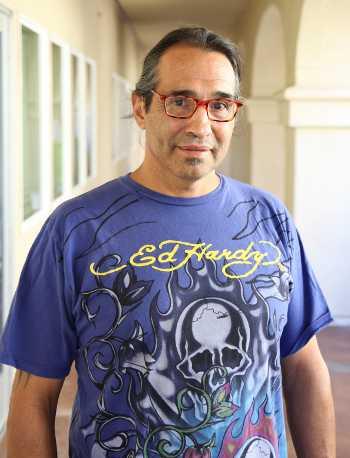
UKIAH, Calif. – For the past 10 years Timothy Johnson has been in physical pain – pain that has been debilitating and left him bedridden at times.
“It was frustrating and depressing,” he said as he shared his experience both prior to and post treatment at the Center for Pain Relief at Ukiah Valley Rural Health Center (UVRHC).
“Traveling more than 60 miles from my home in Covelo was a challenge, but I was willing to make the journey,” he said.
Johnson was seen and treated by Interventional Pain Specialist, Michael Young, D.O., at the UVRHC.
“Timothy has been on a remarkable journey,” said Dr. Young. “When he first presented at the Center for Pain Relief, he was on high doses of medication to help manage his pain, he wasn’t able to walk, and spent most of his days in bed. Upon his initial assessment I created a treatment plan that would help improve Timothy’s quality of life and hopefully reduce his pain. I worked with Timothy to help manage his medications and prescribed treatments that would reduce his lower back and hip pain.”
Since his arrival at the Center for Pain Relief Timothy has undergone three different treatments: a facet injection, radio frequency ablation and a bilateral SI joint injection.
These treatments, along with medication management, have helped reduce his pain and improve his quality of life.
“Timothy has responded exceptionally well to the treatment methods and is a testimony that the right treatments can make all the difference in helping reduce someone’s pain,” Dr. Young said.
The Center for Pain Relief takes a holistic approach to pain management by educating patients to help them understand their pain from a psychological and a physical perspective. They also include elements of physical activity and nutrition to treat patients.
According to Johnson, he feels Dr. Young gave him a second chance in life.
“I’m 100 percent better today than where I had been,” he said. “Now I understand more about my pain and how to manage it. Dr. Young also took the time to listen to me and hear what my experience was like. Not all doctors take the time to do that. Truthfully, with my treatments I felt better overnight!”
The Center for Pain Relief is comprised of Dr. Young; Rachel Chavez, physician assistant; and Rigpa Shunya, psychiatric nurse practitioner.
The Center is located at Ukiah Valley Rural Health Center at 260 Hospital Drive, Suite 107 in Ukiah.
For more information on types of pain treated and treatment methods, please call 707-463-8003 or visit online at www.uvmc.org/painfree .
- Details
- Written by: Editor
SACRAMENTO – A bill to extend the sunset of a California law that requires private insurance health plans to cover behavioral health treatment was approved by the California Senate on Friday on a unanimous and bipartisan vote of 38-0.
Senate Bill 126, authored by Senate President pro Tempore Darrell Steinberg (D-Sacramento), now heads to the governor for his consideration.
“This unanimous endorsement of California’s landmark legislation for autism provides much needed continuity for the progress that began with the original bill in 2011,” said Steinberg. “Many families still struggle to locate and afford these needed services for their loved ones and I will continue my work to improve the lives of those impacted by autism in the Golden State.”
Senate Bill 126 builds on the success of Sen. Steinberg’s Senate Bill 946, a 2011 law that requires health care service plans and health insurers to provide behavioral health treatment coverage for pervasive developmental disorder and autism. SB126 extends that bill’s sunset date to January 1, 2017.
Since the introduction of California’s autism insurance mandate on July 1, 2012, the Department of Insurance estimates that over 12,500 Californians are receiving early autism treatment under this provision; with an estimated taxpayer savings of up to $200 million dollars annually.
Autism is the most rapidly growing serious developmental disability and is estimated to occur in approximately one in every 50 children in the United States.
Autism occurs more often than childhood cancer, pediatric HIV infections, and juvenile diabetes combined.
Scientists and researchers have established that early behavioral intervention therapy ASD/PPD not only improves brain function but also increases speech and language; promotes a higher IQ and cognitive function, and reduces self-injurious behaviors for a significant number of individuals with these disorders.
SB 126 is supported by Autism Speaks, the Association of Regional Center Agencies, and the Alliance of California Autism Organizations.
- Details
- Written by: Editor