Health
Here’s yet another reason to get off the couch: new research findings suggest that regularly breaking a sweat may lower the risk of having a stroke.
A stroke can occur when a blood vessel in the brain gets blocked. As a result, nearby brain cells will die after not getting enough oxygen and other nutrients. A number of risk factors for stroke have been identified, including smoking, high blood pressure, diabetes and being inactive.
For this study, published in the journal Stroke, Michelle N. McDonnell, Ph.D., from the University of South Australia, Adelaide and her colleagues obtained data from the Reasons for Geographic and Racial Differences in Stroke (REGARDS) study.
REGARDS is a large, long-term study funded by the NIH National Institute of Neurological Disorders and Stroke (NINDS) to look at the reasons behind the higher rates of stroke mortality among African-Americans and other residents living in the Southeastern United States.
“Epidemiological studies such as REGARDS provide an important opportunity to explore race, genetics, environmental, and lifestyle choices as stroke risk factors,” said Claudia Moy, Ph.D., program director at NINDS.
Over 30,000 participants supplied their medical history over the phone. The researchers also visited them to obtain health measures such as body mass index and blood pressure. At the beginning of the study, the researchers asked participants how many times per week they exercised vigorously enough to work up a sweat.
The researchers contacted participants every six months to see if they had experienced a stroke or a mini-stroke known as a transient ischemic attack (TIA). To confirm their responses, the researchers reviewed participants’ medical records.
The researchers reported data for over 27,000 participants who were stroke-free at the start of the study and followed for an average of 5.7 years. One-third of participants reported exercising less than once a week. Study subjects who were inactive were 20 percent more likely to experience a stroke or TIA than participants who exercised four or more times a week.
The findings revealed that regular, moderately vigorous exercise, enough to break a sweat, was linked to reduced risk of stroke. Part of the protective effect was due to lower rates of known stroke risk factors such as hypertension, diabetes, obesity and smoking.
“Our results confirm other research findings but our study has the distinct advantage of including larger numbers, especially larger numbers of women as well as blacks, in a national population sample so these provide somewhat more generalizable results than other studies,” said Virginia Howard, Ph.D., senior author of the study from the School of Public Health, University of Alabama at Birmingham.
The researchers also looked at the data according to gender. After the researchers accounted for age, race, socioeconomic factors (education and income) and stroke risk factors, the results revealed that men who exercised at least four times a week still had a lower risk of stroke than men who exercised one to three times per week.
In contrast, there was no association between frequency of exercise and stroke risk among women in the study. However, there was a trend towards a similar reduction in stroke risk for those who exercised one to three times a week and four or more times a week compared to those who were inactive.
“This could be related to differences in the type, duration, and intensity of physical activity between men and women,” said Dr. Howard. “This could also be due to differences in the perception of what is intense physical activity enough to work up a sweat.”
The results should encourage doctors to stress the importance of exercise when speaking with their patients, Dr. Howard said.
“Physical inactivity is a major modifiable risk factor for stroke. This should be emphasized in routine physician check-ups along with general education about the benefits of exercise on stroke risk factors including high blood pressure, diabetes and being overweight or obese,” she said.
The study suggests that men should consider exercising at least four times a week.
REGARDS will continue to assess stroke risk factors to look for long-term patterns in the study population. “Findings from this study, including the current physical activity results, will ultimately help us to identify potential targets for immediate intervention as well as for future clinical trials aimed at preventing stroke and its consequences,” said Dr. Moy.
This study was supported by NINDS grant U01 NS041588.
For more information about stroke, please visit http://www.stroke.nih.gov .
- Details
- Written by: Editor
Putting a new spin on the concept of “stress eating,” research presented at the 2013 Institute of Food Technologists (IFT) Annual Meeting & Expo found that people who eat during times of stress typically seek the foods they eat out of habit – regardless of how healthy or unhealthy that food is.
The research co-authored and presented by David Neal, Ph.D., a psychologist and founding partner at Empirica Research, contradicts the conventional wisdom that people who are stressed-out turn to high-calorie, low-nutrient comfort food.
“Habits don't change in a high-pressure situation,” Neal said. “People default to what their habits are under stress, whether healthy or not.”
In the study he and his co-authors conducted this year, 59 MBA students at the University of California, Los Angeles, were asked during midterm exams which snack they would like from an array that included healthy snacks (fruit, non-fat yogurt, whole wheat crackers, nuts/soy chips) and unhealthy options (various candy bars, flavored popcorn, sugar cookies). They also were asked to rate how often during the week they choose that snack.
The results found that during peak stress like an exam, participants were likely to fall back on their habitual snack.
“Habits are 45 percent of daily life,” Neal said. “They cause us to disregard rational or motivational drivers and instead be cued by context, automated actions, time pressure and low self-control.”
This kind of research has significant implications for food manufacturers trying to establish new products with consumers, said panelist Neale Martin, Ph.D., founding partner of Sublime Behavior Marketing and author of Habit: the 95 percent of Behavior Marketers Ignore.
Martin noted that consumers already are habituated to the current products on store shelves, with the average weekly shopping trip taking about 45 minutes and including 31 items.
“Think about the cognitive efficiency of that effort,” Martin said. “Think of how many things you're not looking at; how many things you are ignoring.”
He believes that is a major reason about 80 percent of new products fail or dramatically underperform, a rate that has been largely unchanged for decades. A new product has to become part of the daily habits of consumers, which is not an easy task.
Martin suggests product developers go beyond the traditional consumer trials and get consumers to absorb the product into their daily life over an extend period of time. They need to find a place in their day where they are willing to disrupt their current habit and adopt a new one with that product.
“Where is the room for another brand in your life? Where is there room for another product? We are overwhelmed by choices,” he said. “Figure out the automated behavior and then find out how to disrupt it and get consumers to initiate the behavior you want. You have to get the behavior to occur and then reinforce it by making sure the experience is so fantastic they want it to happen again.”
- Details
- Written by: Editor
LAKEPORT, Calif. – SPMF Lakeside Wellness Center will host a second cancer prevention workshop in Lakeport on Monday, Aug. 5, with Steven West, ND.
This workshop will be held 12:30 p.m. to 2:30 p.m. in the aerobic studio of the Wellness Center.
This workshop will teach how to prevent cancer as well as to suggest powerful cancer fighting herbs and dietary suggestions that can heal cancer naturally.
This presentation is a holistic or total approach to healing cancer.
Steven West is a naturopathic doctor in private practice since 1991. He also hosts a local radio show, “Holistically Speaking,” that airs on KPFZ 88.1 Mondays from 5 p.m. to 6 p.m.
If you would like more information regarding this workshop please call Dr. West at 707-921-9805 or the Wellness Center at 707-262-5171.
Cost for this workshop is $30 prepayment and $40 on the day of the event. Payments can be mailed to Steven West at P.O. Box 1007 Lower Lake, CA 95457.
- Details
- Written by: Editor
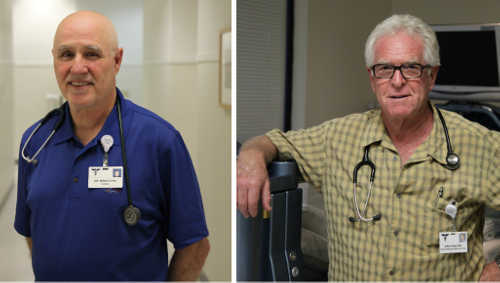
UKIAH, Calif. – Two progressive physicians have recently joined the Advanced Wound Center (AWC) at Ukiah Valley Medical Center (UVMC), William Cress, M.D., general surgeon, and Jeffrey Rapp, M.D., emergency and occupational medicine physician – increasing the number of panel doctors to eight.
“We are excited to welcome Dr. Cress and Dr. Rapp to our center,” said AWC Director Jared Chaney. “They each bring a unique set of skills and years of experience to allow us to continue evolving and developing progressive forms of treatment.”
Chaney went on to say, “Having a total of eight physicians at the center enables us to expand our hours of operation, giving us the opportunity to meet our patient’s scheduling needs.”
Regarding his decision to join the AWC, Dr. Cress said, “With my experience as a general surgeon, I have treated numerous wounds throughout my career. Working at the AWC has opened my eyes to new ways of treating wounds that have until this point been difficult to heal. Treatments such as Hyperbaric Oxygen Therapy (HBOT) and bioengineered skin grafts have significantly increased healing rates in the patients we see at the AWC.”
Cress continued, “I am really excited to be working with an experienced team of professionals who bring a diversified set of skills to our team at the AWC.”
Dr. Rapp, whose been practicing as an emergency and occupational medicine physician in Ukiah since 1990, is looking forward to his work at the AWC. “Wound care has become a dynamic field and the success rate of the AWC has been in the 96th percentile.”
The progressive treatment methods at the AWC were also a draw to Dr. Rapp. “To be perfectly honest, I was initially drawn to the HBOT due to my inherent interest in scuba diving – an activity I immensely enjoy. Being able to apply the healing aspects of oxygenation to wounds through the use of HBOT has been extremely rewarding.”
Since the AWC opened in February of 2012 it has helped heal wounds through the use of HBOT and other methods.
General surgeon and medical director of the AWC, Frederick Burris, M.D. pointed out, “Without this service many of those affected by hard to heal wounds would most likely need to have an amputation at some point. The AWC gives them hope and truly have a positive impact on the communities we serve by helping to heal and reduce the need for amputation.”
As is the case with recent patient Joseph Fuentes, of Lake County, who previous to having treatment in the AWC was in a wheelchair and in need of an amputation to stop a bone infection in his foot.
“When I first started coming to the wound center, I didn’t think there was any hope and thought amputation was the only way,” Fuentes said. “I wasn’t able to walk, and now my foot is healed and I can walk on my own.”
Fuentes recently shared his experience at the AWC with HBOT on camera. Fuentes wanted to express his thankfulness and share his experience with others who may be needlessly suffering from a wound that can be healed.
The AWC is an outpatient facility that focuses on chronic and non-healing wounds. Using advanced treatment methods and a case management model, they help patients improve the quality of their lives. HBOT works by providing oxygen for the healing wound. Individuals who have health issues, such as diabetes, can’t always deliver oxygen the way they should, hence affecting the way their bodies heal wounds.
The wound treatment team, including physicians, nurses, and technicians, provide invaluable care for patients to prevent the loss of limbs and reduce the incidence of recurring wounds.
The AWC is located at 415 Hospital Drive in Ukiah.
For more information about the services available at the AWC please call 707-467-5230 or visit www.uvmc.org/wound .
- Details
- Written by: Editor