Health
- Details
- Written by: Editor
Tobacco control measures put in place in 41 countries between 2007 and 2010 will prevent some 7.4 million premature deaths by 2050, according to a study published in the Bulletin of the World Health Organization this week.
The study is one of the first to look at the effect of measures since the World Health Organization Framework Convention on Tobacco Control (WHO FCTC) was established in 2005. It demonstrates the success of the WHO FCTC in reducing tobacco use and, thus, saving lives.
“It's a spectacular finding that by implementing these simple tobacco control policies, governments can save so many lives,” said lead author David Levy, PhD, professor of oncology at Georgetown Lombardi Comprehensive Cancer Center in Washington.
In 2008, WHO identified six evidence-based tobacco control measures that are the most effective in reducing tobacco use, and started to provide technical support to help countries fulfill their WHO FCTC obligations.
Known as “MPOWER,” these measures correspond to one or more of the demand reduction provisions included in the WHO FCTC: Monitoring tobacco use and prevention policies, Protecting people from tobacco smoke, Offering help to quit tobacco use, Warning people about the dangers of tobacco, Enforcing bans on tobacco advertising, Promotion and sponsorship, and Raising taxes on tobacco.
The authors did a modeling exercise and projected the number of premature deaths that would be averted by 2050 through the implementation of one or more of these measures.
The study focused on the 41 countries (two of which are not Parties to the WHO FCTC) that had implemented the demand reduction measures at “the highest level of achievement,” that is, at a level proven to attain the greatest impact.
These countries represented nearly one billion people or one-seventh of the world's population of 6.9 billion in 2008. The total number of smokers in those countries was nearly 290 million in 2007.
Of the 41 countries, 33 had put in place one MPOWER measure and the remaining eight had implemented more than one.
“In addition to some 7.4 million lives saved, the tobacco control policies we examined can lead to other health benefits such as fewer adverse birth outcomes related to maternal smoking, including low birth weight, and reduced health-care costs and less loss of productivity due to less smoking-related disease,” Levy said.
If these high-impact tobacco control measures were implemented even more widely, millions more smoking-related deaths would be averted, said Douglas Bettcher, MD, director of the department of non-communicable diseases at WHO.
“Tobacco use is the single most preventable cause of death in the world, with six million smoking-attributable deaths per year today, and these deaths are projected to rise to eight million a year by 2030, if current trends continue,” Bettcher said. “By taking the right measures, this tobacco epidemic can be entirely prevented.”
The WHO FCTC was developed in response to the globalization of the tobacco epidemic. Since the WHO FCTC came into force in 2005, 175 countries and the European Union have become parties to it. It is the most rapidly and widely embraced treaty in United Nations history, covering almost 90 percent of the world's population.
- Details
- Written by: Editor
Congressman John Garamendi (D-Fairfield, CA), who served as California’s Insurance Commissioner for eight years and was a health care advisor for President Clinton, announced that a new report from the U.S. Department of Health and Human Services (HHS) concludes that provisions of the Affordable Care Act saved consumers $3.9 billion on premiums in 2012.
“Because of health care reform, American consumers saved nearly $4 billion on premiums last year primarily due to the so-called 80/20 rule,” said Congressman Garamendi.
“Health insurers must spend 80 cents of every premium dollar on medical care – instead of padding their profits at the expense of cash strapped patients,” Garamendi said. “For years, health insurance companies have jacked up premiums while delaying and denying coverage, but the Affordable Care Act provides powerful tools to hold them accountable. In addition to requiring justification for substantial rate hikes, insurers must now respect a Patient’s Bill of Rights.”
Garamendi continued, “This summer, 1,433,787 Californians will receive $65,659,905 in rebates from insurance companies, averaging $71 per family, thanks to health reform.”
Created through the Affordable Care Act, the “80/20” rule requires insurers to spend at least 80 cents of every premium dollar on patient care and quality improvement. If they spend a higher amount on other expenses like profits and red tape, they owe rebates back to consumers.
As a result, the HHS report found that, compared to 2011, insurance companies devoted a greater portion of premium dollars to patient care and less to “administrative costs” – in order to comply with the law’s requirement.
In short, the data in the report show that the law has motivated many plans to lower prices or improve their coverage to meet the new standard.
Nationwide, 77.8 million consumers saved $3.4 billion up front on their premiums as insurance companies operated more efficiently. Additionally, consumers nationwide will save $500 million in rebates, with 8.5 million enrollees due to benefit from an average rebate of around $100 per family this summer.
In addition to saving on premiums, American consumers have also saved on co-pays for a variety of preventative services and on prescription drugs.
For example, since the Affordable Care Act’s enactment, more than six million seniors have saved over $700 each on their prescription drugs.
Also, more than 32 million seniors have accessed a free preventative service under the law.
- Details
- Written by: Editor
SACRAMENTO – California Health and Human Services Secretary Diana S. Dooley, California Department of Public Health Director and State Health Officer Ron Chapman, and the Association of Public Health Laboratories were joined by families and champions of newborn screening at the Capitol on Wednesday to celebrate 50 years of saving and improving lives through the California Newborn Screening Program (NBS).
Since 1980, the NBS has screened approximately 17 million babies and expanded the screening panel from three genetic diseases to 80 different disorders.
“Every parent wants to ensure that their newborn is perfectly healthy and the NBS program is helping more families do just that,” said Secretary Dooley. “The program has been credited with saving lives and preventing disability for thousands of newborns.”
“Most babies who have one of the disorders look and act like healthy newborns. Most families have no family history of the disorder. By the time symptoms are visible, irreversible damage has already occurred. Early diagnosis and treatment is the best way to prevent that,” said Dr. Chapman. “We are grateful for the strides made in technology that have led to lives saved and physical, emotional and financial pain spared through screening.”
The mission of the California NBS program is to reduce the emotional and financial burden of disability and death caused by genetic and congenital disorders.
NBS protects the health of all its newborns and is an essential preventive public health measure. Since 1966, state law requires that all babies born in California be tested before leaving the hospital.
The California Newborn Screening Program is one of the largest in the world, and screens one out of every eight babies born in the U.S. More than 13,500 children with a serious genetic condition have been diagnosed, treated and are living healthy and productive lives because early identification and treatment.
- Details
- Written by: Editor
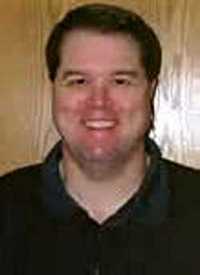
NORTHERN CALIFORNIA – Partnership HealthPlan of California (PHC) announced that pediatrician Jeffrey Ribordy has been selected as the new regional medical director for Humboldt-Del Norte-Western Trinity counties.
He will be working two days per week in PHC’s future Eureka office, starting in September.
Dr. Ribordy has worked for the past 15 years at Eureka Pediatrics, a rural health clinic with offices in Eureka and McKinleyville.
He graduated from the University of Illinois at Chicago College of Medicine, and completed his residency at Children’s Hospital in Oakland. He has a master's of public health from the University of California at Berkeley.
He has served in a number of leadership roles in the medical community, including serving on the credentials and medical executive committees at St. Joseph Hospital in Eureka, the North Coast Health Information Network Board of Directors, Changing Tides Family Services Board of Directors, and the Public Service and Medical Ethics Committee of the Humboldt-Del Norte Medical Society. He is well-respected and well-liked by physicians and non-physicians in the community.
Dr. Ribordy’s major responsibilities will include utilization management reviews, representing PHC in the local medical community, and communication with physicians around quality improvement and utilization management activities.
Partnership HealthPlan of California is the county organized health system selected by the state of California to provide a Medi-Cal Managed Care delivery system to eight new counties, starting on Sept. 1, 2013.
The new counties are Humboldt, Del Norte, Trinity, Siskiyou, Shasta, Modoc, Lassen and Lake. The organization currently serves six counties: Solano, Napa, Yolo, Sonoma, Marin and Mendocino.
Partnership HealthPlan of California began operating in 1994. Additional information about PHC can be found at www.partnershiphp.org .