Health
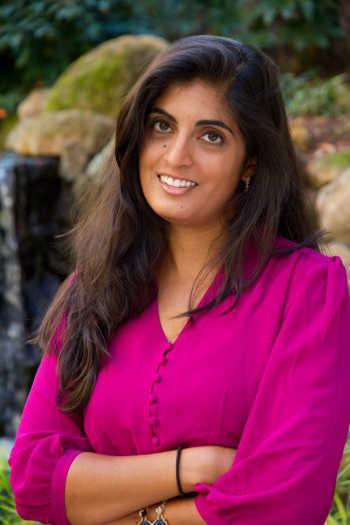
CLEARLAKE, Calif. – Clearlake has a new cardiologist whose level of expertise will leave a lasting impression on the community for generations to come.
According to David Santos, vice president of operations for St. Helena Hospital Clear Lake, “We are pleased to welcome new interventional cardiologist, Monica Divakaruni, M.D., to Clearlake.
Dr. Divakaruni is highly-skilled, Stanford trained, and is board certified in interventional cardiology. Her skill set and level of expertise focuses on innovative treatment options of complex cardiac conditions using diagnostic testing and the most advanced cardiac catheterization techniques.”
When asked why she chose to practice in Clearlake when her expertise could have afforded her a position at any major medical group throughout the United States, Dr. Divakaruni shared, “When I first came to Lake County I was drawn by the natural and rural beauty of the area. I want to practice medicine in a place where I am truly making a difference in the community.”
She added, “I really enjoy developing a relationship with my patients and watching their quality of life improve. Helping to diagnose younger patients who’ve experienced symptoms that are elusive is also rewarding.
“I have a passion for women’s cardiovascular health and enjoy seeing women of all ages – diagnosing and treating – to give them the best quality of life possible,” continued Dr. Divakaruni.
Regarding her level of expertise, Whie Oh, M.D., a local cardiologist who practices at the same clinic location, “Dr. Divakaruni is skilled in advanced coronary interventions. She is able to perform structural interventions, patent foramen ovale and atrial septal closure, both advanced procedures related to congenital heart disease. She is definitely an asset to the practice and to the community. ”
Dr. Oh and Dr. Divakaruni are part of the Adventist Heart Institute (AHI), an acclaimed heart center made up of a team of experienced cardiologists and cardiovascular surgeons who serve patients in Napa, Lake and Mendocino counties.
Dr. Divakaruni is now accepting new patients. Her office is located at 15250 Lakeshore Dr., Suite C, in Clearlake. Call 707-995-3764 to schedule an appointment.
- Details
- Written by: Editor
Workers earning the lowest wages have a higher risk of hypertension than workers with the highest wages, according to new research from UC Davis.
The correlation between wages and hypertension was especially strong among women and persons between the ages of 25 to 44.
“We were surprised that low wages were such a strong risk factor for two populations not typically associated with hypertension, which is more often linked with being older and male,” said J. Paul Leigh, senior author of the study and professor of public health sciences at UC Davis. “Our outcome shows that women and younger employees working at the lowest pay scales should be screened regularly for hypertension as well.”
The study, published in the December issue of the European Journal of Public Health, is believed to be the first to isolate the role of wages in hypertension, which occurs when the force of circulating blood against artery walls is too high.
According to the Centers for Disease Control and Prevention, hypertension affects approximately one in three adults in the U.S. and costs more than $90 billion each year in health-care services, medications and missed work days.
It also is a major contributor to heart disease and stroke, both of which are leading causes of death and disability.
While there is a known association between lower socioeconomic status (SES) and hypertension, determining the specific reason for that association has been difficult, according to Leigh.
Other researchers have focused on factors such as occupation, job strain, education and insurance coverage, with unclear results. Leigh’s study was the first to focus on wages and hypertension.
“By isolating a direct and fundamental aspect of work that people greatly value, we were able to shed light on the relationship between SES and circulatory health,” said Leigh. “Wages are also a part of the employment environment that easily can be changed. Policymakers can raise the minimum wage, which tends to increase wages overall and could have significant public-health benefits.”
In conducting the study, the team used data from the Panel Study of Income Dynamics, a highly regarded database in social science.
This longitudinal, representative study of families in the United States includes information on wages, employment and health, including hypertension status.
The team used information from a total of 5,651 household heads and their spouses for three time periods: 1999-2001, 2001-03 and 2003-05.
The sample was limited to working adults between 25 and 65 years of age. Anyone with hypertension during the first year (e.g., 1999) of each time period was eliminated from the final sample.
Wages were calculated as annual income from all sources divided by work hours and ranged from about $2.38 to $77 per hour in 1999 dollars. Hypertension was determined by respondents’ self-reports of a hypertension diagnosis from their physicians.
The team used logistic regressions for the statistical analysis, and found that doubling the wage was associated with a 16 percent decrease in the risk of a hypertension diagnosis. Doubling the wage reduced the risk of a hypertension diagnosis by 1.2 percent over two years and 0.6 percent for one year.
“That means that if there were 110 million persons employed in the U.S. between the ages of 25 and 65 per year during the entire timeframe of the study – from 1999 until 2005 – then a 10 percent increase in everyone’s wages would have resulted in 132,000 fewer cases of hypertension each year,” said Leigh.
Additional logistic regression analyses by demographics such as age, gender, race and co-morbidities such as obesity, diabetes and alcohol consumption revealed two standout outcomes.
Being in the youngest age group – between 25 and 44 years old – or being female were strong predictors of hypertension.
In fact, doubling the wages of younger workers was associated with a 25 to 30 percent decrease in the risk of a hypertension diagnosis, and doubling the wages of women was associated with a 30 to 35 percent decrease in the risk of a hypertension diagnosis.
Leigh said that a potential limitation of the study regarding the gender disparity was its reliance on respondents’ self-reports of hypertension diagnoses.
“Other research has shown that women are more likely than men to report a health diagnosis,” said Leigh. “However, the longitudinal nature of the data used in our study helps mitigate that natural bias, and self-reports of health do typically correlate with clinical data.”
Leigh recommends additional research using different national data sets to investigate the potential relationship between low wages and hypertension.
“If the outcomes are the same, we could have identified a way to help reduce the costs and personal impact of a major health crisis,” said Leigh.
The study’s co-author was Juan Du, who recently completed her Ph.D. in economics at UC Davis.
The study was funded in part by the National Institute of Occupational Safety and Health.
- Details
- Written by: Editor
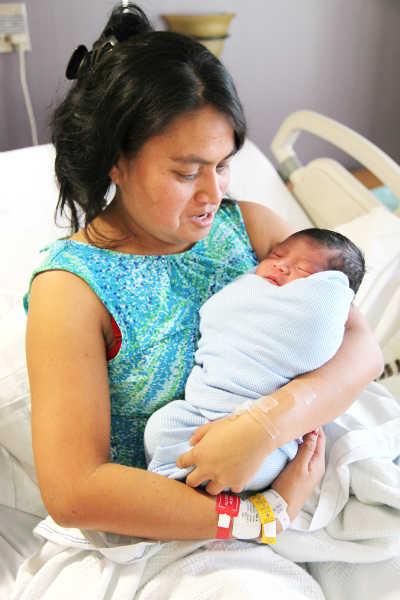
UKIAH, Calif. – Ukiah has welcomed its first baby of 2013.
Jose Castaneda, a healthy baby boy, was born at 2:22 a.m. on New Year’s Day in the Family Birth Center at Ukiah Valley Medical Center.
Baby Jose, born to Guillermina Ramirez of Ukiah, is welcomed by his five older siblings, all born at UVMC.
Jose was delivered by Karen Crabtree, M.D., and weighed in at 8 pounds, 10 ounces.
Ms. Ramirez extended a special thank you to Dr. Crabtree and Eliza Thompson, RN, for their exceptional care of both mom and baby.
Each year there are an estimated 440,000 babies born around the world on New Year’s Day.
As the first baby of the year, UVMC provided baby Jose and his family with his first case of disposable diapers, 240 of them to be exact.
Nurses from the Family Birth Center also pooled their resources to provide a stroller, high chair and gift basket full of newborn necessities for the family.
Teresa Keffeler, RN, made a “Cat in the Hat” baby blanket and the Ukiah Quilters Guild donated a beautiful quilt.
The Family Birth Center had a record number of births, 910, during 2012. All birthing suites were renovated with new paint, window coverings, soft lighting, flat screen TVs, labor beds, bassinettes, glider rockers and sleeper sofas.
In addition to the facility itself, staff at the Family Birth Center provide childbirth education classes, lactation consultations and tours.
You can take a virtual tour of the Family Birth Center at http://bit.ly/UVMCFBC .
With its central location and state-of-the-art facility, the Family Birth Center is attracting new obstetricians and gynecologists to the greater Ukiah area.
Doctors Jessica Hutchins and Seema Nayak are both recent additions to the Women’s Health Center at the Ukiah Valley Rural Health Center and are accepting new patients. For an appointment, please call 707-463-7652.
The Family Birth Center is located in UVMC at 275 Hospital Drive in Ukiah. For more information about the classes provided, please call 707-463-7550.
- Details
- Written by: Editor
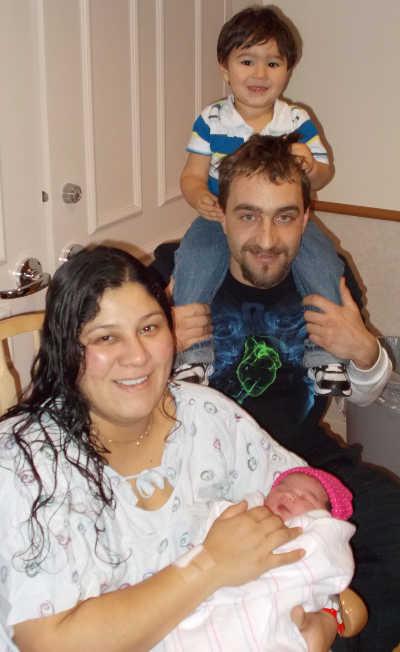
LAKEPORT, Calif. – Rebecca Katerina Barnes-Daza has the distinct honor of being the first baby born in 2013 at Sutter Lakeside Hospital’s Family Birth Center.
Rebecca Katerina weighed in at 10 pounds, measured 22.5 inches long and was born on Thursday, Jan. 3, at 8:40 a.m. to parents Martha A. Daza and Bobbei Barnes.
The proud family received a basket full of gift items from the Family Birth Center commemorating their baby’s arrival.
The basket includes many necessities, as well as a quilt and crocheted blanket handmade and donated by Sherrie Loewen of Lakeport and Elaine Merchant of Clearlake Oaks.
In addition, the Lake County Office of Education and the Lake County Task Force are proud to present the Barnes-Daza family with the first of 100 Imagination Library membership certificates sponsored by Sutter Lakeside Hospital.
Members of Imagination Library receive a book in the mail every month, for 12 months, to read, enjoy and keep.
“Imagination Library will be a great addition in the homes of these families. We want to be among the first to welcome Baby Barnes-Daza,” said Superintendent of Lake County Schools Wally Holbrook.
“Every baby born in the Birth Center is special, but New Year’s babies really remind us of new beginnings,” said Jackie Rad, R.N.C.,M.S.N., Family Birth Center clinical coordinator.
- Details
- Written by: Editor