How to resolve AdBlock issue?
Refresh this page
How to resolve AdBlock issue?
Refresh this page
Lake County News,California
  • Home
    • Registration Form
  • News
    • Education
    • Veterans
    • Community
      • Obituaries
      • Letters
      • Commentary
    • Police Logs
    • Business
    • Recreation
    • Health
    • Religion
    • Legals
    • Arts & Life
    • Regional
  • Calendar
  • Contact us
    • FAQs
    • Phones, E-Mail
    • Subscribe
  • Advertise Here
  • Login
How to resolve AdBlock issue?
Refresh this page

News

Mendocino National Forest activates fire restrictions due to conditions

Details
Written by: LAKE COUNTY NEWS REPORTS
Published: 22 August 2025

MENDOCINO NATIONAL FOREST, Calif. — Mendocino National Forest officials are issuing fire restrictions due to increased risk of fire starts. 

The combination of dry fuels, low humidity and high temperatures create conditions that elevate risk of ignition and rapid fire spread.

Fire restrictions go into effect now through the end of the 2025 fire season. 

Fire restrictions prohibit the following activities:

• Building, maintaining, attending or using a fire, campfire, or stove fire.
• Smoking, except within an enclosed vehicle or building, or within the designated recreation sites shown in Exhibit A of the forest order.
• Operating an internal combustion engine, except on National Forest System roads or trails.
• Welding, or operating an acetylene or other torch with an open flame.
• Using an explosive.
• Possessing, discharging or using any kind of firework or other pyrotechnic device.

With a valid California Campfire Permit, visitors may use portable stoves or lanterns using gas, jellied petroleum, or pressurized liquid fuel.  

Additionally, visitors with a valid California Campfire Permit may enjoy a campfire or stove fire in the Designated Fire Safe Recreation Sites (see Exhibit A), as well as in federally designated Wilderness Areas (see Exhibit B).

Forest Service officials stated that more than 90% of all fires are human-caused. Visitors to national forests can help prevent wildfires with just a bit of planning and common sense.

• Campfires: Attend your campfire at all times. Ensure your fire is completely extinguished — drown with water (NOT dirt), stir with your shovel, drown again and feel for any heat using the back of your hand. Continue this process until no heat remains.
• Stoves: If using pressurized or bottled liquid fuel stoves, lanterns, or heating devices, use in barren areas with at least 3 feet of clearance from grasses and other debris that may catch fire. Prevent stoves from tipping.
• Vehicles: When traveling, ensure your chains are properly connected. The hot underside of the vehicle and dragging chains can start a fire. Stick to driving on designated roads and trails and be careful to not park your car or OHV in tall, dry vegetation, including grass.
• Spark Arrestors: Ensure that all internal or external combustion engines have a spark arresting device properly installed, maintained and in effective working order.
• Smoking: Extinguish all smoking materials dead out on bare soil. Pack out all cigarette butts and filters.
• Fireworks: Fireworks are prohibited on all national forests year-round, leave them and all other pyrotechnic devices at home.  

Similar restrictions are also in effect on neighboring public lands. Because restrictions can vary by jurisdiction, visitors should contact the area they plan to visit for specific fire restrictions and conditions.

California campfire permits are available online at https://permit.preventwildfiresca.org/. 

The fire restrictions and list of designated firesafe campgrounds are available on the Mendocino National Forest website. 

Visitors can check the latest alerts, orders and recreation information at https://www.fs.usda.gov/r05/mendocino. 

Gov. Newsom signs ‘Election Rigging Response Act’ legislative package

Details
Written by: LAKE COUNTY NEWS REPORTS
Published: 22 August 2025
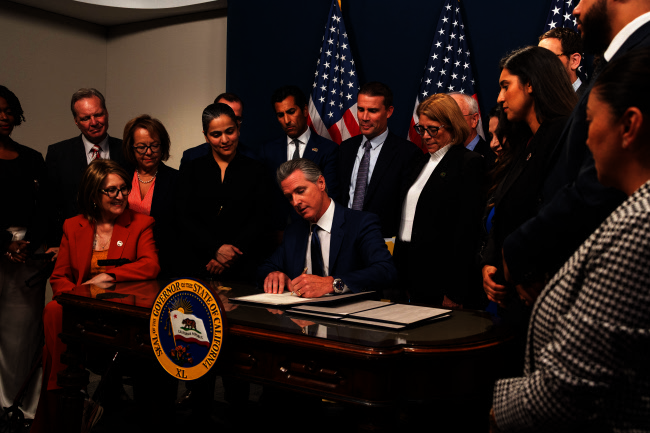
Gov. Gavin Newsom signs the “Election Rigging Response Act” legislative package on Thursday, August 21, 2025, in Sacramento, California. Lake County’s senator, Mike McGuire, also the Senate pro tempore, is standing just behind and to the right of Newsom, while Assemblymember Cecilia Aguiar-Curry, is just to the right of Newsom. Photo courtesy of the Governor’s Office.


On Thursday, Gov. Gavin Newsom, alongside Speaker Robert Rivas and Senate pro Tempore Mike McGuire, signed the “Election Rigging Response Act” legislative package.

Newsom’s office said the package will give Californians an opportunity this November to push back against President Trump’s power grab in Texas and other Republican-led states.

In doing so, Proposition 50 — named for the 50 United States — would allow Californians an opportunity to bring some much-needed accountability to the Trump Administration. 

“Californians have been uniquely targeted by the Trump Administration, and thanks to the hard work of the California legislature, they will have a choice to fight back — and bring much needed accountability to Trump’s efforts to undermine the democratic process,” said Newsom.

About the legislative package

Assembly Constitutional Amendment 8 (Rivas, McGuire): allows Californians the ability to adopt a new, temporary Congressional map, in response to the congressional redistricting in Texas, that neutralizes Trump’s power grab.

Senate Bill 280 (Cervantes, Pellerin): establishes timelines and procedures to conduct a statewide special election for Proposition 50, and provides the funding for the special election, set to take place on November 4, 2025.

Assembly Bill 604 (Aguiar-Curry, Gonzalez): establishes the temporary Congressional District Maps that would take effect if the people vote to pass ACA 8 on November 4.

This bill package implements Governor Newsom’s framework announced last week in Los Angeles at the Democracy Center, alongside leaders from across the Golden State like Planned Parenthood, labor unions, community organizations and educators, as well as key elected officials at the federal, state, and local level. 

“California will not be a bystander to Trump’s power grab,” said Speaker Robert Rivas (D-Salinas). “We are acting to defend our state from his attacks, by taking it directly to the voters. Californians believe in democracy and freedom, and we will not stand by while the House is hijacked by authoritarianism. Today, we gave every Californian the opportunity to stop Trump by saying yes to our people, to our state, and to American democracy.”

"The Election Rigging Response Act legislation allows voters the chance to stop Trump and Republican attempts to blatantly steal our election," said pro Tempore Mike McGuire (D-North Coast). "This legislation is temporary, and it's all about fairness. And, today's action means we're fighting back for our democracy and our future — not with fire — but with the power of the voters and millions of folks across the Golden State."

Gov. Newsom also issued a proclamation calling the special election for Nov. 4, 2025. 

Data centers consume massive amounts of water – companies rarely tell the public exactly how much

Details
Written by: Peyton McCauley, University of Wisconsin-Milwaukee and Melissa Scanlan, University of Wisconsin-Milwaukee
Published: 22 August 2025

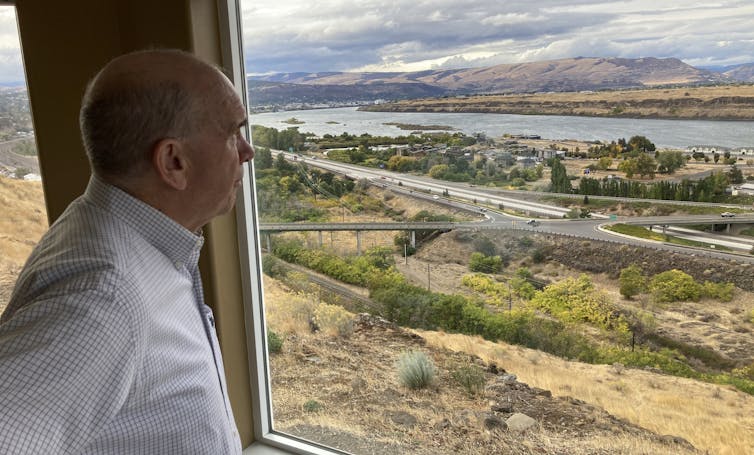
The Columbia River running through The Dalles, Oregon, supplies water to cool data centers. AP Photo/Andrew Selsky

As demand for artificial intelligence technology boosts construction and proposed construction of data centers around the world, those computers require not just electricity and land, but also a significant amount of water. Data centers use water directly, with cooling water pumped through pipes in and around the computer equipment. They also use water indirectly, through the water required to produce the electricity to power the facility. The amount of water used to produce electricity increases dramatically when the source is fossil fuels compared with solar or wind.

A 2024 report from the Lawrence Berkeley National Laboratory estimated that in 2023, U.S. data centers consumed 17 billion gallons (64 billion liters) of water directly through cooling, and projects that by 2028, those figures could double – or even quadruple. The same report estimated that in 2023, U.S. data centers consumed an additional 211 billion gallons (800 billion liters) of water indirectly through the electricity that powers them. But that is just an estimate in a fast-changing industry.

We are researchers in water law and policy based on the shores of Lake Michigan. Technology companies are eyeing the Great Lakes region to host data centers, including one proposed for Port Washington, Wisconsin, which could be one of the largest in the country. The Great Lakes region offers a relatively cool climate and an abundance of water, making the region an attractive location for hot and thirsty data centers.

The Great Lakes are an important, binational resource that more than 40 million people depend on for their drinking water and supports a US$6 trillion regional economy. Data centers compete with these existing uses and may deplete local groundwater aquifers.

Our analysis of public records, government documents and sustainability reports compiled by top data center companies has found that technology companies don’t always reveal how much water their data centers use. In a forthcoming Rutgers Computer and Technology Law Journal article, we walk through our methods and findings using these resources to uncover the water demands of data centers.

In general, corporate sustainability reports offered the most access and detail – including that in 2024, one data center in Iowa consumed 1 billion (3.8 billion liters) gallons of water – enough to supply all of Iowa’s residential water for five days.

The computer processors in data centers generate lots of heat while doing their work.

How do data centers use water?

The servers and routers in data centers work hard and generate a lot of heat. To cool them down, data centers use large amounts of water – in some cases over 25% of local community water supplies. In 2023, Google reported consuming over 6 billion gallons of water (nearly 23 billion liters) to cool all its data centers.

In some data centers, the water is used up in the cooling process. In an evaporative cooling system, pumps push cold water through pipes in the data center. The cold water absorbs the heat produced by the data center servers, turning into steam that is vented out of the facility. This system requires a constant supply of cold water.

In closed-loop cooling systems, the cooling process is similar, but rather than venting steam to the air, air-cooled chillers cool down the hot water. The cooled water is then recirculated to cool the facility again. This does not require constant addition of large volumes of water, but it uses a lot more energy to run the chillers. The actual numbers showing those differences, which likely vary by the facility, are not publicly available.

One key way to evaluate water use is the amount of water that is considered “consumed,” meaning it is withdrawn from the local water supply and used up – for instance, evaporated as steam – and not returned to its source.

For information, we first looked to government data, such as that kept by municipal water systems, but the process of getting all the necessary data can be onerous and time-consuming, with some denying data access due to confidentiality concerns. So we turned to other sources to uncover data center water use.

Sustainability reports provide insight

Many companies, especially those that prioritize sustainability, release publicly available reports about their environmental and sustainability practices, including water use. We focused on six top tech companies with data centers: Amazon, Google, Microsoft, Meta, Digital Realty and Equinix. Our findings revealed significant variability in both how much water the companies’ data centers used, and how much specific information the companies’ reports actually provided.

Sustainability reports offer a valuable glimpse into data center water use. But because the reports are voluntary, different companies report different statistics in ways that make them hard to combine or compare. Importantly, these disclosures do not consistently include the indirect water consumption from their electricity use, which the Lawrence Berkeley Lab estimated was 12 times greater than the direct use for cooling in 2023. Our estimates highlighting specific water consumption reports are all related to cooling.

Amazon releases annual sustainability reports, but those documents do not disclose how much water the company uses. Microsoft provides data on its water demands for its overall operations, but does not break down water use for its data centers. Meta does that breakdown, but only in a companywide aggregate figure. Google provides individual figures for each data center.

In general, the five companies we analyzed that do disclose water usage show a general trend of increasing direct water use each year. Researchers attribute this trend to data centers.

A closer look at Google and Meta

To take a deeper look, we focused on Google and Meta, as they provide some of the most detailed reports of data center water use.

Data centers make up significant proportions of both companies’ water use. In 2023, Meta consumed 813 million gallons of water globally (3.1 billion liters) – 95% of which, 776 million gallons (2.9 billion liters), was used by data centers.

For Google, the picture is similar, but with higher numbers. In 2023, Google operations worldwide consumed 6.4 billion gallons of water (24.2 billion liters), with 95%, 6.1 billion gallons (23.1 billion liters), used by data centers.

Google reports that in 2024, the company’s data center in Council Bluffs, Iowa, consumed 1 billion gallons of water (3.8 billion liters), the most of any of its data centers.

The Google data center using the least that year was in Pflugerville, Texas, which consumed 10,000 gallons (38,000 liters) – about as much as one Texas home would use in two months. That data center is air-cooled, not water-cooled, and consumes significantly less water than the 1.5 million gallons (5.7 million liters) at an air-cooled Google data center in Storey County, Nevada. Because Google’s disclosures do not pair water consumption data with the size of centers, technology used or indirect water consumption from power, these are simply partial views, with the big picture obscured.

Given society’s growing interest in AI, the data center industry will likely continue its rapid expansion. But without a consistent and transparent way to track water consumption over time, the public and government officials will be making decisions about locations, regulations and sustainability without complete information on how these massive companies’ hot and thirsty buildings will affect their communities and their environments.The Conversation

Peyton McCauley, Water Policy Specialist, Sea Grant UW Water Science-Policy Fellow, University of Wisconsin-Milwaukee and Melissa Scanlan, Professor and Director of the Center for Water Policy, School of Freshwater Sciences, University of Wisconsin-Milwaukee

This article is republished from The Conversation under a Creative Commons license. Read the original article.
End-of-week heat advisory issued; temperatures expected to top century mark

Details
Written by: Elizabeth Larson
Published: 21 August 2025
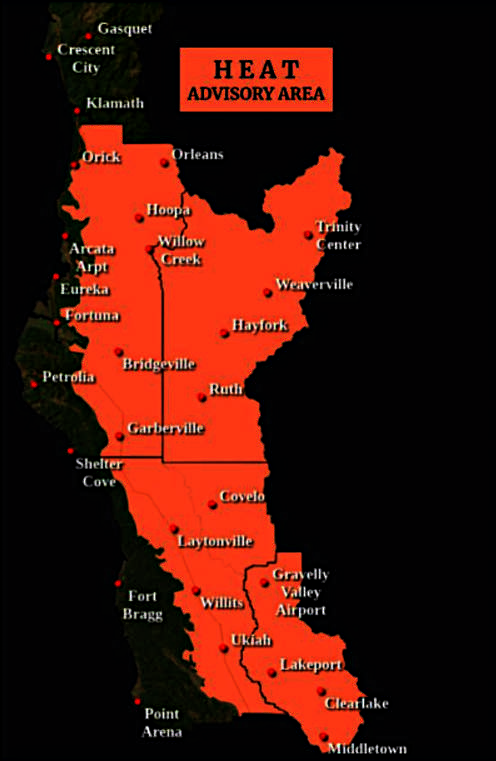
The heat advisory area. Image courtesy of the National Weather Service.


LAKE COUNTY, Calif. — The National Weather Service has issued a heat advisory due to high temperatures over the century mark over the next several days.

The advisory will be in effect from 11 a.m. Thursday to 11 p.m. Saturday. 

Along with Lake County, Trinity and parts of Humboldt and Mendocino counties are included in the advisory.

Temperatures could be the hottest in Clearlake, where forecasters predict it could reach 102 degrees on Thursday, 104 degrees on Friday and 103 degrees on Saturday.

Nighttime temperatures are expected to hover in the low 70s, according to the forecast.

Lake County residents are urged to take extra precautions when outside, to limit strenuous activities to early morning, and schedule frequent rest breaks in shaded or air conditioned
environments during outdoor work to avoid heat-related illness.

By Sunday, temperatures are expected to begin to decrease, reaching the 80s by the middle of next week. 

Email Elizabeth Larson at This email address is being protected from spambots. You need JavaScript enabled to view it.. Follow her on Twitter, @ERLarson, and on Bluesky, @erlarson.bsky.social. Find Lake County News on the following platforms: Facebook, @LakeCoNews; X, @LakeCoNews; Threads, @lakeconews, and on Bluesky, @lakeconews.bsky.social. 

  1. Sheriff’s office investigates disappearance of Clearlake Park man
  2. Clearlake Animal Control: ‘Ziggy’ and the dogs
  3. Pediatricians’ association recommends COVID-19 vaccines for toddlers and some older children, breaking with CDC guidance
  • 249
  • 250
  • 251
  • 252
  • 253
  • 254
  • 255
  • 256
  • 257
  • 258
How to resolve AdBlock issue?
Refresh this page