How to resolve AdBlock issue?
Refresh this page
How to resolve AdBlock issue?
Refresh this page
Lake County News,California
  • Home
    • Registration Form
  • News
    • Education
    • Veterans
    • Community
      • Obituaries
      • Letters
      • Commentary
    • Police Logs
    • Business
    • Recreation
    • Health
    • Religion
    • Legals
    • Arts & Life
    • Regional
  • Calendar
  • Contact us
    • FAQs
    • Phones, E-Mail
    • Subscribe
  • Advertise Here
  • Login
How to resolve AdBlock issue?
Refresh this page

News

Firefighters stop progress of Arden fire; work continues to reach full containment

Details
Written by: Elizabeth Larson
Published: 10 August 2025
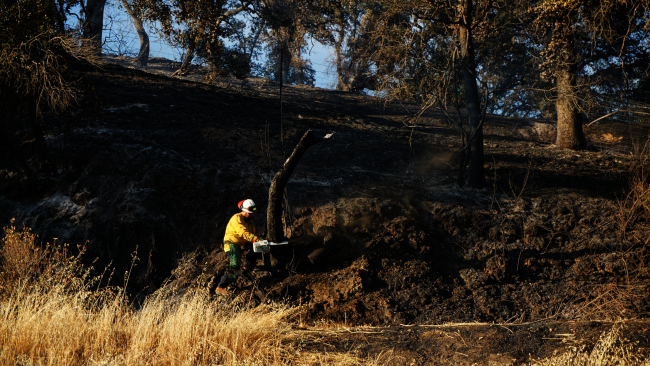
A Pacific Gas and Electric employee cleared a burning tree in the Arden fire area in Lucerne, California, on Saturday, August 9, 2025. Photo by Elizabeth Larson/Lake County News.

LUCERNE, Calif. — Work continued Saturday evening to fully contain a wildfire that destroyed structures, led to evacuation orders and resulted in a power outage that impacted thousands of Lucerne residents.

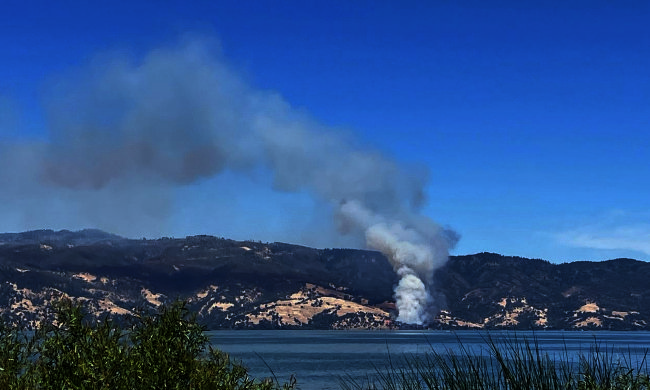
The Arden fire began at 2:09 p.m. Saturday at Arden and Foothill drives off of Highway 20, on the west end of Lucerne.

By evening, after a fierce fire fight, multiple spot fires, power outages and evacuations, the fire was being held to 26 acres, with 40% containment, Cal Fire reported.

The fire quickly moved uphill on Saturday afternoon — prompting a closure of Highway 20 — and threatened multiple structures, which led to evaluation orders that were lifted shortly after 4 p.m.

Cal Fire said the fire ultimately destroyed two structures.

The Arden fire shortly after it blew up in Lucerne, California, as seen from Lakeshore Drive in Lakeport, California, on Saturday, August 9, 2025. Photo courtesy of Michael Froio.


The power went off across Lucerne just after 3:30 p.m. and was off for about three and a half hours. The organization Find Energy said the outage impacted 3,941 meters at its height. By 11 p.m., 38 meters were still without power.

While the power was off in the late afternoon and early evening, the Lucerne Alpine Senior Center opened as a cooling center to give people respite during the hot temperatures. 

At about 6:15 p.m., three spot fires were reported at the head of the fire, farther up in the hills above the town, to the west of the fire and under high tension power lines. That required air resources to return to the scene after they had been released following the initial fire fight.

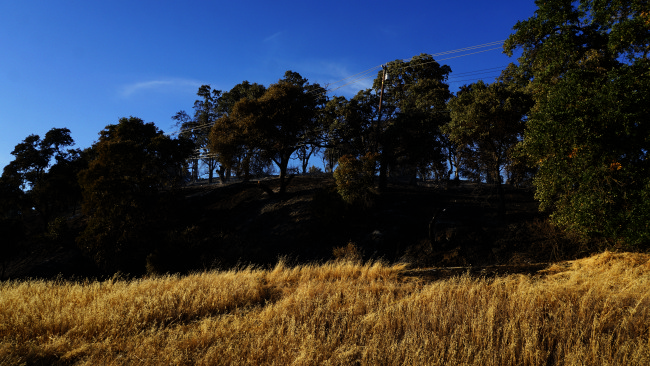
Part of the burn area of the Arden fire just off of Highway 20 in Lucerne, California, on Saturday, August 9, 2025. Photo by Elizabeth Larson/Lake County News.

An incident overview by Cal Fire said the fire burned as far as Sherwood Road, one of the many gravel fire roads in the paper subdivisions above town.

The fire roads in the hills were reported to be helping to contain the advance of the fire, along with the multiple retardant and water drops done throughout the afternoon by Cal Fire air resources.

The hillside above Highway 20 was still smoking at around 7 p.m., with Pacific Gas and Electric personnel working to cut up smoking trees and address burning power poles. 

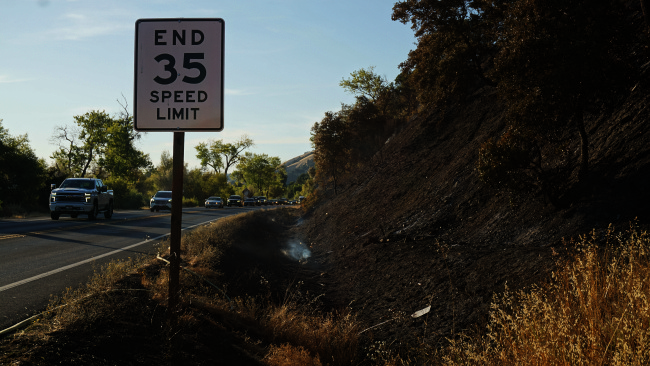
Into the evening, traffic control remained in place at Highway 20 and Foothill Drive as firefighters, PG&E, California Water Service and Lake County Sheriff’s deputies continued to work in the area.

Cal Fire said in a report issued shortly after 8 p.m. Saturday that forward progress of the fire has been stopped.

Also stopped — and fully contained — were the three spot fires that had been reported shortly after 6 p.m. at the head of the fire.

Traffic control was still in effect on Highway 20 near the Arden fire in Lucerne, California, on the evening of Saturday, August 9, 2025. Photo by Elizabeth Larson/Lake County News.

Resources that were assigned to the incident on Saturday included 200 personnel, 14 engines,  four dozers, four water tenders and three crews coming from agencies including Cal Fire units from Lake and Mendocino counties, the Mendocino National Forest, Northshore Fire, South Lake County Fire, Lakeport Fire and Williams Fire, with air resources such as tankers and air attack coming from Chico and Ukiah, and two helicopters from Boggs Mountain and Howard Forest.

The Arden is the latest in a series of fires that have burned in Lake County this month.

Those include the North fire, which burned 11 acres on Friday near Sulphur Bank and North Drive in Clearlake. It was 80% contained as of Saturday night, Cal Fire said.

The largest of the season so far in Lake County is the Lake fire, which burned 401 acres near Borax Lake last Sunday afternoon. Cal Fire said it was fully contained on Saturday morning.

The Lake fire also is the largest wildfire in the Cal Fire Sonoma-Lake-Napa Unit in 2025. Up until the Lake Fire, the unit said it had only seen 240 wildfires burn a total of 518 acres.

Email Elizabeth Larson at This email address is being protected from spambots. You need JavaScript enabled to view it.. Follow her on Twitter, @ERLarson, and on Bluesky, @erlarson.bsky.social. Find Lake County News on the following platforms: Facebook, @LakeCoNews; X, @LakeCoNews; Threads, @lakeconews, and on Bluesky, @lakeconews.bsky.social. 

Teen drivers face unique challenges during ‘100 deadliest days’ of summer, but safety measures can make a difference

Details
Written by: Shannon Roberts, UMass Amherst and Anuj Kumar Pradhan, UMass Amherst
Published: 10 August 2025

Summer is the riskiest time of year for teenage drivers. Martin Novak/Moment via Getty Images

The last few weeks of summer, heading into Labor Day weekend, can sometimes mean vacations and driving more miles on the road for all people, including teens.

Traffic crashes are the No. 1 cause of death for teens, and the crash rate for teen drivers is disproportionately higher than the share of licensed teen drivers.

In addition to this grim statistic, summer is the riskiest time for teen drivers. The 100 deadliest days represent the period from Memorial Day to Labor Day when the number of fatal crashes involving teen drivers dramatically increases. A third of each year’s teen driver crashes occur during the summer.

We are scholars who research transportation safety and teen driver behavior. Our expertise helps us understand that these 100 days are not just a statistical fluke – they reflect a dangerous intersection of factors such as inexperience and a propensity to take risks.

A young woman turns to face a young man while sitting in a convertible car
More time on the road means more risk for inexperienced drivers. Klaus Vedfelt/Digital Vision via Getty Images

What makes summer different?

Regardless of the season, some teen drivers engage in risky behaviors that increase their likelihood of a fatal crash, such as getting distracted, driving with friends in the vehicle, driving under the influence, not wearing seat belts and a lack of hazard awareness.

Teens also have more free time in the summer, since most aren’t in school. Combined with the longer days and better weather, teens drive more over the summer. More time on the road means more risk, especially for inexperienced drivers.

Teens may also be more likely to drive after dark during the summer, in comparison to more experienced drivers. But nighttime driving is also when visibility is reduced and crash risks are higher, particularly for teens who haven’t fully developed the skills necessary for night driving. This increased exposure, in addition to teens’ general risky driving tendencies, contributes to the 100 deadliest days for teen drivers.

The increased crash risk for teens over the summer isn’t equally distributed either. Crashes with teen drivers that lead to serious injuries are more likely to occur with male drivers, in rural areas, for those of lower socioeconomic status and for those with disorders, such as attention deficit and hyperactivity disorder.

A rear view of an instructor holding a clipboard and guiding a student during a driving lesson.
Driver’s education programs can be effective, but not all teenagers have access to them. Antonio Diaz/iStock via Getty Images

Teaching young drivers

Driver’s education programs are the formal method to teach teen drivers the rules of the road.

In driver’s education programs, teens receive information about driver and road safety though classroom and behind-the-wheel instruction in preparation for the licensing exam. Some states require teens to complete a driver’s education course if they want to receive a license under the age of 18. Of teens who have a license, nearly 80% of them have gone through some form of driver’s education.

Though driver’s education programs can be helpful, their effects are not equally felt. In some states, teens and their guardians must pay out of pocket for driver’s education courses to obtain a license. This makes driver’s education and, as a consequence, obtaining a driver’s license inequitable.

There are also driving school deserts – areas where the poverty rate is 20% or above and there are no behind-the-wheel driver education courses within a 10- to 15-minute drive. This makes driver education courses inaccessible. Many of these driving school deserts happen to be in areas with high populations of minorities.

Over 20 years ago, graduated driver licensing was introduced to reduce teen crash rates. This is a phased licensing system wherein teen drivers are restricted in terms of when, where and with whom they can drive until they turn 18. Such a system allows teens to gradually learn and gain experience with driving over time.

Graduated driver licensing has been implemented in all 50 states, and it has been shown to reduce teen driver crash rates. However, its effectiveness is limited to those who participate in the system. A large number of teens are unlicensed and are of low socioeconomic status. Many of these unlicensed teens forgo the entire process and remain unlicensed but still drive, well into their 20s when the graduated driver licensing restrictions are lifted.

A father shows his teenage son the functions that buttons in a car performs.
Adults can serve as good role models for teenagers who are learning to drive. fotostorm/E+ via Getty Images

Making summer safer

There are two things people can do to turn the 100 deadliest days into the 100 safest days.

First, it is important that communities offer free supplementary training programs for teen drivers, because becoming a safe and responsible teen driver shouldn’t be limited to those with resources. As one example, in collaboration with industry partners, we have developed a program called Risk-ATTEND. It is a free, online, evidence-based program that teaches teen drivers how to anticipate risks while driving. Our research has shown that programs such as these can improve teen driving skills and may be especially effective for teen drivers in high-poverty areas.

Second, our research has shown that parents and guardians still play an important role in influencing teen driver behavior. Studies show that teens mirror the behaviors they observe: If they see adults text and drive, they’re more likely to do the same.

Once teenagers become old enough to drive, it is also important to establish rules and guidelines about expectations to establish clarity and accountability. Written agreements or checklists can address high-risk conditions such as nighttime driving, driving with other young passengers, phone use and adherence to speed limits.

Systems to help monitor and enforce rules have been shown to be effective in improving teen driver behavior. One such program is Checkpoints, which is a Connecticut-based program in which families agree to limit teen driving during high-risk conditions. Teens face consequences for violating these limits, such as a temporary loss of driving privileges. However, the limits are gradually lifted as they gain driving experience.

A young woman with curly smiles as she drives a car.
Programs that monitor teen driver behavior have shown promising results. Fotografía de eLuVe/Moment via Getty Images

More than rules matter

Ultimately, preventing crashes in the summer and beyond extends beyond mere adherence to regulations. Avoiding them fundamentally hinges on cultivating a robust safety culture that emphasizes a collective commitment to risk reduction and continuous improvement in driving practices.

For teens, the summer months present unique challenges and opportunities.

Drawing on best practices, such as training programs, teens can build essential skills in varied conditions before gaining full, unsupervised privileges.The Conversation

Shannon Roberts, Associate Professor of Industrial Engineering, UMass Amherst and Anuj Kumar Pradhan, Assistant Professor, UMass Amherst

This article is republished from The Conversation under a Creative Commons license. Read the original article.


Helping Paws: Dogs in need

Details
Written by: Elizabeth Larson
Published: 10 August 2025

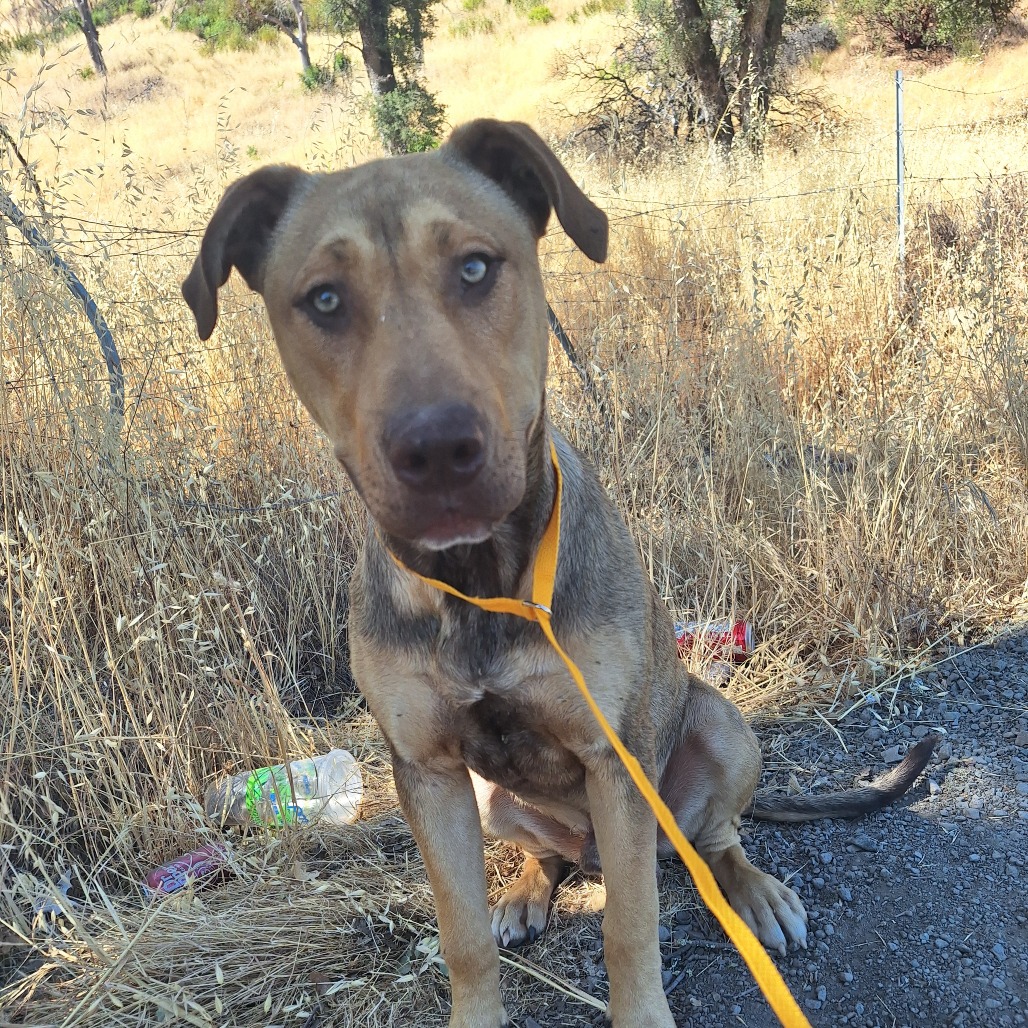
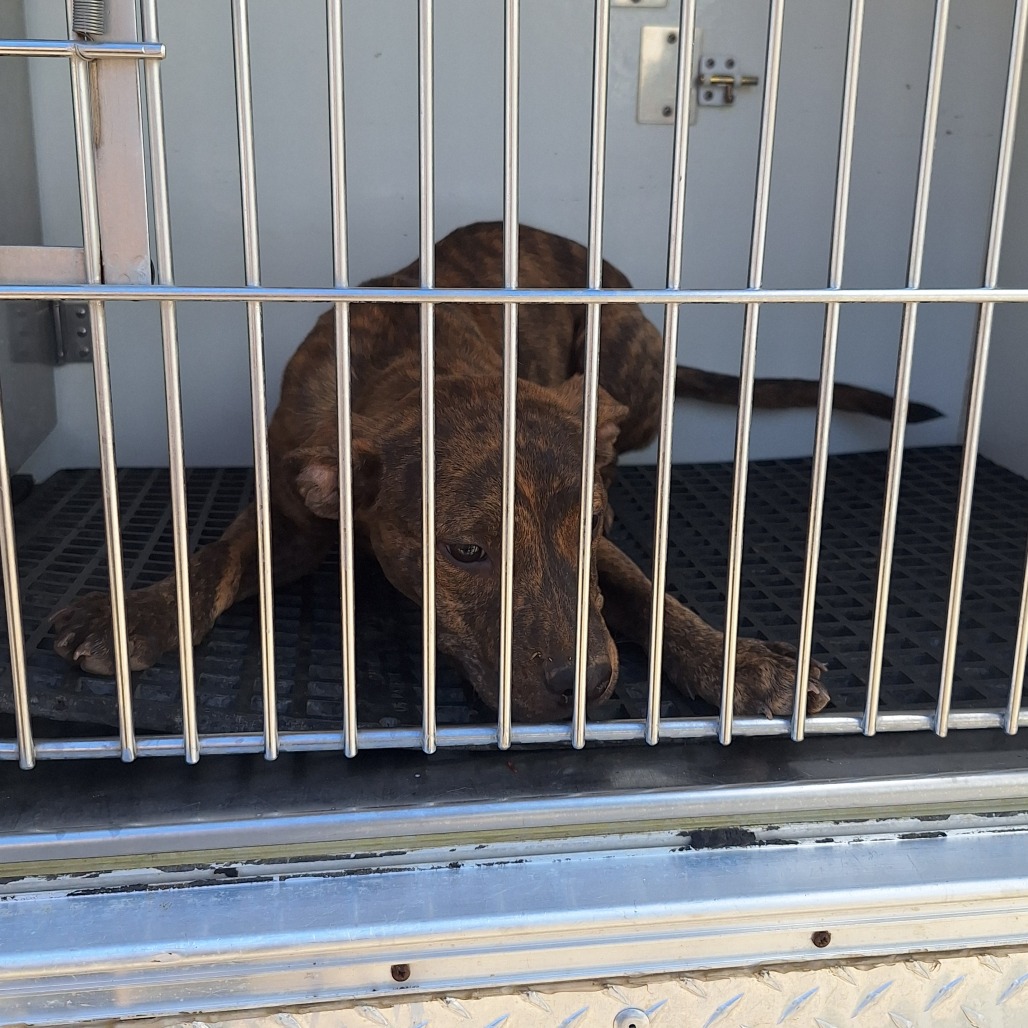
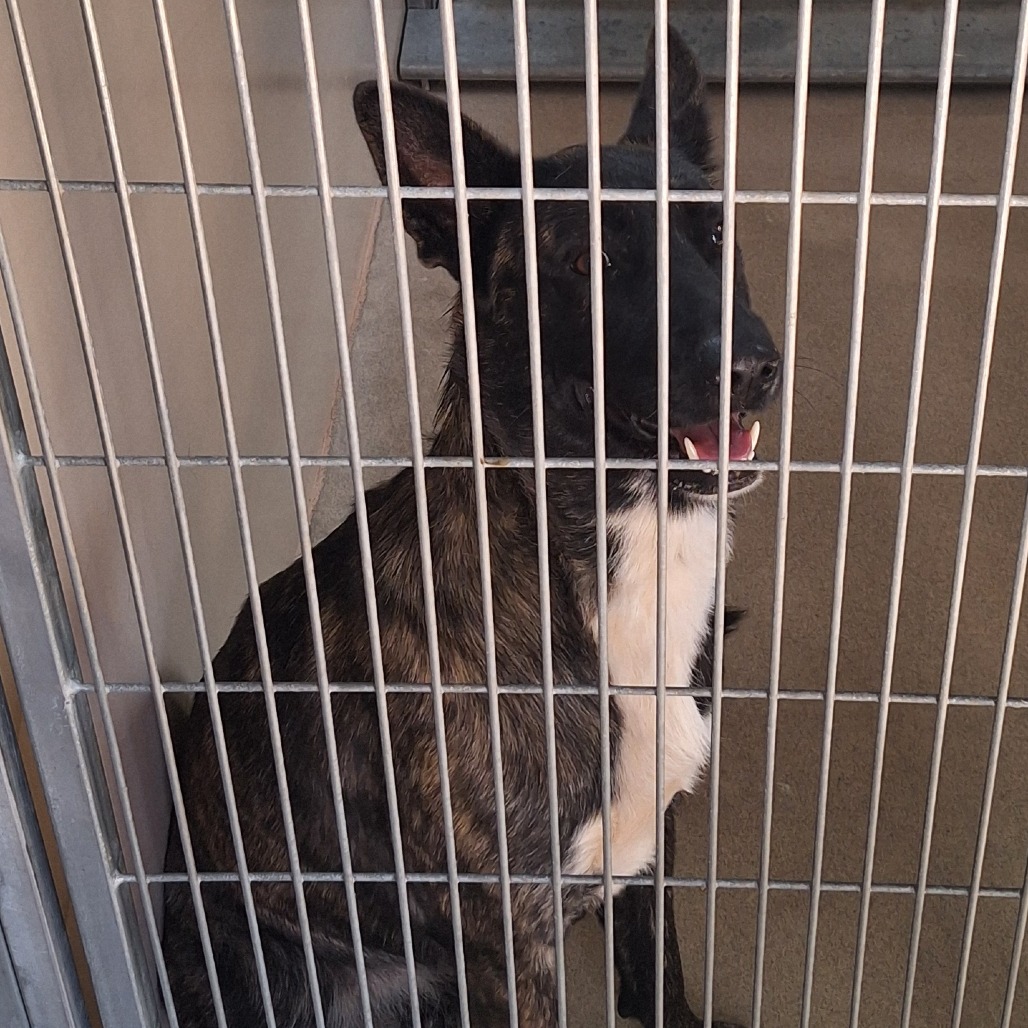
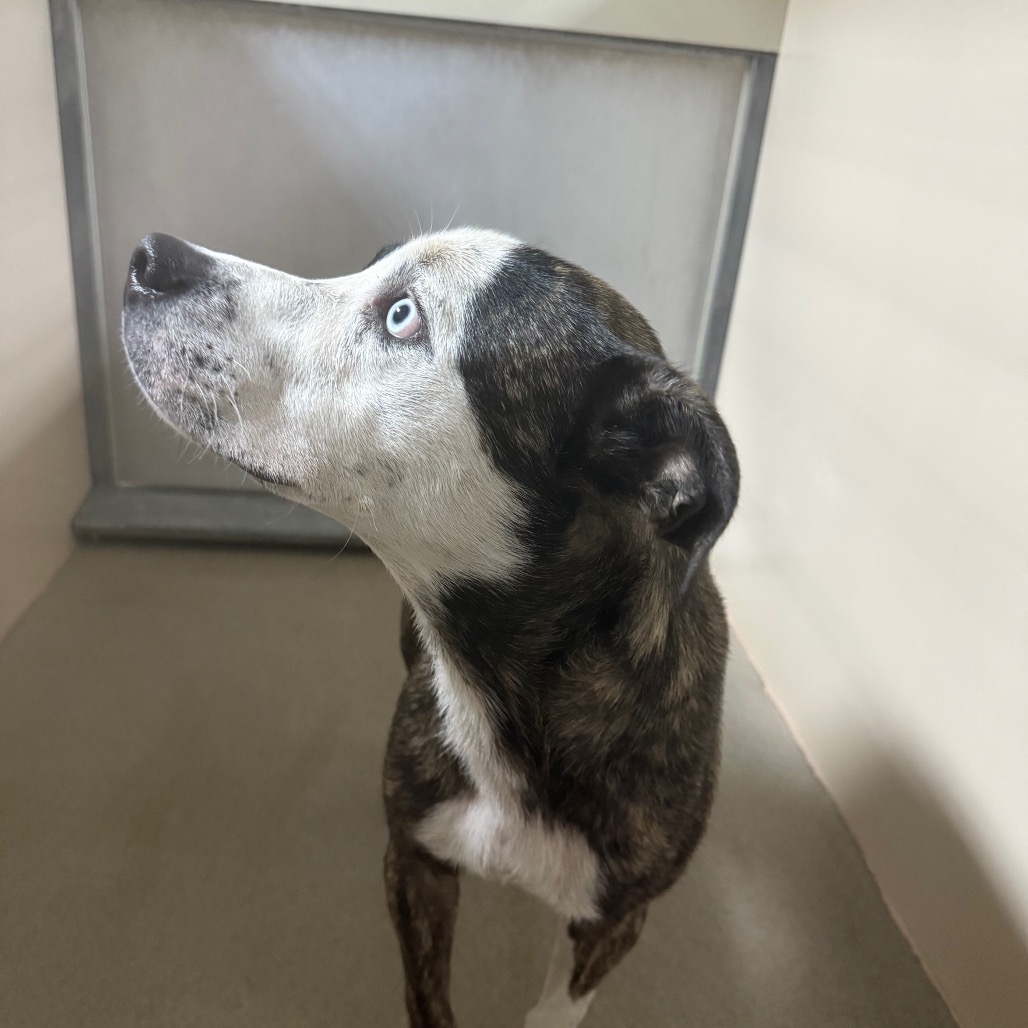
LAKE COUNTY, Calif. — Lake County Animal Care and Control has many dogs needing new homes this week.

The dogs available for adoption this week include mixes of German shepherd, Labrador Retriever, pit bull terrier, Rottweiler, terrier and shepherd.

Dogs that are adopted from Lake County Animal Care and Control are either neutered or spayed, microchipped and, if old enough, given a rabies shot and county license before being released to their new owner. License fees do not apply to residents of the cities of Lakeport or Clearlake.

Those animals shown on this page at the Lake County Animal Care and Control shelter have been cleared for adoption.

Call Lake County Animal Care and Control at 707-263-0278 or visit the shelter online for information on visiting or adopting.

The shelter is located at 4949 Helbush in Lakeport.

Email Elizabeth Larson at This email address is being protected from spambots. You need JavaScript enabled to view it.. Follow her on Twitter, @ERLarson, and on Bluesky, @erlarson.bsky.social. Find Lake County News on the following platforms: Facebook, @LakeCoNews; X, @LakeCoNews; Threads, @lakeconews, and on Bluesky, @lakeconews.bsky.social. 


Kennel#28(Scrappy)'s preview photo
Kennel#28(Scrappy)
Kennel#6(Jax)'s preview photo
Kennel#6(Jax)

Kennel#9 Bear's preview photo
Kennel#9 Bear

Kennel#12 Tallie's preview photo
Kennel#12 Tallie

 
Kennel#33 Hunter's preview photo
Kennel#33 Hunter

Kennel#5 Lucky's preview photo
Kennel#5 Lucky

Kennel#14 Tanner's preview photo
Kennel#14 Tanner

Kennel#31 Daisy's preview photo
Kennel#31 Daisy

Kennel#13(Flamingo)'s preview photo
Kennel#13(Flamingo)

Kennel#21 Helen's preview photo
Kennel#21 Helen

Kennel#17 Bruce's preview photo
Kennel#17 Bruce

Kennel#16d (green)'s preview photo
Kennel#16d (green)

Kennel#24 Carra's preview photo
Kennel#24 Carra

Kennel#3(Hamster)'s preview photo
Kennel#3(Hamster)

Kennel#15 Stormie's preview photo
Kennel#15 Stormie

Kennel#22(Bacardi)'s preview photo
Kennel#22(Bacardi)

Kennel#20 (Chapo)'s preview photo
Kennel#20 (Chapo)

Kennel#22(Big Boy)'s preview photo
Kennel#22(Big Boy)

Quarantine#1 Titan's preview photo
Quarantine#1 Titan

Kennel#19 Duncan's preview photo
Kennel#19 Duncan

Kennel#27 Scamp's preview photo
Kennel#27 Scamp

Kennel#27 Cici's preview photo
Kennel#27 Cici

Kennel#34 Champ's preview photo
Kennel#34 Champ

Kennel#29's preview photo
Kennel#29

Kennel#2 Eliza's preview photo
Kennel#2 Eliza

Kennel#23's preview photo
Kennel#23

Kennel#8's preview photo
Kennel#8

Kennel#7's preview photo
Kennel#7

CDFW introduces new digital tools to track wildlife connectivity, barriers

Details
Written by: LAKE COUNTY NEWS REPORTS
Published: 10 August 2025

The California Department of Fish and Wildlife, or CDFW, has announced the launch of a new suite of online tools to help identify and address wildlife connectivity barriers across the state. 

These resources will make it easier for the public, planners and partners to explore known barriers to wildlife movement and understand where action is needed to support animal migration and road safety.

“I am thrilled we can share these new online tools that will advance collaboration with our partners and ultimately improve wildlife connectivity and movement across the state,” said CDFW Director Charlton H. Bonham. “California is making tremendous progress on identifying and resolving wildlife connectivity barriers as exemplified by the Annenberg Wildlife Crossing in Southern California, the largest wildlife crossing of its kind in the nation now in the final stages of construction.”

Habitat connectivity is essential to the health and resilience of wildlife populations — especially in the face of increasing development and climate change. 

Transportation and other linear infrastructure can block wildlife movement, isolate populations, reduce genetic exchange and lead to increased wildlife-vehicle collisions. 

Addressing these barriers is critical to protect California’s diverse wildlife populations and provide increased road safety.

CDFW’s new Wildlife Connectivity Barriers web page features an interactive map and additional resources that allow users to identify, explore and understand the locations of known wildlife movement and barriers.

Key features of the Wildlife Connectivity Barriers web page include:

• An interactive map showcasing over 200 high-priority barrier segments across 3,000 miles of roadways and infrastructure.
• A searchable database with detailed information on each barrier, including species affected (e.g., deer, mountain lions, amphibians, reptiles) and prioritization data.
• Online tools to export data, zoom in on relevant areas of interest, and print focal areas of concern.
• Resources for planners and partners to inform conservation, restoration, and infrastructure planning.

In recent years, CDFW has taken major steps toward a more strategic and science-based approach to identifying and remediating wildlife connectivity barriers. 

The new digital tools build on CDFW’s first statewide assessment of priority barriers in 2020 (updated in 2022). 

This transition to an online format continues to build on years of interagency and partner collaboration and is designed to make barrier data more accessible, dynamic, and user-friendly.

This effort also leverages the 2024 California State Action Plan developed under U.S. Department of Interior Secretarial Order No. 3362, which supports the conservation of big-game migration corridors across the western United States. 

Of the barriers identified in California, 21 intersect with lands prioritized under this plan, highlighting routes essential to ungulate species.

  1. Space News: Meet ‘lite intermediate black holes,’ the supermassive black hole’s smaller, much more mysterious cousin
  2. Roadside vegetation fire prompts evacuations in Lucerne
  3. Lake County celebrates first summer youth CNA graduation
  • 261
  • 262
  • 263
  • 264
  • 265
  • 266
  • 267
  • 268
  • 269
  • 270
How to resolve AdBlock issue?
Refresh this page