How to resolve AdBlock issue?
Refresh this page
How to resolve AdBlock issue?
Refresh this page
Lake County News,California
  • Home
    • Registration Form
  • News
    • Education
    • Veterans
    • Community
      • Obituaries
      • Letters
      • Commentary
    • Police Logs
    • Business
    • Recreation
    • Health
    • Religion
    • Legals
    • Arts & Life
    • Regional
  • Calendar
  • Contact us
    • FAQs
    • Phones, E-Mail
    • Subscribe
  • Advertise Here
  • Login
How to resolve AdBlock issue?
Refresh this page

News

Lake County Office of Education to host transfer fair at Woodland Community College Lake County Campus

Details
Written by: LAKE COUNTY NEWS REPORTS
Published: 17 October 2025

LAKE COUNTY, Calif. — The Lake County Office of Education is partnering with Woodland Community College’s Lake County Campus to host the Lake County College and Transfer Fair.

The event will take place from 9 to 11 a.m. Friday, Oct. 24, at the campus, 15880 Dam Road Extension in Clearlake.

Current Lake County high school and community college students are invited to learn about opportunities to transfer to other schools.

They also can meet with representatives of colleges and universities including California State University, Chico; Dominican University of California; Cal Poly Humboldt; Jessup University; San Francisco State University; Simpson University; Sonoma State University; Southern Oregon University; University of California, Davis; University of California, Santa Cruz; Woodland Community College; and Mendocino College.

On Oct. 23, ahead of the fair, Woodland Community College will be honored with a Pathway Champion Award by the Campaign for College Opportunity. 

Each year, this organization recognizes California Community Colleges and CSU campuses that are breaking barriers to help more students transfer and graduate with a degree.

This year, WCC is among 40 Pathway Champions statewide and is recognized with an “Excellence in Placement” Award for campuswide growth in transfer-level English success. 

To earn this honor, WCC ranked among the top three California Community Colleges with the highest percentage point growth in students completing a transfer-level English course from the 2022-23 to 2023-24 academic year.

For more information, contact Matt Russell at This email address is being protected from spambots. You need JavaScript enabled to view it. or 707-262-4171 or Christian Villalobos, This email address is being protected from spambots. You need JavaScript enabled to view it. or 707-262-4124.

Officials reach agreement to provide affordable insulin to Californians

Details
Written by: LAKE COUNTY NEWS REPORTS
Published: 17 October 2025
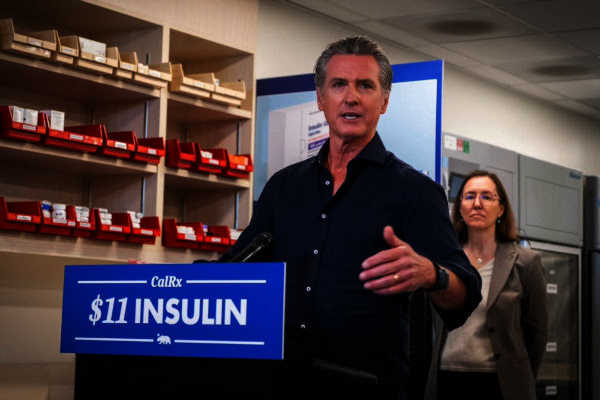
Gov. Gavin Newsom announces the availability of affordable insulin for Californians on Thursday, Oct. 16, 2025. Photo courtesy of the Governor’s Office.

California has become the first and only state to contract for its own affordable insulin.

On Thursday, Gov. Gavin Newsom announced that CalRx biosimilar insulin glargine pens will be available to consumers in California beginning Jan. 1, 2026.

“This launch marks a significant step in the state's ongoing effort to lower prescription drug prices and improve medication access statewide,” Newsom’s office said.

Through an agreement secured by Civica Rx — a nonprofit generic drug manufacturer — with Biocon Biologics, Californians will have access to an interchangeable biosimilar insulin glargine pen offered under the CalRx brand and pricing. 

“California didn’t wait for the pharmaceutical industry to do the right thing — we took matters into our own hands,” said Newsom. “By beginning the process to manufacture our own insulin and pricing it at a maximum cost of $11 a pen in a five-pack, California and Civica are showing the nation what it looks like to put people over profits. No Californian should ever have to ration insulin or go into debt to stay alive — and I won’t stop until health care costs are crushed for everyone.”

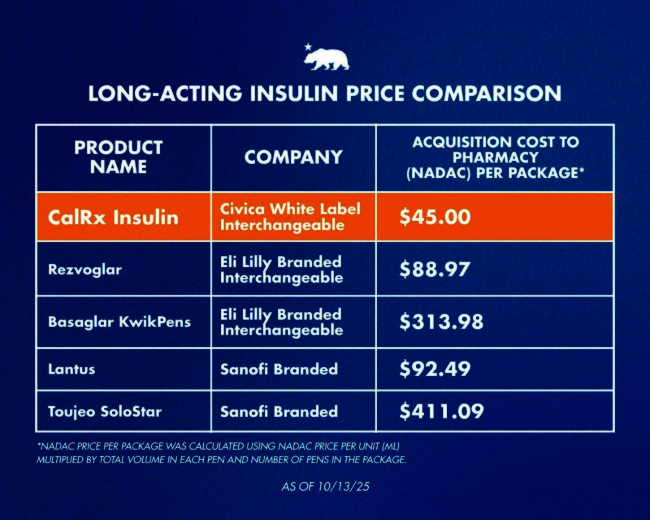
Insulin glargine is a long-acting insulin analog used in the management of diabetes. The CalRx insulin glargine pens are interchangeable with Lantus, which officials said will ensure seamless substitution for patients, and will be available to California pharmacies for $45 and to consumers at a suggested retail price of no more than $55 per five-pack of 3 mL pens — a substantial reduction from current retail market prices.

"We are grateful for the support of the state of California for our effort to bring affordable insulin to all Americans," said Ned McCoy, president and CEO of Civica. "The state shares our vision to ensure a sustainable, quality supply of affordable, essential medicines for people who need them."

“Today’s action marks a significant milestone in California’s ongoing efforts to reduce prescription drug costs," said California Health and Human Services Agency Secretary Kim Johnson on Thursday. “Lowering the cost of insulin moves us closer to a California where no one is forced to choose between their health and their financial stability.”

The insulin glargine pen agreement with Biocon Biologics complements Civica Rx’s broader insulin development strategy. 

Civica Rx continues its ongoing efforts to independently produce interchangeable biosimilar versions of insulin glargine and rapid-acting insulin under the CalRx label, further solidifying a reliable and affordable insulin supply for Californians.

“California is taking action to tackle the insulin affordability crisis," said Elizabeth Landsberg, director of the Department of Health Care Access and Information, or HCAI. "We’re committed to transparent pricing, eliminating hidden costs, and ensuring equitable medication access for uninsured, underinsured, and vulnerable residents across our state."

“In a moment where inflation is spiking everyday prices for Californians and our health care system is under attack in the form of Medicaid cuts from H.R. 1, a lower cost insulin will bring much needed relief both to California pocketbooks and our state budget,” said member Chris Noble, Health Access California’s organizing director and member of the CalRx Insulin Patient Advisory Council. “California consumers need relief now, so as a person dependent on insulin to live and a health care advocate, I’m relieved to see CalRx moving quickly to lower insulin costs for the people of California while continuing to pursue other needed prescription drug cost solutions.”

“California’s continued leadership in tackling insulin’s broken market is a promising step forward,” said Allison Hardt, T1 International’s Community Development director and member of the CalRx Advisory Council. “We celebrate progress that puts patients first and secures insulin at a stable, transparent price while encouraging bold next steps toward true public manufacturing — for people, not for profit.”

CalRx initiative

The launch of CalRx-branded insulin is part of a broader strategy of the governor’s first executive order in 2019 to lower prescription drug costs and ensure fair and transparent pricing is accessible to all Californians. 

To date, no other state has taken action to procure its own affordable medication available for purchase to the public to compete with market-priced products.

Thursday’s announcement builds on the successes of the CalRx Naloxone Access Initiative, which has successfully driven down the market price of naloxone, saving consumers money and helping the state purchase more of this life-saving medication to reverse opioid overdoses. 

The CalRx program continues to identify opportunities to make drugs more affordable and accessible in California. 

Newsom recently signed significant legislation advancing health care affordability by lowering the cost of prescription drugs, including:

SB 40, capping consumer cost-sharing for insulin at $35 for a month-long supply. 

SB 41, reducing prescription drug prices by regulating the practices of pharmacy benefit managers (PBMs), which negotiate prices between drug manufacturers, health care insurance providers, and pharmacies.

Since his first executive order in 2019, Governor Newsom has prioritized making health care more affordable to ensure that families do not have to pick between purchasing medications or having food on the table.

For more information on CalRx insulin, visit CalRx Biosimilar Insulin Initiative.

Clearlake Animal Control: ‘Mona Lisa’ and the dogs

Details
Written by: Elizabeth Larson
Published: 17 October 2025
“Mona Lisa.” Photo courtesy of Clearlake Animal Control.

CLEARLAKE, Calif. — Clearlake Animal Control has dozens of dogs needing new homes this week.

The shelter has 46 adoptable dogs listed on its website.

This week’s dogs include “Mona Lisa,” a female American pit bull terrier mix with a brown and white coat. 

The shelter is located at 6820 Old Highway 53. It’s open from 9 a.m. to 6 p.m. Tuesday through Saturday. 

For more information, call the shelter at 707-762-6227, email This email address is being protected from spambots. You need JavaScript enabled to view it. or visit Clearlake’s adoptable dogs here.

This week’s adoptable dogs are featured below.

Email Elizabeth Larson at This email address is being protected from spambots. You need JavaScript enabled to view it.. Follow her on Twitter, @ERLarson, and on Bluesky, @erlarson.bsky.social. Find Lake County News on the following platforms: Facebook, @LakeCoNews; X, @LakeCoNews; Threads, @lakeconews, and on Bluesky, @lakeconews.bsky.social. 

Why countries struggle to quit fossil fuels, despite higher costs and 30 years of climate talks and treaties

Details
Written by: Kate Hua-Ke Chi, Tufts University
Published: 17 October 2025

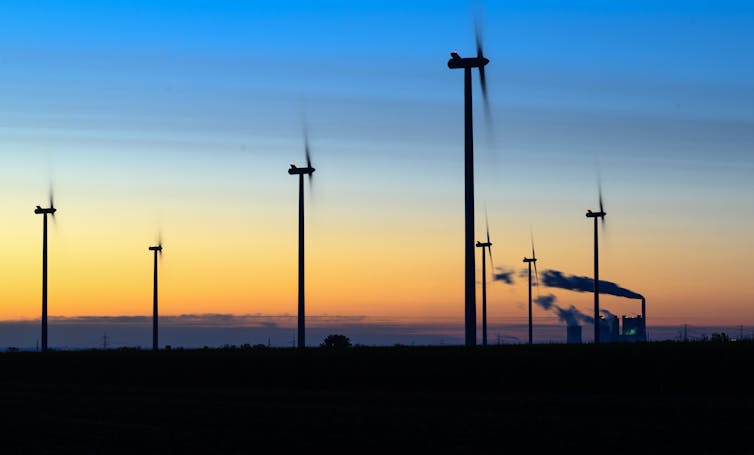
Renewable energy is expanding, but a fossil fuel phaseout appears to still be far in the future. Hendrik Schmidt/picture alliance via Getty Images

Fossil fuels still power much of the world, even though renewable energy has become cheaper in most places and avoids both pollution and the climate damage caused by burning coal, oil and natural gas.

To understand this paradox, it helps to look at how countries – particularly major greenhouse gas emitters, including the U.S., China and European nations – are balancing the pressures of rising electricity demand with the global need to reduce greenhouse gas emissions that are warming the planet.

US embraces fossil fuels

The United States makes no secret of its fossil fuel ambitions. It has a wealth of fossil fuel reserves and a politically powerful oil and gas industry.

Since President Donald Trump took office in January 2025, his administration has been promoting oil and gas drilling and coal production, pointing to rising electricity demand to justify its moves, particularly to power artificial intelligence data centers.

Reviving the “drill, baby, drill” mantra, the Trump administration has now embraced a “mine, baby, mine” agenda to try to revive U.S. coal production, which fell dramatically over the past two decades as cheaper natural gas and renewable energy rose.

Trump shakes a man's hand. All of the men are wearing hardhats.
U.S. President Donald Trump shakes hands with coal industry employees who were invited to watch him sign legislation in April 2025 promoting fossil fuels. Jabin Botsford/The Washington Post via Getty Images

The Department of Interior on Sept. 29 rolled out a plan to “unleash American coal power” by opening 13 million acres of federal land to mining. The Department of Energy also pledged US$625 million to try to make coal competitive. It includes lowering the royalty rates mining companies pay and extending the operating lifespans of coal-fired power plants.

However, these initiatives further lock communities with coal plants into a carbon-intensive fossil fuel. Coal’s resurgence would also have public health costs. Its pollution is linked to respiratory illness, heart disease and thousands of premature deaths each year from 1999 to 2020 in the United States.

The Trump administration is also ceding the clean energy technology race to China. The administration is ending many renewable energy tax credits and pulling federal support for energy research projects.

I work in the Climate Policy Lab at The Fletcher School of Tufts University, where we maintain a suite of databases for analyzing countries’ energy research budgets. The Trump administration’s 2026 U.S. budget request would slash funding for energy research, development and demonstration to $2.9 billion — just over half the budget allocated in 2025. These energy research investments would fall to levels not seen since the mid-1980s or early 2000s, even when accounting for inflation.

China’s clean energy push – and coal expansion

While the United States is cutting renewable energy funding, China is doubling down on clean energy technologies. Its large government subsidies and manufacturing capacity have helped China dominate global solar panel production and supply chains for wind turbines, batteries and electric vehicles.

Cheaper Chinese-manufactured clean energy technologies have enabled many emerging economies, such as Brazil and South Africa, to reduce fossil fuel use in their power grids. Brazil surged into the global top five for solar generation in 2024, producing 75 terawatt-hours (TWh) of electricity and surpassing Germany’s 71 TWh.

The International Energy Agency now expects global renewable energy capacity to double by 2030, even with a sharp drop expected in U.S. renewable energy growth.

However, while China expands clean energy access around the world, its production and emissions from coal continue to rise: In the first half of 2025, China commissioned 21 gigawatts (GW) of new coal power plants, with projections of over 80 GW for the full year. This would be the largest surge in new coal power capacity in a decade for China. Although China pledged to phase down its coal use between 2026 to 2030, rising energy demand may make the plan difficult to realize.

China’s paradox — leading in clean energy innovations while expanding coal — reflects the tension between ensuring energy security and reducing emissions and climate impact.

Europe’s scramble for reliable energy sources

The European Union is pursuing strategies to reduce its reliance on fossil fuels amid the ongoing geopolitical tensions with Russia.

Russia’s invasion of Ukraine exposed many countries to supply disruptions and geopolitical turmoil, and it triggered a global energy crisis as countries once reliant on Russian oil and gas scrambled to find alternatives.

In June 2025, the European Commission proposed a regulation to phase out Russian fossil fuel imports by the end of 2027, aiming to enhance energy security and stabilize prices. This initiative is part of the broader REPowerEU plan. The plan focuses on increasing clean energy production, improving energy efficiency and diversifying oil and gas supplies away from Russia.

Renewables are now the leading source of electric power in the EU, though natural gas and oil still account for more than half of Europe’s total energy supply.

The EU’s fossil energy phaseout plan also faces challenges. Slovakia and Hungary have expressed resistance to the proposed phaseout, citing concerns over energy affordability and the need for alternative supply sources. Hungarian Prime Minister Victor Orbán said Hungary would continue importing Russian oil and gas. Cutting off these supplies, he asserted, would be an economic “disaster” and immediately reduce Hungary’s economic output by 4%.

The path to reducing Europe’s dependence on fossil fuels thus involves navigating internal disagreements and incentivizing long-run sustainable development. Europe does appear to be gaining in one way from the U.S. pullback from clean energy. Global investment in renewable energy, which hit a record high in the first half of 2025, increased in the EU as it fell in the U.S., according to BloombergNEF’s analysis.

Brazil: Torn on fossil fuels as it hosts climate talks

In November 2025, representatives from countries around the world will gather in Brazil for the annual United Nations climate conference, COP30. The meeting marks three decades of international climate negotiations and a decade since nations signed the Paris Agreement to limit global temperature rise.

The conference’s setting in Belém, a city in the Amazon rainforest, reflects both the stakes and contradictions of climate commitments: a vital ecosystem at risk of collapse as the planet warms, in a nation that pledges climate leadership while expanding oil and gas production and exploring for oil in the Foz do Amazonas region, the mouth of the Amazon River.

Thirty years into global climate talks, the disconnect between promises and practices has never been so clear. The world is not on track to meet the Paris temperature goals, and the persistence of fossil fuels is a major reason why.

Negotiators are expected to debate measures to curb methane emissions and support the transition from fossil fuels. But whether the discussions can eventually translate into a concrete global phaseout plan remains to be seen. Without credible plans to actually reduce fossil fuel dependence, the annual climate talks risk becoming another point of geopolitical tension.The Conversation

Kate Hua-Ke Chi, Doctoral Fellow, The Fletcher School, Tufts University

This article is republished from The Conversation under a Creative Commons license. Read the original article.

  1. Annual Lake County Health & Wellness Expo takes place Oct. 18
  2. Governor signs McGuire bill to increase access to maternal care in rural communities
  3. California announces coalition of governors forming new alliance to protect public health from political interference
  • 190
  • 191
  • 192
  • 193
  • 194
  • 195
  • 196
  • 197
  • 198
  • 199
How to resolve AdBlock issue?
Refresh this page