How to resolve AdBlock issue?
Refresh this page
How to resolve AdBlock issue?
Refresh this page
Lake County News,California
  • Home
    • Registration Form
  • News
    • Community
      • Obituaries
      • Letters
      • Commentary
    • Education
    • Veterans
    • Police Logs
    • Business
    • Recreation
    • Health
    • Religion
    • Legals
    • Arts & Life
    • Regional
  • Calendar
  • Contact us
    • FAQs
    • Phones, E-Mail
    • Subscribe
  • Advertise Here
  • Login

The US used to be really dirty – environmental cleanup laws have made a huge difference


Growing up in the 1970s, I took for granted the trash piles along the highway, tires washed up on beaches, and smog fouling city air. The famed “Crying Indian” commercial of 1971 became a symbol of widespread environmental damage across the United States.

That’s why the first Earth Day on April 22, 1970, energized the nation. In the largest single-day public demonstration in U.S. history, roughly 10% of the population took to the streets to shout together: “Enough is enough!”

Republican and Democratic politicians alike listened. Over the decade that followed, all the nation’s foundational environmental laws were passed with strong bipartisan support – the Clean Air Act, Clean Water Act, Endangered Species Act and more.

The “Crying Indian” ad began running on TV in the U.S. in 1971 and shows scenes of pollution that were common across the country at the time. The harms were all too real, though it was later revealed the actor was of Italian ancestry, not Indigenous heritage.

These laws are taking a beating at the moment, including from the Environmental Protection Agency – the federal government agency created in 1970 to protect the environment. The agency’s own leader, Lee Zeldin, boasted of “driving a dagger straight into the heart” of environmental regulations. President Donald Trump regularly derides environmental laws as job killers and government overreach.

But the conditions that made these laws necessary have largely been forgotten. This environmental amnesia allows critics to focus entirely on costs while ignoring the laws’ very real benefits and achievements.

I’m an environmental law professor, so I was excited to learn recently about the Documerica project, courtesy of a wonderful article by writer Gideon Leek. It shows in clear photographic evidence how dirty the U.S. used to be and wakes people up to how much better the environment is today.

Crowds of people cover all of a wide city street and its sidewalks.
Across the U.S., including on Fifth Avenue in New York City, millions of people demanded environmental protection on the first Earth Day, April 22, 1970. Bettmann Archive via Getty Images

An inspired origin

Environmental protection was a bipartisan effort in the 1970s: The EPA was created by President Richard Nixon, a Republican. The agency’s first leader was Bill Ruckelshaus, a Republican congressman from Indiana.

Inspired by the famous photographs of Depression-era farmworkers commissioned in the 1930s by the Farm Security Administration, Ruckelshaus’ newly created EPA commissioned a nationwide photo record. The goal, as Leek put it, was to “provide the EPA with a great deal of qualitative environmental data, create a ‘visual baseline’ against which to judge their efforts, and introduce the agency to the country through art.”

In its few short years of operation, from 1972 through 1978, the Documerica project produced over 20,000 photographs of rivers and farms, highways and city streets. The photos provide a vivid window into the state of the U.S. environment in the 1970s. Now, looking back, they highlight the progress made in the decades since, a demonstration of environmental laws’ successes far more powerful than graphs and statistics.

A broad swath of trash sits on the ground. In the distance are a green meadow and sharp mountain peaks.
The landfill in Boulder County, Colo., in 1972 was just an open pit people could walk right up to and throw their trash in. Bill Gillette, Documerica Project, U.S. National Archives

Solid waste

As a kid, every Sunday my father and I would load the back of our station wagon with trash barrels and drive to the town dump – literally a hole in the ground. My dad would back up to the edge of the pit, and I would enthusiastically run out for what we called “The Olympic Trash Throw!” pouring the barrels’ contents down to where a bulldozer rumbled back and forth, compacting the trash while gulls circled overhead.

To say America’s landscape was littered in the 1970s is not merely poetic phrasing. Waste disposal was a matter of local law, and illegal dumping was commonplace. Drums of pesticides and chemicals could be sent to the local dump along with tires and just about anything else people and companies wanted to get rid of. When the dump was full, it was covered with topsoil and became open land, ready for recreation or building construction.

One place where this happened was Love Canal, a neighborhood near Niagara Falls, New York. A dump holding decades of chemical drums from the Hooker Chemical Co. was lightly covered and sold to the town for just $1. The town was grateful. A neighborhood was built on the land.

Only when people noticed high levels of miscarriages and cancer clusters among the residents – and saw oozing waste – did opinion change.

A bulldozer pushes dirt across open land, marked with a sign saying 'Danger, keep out.'
In 1980, a massive cleanup got underway in the Love Canal neighborhood of Niagara Falls, N.Y. Bettmann Archive via Getty Images

In 1976, Congress passed the Resource Conservation Recovery Act, which was the first law that tracked waste materials from their creation to their disposal and set tough standards for how to dispose of them. But by then, decades of unregulated waste disposal had contaminated sites all over the country. The contaminants, toxicity and people responsible were often unknown.

Four years later, the 1980 law known as “Superfund” set standards and assigned financial responsibility for cleaning up hazardous waste sites. The law created a multibillion-dollar fund that could pay for the cleanups and required potentially responsible parties to reimburse the government or clean up the sites on their own.

Faced with requirements to track their waste and heavy fines if the disposal resulted in hazardous sites, companies paid much more careful attention to their waste disposal. No one wanted to pay for cleaning up a Superfund site.

A beach covered in tires stretches out to a waterway, with docks and boats in the distance.
Discarded tires litter the shorefront of Baltimore Harbor in 1973. Jim Pickerell, Documerica Project, U.S. National Archives

Water pollution

I had the misfortune in 1978 to capsize while sailing a boat on the Charles River in Boston. My shame turned to a dermatologist’s visit when I broke out in rashes the next day. You fell in the Charles at your peril.

Environmental advocates weren’t kidding when, in the 1960s and 1970s, they declared “Lake Erie is a dead lake” because of all the industrial pollution pouring into its waters. An oil slick on Cleveland’s Cuyahoga River famously caught fire in 1969, but it was actually the 12th time the river had burned in a century.

Just as with dumps on land, all kinds of waste was being disposed of in rivers, lakes and harbors. There was a federal law in place, but it was ineffective and relied on states to set limits and enforce them.

The Clean Water Act of 1972 sought to create a national standard, requiring companies that wanted to discharge waste into waterways to get a federal permit and use the best available technology to reduce the amount and toxicity of what they did dump. The act also provided billions of taxpayer dollars to upgrade sewage treatment plants so they didn’t just dump untreated sewage into the water.

A large stretch of discolored water flows into a larger body of water.
The badly polluted Buffalo River flows into Lake Erie in Buffalo, N.Y., in 1973. George Burns, Documerica Project, U.S. National Archives

The ambitious goal was to end water pollution entirely and make all of the nation’s waters safe for swimming and fishing within a decade. Those aspirational goals for the country’s waters still have not been fully met, though Ruckelshaus used to quip that at least they are not flammable.

Even more telling, the Charles River and other urban rivers that people avoided in the 1970s now boast all manner of recreation, with little or no risk of rashes even while swimming.

A curtain of smog obstructs the view of a city and the mountains behind it.
Smog blankets Salt Lake City in 1972. Bruce McAllister, Documerica Project, U.S. National Archives

Air pollution

Perhaps the most obvious improvement since the 1970s has been in air quality around the U.S.

The horrible smog around Los Angeles is well known. But many other cities were blanketed in polluted air that led to respiratory illnesses and millions of early deaths across the nation over the decades. In Pittsburgh it was only half-jokingly said that you had to floss your teeth after breathing.

The Clean Air Act of 1970 was the first law to require the EPA to set uniform nationwide standards for air quality to protect the air people breathe. In short order, lead was phased out of gasoline, catalytic converters were required on cars, acid rain was ended, and the sources of smog were stringently regulated. An EPA study found that the benefits under the law exceeded costs by a factor of more than 30 to 1 and in 2020 alone prevented over 230,000 early deaths.

A thick layer of smog covers a cityscape with tall buildings and several bridges over a river.
Smog was a problem in Louisville, Ky., and across the nation in the early 1970s. William Strode, Documerica Project, U.S. National Archives

I could go on with photos and stories about laws from the 1970s that protected wetlands, conserved open space, reduced pesticide use, increased recycling and made many other changes to how Americans treat our lands and waters.

But it all boils down to two simple facts. First, with the exception of greenhouse gases, which have been effectively unregulated, every major measure of environmental health has improved significantly over the past five decades. And second, those improvements all occurred during times of strong economic growth, with inflation-adjusted gross domestic product increasing fivefold.

Calling these laws “job killers” misses the point entirely. They created jobs and stopped environmental killers. The laws now being demonized are the very reason the Documerica photos are images of the past, not the present. Environmental laws and regulations have their costs, to be sure, but these photographs still hold visceral power: They show just how far the nation has come and what is at risk if we forget.

This article was updated on Jan. 5, 2026, to correctly identify a river in New York.The Conversation

James Salzman, Professor of Environmental Law, Bren School of Environmental Science & Management, University of California, Santa Barbara; University of California, Los Angeles

This article is republished from The Conversation under a Creative Commons license. Read the original article.
Details
Written by: James Salzman, University of California, Santa Barbara; University of California, Los Angeles
Published: 16 January 2026

County officials update residents on Robin Lane sewer spill; Public Health officer urges temporary relocation

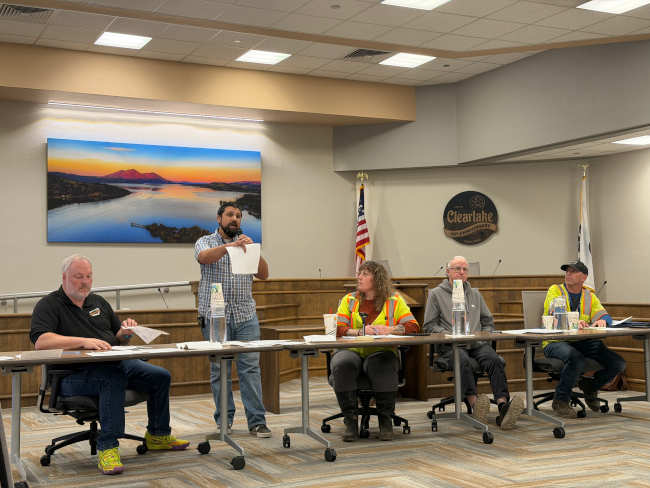
From left, Environmental Health Director Craig Wetherbee, Supervisor Bruno Sabatier, Lake County Special Districts Customer Service Supervisor Lori Baca, Public Health Officer Dr. Robert Bernstein and Special Districts staffer Albert Coats at a town hall for the Robin Lane sewer spill on Wednesday, Jan. 14, 2026, in Clearlake, California. Photo by Lingzi Chen/Lake County News.

CLEARLAKE, Calif. — County officials updated community members on Wednesday night about the response to the Sunday sewer system failure in Clearlake that has resulted in contaminated wells and led to new public health advice to temporarily relocate affected residents.

The town hall was called Wednesday afternoon, with public notifications going out less than two hours beforehand, as officials sought to share new details about the Robin Lane sewer spill.

The incident began on Sunday morning when a 16-inch force main operated by the Lake County Sanitation District ruptured.

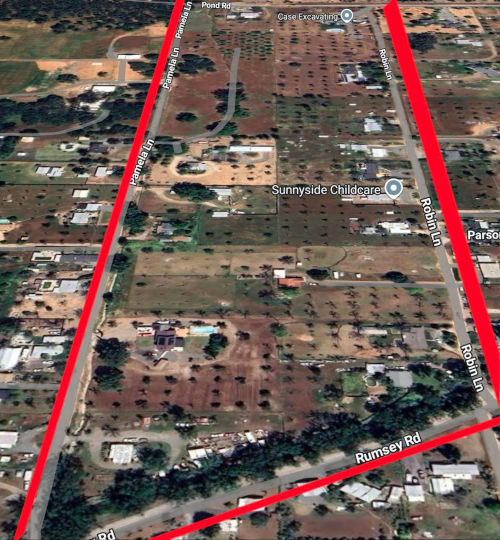
The spill has impacted 58 properties in the area south of Pond Road and north of Rumsey Road, east of Pamela Lane and west of Robin Lane.

The sewer system failure and a massive spillage have caused Lake County Special Districts to warn against using well water, as early tests have shown well contamination. 

That, in turn, has led to new relocation advice that came four days after Robin Lane was first flooded with raw sewage.

Lake County Public Health Officer Dr. Robert Bernstein urged residents in the spill area to temporarily relocate out of concern for health impacts.

While the spill was finally stopped following repairs on Monday night, the situation and its developing impacts left county officials on Wednesday with some answers but still more questions.

One of the questions — posed by a community member — resulted in an answer from Environmental Health Director Craig Wetherbee that, as he acknowledged, got everyone’s attention.

The question was whether or not it was possible that the aquifer could be permanently impacted.

“That is entirely possible, that this aquifer does not recover in any safe manner,” Wetherbee said, but he added that it was highly unlikely and would require extraordinary circumstances.

“I have every expectation that even if this contamination continues for a long period, that it will recover over time. I cannot say what that time would be,” he said, explaining that as new water infuses into the system and pushes out old water it naturally replenishes itself.

“But there are circumstances where this could be a permanent or long-term problem. Again, that is a highly unlikely event,” he said.

Town hall called Wednesday afternoon

The hour-and-a-half-long town hall in the council chambers at Clearlake City Hall was called Wednesday afternoon, with a Nixle going out just after 4:30 p.m. The meeting started at 6 p.m.

Wetherbee told the full room of concerned residents that they were focusing on what they know.

“We know that this has not gone well and no amount of apologies is going to fix that,” he said, adding that their goal is to move forward.

Lori Baca, Lake County Special Districts’ customer service supervisor, said her agency was notified at around 7:30 a.m. Sunday there was sewage running down the street. When they showed up on scene, they realized a 16-inch force main that runs down Robin Lane was the starting point.

Crew members were on site right away to begin work, Baca said. That included putting out wattles and sandbags, and running pumping trucks for several days, with 10 companies called in from around the region.

That pumping went on around the clock for four days, she said.

They also had to call an out-of-area company to come and replace the damaged valve, which took longer than expected due to the company being on another job.

In order to do that repair, Baca said they had to turn on another valve by Safeway. That 10-inch valve failed, however, they were able to get a contractor there immediately and a new valve was installed on Monday evening. They were then able to turn it off and turn on the 16-inch valve.

Baca said the spill finally stopped at 9:55 p.m. Monday. 

A Google image with the spill area outlined in red. Graphic by Lingzi Chen/Lake County News.

Assistance for property owners

To help impacted property owners, the county has brought in an eight-unit shower trailer and a potable water station. 

Baca said she delivered water to as many residents as she could, and staff also went door to door to let people know about the availability of potable water and showers.

While the spill is over, Baca said they are continuing to pump out as much sewage as possible. 

The team has started with decontamination of ag lines so there is safe water for livestock and natural flora, she said.

Staff also will be coming out to do disinfection on hard surfaces and look at driveways, Baca said. 

“We’re not done,” Baca said. “You will still be seeing us out there.”

There also will continue to be around-the-clock monitoring. “We are trying our best. The best may not be the best,” Baca said.

They also have multiple water companies working with Environmental Health on water and well samples, she said.

Baca said they don’t yet know the size of the spill but when they do, that information will be released.

Wetherbee said Environmental Health is the agency responsible for making sure the cleanup is completed.

“The primary safety concern here is the contamination of the water wells,” said Wetherbee.

Some wells have been surrounded by sewage up to casing. Wetherbee said many of the wells in their area were developed well before modern standards — back as far as the 1930s and 1940s. New wells have sanitary seals.

Initial water testing reports for the first 15 samples focusing on Robin Lane have come back showing contamination, but Wetherbee said testing will continue for some time. Some wells will be tested at least twice, others will be tested more.

As of Wednesday, 75 samples had been taken, and that number is expected to double as testing continues on Thursday and Friday.

That testing will help them figure out if the impact is limited to the spill area or if it impacts the aquifer generally, Wetherbee said.

Public Health officer explains recommendations

Dr. Bernstein said residents who live in the area south of Pond Road, north of Rumsey Road, east of Pamela Lane and west of Robin Lane, and who rely on private drinking water wells are advised to temporarily relocate until their private wells are deemed safe by him.

He said affected residents may first ask their homeowners policy for temporary lodging coverage or, alternately, seek assistance from Lake County Special Districts.

Bernstein said relocation is recommended for residents with children under age 5, people over age 60, or those with health or immune system concerns.

Those choosing to remain in their homes are strongly advised to contact Lake County Special Districts to get a minimum amount of safe water, which he said is 60 gallons of water per person, per day, for all needs. All residents should take additional precautions to clean household items.

Supervisor Bruno Sabatier was apologetic in his approach to the public discussion.

“Our system upended your guys’ lives and I'm hating the situation that we’re all dealing with,” Sabatier said.

He told residents it may take some time to deal with the situation, noting that with fires they know how to respond, but that hasn’t been the case with a situation like this.

There were repeated questions throughout the meeting about whether the site of the force main break was the same as one that occurred about 20 years ago.

Baca confirmed there was a break in the area around that time frame. She said force mains are under pressure and so there is no way to check on their condition.

Wetherbee told the group that he is putting together a long-term plan — of one month or longer — to continuously monitor the area to better understand the nature of contamination and the nature of it.

“This is something that we’ll be looking at for some time,” he said.

Email Elizabeth Larson at This email address is being protected from spambots. You need JavaScript enabled to view it.. Follow her on Twitter, @ERLarson, and on Bluesky, @erlarson.bsky.social. Find Lake County News on the following platforms: Facebook, @LakeCoNews; X, @LakeCoNews; Threads, @lakeconews, and on Bluesky, @lakeconews.bsky.social. 

County and city officials spoke with community members after a town hall for the Robin Lane sewer spill on Wednesday, Jan. 14, 2026, in Clearlake, California. Photo by Lingzi Chen/Lake County News.


Details
Written by: Elizabeth Larson
Published: 15 January 2026

13th annual ‘Unity through ComeUnity’ scheduled for Jan. 19

CLEARLAKE, Calif. — Unity Day organizers and the Clearlake Senior Center invite the public to join them in honoring Dr. Martin Luther King Jr's legacy on Monday, Jan. 19, at the 13th annual MLK Unity Day.

“Unity through ComeUnity” MLK Unity Day will take place at Highlands Senior Center in Clearlake.

There will be a variety of special musical guests, dancers and guest speakers.

MLK Unity Day celebrations are scheduled across the U.S. for Monday, Jan. 19. 

Events like parades, marches, breakfasts and festivals will take place from Jan. 17 to 20, featuring speakers, music and community activities to honor Dr. King's legacy.

King is honored for his leadership in the American Civil Rights Movement, championing racial equality and justice through powerful oratory, nonviolent civil disobedience, and inspiring landmark legislation like the Civil Rights Act of 1964 and the Voting Rights Act of 1965.

He left a lasting impact on global human rights, economic justice, and the ongoing pursuit of a diverse, inclusive "Beloved Community" free from racism, poverty and violence.

Organizers are encouraging everyone in our county to come to be a part of Unity Day at the Highlands Senior Center at 3245 Bowers Avenue in Clearlake on Monday, Jan. 19, from noon to 2 p.m.

Details
Written by: Lake County News Reports
Published: 15 January 2026

Lake County Animal Care and Control: Pickles, Ice, Sugar and the chickens

LAKE COUNTY, Calif. — Lake County Animal Care and Control has a pig, two horses and two chickens ready for adoption in addition to its many other pets.

The pig is named Pickles.

Shelter staff said that while they are unsure of his exact age and breed, “we do know he’s full of personality and ready for a loving home.”

Also available for adoption are Ice, a 14-year-old male pinto and Sugar, a 10-year-old sorrel mare.

There also are two chickens, a rooster and a hen, in need of a home.

The animals are available for adoption once the application process is complete. 

Call Lake County Animal Care and Control at 707-263-0278 or visit the shelter online for information on visiting or adopting.

The shelter is located at 4949 Helbush in Lakeport.

Email Elizabeth Larson at This email address is being protected from spambots. You need JavaScript enabled to view it.. Follow her on Twitter, @ERLarson, and on Bluesky, @erlarson.bsky.social. Find Lake County News on the following platforms: Facebook, @LakeCoNews; X, @LakeCoNews; Threads, @lakeconews, and on Bluesky, @lakeconews.bsky.social. 

UpperPen#1 Pickles's preview photo
UpperPen#1 Pickles

Ice 's preview photo
Ice

Sugar 's preview photo
Sugar
Upper Pen #2 Rooster's preview photo
Upper Pen #2 Rooster

UpperPen#2Rooster2's preview photo
UpperPen#2Rooster2
 

Details
Written by: Elizabeth Larson
Published: 15 January 2026
  • 18
  • 19
  • 20
  • 21
  • 22
  • 23
  • 24
  • 25
  • 26
  • 27

Public Safety

  • Lakeport Police Department celebrates long-awaited new headquarters

  • Lakeport Police Department investigates flag vandalism cases

  • Lakeport Police Department thanks Kathy Fowler Chevrolet for donation

Community

  • Hidden Valley Lake Garden Club installs new officers

  • 'America's Top Teens' searching for talent

  • 'The Goodness of Sea Vegetables' featured topic of March 5 co-op talk

Community & Business

  • Annual 'Adelante Jovenes' event introduces students, parents to college opportunities

  • Gas prices are dropping just in time for the holiday travel season

  • Lake County Association of Realtors installs new board and presents awards

  • Local businesses support travel show

  • Preschool families harvest pumpkins

  • Preschool students earn their wings

How to resolve AdBlock issue?
Refresh this page