 How to resolve AdBlock issue?
Clearlake City Council directs staff to draft new ordinance prohibiting marijuana growing
CLEARLAKE, Calif. – The city of Clearlake is moving toward an all-out ban on the cultivation of marijuana, medicinal or otherwise.
The city council directed legal staff Thursday to draft an ordinance that would prohibit the growing of all marijuana within city limits and provide for abatement of cultivation activities.
“I want to be compassionate but it has gotten out of control,” Mayor Denise Loustalot said.
Clearlake Police Chief Craig Clausen provided the council with a report concerning police services associated with marijuana cultivation.
He said while calls for service are tracked in such a way that discerning actual marijuana-related incidents is not possible, the number of compliance checks conducted by officers can be calculated.
The compliance checks performed all were found to be in violation of the city's ordinance, in which the number of plants allowed is determined by the size of the property, Clausen said.
The city does not have a means of tracking the number of medical marijuana cultivation operations that are in compliance because such activities do not require a permit, Loustalot added.
Clausen said marijuana-related calls have resulted in incidents up to and including homicide, kidnapping, assault and recovery of weapons.
He said there was a recent incident that involved a shooting in which an AK-47 was used and later recovered by police.
“Officers spend two to five hours per day (on marijuana-related issues) either conducting compliance checks or through calls for service,” he said. “There is a direct cost associated with this.”
City Finance Director Chris Becnel provided the council with an assumption of costs associated with law enforcement activities related to marijuana cultivation.
Becnel estimated a $113,000 expense to the city in a seven-month period based on an estimate of total cost of an incident including police response, investigation, administrative and court expenses.
Compliance checks by officers – assuming an hour per call, plus the cost to fully burden a police officer II (at an estimated $74 per hour) – total $10,582 in a six-month period, according to Becnel's calculations.
Calls for code enforcement, assuming two hours per call and the full burden of a code enforcement officer (at an estimated $42 per hour), total $9,450 in a six-month period, Becnel said.
Becnel estimated police officer time – in a seven-month period, assuming two to four hours per call and the full burden of a police officer II – to be between $62,160 to $93,240.
Lake County Fire Protection District Chief Willie Sapeta also provided the council with an informational presentation concerning health and other hazards related to indoor growing operations prior to the council rendering direction.
Sapeta emphasized the negative long-term, accumulative effect conditions could have on firefighters, residents of the home and the environment including, but not limited to, a myriad of breathing disorders.
Citing indoor cultivation of marijuana as a relatively new situation, Sapeta said the long-term effects have not been precisely determined yet.
Sapeta said health hazards include response to a concealed operation in which responders are unaware of the conditions.
He said ventilation is often inadequate causing concern for airborne pathogens, including mold and fungus spores, that could cause long term health damage.
Sapeta said the district is seeing health problems arise in people who, often unknowingly, move into a house that formerly was used as an indoor growing operation.
He said that homes are porous, retaining mold and fungus spores in the walls that are later released with heat and moisture.
One incident Sapeta shared involved an entire household that became sick after a few months of living in such a home. He said the family was healthy until the weather changed and use of the heater began.
Improper electrical installation and makeshift carbon dioxide concentrators present further concern for indoor growing operations, Sapeta said. As a result indoor growing activities, there have been multiple cases of fire within in the district.
Another concern is for the misuse of chemicals and fertilizers and the improper disposal of such, he said.
Community, council members weigh in
A dozen people from the public spoke to the issue with eight conveying support of a complete ban and five urging the council to strengthen its current ordinance.
Those speaking in favor of a ban on marijuana cultivation cited concerns such as depletion in air quality, a rise in violent criminal activity, property damage, safety of children and cross contamination by those carrying the hazardous spores on their clothing.
Mark Illia, who is asthmatic and works for an area water company, said he has developed the “knock and walk” technique when a service call requires contact at a home.
“I knock and I take a few steps back,” he said. “You don't know what is going to come out of that door. It could be the odor and those pathogens or it could be a shotgun.”
One woman said she fears for children who may get into someone's growing site.
Richard Birk, president of Habitat for Humanity, said the organization recently experienced a situation in which donated land was found to be the site of an illegal growing operation.
“The property owner didn't know it was there,” he said.
Pete Loustalot said restricting the number of plants allowed to just six would not solve the odor problem.
He said his neighbor went from 14 to six plants but the plants were bigger, resulting in the same amount of odor.
“I think the only way to get control of this is to go down to zero,” he said.
Adelia Leonard pleaded with the council to consider the medical needs of her son, who is treated with marijuana for epileptic seizures.
She said she grows her six plants in compliance with the city ordinance.
“The criminals don't care what you do. Just because how bad this year went, you're going to punish the legitimate people,” she asked. “Have some compassion. Work with us. The criminals, cut down their plants.”
“My grandson was traumatized over six plants,” Ed Wynn said. “Yes, there are some big grows and we need to do something about them. But, people need their medicine. There needs to be compassion. There are too many bias people.”
Former Councilman Joey Luiz said he agreed the current ordinance “needs more teeth” but that he thought a fair compromise was reached with the public in developing it.
He urged the council against driving growing operation indoors where the potential for improper conditions exist.
“It's not going away and in my new position, I will be looking at tax issues on the state level,” he said. “It's happening. We need to find a way to make this thing work.”
Councilwoman Joyce Overton said most of the people growing are not doing it for medical reasons.
“It's for money,” she said. “We need to step back and go to a 'no grow' until the state defines how to do this. Let's stop this. I think it's gone too far.”
Councilman Russ Perdock said he favored a ban on cultivation. He said 100-percent of the people he spoke with on his door-to-door election campaign said they wanted something done about the abundance of large marijuana grows.
Councilman Bruno Sabatier said he recognized the large amount of illegal growing operations in the city and that many are not for medicinal reasons.
Sabatier said he would like to see the city's ordinance strengthened, focusing on large-scale operations. He said the city failed by not enforcing the current ordinance.
“We cannot let law abiding citizens lose their rights because we didn't do our jobs and enforce the law,” Sabatier said.
Vice Mayor Gina Fortino Dickson asked what greater power would the police have if the ordinance was dropped to zero.
Clausen said the problem with the current ordinance is that it does not contain an abatement order and that it is a civil ordinance with a civil process that includes only administrative penalties.
Fortino Dickson said an influx of nonresidents who came to the area specifically to grow marijuana following the county and Lakeport's tighter restrictions compounds the city of Clearlake's problem.
“Prop. 215 does exist and it exists for reason – for people who need it,” she said.
City Attorney Ryan Jones said the city has a broad scope of options in dealing with the cultivation of medical marijuana.
He said the city could reduce the number of plants allowed, restrict growing to indoors or ban growing completely.
Jones said staff recommended a complete ban.
He is expected to have a draft ordinance to ban marijuana cultivation ready for the council's consideration by its next regular meeting on Thursday, Feb. 12.
Email Denise Rockenstein at
- Details
- Written by: Denise Rockenstein
Supervisors extend emergency proclamations for drought, December storm
LAKEPORT, Calif. – With Lake County and the rest of the state in the midst of another dry winter, the Board of Supervisors this week extended a local emergency declaration due to the drought and also extended a second emergency proclamation that resulted from a damaging early December storm.
Lake County Office of Emergency Services Manager Marisa Chilafoe went to the board on Tuesday to ask for the emergency declaration extensions.
Last March 4, the Board of Supervisor initially passed the proclamation of a declaration of a local emergency due to drought conditions.
State law requires the board reconsider the declaration every 30 days, and in that time it's been renewed 10 times – including Tuesday's action.
Chilafoe also sought an emergency declaration extension due to the storm that began late on Dec. 10 and continued the next day.
That storm resulted in widespread flooding and road closures throughout the county, prompted the activation of the Lake OES Emergency Operations Center and led to County Administrative Officer Matt Perry issuing a declaration of a local emergency that the board ratified on Dec. 16.
Her written report to the board explained, “As your board is aware, the severity of this year's drought became apparent as our community water systems, private wells and natural resources struggled to maintain adequate water supply, was complicated by the extreme effects of the lake's algae, and the County saw impacts to local agriculture. Though our current conditions have improved with recent rains, there is much work to be done to prepare for another drought year impacting Lake County.”
She told the board on Tuesday, “We saw a little bit of rain in December,” but that has stopped for now.
Chilafoe said the state's preliminary snowpack survey didn't meet the amount needed to recover.
That preliminary survey showed a snowpack at 50-percent of normal, while 150-percent of normal is required to recover from the drought, with the U.S. Drought Monitor reporting that Northern California will remain in “extreme drought” and conditions to continue for the next year or more, according to Chilafoe's written report.
“So we're still looking at another year, if not more, of drought,” Chilafoe added.
With two county water systems still working on grant applications, continuing the emergency declaration is important, she explained.
Chilafoe told the board that Gov. Jerry Brown asked communities for a 20-percent water use reduction, which she said Lake County and the rest of the North Coast Hydrologic Region didn't meet. Her report stated that the region only reduced water usage by 12 percent in 2014, compared to 2011-13 averages.
“We’ll still need to increase our conservation efforts,” she said, adding that the county will be sitting well after its system upgrades are completed.
Supervisor Jim Steele said that during a drought the landscape dries out so much that it is susceptible to movement.
In addition to looking at saving water, he said the county should send a message to the public about best management practices to secure soil, and to the roads department that during rains soil will move into streams and so dirt roads need to be kept buttoned up.
He said the storm had a big impact on Clear Lake, sending a lot of mud into it, which he said will lead to algae blooms.
Chilafoe said the county is looking at offering a drought workshop this spring to offer conservation tips.
Steele said the county should be making outreach to groups like the Farm Bureau. Chilafoe responded that the Farm Bureau was very engaged in the county's drought task force over the summer, and that the county worked both with the Farm Bureau and the Lake County Winegrape Commission.
Supervisor Rob Brown said the Farm Bureau had more to offer the county in the way of instruction than vice versa.
“They've done a lot,” Chilafoe acknowledged.
Supervisor Jeff Smith noted that, with this year likely to see a bad algae bloom on Clear Lake, “We should be documenting this just to give credence to the Middle Creek marsh restoration project,” as well as placing sediment basins at the mouth of the creeks.
Steele said that it was more a matter of just the sediment, at which point Board Chair Anthony Farrington broke in to try to get the conversation focused on the emergency declaration.
“This does focus on that,” said Steele, referring to topsoil issues.
Farrington said that last year, the algae wasn't as bad despite it being a drought year, with Steele acknowledging that was so.
Regarding the damage from the Dec. 11 rainstorm, Chilafoe said the estimated damages throughout the county for response costs and cleanup is $4 million, a total which covers both the cities of Clearlake and Lakeport.
Chilafoe said Cal OES visited Lake County on Jan. 8 as part of the recovery and damage estimate process.
She said the county has since made its request for assistance. “We’ve not heard back. We do know that there won’t be individual assistance provided,” she said, meaning that individual homeowners who suffered damage that isn't covered by insurance policies won't have assistance available.
“This is purely for public assistance, which is damage to public infrastructure – roads, buildings, systems and so on,” Chilafoe said.
Supervisor Jim Comstock moved to extend the proclamation of local emergency for the drought, which Steele seconded and the board approved 5-0.
Comstock also moved to extend the proclamation of local emergency due to the Dec. 11 storm, which also was approved unanimously by the board.
Chilafoe's written report to the board also noted that the State Water Resources Control Board has passed statewide conservation regulations for rural water suppliers which remain in effect until April.
She reported that though local water rights curtailments have been lifted, the compliance order in place for Hidden Valley Lake's Community Service District remains in place until the district can address its junior water rights.
Chilafoe said Lake OES continues to work with Hidden Valley Lake's Community Service District, the State Water Resources Control Board and Cal OES regarding the systems status.
Lake OES also continues to work with local water districts as they seek grant funding to mitigate system issues related to the drought. “Of the seven local systems who sought grant funding, six projects have been funded as of this date,” she wrote.
“Given the circumstances, the County continues to seek State or Federal assistance for impacted systems as drought conditions persist and weather forecasts predict continued drought conditions,” Chilafoe wrote in her memo.
“Therefore, continuing the declaration of an emergency and maintaining a proactive approach to drought response is critical for area water purveyors in maintaining the health and safety of their customers – Lake County residents and tourists – and protecting our local economy. Continuing the declaration of an emergency is also required to allow the County to seek funding specifically designated for drought relief purposes, and other assistance that might be required.”
Email Elizabeth Larson at
- Details
- Written by: Elizabeth Larson
Comstock reports on the 'State of the County'
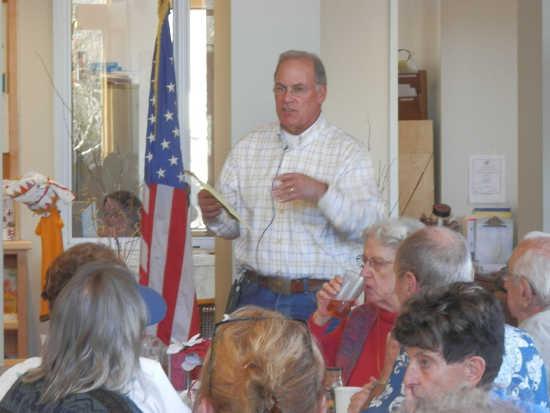
MIDDLETOWN, Calif. – This week District 1 Supervisor Jim Comstock offered community members his annual “State of the County” update, covering issues from finances to roads.
Comstock's remarks were given Wednesday before a full house at the Middletown Senior Center as part of the monthly meeting of the Middletown Luncheon Club, which welcomed Comstock as its first guest speaker of 2015.
He spoke of the county's financial situation as well as its focus for the coming year, highlighting information of particular concern to residents of the Middletown area.
A budget of $188 million was passed by the Lake County Board of Supervisors this fiscal year.
Comstock said while the amount isn't ideal, it is more than the $174 million budget that was adopted three years ago, which he said he thought to be lowest in recent years.
“Lake County has always been a challenging place to live,” he said, citing constraints, financial and otherwise, endured by residents of the county. “It's always been tough to make here, but it is worth it.”
Comstock said the budget was affected by decreases in tax revenues. He said the county experienced a slight decrease in property taxes, down about four-tenths of a percent.
“It's not a big drop but you don't really want any loss in property taxes,” he said.
Sales tax revenues, Comstock said, are about 20-percent lower than they were at their highest in the 2004-05 fiscal year.
A substantial drop in transient occupancy tax revenues throughout the past several years, he said, contributes significantly to a loss of county tax revenues.
“We took a major hit when Konocti (Harbor Resort & Spa) closed and we haven't recovered from that yet,” he said.
Comstock said the focus in the coming year will be on code enforcement and the eradication of illegal marijuana cultivation sites.
Roads, he said, will be another area of focus.
“There are 600 miles of roads in the county and the road department is struggling to get to them,” he said. “They are doing the best they can with the funds they have.”
Comstock highlighted road projects in the Middletown area.
He said while the installation of stop signs at Highway 29 and Hartmann Road are working well to improve the safety of the area, the project is not complete.
Ideally, Comstock thinks a stop light would work best. The installation of a roundabout is planned to complete the project in 2017.
“The state is enamored with roundabouts right now, and they are very expensive,” he said.
A major road project that's ahead, Comstock said, is the replacement of the Troutdale Creek bridge on Highway 29 on Mount St. Helena. The project includes widening of lanes in both directions of the bridge's approach.
“Construction is supposed to start this spring. So, if you're traveling that way, remember to expect delays,” he said.
Comstock concluded his address with news that was received with applause.
He said funds are budgeted to complete the landscaping and other final details at the new community park in Middletown this year.
“It's going to get done,” he said.
Middletown Senior Center Executive Director Lori Tourville said the organization appreciates the opportunity to host the Middletown Luncheon Club, which she said garners the center about $1,200 a year.
The funds, she said, help support senior nutrition programs such as Meals On Wheels.
“Homebound seniors are having a hard time donating money for their meals,” Tourville said. “We ask for $5 but seniors pay what they can. The average donation for an in-house meal is $4.25. The average donation for Meals-On-Wheels is $1.30. That's where we have to raise funds to make up the difference.”
The Middletown Senior Center will hold its annual “March for Meals” fundraiser from 9 a.m. to 2 p.m. March 28.
The event will include a walk through town and the new park, which is located adjacent to the center; a luncheon and a craft fair.
For more information, contact the Middletown Senior Center at 707-987-3113 or visit www.middletownseniorcenter.org .
Email Denise Rockenstein at
- Details
- Written by: Denise Rockenstein
Moore announces candidacy for District 5 supervisor
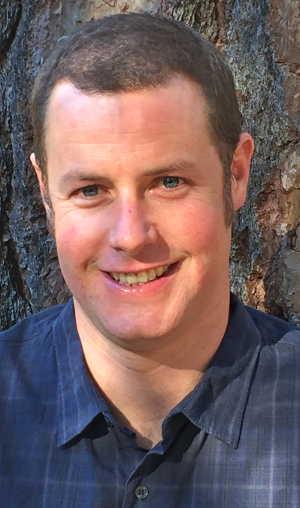
COBB, Calif. – Lake County businessman and agricultural leader Beau Moore has announced his candidacy to succeed retiring Supervisor Rob Brown in District 5.
“I am seeking the office of county supervisor to preserve our land for future generations while providing the good paying jobs, educational resources and recreational opportunities our families need to thrive,” said Moore.
Brown last week announced that he would not seek a fifth term in the 2016 election, as Lake County News has reported.
A fifth-generation Lake County resident, Moore is a manager for Steve Moore Engineering as well as the Moore Family Winery.
Moore also serves as a director for the Lake County Farm Bureau, the Cobb Mitigation Board and the Lake County Winery Association.
He and his wife Gabriella reside in Cobb with their four children.
“My campaign committee has chosen the campaign theme of 'Local Values … Independent Voice' to highlight my family’s five generations of service to Lake County, as well as my record as a community problem-solver who will always put people ahead of politics,” explained Moore.
Moore said strengthening the local economy will be a major focus of his candidacy.
“We must bring quality new businesses and jobs to Lake County,” he said. “I believe that we can make Lake County a truly great tourist destination that combines the water recreation of Lake Tahoe and the agritourism of Napa – without the crowds. I will work to strengthen Lake County’s vital agricultural economy by supporting our farmers, ranchers and vintners.”
Moore said his years of experience on public works projects for his family's engineering business gives him a good working knowledge about many of the critical infrastructure issues facing Lake County.
The county's young people are another of his concerns. “As a father of four children, I am also strongly committed to expanding recreational and educational resources for our youth. Providing greater opportunities will help to keep our youth away from harmful influences and give them the skills needed to achieve success in the workplace. Creating a more family-friendly environment will also attract quality new employers to boost Lake County’s economy.”
Another of Moore's top priorities will be public safety. “As a supervisor, I will work closely with law enforcement to drive criminal gangs out of Lake County and give our citizens the safe and healthy communities they deserve.”
Brown is endorsing Moore to succeed him on the Board of Supervisors.
“I’m proud to support Beau Moore as our next supervisor,” Brown said. “The Moore family has been a pillar of our community for many years. Beau understands what is needed to create jobs. He has the integrity and commitment to be an outstanding member of the county Board of Supervisors.”
“Supervisor Rob Brown is an excellent representative for the citizens of District 5,” said Moore. “It is an honor to have Rob’s endorsement and I will work to build upon his legacy of service while bringing my own independent leadership approach to the county Board of Supervisors.”
In addition to Supervisor Brown, a number of community leaders have joined in endorsing Moore’s candidacy for supervisor, including Mark Borghesani, Bill Brunetti, Ron Minudri, Robert Stark and Kelseyville Fire Chief Mike Stone.
“I’m very proud of the overwhelming support that my candidacy has received so far,” said Moore. “In the weeks and months ahead, I look forward to listening carefully to all the people of District 5.”
Moore invites District 5 residents to call him personally on his cell phone at 707-738-3088.
“Your views and concerns are very important,” he said.
- Details
- Written by: Lake County News reports