
 How to resolve AdBlock issue?
 Clearlake Redevelopment Oversight Board meets Feb. 27
CLEARLAKE, Calif. – The Clearlake Redevelopment Oversight Board will hold a special meeting this week to discuss a loan agreement and an obligations payment schedule.
The meeting will begin at 9 a.m. Thursday, Feb. 27, in the council chambers at Clearlake City Hall, 14050 Olympic Drive.
Board members will review and consider a resolution approving a revised loan agreement between the city and the redevelopment successor agency.
The board also will review and consider a resolution approving the recognized obligation payment schedule for 2014-15 – specifically, July to December 2014 – and submittal of that schedule to the California Department of Finance.
In other business, the oversight board will review the state controller’s final asset transfer review for Jan. 1, 2011, to Jan. 31, 2012, as well as successor agency action to implement the State Controller’s Office orders.
Oversight board members include Clearlake City Councilman Joey Luiz, City Manager Joan Phillipe, Supervisor Jeff Smith, Lake County Fire Protection District Chief Willie Sapeta, Member-At-Large Bill Perkins, Lake County Board of Education Retired Superintendent Bill Cornelison and Yuba College Chancellor’s Office V. Richard Savarese.
Email Elizabeth Larson at
- Details
- Written by: Elizabeth Larson
Clearlake City Council to discuss speed zone study, sales tax measure
CLEARLAKE, Calif. – The Clearlake City Council this week will consider accepting a speed zone study that would raise speeds on some city streets and continue a discussion about the possibility of taking another sales tax measure to city voters.
The meeting will begin at 6 p.m. Thursday, Feb. 27, in the council chambers at Clearlake City Hall, 14050 Olympic Drive.
In council business, the June 2013 speed zone study – completed for the city by Phil Dow of the Lake County Area Planning Council – will be presented, with a request that the city adopt a resolution accepting the study.
Cities and counties are required to perform the speed zone studies every five years, according to city officials.
The study proposes changes including raising the speed from 30 to 35 miles per hour for 40th Avenue from Highway 53 to Wilkinson, Austin Road from Redwood to Old Highway 53, Burns Valley Road from Rumsey to Arrowhead, and Moss Avenue from 40th to Davis; from 35 to 40 miles per hour for Dam Road from Dam Road Extension to Lake; and from 25 to 30 miles per hour for Lakeshore Drive from Olympic to Old Highway 53, according to Galusha's report.
The council also will continue a discussion that began at its Feb. 13 meeting about the possibility of presenting a new sales tax measure for roads and code enforcement to voters. Two such measures have failed in the previous two November elections.
Also on Thursday, the council will get an update from Lake County Youth Services on participation in the San Francisco Giants Youth Baseball Program.
Items on the consent agenda – considered to be noncontroversial and accepted as a slate with one vote – include warrant registers; minutes of the Jan. 8 Lake County Vector Control Board meeting; consideration of adoption of Resolution No. 2014-4, authorizing the surplus of a 1998 Ford Crown Victoria Volunteer in Policing vehicle and transfer to the Lake County Fire Protection District for training purposes; and request to authorize the city manager to execute a professional engineering contract with Coastland Civil Engineering for design of the Olympic Drive and Old Highway 53 street maintenance project for an amount not to exceed $25,000.
Email Elizabeth Larson at
- Details
- Written by: Elizabeth Larson
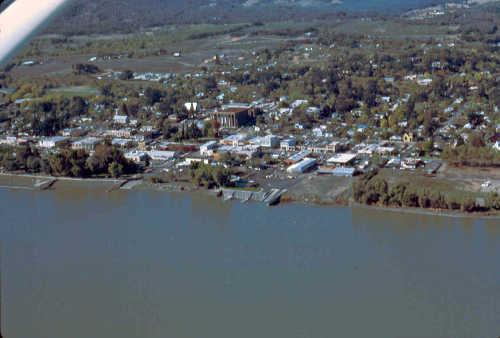
Lake County History: The 1976-77 drought
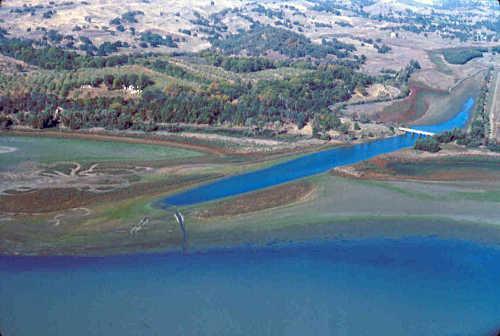
LAKE COUNTY, Calif. – The weather news from 1976 and 1977 sounds familiar today.
Clear rainless days progress one after another, mild temperatures prevail and lake levels drop. Today’s jet stream patterns duplicate 1977’s.
Lake County’s rainfall in 1976 and 1977 totaled about 25 inches, only half of average, and 1977 was the driest year on record in California.
In early 1976 the drought garnered little attention in the press. Roy Dufrain Sr. at the Record-Bee noticed and urged Lakeport officials to get serious about finding reliable long-term water sources.
Wells showed levels 5 to 10 feet lower in May than they did a year earlier, but officials weren’t yet worried about a crisis.
Clear Lake slipped below “zero Rumsey” in September 1976 when water stopped flowing over the Grigsby Riffle in Cache Creek.
Rain in November raised hopes briefly, but Clear Lake continued to fall faster than the rain did.
On Nov. 27, 1976, the low water revealed a car submerged at Clear Lake State Park and resolved the December 1967 disappearance of Melvin Murrin and Chester Lowe.
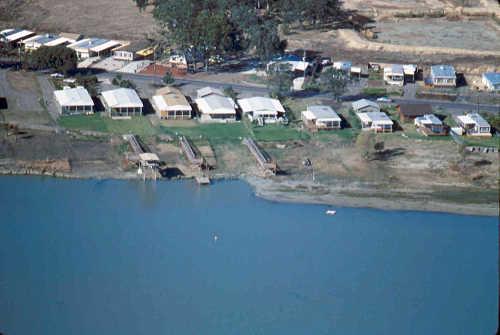
When the drought continued into 1977, the Board of Supervisors asked Gov. Jerry Brown to declare a state of emergency in Lake County and make the county eligible for federal and state assistance.
The Federal Emergency Management Agency did not yet exist but other agencies and programs provided drought relief.
The state of California made $10 million available through the Livestock Raisers’ Disaster Relief Act of 1977 for owners and lessees of nonirrigated land in drought-stricken areas.
The federal Agricultural Stabilization and Conservation Service assisted farmers with water conservation and irrigation projects.
Lake County and nearby counties hired rainmakers to seed clouds, a project that produced mixed results.
Water conservation programs promoted ways to use and reuse water wisely. Lakeport instituted severe water rationing in May and contemplated pumping lake water to recharge the municipal wells.
The Bureau of Land Management burned 3,500 acres of water-holding brush on Cow Mountain, which released some water into Scotts Creek.
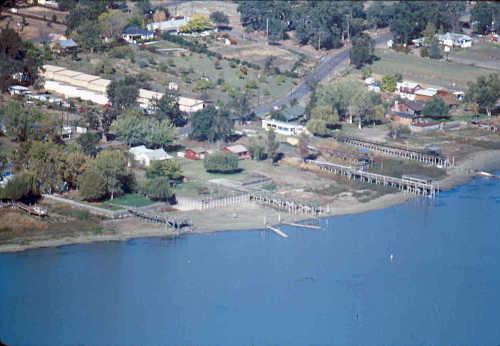
The lake level continued to drop, leaving docks and boat ramps high and dry; drivers created shortcuts through dry creek beds and Lake Mendocino shrank to a puddle. Clear Lake’s level reached -3.39 feet in November 1977
Lake County’s pear industry suffered from the drought more than did other crops.
Pear growers reported a crop only about three quarters of what they expected, the fruit never reached full size, and frost and hail damaged fruit.
Some growers resorted to irrigating their orchards when the water table dropped, but pumping lowered the wells even more and growers couldn’t keep up with the vicious cycle.
Walnut production remained high in spite of some frost damage and vineyards survived reasonably well.
Storms in November and December delivered a gift to Lake County and residents began to hope that the drought would end soon. Creeks flowed again and wells began to rise.
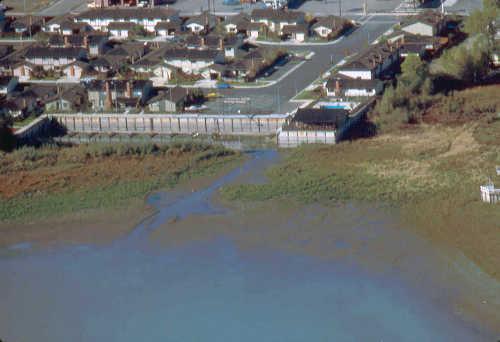
Rain pelted Lake County with nearly 14 inches on 22 days in December and January. One headline captured the story: “Storms End Drought As Floods Cause Damage Around County.”
Clear Lake rose four and a half feet in one week and passed above zero Rumsey on Jan. 10.
Had Clear Lake ended 1977 at a normal level instead of a negative, the 45 inches of rain that elevated Clear Lake 11 feet in 1978 would have inundated the shoreline for weeks.
As the current news sounds more and more like 1977’s news, one wonders how Lake County would cope with another drought of the same magnitude.
Lake County’s population has doubled since 1977 and would strain resources more than it did in the 1970s.
Water districts are warning their customers that current conditions compare to those of 1977 and are urging conservation.
For further reading:
http://www.cwsl.edu/content/klein/California%20three%20year%20drought.pdf
Number of acre-feet in runoff in 1977; water levels in reservoirs
Lake County newspapers on microfilm in the Lake County Library chronicle the local drought story.
Online sources show the larger picture.
California Drought of 1976 and 1977: Extent, Damage and Governmental Response
http://www.gao.gov/assets/130/120157.pdf
Major Floods and Droughts in California
http://geochange.er.usgs.gov/sw/impacts/hydrology/state_fd/cawater1.html
The California Drought: A Quasi-Experimental Analysis of Social Policy
http://www.ncbi.nlm.nih.gov/pmc/articles/PMC1308163/pdf/jaba00050-0027.pdf
Drought in California
http://nwri-usa.org/documents/DroughtBrochure_Jeanine.pdf
Jan Cook has lived in Lake County for about 40 years. She works for the Lake County Library, is the editor of the Lake County Historical Society's Pomo Bulletin and is a history correspondent for Lake County News. If you have questions or comments please contact Jan at
- Details
Lakeport City Council approves beginning negotiations for Carnegie Library study
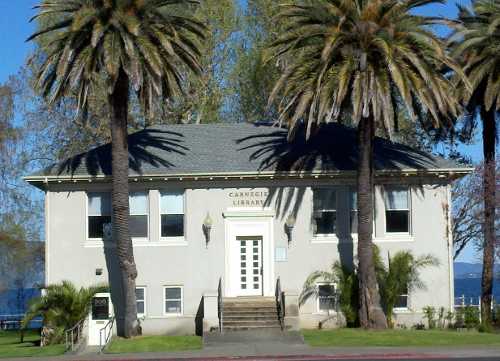
LAKEPORT, Calif. – This week the Lakeport City Council approved moving forward with negotiating a contract for a feasibility study of the 96-year-old Carnegie Library.
The council unanimously approved a consultant selection committee's choice of San Francisco-based Garavaglia Architecture Inc., and directed staff to negotiate a contract and scope of work with the firm for the feasibility study, which is meant to determine a new and best use for the historic building.
The contract, not to exceed $10,000, will be paid for with a $5,000 grant the city received as well as $5,000 in city matching funds.
City Special Projects Coordinator Richard Knoll, who sat on the selection committee, said the request for proposals for the feasibility study was widely circulated, with outreach also made to local firms. A total of five proposals were submitted, he said.
Phil Smoley, president of the Lake County Historical Society, said the organization had submitted a proposal, and was interested in seeing the building used as a historical site and resource, with a docent available to help educate people about the area's history.
“We're definitely interested in the use of the building for that purpose,” Smoley said, adding that it also could be used for a meeting space.
He wanted to know if the $10,000 for the contract was meant only to study the building or if some of the funds would be available to be used for repairs.
Councilman Marc Spillman said the grant was specific that it's for study, not repairs.
Smoley said the historical society was excited about seeing the building used in one form or another. “It's such a historical gem,” he said, asking that the historical society be given due consideration when the city selects a use for the library.
City Manager Margaret Silveira said the city has been collecting ideas about future uses for the building, and has received good ideas from the public. She acknowledged receiving a proposal from the historical society.
She said the study will look at necessary upgrades and what uses for the building are the best for the community.
Mayor Kenny Parlet thanked the selection committee for its work on choosing the firm.
Knoll, who also thanked the selection committee for its efforts, explained that the Carnegie Library underwent a significant rehabilitation in 1997.
The upgrades completed at that time included a new roof, leveling of the basement slab, new exterior paint, and new electrical, phone and computer wiring. Knoll said new wall-mounted space heaters and a new attic-mounted heating and cooling unit were installed at that time.
“The building is actually in fairly good shape,” Knoll said.
While it needs some maintenance work, the building – which on the day of the council meeting marked the 96th anniversary of its opening – is “pretty stable,” he added.
Knoll, who worked in the building for a number of years, said that it can get cool in the winter and hot in the summer, and he suggested that there may be some additional work that needs to be done to update it.
Spillman moved to authorize city staff to negotiate the professional services contract and scope of work with Garavaglia Architecture, with Mayor Pro Tem Martin Scheel seconding. The council approved the motion 5-0.
Also on Tuesday, the council conducted a hearing and adopted an ordinance adding Chapter 17.39 to the Lakeport Municipal Code related to the establishment of density bonuses and other affordable housing incentives. No public input was offered during the hearing.
The council also approved a professional services agreement and development reimbursement agreement with the consulting firm PMC, which will work on studies and environmental documents for a new 16-pump gas station project Safeway is proposing to build at its 11th Street shopping center, as Lake County News has reported.
In other news, the council approved a contract for the housing program inspector with Robert Fogelstrom, approved a resolution reaffirming the necessity of AB 1600 development impact fees, approved a professional services agreement with Total Compensation Inc. for actuarial services and authorized Silveira to enter into a professional services agreement with Utility Safety Services for CalOSHA compliance services.
Email Elizabeth Larson at
- Details
- Written by: Elizabeth Larson
Supervisors approve $3,000 contribution toward Land Trust wetlands purchase
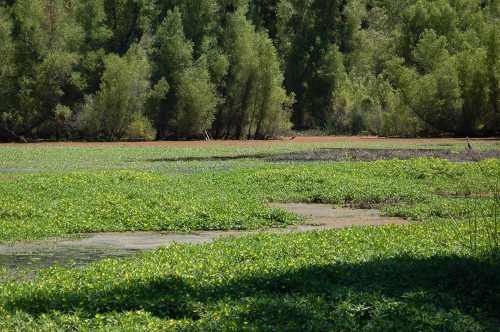
LAKEPORT, Calif. – The Board of Supervisors on Tuesday approved a request from the Lake County Land Trust to make a contribution toward the purchase of a Kelseyville wetlands property that the group says is critical to the health of Clear Lake.
The board approved a $3,000 allocation from the Lake County Fish and Wildlife Advisory Committee's budget for the Land Trust's Big Valley Wetlands project.
The 31-acre parcel, which includes both wetlands and grassland, is located on Clipper Lane and is owned by George Melo. Last fall, the Land Trust announced its was raising funds to purchase the property for $225,000.
Fish and Wildlife Advisory Committee Chair Greg Giusti took the request to the board, explaining that the Land Trust had approached the committee last November to ask for a $5,000 contribution.
Giusti said the committee held off on a decision while it gathered more information, taking up the issue again in January.
At that time, the committee decided that it didn't want to commit to giving the full $5,000 requested, as that would have meant that 50 percent of its budget was devoted to one project, Giusti said.
Instead, the committee settled on a compromise, offering a $3,000 contribution, he said.
“This is a wonderful project,” said Supervisor Jim Comstock, adding that he's hopeful it will be successful.
However, Comstock was concerned about what would happen to the county's funds if the sale fell through.
Giusti suggested the board could could direct the funds be held until the project is completed.
Supervisor Rob Brown said he believed the project's potential for failure was long past. He said he had spoken to Land Trust representatives Roberta Lyons and Michael Friel, and was confident that the sale would go through.
Board members also asked about whether the land would be publicly accessible.
Land Trust Executive Director Catherine Koehler told the board that some of the land will be accessible while, at the same time, the organization works to maintain the wetlands' conservation value.
“Above all, that is what we are trying to protect,” she said.
She said they don't want the lands to be damaged, nor do they want to prevent people from enjoying them.
Supervisor Denise Rushing pointed out that public access isn't always the point in such land purchases. “Those wetlands are key to the lake's health,” Rushing said.
During the meeting, Supervisor Anthony Farrington suggested that the county have a contract to disburse the funds, and County Administrative Officer Matt Perry told the board he felt that was an appropriate approach. Perry said the board could authorize him to both draft and sign the document.
Farrington moved to approve the $3,000 allocation with a contract to require that it goes toward the purchase, with the requirement that if the purchase doesn't take place, the funds are returned to the county.
Brown seconded the motion, which the board approved 4-0. Supervisor Jeff Smith was absent.
With the $3,000 from the county, the Lake County Land Trust has now raised $69,000 toward the $225,000 purchase price, Koehler told Lake County News in a followup interview.
The $69,000 raised so far includes $5,000 from a bequest from the late John Graham, a Land Trust member and avid fisherman.
Koehler said the Land Trust's option to buy the land runs through March 2015. “We're hoping to close long before the option, though,” she said.
The Land Trust's goal is to raise the funds by the end of this calendar year, according to Koehler.
“We are going to see how things go for the first part of the year and then come up with a decision on how to finalize the fundraising, roughly midyear,” Koehler said.
Those interested in donating to the Melo land purchase can visit the Lake County Land Trust's Web site at http://www.lakecountylandtrust.org/ and go to the “donate now” button in the upper righthand corner. The online donation function allows donors to specify where they want their donation spent, Koehler said.
Checks also can be sent to the Lake County Land Trust, P.O. Box 711, Lower Lake, CA 95457, with the specific project noted in the check's subject line.
Email Elizabeth Larson at
- Details
- Written by: Elizabeth Larson




