
 How to resolve AdBlock issue?
 Lake County officials concerned about Lake Piru quagga mussel discovery
LAKE COUNTY, Calif. – The discovery last month of invasive quagga mussels in another of California's water bodies has county officials concerned.
“It doesn’t bode well for Clear Lake or any other water body in California for that matter,” said Lake County Water Resource Director Scott De Leon in response to the discovery of quagga mussels in Lake Piru in Ventura County on Dec. 18, 2013.
This is the first time quagga or zebra mussels have been found in a Southern California water body that does not receive water from the Colorado River, according to the California Department of Fish and Wildlife.
“This is evidence that the mussels are going to continue to move to other bodies of water through boat movement, yet the State Department of Fish and Wildlife neither acknowledges Lake Piru was infested by a boat nor do they pursue a statewide effort to control boat movement from infested areas,” said De Leon.
An invasive mussel infestation in Clear Lake could be devastating, according to county officials.
The ecosystem and tourism industry would be negatively impacted, but the higher financial cost could come about from the mussel-clogged water intakes, pumps, pipelines, and irrigation lines that use water from the lake, the county reported.
An infestation in Clear Lake and its surrounding lakes could have a huge impact on Northern California as well, local officials said.
Clear Lake empties into Cache Creek whose water is used for agricultural irrigation in Yolo County; Lake Pillsbury empties into the Eel River which could introduce invasive mussels into the Russian River; and Hidden Valley Lake empties into Putah Creek which runs through Lake Berryessa into Vacaville, Fairfield and the Suisan Marshes.
Both Putah and Cache Creek waters flow into the Bay Delta and so an infestation in these creeks could ultimately infest the San Joaquin and Sacramento valleys.
Although the downstream flow of water from Lake County could affect several other counties, it is the state of California’s stance that each individual water body is responsible for their own protection.
In 2008, the Lake County Department of Water Resources brought the quagga mussel to the attention of the Lake County Board of Supervisors. Four decontamination units were purchased almost immediately and a mussel sticker program was created.
Lake County currently has about 30 retailers who participate in the sticker program and approximately 20 state-certified inspectors.
Mark Miller, a member of the Lake County Invasive Species Prevention team is available 24/7 to perform inspections. His attitude is to get people on the lake as quickly as possible.
“My goal is to make friends with the boaters, while keeping Clear Lake clear of mussels,” said Miller.
The Lake County Invasive Mussel Program is funded through fees collected from the sale of mussel stickers, which totals approximately $45,000 a year, according to De Leon.
“This barely covers the cost of the supplies to print the stickers and our part-time extra help employee who is currently coordinating the program,” said De Leon.
A Lake County resident pays $10 a year for their annual sticker, and a visitor will spend $10 per month on a sticker. The retailer retains $7 of that fee, and the county receives $3 of the fee.
In 2013, Lake County performed 14,771 screenings, which are more than were performed at Lake Tahoe, with a fraction of the budget.
Miller also performs a monthly monitoring of the 20-plus “traps,” artificial substrates scattered throughout Lake County’s lakes, in order to identify an infestation as soon as possible.
The California Department of Fish and Wildlife also performs a plankton tow of Clear Lake twice a year at the request of the County to check for veligers, the microscopic larvae of invasive mussels.
“The need for Lake County to secure an ongoing revenue source is of paramount importance in order to set up a comprehensive line of defense to prevent the infestation of the zebra and quagga mussels,” said Lake County District 4 Supervisor Anthony Farrington.
On Tuesday, Jan. 28, the Lake County Board of Supervisors will consider a resolution calling for the placement of the Healthy Lake Sales Tax ordinance on the June ballot. The ordinance calls for a one half-percent increase in sales tax to be used exclusively for the lake.
In November 2012, Measure E, a Sales Tax to Support Clear Lake, was narrowly defeated in the local polls.
De Leon said that invasive species prevention would be the top priority of funding received from that sales tax.
Algae, weed abatement, water quality programs and the Middle Creek Restoration Project also are priorities of the measure, he said.
No viable method of invasive mussel remediation has yet been developed for a body of water the size of Clear Lake if it should become infested.
For more information on Lake County’s Mussel Sticker program go to www.nomussels.com .
- Details
- Written by: Lake County News reports
State controller orders enforcement action against delinquent reclamation district
LAKE COUNTY, Calif. – The State Controller's Office is seeking missing financial data from a number of special districts around the state that haven't submitted the information as required by law, with a local reclamation district that is being proposed for disbandment among them.
State Controller John Chiang said Thursday he was dispatching his audit and accounting staff to 20 special districts across the state to collect missing financial data that, by law, was required to be reported more than a year ago.
Among the districts that Chiang said haven't reported is Reclamation District No. 2070, based in Upper Lake.
Of those 20 public agencies delinquent in their reporting, the controller will audit at least three districts which have failed to comply with reporting requirements for two or more consecutive years, Chiang said.
Tom Smythe of Lake County Water Resources said Reclamation District No. 2070, which is an independent special district, was created in the mid 1920s to maintain levees and pumps in the Upper Lake Reclamation Area.
Maintenance of those levees was taken over by the state in the 1950s, Smythe said
Reclamation District No. 2070 has “become a nonfunctional entity at this point,” Smythe said.
The reclamation district was among 120 local governments that received letters from Chiang last October warning that their financial reports were overdue by more than a year and that action would be taken if the reports weren't submitted by Dec. 31.
Nine cities and 97 of the special districts that were warned subsequently filed their reports, according to Chiang's office.
Altogether, more than 5,200 local public agencies have complied with Government Code section 53891, which requires local governments to annually file with the State Controller's Office a report of financial transactions – which include figures on revenues, expenditures and long-term debt – within 90 to 110 days of the end of the fiscal year.
Chiang publishes financial reporting instructions annually on his Web site, http://www.sco.ca.gov/ .
In the case of Reclamation District No. 2070, the last report it made to the state was for the 2010-11 fiscal year, according to Jacob Roper, a spokesman for the State Controller's Office.
He said the data for 2012-13 was due last October, but the district didn't submit it.
At its Jan. 28 meeting, the Board of Supervisors is scheduled to consider a request from Lake County Water Resources to ask the Lake County Local Agency Formation Commission to initiate proceedings to dissolve the reclamation district.
Smythe said the Lake County Watershed Protection District has been buying up property in Reclamation District No. 2070 for the Middle Creek Restoration Project area, which covers 1,650 acres of land that is meant to be restored to wetlands to improve the health of Clear Lake.
As that land purchasing process has moved forward, the reclamation district's officers have been bought out, Smythe said. As a result, the district hasn't functioned for about a year.
In one case in point, Smythe said last November escrow closed on the Watershed Protection District's purchase of property owned by John Irwin, who had been the reclamation district board president.
“So we're starting the disbandment process and it will come under the jurisdiction of the Watershed Protection District,” Smythe said.
At some point in the future, when the Middle Creek Restoration Project goes into effect, the reclamation district's remaining facilities – a flood water pumping station and diversion channel that it maintains – will no longer be needed, according to Smythe.
In the meantime, the State Controller's Office is still trying to locate the delinquent financial data from Reclamation District No. 2070, Roper said.
He said accounting staff will work to collect the data, and may be able to obtain it through the Lake County Auditor's Office, as local auditors offices often oversee funds for such districts, he said.
Roper didn't yet have a timeframe for when State Controller's staff plan to work on getting the district's records.
“We will be collecting it and making sure everyone has access to it,” Roper said.
Email Elizabeth Larson at
- Details
- Written by: Elizabeth Larson
Marymount California University opens fall enrollment for Lakeside Campus
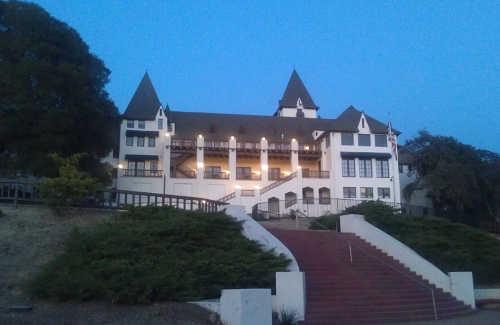
LUCERNE, Calif. – Lake County's first university campus is gearing up to open its doors to students this fall.
Marymount California University reported that it is ready to enroll students for the fall semester – which begins this August – at the Lakeside Campus, located at the Lucerne Hotel or “the Castle” as it's commonly known.
Marymount also has campuses in Southern California in Rancho Palos Verdes and San Pedro.
Kelly Curtis Intagliata, the university's chief public relations and marketing officer, said students may select courses leading to a bachelor’s degree or master’s degree.
The undergraduate programs include a bachelor of arts in business or a liberal arts bachelor’s degree with an emphasis in business and psychology, she said.
For those students wanting to earn a master’s degree, graduate programs include a master of science in community psychology, a master of science in leadership and global development, or a master of business administration, according to Curtis Intagliata.
Meanwhile, the historic building's transformation into an educational center is expected to be completed by this summer.
The county of Lake, which purchased the building in 2010, entered into a 15-year lease agreement with Marymount in 2012, with the agreement giving the university the option to purchase the building outright, as Lake County News has reported.
As part of that lease – which was updated in December – the county must prepare four classrooms and must address Americans with Disabilities Act compliance issues, including the installation of an elevator in the eight-decade-old building.
The update to the lease dropped the requirement for a fifth classroom and instead allows the county to spend the money on making the parking lot ADA-compliant.
Deputy County Administrative Officer Alan Flora told Lake County News on Wednesday that the county expects to have fully completed its responsibilities before July 1.
At its Jan. 14 meeting, the Board of Supervisors approved the bid process, plans and specifications for the building's biggest ticket item, the four-stop elevator needed to meet ADA rules.
Flora said the elevator bids are now open and are due Feb. 3. He said county staff plans to schedule the award of the contract for the supervisors' meeting on Feb. 4.
The elevator contract will require completion by June 13, Flora said.
Prospective students interested in completing their bachelor’s degree – after finishing the freshman and sophomore years of college – or starting a master’s degree can receive information about course schedules and financial aid by contacting Marymount California University at 888-991-5253 or by emailing
Email Elizabeth Larson at
- Details
- Written by: Elizabeth Larson
Lucan drops out of State Senate race; race narrows to McGuire, Wiesner
NORTH COAST, Calif. – The race to succeed retiring State Sen. Noreen Evans has narrowed down to two men.
On Wednesday, Novato Mayor Eric Lucan, one of the two remaining Democrats in the race for the Second Senate District seat, announced he was ending his campaign.
At the same time, he gave his support to Sonoma County Supervisor Mike McGuire.
McGuire now remains the race's lone Democrat, and he's facing Republican Lawrence Wiesner of Santa Rosa in the race to represent the Second Senate District.
In this year's election, the district's new boundaries will take effect. The new lines extend from the Golden Gate Bridge to the Oregon border, and include all of Lake, Del Norte, Humboldt, Marin, Mendocino and Trinity counties, and portions of Sonoma County.
Evans (D-Santa Rosa) announced last year she was not seeking reelection.
The Wednesday announcement from Lucan follows Arcata resident Chris Lehman's decision, made public Jan. 13, that he also was leaving the race.
Lucan, who has continued to work full-time while conducting his campaign, said in his Wednesday announcement, “With increasing pressures on my time, I found it was possible to run a good campaign, but not the great campaign that this large district deserves and requires.”
He went on to endorse McGuire. “Over the last several months, I have been impressed with Mike’s track record, energy and his knowledge of issues in Marin County and through out this beautiful senate district. Even as we competed in the campaign, Mike was always gracious and open. We will be in good hands with Mike as our state senator.”
McGuire thanked Lucan for his support and endorsement, calling him “a strong candidate.”
So far, McGuire has racked up endorsements from more than 80 elected officials, including Congressman Mike Thompson, Assemblyman Wes Chesbro and Assemblywoman Mariko Yamada, and on the local level, from county supervisors Anthony Farrington and Jeff Smith.
Wiesner, 70, is a US Air Force veteran and Certified Public Accountant who believes what the California Legislature needs is an accountant who can balance a budget.
He has sought the North Coast Senate seat previously, losing to Patricia Wiggins in 2006 and Evans in 2010.
In this latest effort, he said jobs, the economy and education remain his priorities, just as they were in past campaigns.
“We're really in bad shape, so we need a little bit better guidance than we've had so far,” he said.
Wiesner doesn't accept that the state is doing better economically. “If everything was great in the state of California, we wouldn't have cities going into bankruptcy,” he said, citing troubles including unfunded pension liabilities and unemployment.
“The state's in real trouble. In Lake County, that's a fact, too,” he said, pointing to the county's high unemployment.
Wiesner held out his military and job experience as better preparation for public service than the route taken by McGuire, who was first elected to the Healdsburg Unified School District Board when he was 19 years old.
McGuire, 34, has since gone on to serve six years on the Healdsburg City Council – including a term as mayor – and was elected to the Sonoma County Board of Supervisors in 2010.
He has visited Lake County 10 times since he began his campaign last year and said he has committed to being in the county twice a month if he wins the office.
“Lake County's prosperity is a priority to me,” he said.
He said he plans to work with Lake County communities on developing jobs and the economy, ensuring a strong rural health care system and rolling out rural broadband.
McGuire also plans to work with the Lucerne community on the “ridiculously high” water rates residents there are paying. McGuire attended a Dec. 12 town hall that focused on the town's water issues, and he told Lake County News that he's worked on a similar situation in Larkfield.
He's also interested in quagga mussel prevention – an issue in which he said Lake County has been a leader – and in building a stronger public school system after nearly six years of statewide cuts to K-12 education totaling $18 billion.
Calling rural counties the backbone of the Second Senate District, McGuire noted that he would be honored to work for Lake County's residents in the Legislature.
“I will be extremely engaged, active and involved, fighting for resources Lake County residents need to thrive,” he said.
Because of the state's recently changed primary system, the race ahead won't be settled in the June primary, but will continue until November.
Email Elizabeth Larson at
- Details
- Written by: Elizabeth Larson
State agency's letter causes Westshore Pool opening to be put on hold
LAKEPORT, Calif. – The effort to open the Westshore Pool so the Channels Cats and high school swim teams can begin their competitive season has hit a major roadblock in the form of a state agency's recently rediscovered letter that raises issues about the pool's safety and compliance with federal accessibility law.
That was the news the Lakeport City Council received on Tuesday night as part of an update on a pool pump it had agreed to replace.
The meeting Tuesday night began with Lakeport Police Chief Brad Rasmussen asking for a moment of silence in memory of Ronnie Dekeyser III, the 11-year-old boy who Rasmussen had made an honorary Lakeport Police officer last October. Ronnie died on Monday afternoon after a long battle with an inoperable brain tumor.
The council then switched the order of the agenda around to take up the Westshore Pool discussion first, with members of the Lakeport Unified School District Board and the Channel Cats swim team in attendance.
City Manager Margaret Silveira said the matter was being brought back to the council for reasons including the fact that the pool's pump – which in November the council had agreed to replace – was going to cost more that previously anticipated.
However, the more serious issue necessitating followup with the council was the Lakeport Unified School District's discovery in its files of a nearly 11-year-old letter from the Division of the State Architect.
That letter – which raised issues with the pool's condition and accessibility under the Americans with Disabilities Act – has resulted in an about-face regarding the district's willingness to open the pool.
Lakeport Unified owns the pool and entered into a 2004 contract with the city of Lakeport to operate the facility. Several years ago, due to budget cuts, the school district stopped contributing to the pool's costs, which the city has continued to pay for in order to keep the pool open.
The pool underwent a renovation that included resurfacing in 2007, with the $370,000 in improvements covered by a combination of a $169,000 state grant and city general fund monies, according to city officials.
Last fall, the city had approached the district about once again contributing monetarily to the pool's upkeep.
At its Dec. 12 meeting, the Lakeport Unified School District Board discussed the costs to run the pool. Dave Norris, the school district's facilities director, said at the time that more improvements were needed and that a “significant amount” of money would be required to maintain the pool.
During that December meeting the district board indicated support for finding a way to get the pool open by February in order for the Channel Cats swim team to begin its season.
Silveira told the council Tuesday that the school district called a special meeting Jan. 16, with school and city officials, and Channel Cats representatives on hand to discuss the situation. At that point, the school reported that, due to liability concerns, it was not moving forward with opening the pool.
The city has since looked at taking on the liability, but Silveira said that avenue didn't work.
She nonetheless urged the council to move forward with buying the new pool pump to help with upkeep and prevent damage. “Our hope is to find a solution.”
Public Works Director Mark Brannigan said that when he took the pool pump issue to the council in November he had estimated it would cost between $5,000 and $10,000. The bid the city received came back at $12,000, but he was able to negotiate it down to just over $9,500 for the pool pump, its motor and a controller, all of which can be installed within three weeks.
Turning back to the matter of the letter from the state, Mayor Pro Tem Martin Scheel asked Silveira, “Have we received this letter before?”
“This was the first time I was made aware of it,” she said, noting it was not in the city's pool files. At the Jan. 16 meeting, she was told that Norris had only seen it for the first time recently.
Lakeport Unified Superintendent Erin Smith-Hagberg told the council that she, also, had only seen the letter for the first time after she found it in school district files during the holiday break. She sent a copy to Silveira a few days ago.
Councilwoman Stacey Mattina asked Smith-Hagberg if the district had contacted the Division of the State Architect about the letter. Smith-Hagberg said yes, noting the person who wrote the letter has been moved to another job. They've not yet been able to speak to that person's successor.
“We're moving forward as quickly as we can,” Smith-Hagberg said.
Mattina said the city wanted to go ahead and open the pool. “Will that work for you?”
“That's a direction we were moving,” said Smith-Hagberg, explaining that the district also had hired a pool consultant to look at upgrades the facility needed.
She told the council that the district can't advise that the pool be opened until the safety concerns raised by the Division of State Architects and the district's pool consultant are addressed.
“What has to be fixed?” asked Councilman Tom Engstrom.
Smith-Hagberg did not offer a specific list, instead giving an estimate that about $34,000 in repairs and upgrades were needed to address priority items.
In the letter from the state, “The immediate concern is the structure,” Smith-Hagberg said.
Scheel pointed out the city already is shouldering liability for the pool. “We'd like to get the pool open, and we'd like your blessing.”
Smith-Hagberg said the Division of the State Architect has to answer that, not the Lakeport Unified board, adding the district was waiting for a call back from the agency.
Scheel asked if the district had any discussions with the Division of the State Architect until now. Smith-Hagberg said no.
In a recent contact with the agency, she said Lakeport Unified was asked if it had followed through with making upgrades, and was informed that it needed to complete that process.
“They advised us that it not be opened,” Smith-Hagberg said of the pool.
Councilman Marc Spillman asked if the district would help cover the costs for upgrading the pool if the city moved forward with paying for the new pump.
“I can't answer that,” Smith-Hagberg said.
She noted during the discussion, “I think we all share the same interests. We want the community to use the pool,” but she added that she believed they all shared the same interest in keeping the community safe.
Silveira said she knows that the Division of the State Architect can be difficult to work with, and she was exploring whether the city can include the needed ADA upgrades to the pool as part of a city ADA transition plan.
Governments are allowed to have the plans, which show how needed improvements are accomplished over time. Upgrades are not required of government facilities all at once, she said.
Silveira said she has asked if the state will accept the city's transition plan or if the changes need to be made immediately, and she doesn't have an answer to that yet. If the transition plan is acceptable, she said it could solve a lot of immediate issues with the pool.
Jennifer Hanson of the Channel Cats told the council she has been in a leadership position with the swim team for 11 years and they've never had a better relationship with the city and council than they now have, and she thanked them for their support.
After the Jan. 16 meeting, Hanson said it was clear how the district felt about opening the pool, so the swim team reached out to the Quail Run fitness club, which has a pool, to find a facility for swimmers to train.
The high school swimmers need to get started immediately, Hanson said, noting she has 45 of them wanting to swim.
About an hour before the council meeting, Hanson met with Quail Run, which agreed to allow the high school swimmers to use its pools.
However, she added, “They are not interested in having us there in the summer.”
She said the facility isn't good for training the little children. “We train 150 kids every summer in that pool,” Hanson said of the Westshore Pool.
She said the high school swim team starts competing Feb. 3. They won't be able to have home meets now because the Quail Run pools don't meet the requirements. “That's logistically going to be hard.”
Agustin Merodio – the swimming coach for the Channel Cats, as well as for the swim teams at Kelseyville and Clear Lake High schools – told the council it would be very expensive to get a new pool, and he believed it made better sense to fix the one they have.
He said he gets contacts from college swim coaches every day looking for collegiate swimmers, and 330,000 children are swimming every year in the United States. Merodio didn't want to see the Westshore Pool go away.
“It's a sad day for Lakeport,” said Engstrom.
While not pointing fingers, Engstrom noted that the district got the letter from the state in 2003 and entered into the contract with the city for running the pool in 2004.
“So here we are, 10 years later, two weeks away from the season starting, and we can't open the pool until the school gives their blessing, right?” he asked.
Engstrom said he was in favor of doing everything needed to get the pool open, but he didn't see the pool being open by Feb. 3. If the pump wasn't put in, he believed they would incur further expense.
Engstrom made the motion to approve proceeding with the pump purchase, with Mattina seconding and the council voting unanimously to support it. The vote got a round of applause from the Channel Cats.
Email Elizabeth Larson at
- Details
- Written by: Elizabeth Larson




