
 How to resolve AdBlock issue?
 Measure H sales tax proposal seeks to tackle Clearlake's road, code enforcement needs
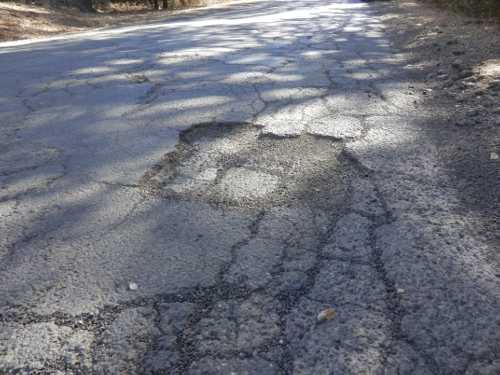
CLEARLAKE, Calif. – In recent years efforts to find additional revenue sources for needed repair and maintenance of the roads in the city of Clearlake have been a boulevard of broken dreams.
But proponents of a road improvement program for the city are optimistic that this is a situation that is about to change.
They are pinning their hopes on a measure calling for a 1-percent sales tax increase to fund code enforcement and road maintenance which will be on the city's Nov. 5 ballot.
Measure H would generate approximately $1.4 million a year over five years, according to Carl Webb of the Yes on Measure H Committee, http://www.helpclearlake.com .
Of that amount, 75 percent, or $1,050,000, would be used for roads, with the remaining 25 percent, or $350,000, to be designated for code enforcement, Webb explained.
Another reason for Measure H, Webb posited, is the outside funding it can bring to the city.
“It makes Clearlake a 'self-help city' and that's very important when it comes to applying for grants,” he reasoned. “There are several important points when it comes to seeing who gets the grant. The thought is if we are willing to help ourselves we are more likely to get help from the state.”
Regarding how the funds would be spent on roads, the plan calls for maintaining the city's major arterial streets – including Lakeshore Drive, Old Highway 53 and Olympic Drive – at the highest level, the Yes on Measure H Committee.
The committee said that collector streets would be rehabilitated, repaved and restriped to improve conditions and meet current standards. Those streets include Lakeshore from Olympic Drive to the northern city limits, and San Joaquin, 18th, Phillips and Boyles avenues, among others.
The city would use the funds to first address the most distressed residential paved streets, and unpaved streets the city maintains would continue to be graded and have gravel added annually.
However, the committee emphasizes that the measure won't pave the city's dirt roads, which instead will have seasonal grading.
Such a program is needed, said Webb “because there isn't sufficient funding available for the city to maintain the 112 miles of roadway without additional funds coming in.”
Nor are there sufficient funds available for the city to have full code enforcement services, which were cut in 2010 as part of across-the-board staff and city service cuts based on reduced funding that resulted from the recession.
“We have some in effect now,” City Manager Joan Phillipe said of code enforcement. “It's limited, just because of staffing.”
She said scaled back code enforcement was reimplemented last year, based on the Clearlake City Council's priorities and goals. Cases have been limited to health and safety issues, such as recreational vehicles being parked on lots with no sanitary hookups.
“Assuming that Measure H passes, that gives us the ability to really put the program back in place,” said Phillipe.
Based on the city's budget, code enforcement covers animal control. Phillipe said it also will assume responsibility for overseeing enforcement of the city's new medical marijuana cultivation ordinance, which goes into effect this coming Jan. 1. The ordinance is meant to be complaint driven, said Phillipe, but allows the city to take action to protect the health, welfare and safety of city residents.
A half-percent sales tax measure passed in Lakeport in 2004, Measure I, has generated millions of dollars for road and capital improvement projects, and helped the city avoid deep service cuts during the depths of the recession. Measure I was accompanied by advisory Measure J, in which city voters expressed their desire to see the money used principally for roads and infrastructure.
Taking on the city's road repair needs
That Clearlake's roads are among the most poorly maintained in the county is no secret.
“Some of them are really bad,” said Webb. “This measure is not going to solve all our problems, but it's a step in the right direction. If we don't start maintaining our roads and making improvements to them, think about what their condition is going to be over a five-year period.
“We're talking about five and a quarter-million dollars that we would not otherwise have that we can spend on our roads,” Webb added.
The city of Clearlake historically has funded road repairs through gas tax funds, said Phillipe. Those funds are down, although due to some reallocation of state proposition funds the city's budget currently reflects an increase. The city's general fund does not contribute to road repairs, she said.
Gas tax sources in the current budget total just over $450,000, with additional funds from the Regional Surface Transportation Plan bringing the total revenues up to $620,659.
Road division expenses include road staff, $430,087; materials and supplies, $154,500; services and utilities, $67,500; training and travel, $2,700; contract services, $12,200; and striping services, $10,000. The difference in funding and appropriations is covered by small transfers from other city funds, including capital projects.
According to the city, Public Works Roads division staff are an allowed expenditure “for employees who provide the research, planning, construction, improvement, maintenance, operation and administration of public streets,” and there are no other funds available to pay for these employees.
Clearlake's pavement condition index rates the city's roads as a 38, in the “poor” category.
The city's pavement management study, conducted by Nichols Consulting Engineers, includes three scenarios for improving the city's streets.
The first would have the city devote an additional $200,000 a year over five years for road improvement.
That would maintain the current 38 or “poor” rating but 51 percent of the roads would be in the “very poor” or failed category at the end of five years, at which point the unfunded work backlog would total $16.5 million.
In the second scenario, the city devotes an additional $1.05 million annually to road upgrades, which would increase the pavement condition index to 60, or a “fair” rating, at the end of five years.
The unfunded backlog would total $12.3 million, and 61.5 percent of the city's streets would fall into the “good” or “excellent” categories, with 30.9 percent ranked as “very poor” or “failing.”
In the third and final scenario, the city would spend an additional $800,000 annually – broken down into $600,000 for arterial and collector streets, and $200,000 on collector streets – which over five years would increase pavement conditions from 38 to a 45 rating, which is still in the “poor” category.
The unfunded backlog would total $13.3 million, with 45.3 percent of the network anticipated to fall into the “good” or “excellent” condition category and 45.9 percent falling into the “poor” or “failed” category.
It becomes much more expensive to fix worn pavement than newer pavement, which is why the city's plans place emphasis on maintaining streets already in good condition.
City officials said slurry seal for roads in good condition costs $1.70 a square yard, compared to $17.80 a square yard for a thin overlay on roads in fair condition, $31.40 per square yard for cold-in-place recycling and, to rebuild roads in very poor condition, $49.50 a square yard.
City emphasizes need for new revenue source
The additional funding for Clearlake's roads and code enforcement needs that Measure H will bring is necessary at a time when the city is continuing to emerge from several years of deep budget and staffing cuts.
Critics of Measure H have said the city needs to further cut staffing and end pay raises for staff, however that fails to take into account that between 2006 and 2010, the city cut nearly 25 full-time positions, reducing total staff to about 39 employees. At that time, the city manager and finance director positions were reduced to half-time.
As the city continues to pull out of the recession, city officials said that total staff number today has remained roughly unchanged from where it was in 2010, with one of the main changes being restoring the city manager's job to a full-time position.
The anti-Measure H forces also have alleged that there has been a 20-percent increase in employee compensation, but Phillipe said city staff hasn't received raises outside of merit increases.
Clearlake Police Chief Craig Clausen said that besides those step increases, staff hasn't received raises since about 2005.
Phillipe added that the predominant reason there's been an increase in staff compensation is because required contributions to the California Public Employees' Retirement System, or PERS, and health insurance have gone up significantly.
“It's devastating,” said Clausen, who has seen police contributions to PERS go up even more sharply than employees in other departments.
In the 2013-14 budget, the city has 45.5 full-time equivalents budgeted, but Phillipe said there are several vacancies, including four open police officer positions and two maintenance worker spots that are about to be filled.
Phillipe said the city also has lost $400,000 annually due to the dissolution of redevelopment, with the general fund – “which already was stretched tight,” she said – now having to cover those losses. It's a significant hit for the city, which has a $10.7 million budget for the current fiscal year.
At an Oct. 2 town hall meeting on Measure H, Phillipe and City Engineer Bob Galusha were on hand to explain the proposal and the city's financial situation.
The only alternate suggestion Phillipe said she has heard from community members who don't support Measure H – some of whom have formed a “No on Measure H” group based around a Facebook page – is that the city should pursue a property tax, a difficult proposition when there are many out-of-county property owners.
Such a tax also would be likely to be passed on to renters, who will pay more than they would in the case of the sales tax, Phillipe said.
The opposition also has used an obscure San Bernardino County planning brochure to accuse the city of improving roads that aren't “state approved.”
“There is no provision that the state accept any of our streets. it just doesn't exist,” Phillipe said, noting that she's waiting for San Bernardino County officials to respond to her about the document.
Phillipe said she and Galusha offered to meet with anyone who had questions or concerns. However, she said neither she nor Galusha were ever contacted by any of the Measure H critics who were at the meeting.
Building a better city image
Webb provides additional assurances of why a road improvement program is critical. For one, the views outsiders have of the city's image.
“I don't know what happened to (Clearlake) or why, but this place is definitely not a place that others think of when they think of 'California,'” one blogger wrote.
“There is no question that if we had code enforcement we would improve the image,” said Webb. “This is a problem that we've had to deal with for some time and it's getting worse. That's the reason we're working so hard to get this measure passed; it will make a significant difference in the city.”
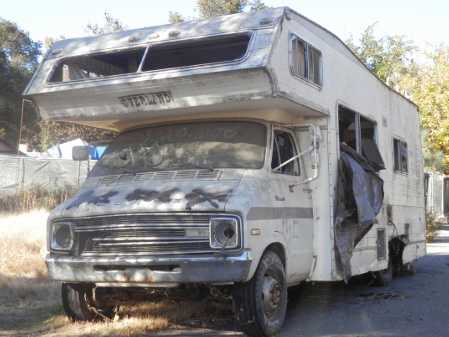
A visible consequence of what has happened in recent years without code enforcement, he added, is an increase in abandoned vehicles along the roadways.
“We had code enforcement a few years back and the number of towed vehicles of abandoned inoperative vehicles that were towed was amazing,” Webb said. “And now that we haven't had code enforcement for two or three years were starting to see a whole lot more of that kind of thing.
“I don't think it's one area of the city. We've got some pockets where there's no problem, but there are problems all over the city that we have to get worked out. This is going to help tremendously to do that,” he added.
The “No on Measure H” coalition argues that Measure H is a virtual duplicate of Measure G, which appeared on the city's November 2012 ballot and narrowly missed passage.
Measure G actually received a 61.7 percent to 38.3 percent vote in its favor, according to the Lake County Registrar of Voters Office.
However, the measure needed a “supermajority,” meaning, a 66-percent “yes” vote to be implemented. It was less than five percentage points away from success.
Measure G also appeared on the ballot at the same time as the county put forward Measure E, a half-percent sales tax that would have helped fund lake- and watershed-related improvement programs. Measure E also needed a supermajority, registering a 63 to 37 percent vote, just three percentage points short.
Having the two measures on the same ballot is believed to have contributed to the failure of both. It was for that reason that the Clearlake City Council voted in August to place Measure H on this November's ballot, rather than wait until the June 2014 election, when it's anticipated the county may put forward another lake-related sales tax measure.
Webb said that opposition to Measure H “seems to be relatively small compared to the amount of people who are contacting me and saying, 'We gotta get this thing passed.' People come to my door and say 'Is this where we go for Measure H?' I say yes and they say, 'Here's a check.'
“People are tired of driving on these roads,” he said. “They're tired of going out the front door of their house looking at a big garbage dump across the street. That's why the code enforcement is an important part of this.”
Webb said he has encountered the naysayers at town hall meetings.
“They don't want the sales tax to go through, but they don't have anything to say about how were going to handle improvements otherwise,” said Webb, adding that the measure's critics have said that Phillipe's $134,820 annual salary should instead be cut. He said that is not going to make a dent in the city's road and code enforcement needs.
“My biggest question for anybody who's opposing this is 'what's your solution?” Webb asked. “I haven't heard one.”
Email John Lindblom at
2013 Measure H sales tax measure - Clearlake, Calif.pdf
- Details
- Written by: John Lindblom and Elizabeth Larson
Crescent City woman dies in Thursday crash; driver seriously injured, arrested
GLENHAVEN, Calif. – Medication is believed to have been a factor in a Thursday afternoon crash near Glenhaven that claimed the life of a Crescent City woman.
Joyce Rakestraw, 77, died in the single-vehicle wreck, which occurred shortly after 12:37 p.m. on Highway 20 at Mary Street, according to the California Highway Patrol.
Her husband, Raymond Daniel Rakestraw Jr., 80, sustained major injuries, the CHP said.
Raymond Rakestraw was driving a 2005 Buick Park Avenue eastbound on Highway 20 approaching Mary Street, driving between 45 and 50 miles per hour, when – for an unknown reason – he allowed the vehicle to drift off the highway's south edge, according to the CHP.
The CHP said the car struck a pier and overturned.
Joyce Rakestraw, riding in the front passenger seat, was pronounced dead at the scene by Northshore Fire Protection District personnel, according to the report.
While the wreck remains under investigation, the CHP believes prescription medication is a factor.
Raymond Rakestraw was arrested for driving under the influence and then released for treatment of his injuries to Santa Rosa Memorial Hospital, where he was transported by a REACH air ambulance, the CHP said.
Both of the Rakestraws were wearing their seat belts, and the vehicle's airbags deployed, the CHP said.
Email Elizabeth Larson at
- Details
- Written by: Elizabeth Larson
County rent control initiative gets enough signatures to qualify for ballot; measure now goes to supervisors
LAKE COUNTY, Calif. – The initiative that proposes to institute rent control in senior mobile home parks in the unincorporated areas of Lake County has moved another step closer to getting onto the June 2014 ballot.
The group “Save Our Seniors” collected enough signatures to qualify its initiative to be placed before the county's voters next summer.
Save Our Seniors also has a similar initiative that will appear on the city of Lakeport's November 2014.
The county initiative defines a senior mobile home park as one where 80 percent of the homes have at least one person over age 55.
It also would roll back rents to Jan. 1, 2012; and require that rent hikes be based on the percent of Social Security benefit increases.
Save Our Seniors submitted the signatures they had begun collecting in the spring to Registrar of Voters Diane Fridley's office on Oct. 4, as Lake County News has reported.
According to a certificate of examination completed by Fridley, Save Our Seniors collected 3,636 signatures for the county initiative, with 2,523 found to be valid. The effort needed a minimum of 2,115 signatures.
Fridley has sent her report to the Board of Supervisors, which will discuss the initiative at its meeting next Tuesday, Nov. 5, at the Lake County Courthouse, 255 N. Forbes St. in Lakeport.
It's scheduled to be discussed at 11:15 a.m. Seniors and other interested parties are invited to attend and give comments on the initiative.
According to Fridley's report, the board has three options – accepting the initiative, without changes, as an ordinance; order it be placed on the June 3, 2014, ballot; or order a report from county departments on the potential impacts of the initiative.
That report would be completed within about a month; once submitted to the board, the supervisors would have 10 days to accept the ordinance or order it go on the June 2014 ballot, Fridley reported.
The Lakeport City Council had city department heads complete that report for the city initiative. With the report in hand, the council at its Sept. 17 meeting voted to place the initiative on the next municipal ballot in November 2014.
Park owners and their representatives have warned that they are preparing to take legal action against the initiatives, which they say are unconstitutional.
Email Elizabeth Larson at
110513 BOS - Senior rent control initiative petition.pdf
- Details
- Written by: Elizabeth Larson
Clearlake Animal Control partners with SPCA of Clear Lake for services
CLEARLAKE, Calif. – Clearlake Animal Control announced that it has begun a new partnership with the SPCA of Clear Lake.
The partnership, which began Oct. 21, will allow for the city of Clearlake Animal Control Division to focus solely on animal-related complaints, abuse cases, violations, welfare checks and community awareness.
This summer, the Clearlake City Council approved a three-year contract with the local SPCA, which – among other things – is to provide a drop off location for animals, veterinary service, low-cost vaccination clinics in the city limits, and maintain a Facebook page and Web site for adoptions.
All animals that are impounded by the Clearlake Animal Control officer are transported daily to the SPCA of Clear Lake and animals are no longer boarded at its Clearlake facility.
For citizens of the city of Clearlake, you should contact the Clearlake Animal Control officer at 707-994-8201, Extension 118, when reporting any and all animal complaints, welfare checks, reports of abuse, vicious or dangerous animals at large, animal bites, injured animals and all other animal nuisance reports.
Clearlake Animal Control operates out of the Clearlake Police Department, located at 14050 Olympic Drive in Clearlake.
Clearlake Animal Control’s normal business hours are Monday through Friday, 8 a.m. to 4 p.m. After-hour and weekend emergencies only will continue to be handled by Clearlake Police Department patrol officers.
For citizens of the city of Clearlake only, you should contact the SPCA of Clear Lake at 707-995-CARE or 707-279-1400 to inquire about city of Clearlake dog licensing, lost, found or impounded animals, redeeming or surrendering an animal, public drop off of animals, adoptions, low cost spay/neuter clinic, vaccination clinics and microchipping.
The SPCA of Clear Lake is located at 8025 Highway 29 in Kelseyville, just south of the Kit’s Corner intersection by the Clear Lake Riviera.
The SPCA of Clear Lake accepts public drop off of animals from the city of Clearlake only with proof of address required at the time of drop off. It is recommended that you contact their office prior to drop off. Public drop off hours are Monday through Friday, 10 a.m. to noon.
In addition, citizens of the city of Clearlake can still license their dogs at Clearlake Veterinary Clinic, located at 3424 Emerson St. in Clearlake; Clearlake City Hall, 14050 Olympic Drive; or by visiting the SPCA's Kelseyville office.
The city of Clearlake Animal Control is on Facebook at www.facebook.com/CityOfClearlakeAnimalControl .
The SPCA of Clear Lake is on Facebook at www.facebook.com/SPCAofClearLake .
- Details
- Written by: Lake County News reports
City of Lakeport seeks to fill vacancies on Parks & Recreation Commission
LAKEPORT, Calif. – The Lakeport City Council announces the availability of four positions on the city of Lakeport Parks & Recreation Commission.
These voluntary positions have two-year terms that will begin in January 2014.
The Parks & Recreation Commission currently meets on the second Thursday of each month at 3 p.m.
The commission acts in an advisory capacity to the Lakeport City Council in matters pertaining to the city parks and recreation.
It cooperates with the Lakeport Planning Commission and civic organizations to advance the sound planning of new recreation areas and facilities.
The commission, from time to time, recommends policies on city recreation facilities to the city council for consideration and approval.
Interested applicants should contact acting Deputy City Clerk Hilary Britton at 707-263-5615, Extension 12, for an application.
Applications are also available on the city’s Web site, www.cityoflakeport.com .
Applications must be returned to the acting deputy city clerk by 5:30 p.m. Dec. 5, and appointments will be scheduled for the Lakeport City Council meeting of Tuesday, Dec. 17.
- Details
- Written by: Lake County News reports




