How to resolve AdBlock issue?
 Council honors high school performers, meets new police officers
LAKEPORT, Calif. – In addition to meeting new police officers and discussing pedestrian safety, the Lakeport City Council enjoyed a little Rodgers and Hammerstein during its Tuesday night meeting, as it honored Clear Lake High School students and school staff who recently presented a much-lauded production of “The Sound of Music.”
Mayor Tom Engstrom presented a certificate of appreciation honoring the group, which presented the musical in March.
“My wife and I love musicals,” he said.
“I was really impressed when I went to see 'The Sound of Music,'” he said, noting the great acting, singing and dancing. “You guys were just fantastic.”
Engstrom read out the certificate, honoring students and the many adults who assisted with the production.
The little group also sang a few lines from the famed musical's song, “Do Re Me.”
Engstrom followed up by presenting another proclamation in honor of Municipal Clerks Week to City Clerk Janel Chapman and Deputy City Clerk Kelly Buendia.
Also on Tuesday night, Police Chief Brad Rasmussen and Lt. Jason Ferguson introduced new police volunteers and officers.
Ferguson introduced Arland Souza and Antonio Cortez, who he said join a large and talented corp of police volunteers.
Rasmussen introduced Officer Michael Nass, a new young officer who recently moved from San Rafael to join the agency. Nass also is a certified locksmith.
The agency's other new officer is Michael Sobieraj, a 15-year Lake County resident who has nine years of law enforcement experience, having previously served as a correctional officer and patrol deputy with the Lake County Sheriff's office, Rasmussen said.
Sobieraj, who started work on March 27, finished his field training in less than four weeks, quickly learned Lakeport Police's policies and processes, and has been doing good work for the department, Rasmussen added.
In other business, the council approved new safety measures at the intersection of 20th and High streets, directing City Engineer Scott Harter to purchase a push button-activated, solar-powered blinking pedestrian warning sign.
“It's a bad intersection, with school kids walking,” said Engstrom.
Council members noted that children must now live at least two miles away to qualify for bus service. As a result, a lot more children are walking, Council member Stacey Mattina pointed out.
The new warning sign, which will be hard-wired – which Harter considered a more reliable option than a more expensive wireless sign – will cost $2,216. The council voted unanimously for the purchase.
Also on Tuesday, the council approved a request from Public Works Director Mark Brannigan to authorize $9,500 for repairs to the hoist on a city dump truck that's been out of commission for about two months and is needed for the upcoming construction season.
Brannigan said he received a quote for $8,471.25 for the repairs, but asked for the higher amount in case additional repairs were needed. At council's request he agreed to seek additional bids from local businesses.
Email Elizabeth Larson at
- Details
- Written by: Elizabeth Larson
Judge to clarify order on county's requirement to provide sheriff private counsel in Brady matter
LAKEPORT, Calif. – A visiting judge is expected to issue a clarification later this week or early next week on his decision from last year to require the county to provide legal counsel to Sheriff Frank Rivero in his legal dispute with District Attorney Don Anderson.
During a half-hour hearing Tuesday afternoon, Mendocino County Judge Richard Henderson heard arguments from Deputy County Counsel Shanda Harry and Paul Coble, a senior associate of the Jones and Mayer law firm, which is representing Rivero in his struggle with Anderson over a determination that he lied during a 2008 shooting investigation.
Coble was one of two attorneys from the firm appearing on Rivero's behalf before separate judges on Tuesday afternoon. In an earlier hearing, retired Butte County Judge William Lamb granted Anderson's anti-SLAPP motion to strike Rivero's civil rights lawsuit over the “Brady” determination.
In February Anderson placed Rivero on a “Brady” list of officers with credibility issues, determining that Rivero had lied to investigators about shooting at a man holding a can of pepper spray while working as a deputy in February 2008. The man was uninjured.
“Brady” comes from the 1963 US Supreme Court case Brady v. Maryland, which requires that prosecutors divulge to criminal defendants information that could help clear them. That includes information relating to the credibility of officers involved in their cases.
In 2012, the supervisors had refused to hire Rivero outside counsel after he alleged a conflict of interest with the County Counsel's Office. Rivero, in turn, filed suit to force the county to hire him an outside attorney, with Henderson determining that a conflict did exist in the County Counsel's Office and ordering the county to hire an outside firm.
The Board of Supervisors in March decided to ask Henderson for clarification on just how far the county needed to go in supplying legal counsel, and held off paying a $29,000 bill submitted by Jones and Mayer.
At that point, total legal fees in the matter were estimated at about $52,000. An updated tally wasn't immediately available from the county on Tuesday.
Henderson acknowledged at the Tuesday hearing that “there is some room for confusion” in his previous judgment, so he agreed to clarify it, noting the underlying issues are still active. He said he wanted to hear arguments from the two sides and would take it under consideration.
Henderson said the court had found the county had an obligation to provide legal representation to Rivero in connection with the Brady determination that, at that time, Anderson was still in the process of considering.
The primary issue, he said, was whether the counsel the county had been required to provide was restricted to the Brady determination or if it could extend beyond to a challenge by Rivero.
Henderson said his tentative ruling was that it had been his intention in that original order to restrict the legal counsel to the proceedings leading up to the Brady decision, and that the representation would not continue in an “open-ended” way in order to allow Rivero to challenge Anderson's final determination.
Harry explained that there had been confusion for the Board of Supervisors over what the ruling actually meant.
She said once a Brady determination is made, there is no appeals process, as it's a matter that is strictly up to the district attorney.
The county wasn't anticipating any litigation or need for Rivero to have an attorney once the matter was decided. “It is no longer pending,” she added.
Harry argued that the need for the representation had ended once Anderson made his decision.
Coble told the court that the dispute between Rivero and Anderson over the Brady issue remained the same. He suggested that the impact of the decision is, in fact, greater now. Consequently, Coble said Rivero's need for legal counsel continued.
He accused the county of being inconsistent, initially refusing to hire Rivero outside legal counsel because nothing bad had happened.
Since then, however, “The bad thing has happened,” Coble said in reference to the Brady decision, and now the county is trying to say the sheriff is no longer entitled to representation.
“The county doesn't like it and doesn't want to pay,” said Coble, pointing out that the county had not paid the $29,000 bill.
He said the firm acted in good faith in relation to the court's original order, which implied that legal counsel was in effect until the dispute had ended, which it has not.
While Coble asked Henderson to consider extending legal representation going forward, he said at the very least the judge should extend the obligation through Tuesday.
Coble argued that the firm should be allowed to pursue the legal challenges on behalf of Rivero until those challenges were exhausted.
In response to Coble, Harry pointed out that case law on Brady “is very clear” that there is no appeal process.
Referencing the statement by Coble that Jones and Mayer had acted in good faith in continuing to represent Rivero after the Brady decision, Harry responded, “It's fairly clear that there is nowhere to go after the Brady determination has been made.”
She also pointed out that the Board of Supervisors had filed the request for clarification at the same time as it decided to hold off on paying the most recent bills.
Henderson told Harry that what the board did or didn't do was not relevant to his intent.
He said the same thing to Coble when Coble suggested that the County Counsel's Office had violated the rules of professional responsibility by taking an adverse position against Rivero.
Coble said that in the law you win some actions and lose others, and the fact that you've lose one doesn't mean you've proceeded in bad faith. The responsibility, he said, is to advance good faith arguments for the application and extension of the law.
Henderson said he would review the matter and try to get his decision finished later this week or next Monday at the latest.
Email Elizabeth Larson at
- Details
- Written by: Elizabeth Larson
Judge agrees to throw out sheriff's case against district attorney based on anti-SLAPP motion
LAKEPORT, Calif. – On Tuesday a visiting judge granted District Attorney Don Anderson's motion to strike down a case filed against him by Sheriff Frank Rivero, who alleged civil rights violations as a result of his being placed on a list of officers with credibility issues.
During the afternoon hearing retired Butte County Judge William Lamb agreed to strike all of the causes of action in Rivero's case based on an anti-SLAPP motion Anderson filed in the case last month.
Anti-SLAPP motions are meant to address “strategic lawsuits against public participation,” usually filed to prevent people from exercising their First Amendment rights.
In this case, Anderson argued that Rivero was trying to limit him from disclosing matters in the public interest, namely that Rivero had been placed on a “Brady” list of officers with credibility issues.
“Brady” references the 1963 US Supreme Court case Brady v. Maryland, which requires prosecutors to divulge to defendants in criminal cases any potentially exculpatory information, including information about officers with credibility issues who are involved in their cases.
Rivero filed suit against Anderson in late February to prevent disclosure of his Brady listing, which resulted from conflicting statements he gave to investigators about his actions during a February 2008 nonfatal shooting, in which Rivero – then a sheriff's deputy – shot at a man holding pepper spray. The man was uninjured.
In a March hearing, however, Lamb had ordered all of the court filings – including Anderson's determination – to be unsealed, making them all public.
In his suit against Anderson, Rivero alleged that his civil rights had been violated, arguing that there had been no due process involved in the Brady determination.
Rivero's attorney during the hearing, Ryan Jones of the Jones and Mayer law firm, said their case was fundamentally a procedural one.
Anderson, however, argued that case law established that Brady determinations are up to the discretion of district attorneys.
During the hearing, Lamb asked Jones if Rivero was seeking another hearing. Jones said yes, but in the confines of the District Attorney's Office, not court, and with additional due process considerations.
“Didn't he already do that once before?” asked Lamb with regard to Anderson's inquiry.
“He did something,” said Jones, but held that something didn't rise to the appropriate level of due process.
Jones said being put on the Brady list interferes with Rivero's desire to work in law enforcement. “I have trouble making that leap of faith from one to the other,” replied Lamb.
Lamb also said he didn't believe that an officer's credibility in a case can be questioned by the defense solely on a Brady listing. “That's what makes it not an immediate act of controversy.”
Jones told the court that personal animus between Anderson and Rivero was the root cause of the issue. There was no record of the Brady determination procedure, no appellate process and no opportunity to cross-examine witnesses.
“It's just as arbitrary and capricious as hair color,” Jones said of the determination.
Lamb said the evidence could easily have been construed another way by another district attorney, and he suggested Anderson acted just as reasonably as a district attorney who reached an opposite conclusion about Rivero's credibility.
Just because he came to the conclusion that he did doesn't mean Anderson's decision was arbitrary or capricious, Lamb said.
Jones argued that Rivero originally had been cleared of any issue regarding the shooting incident and that the matter was only reopened after he was elected. Lamb replied that Rivero was not on the Brady list for use of a firearm during his officials duties.
Jones said the issues already had been resolved but were recycled due to personal animus. “That's why we think additional due process is necessary.”
Lamb said he didn't believe Rivero and his attorney had made their case that the Brady determination provided “immediate jeopardy” to Rivero in his capacity as a law enforcement officer.
The judge also held that while due process rights – including the right to confront witnesses and cross-examine them – are guaranteed in court proceedings, they do not necessarily figure in the kind of investigation that led to Rivero's Brady finding.
“The stigma in and of itself is very problematic for a peace officer,” Jones said.
Lamb said Anderson was not on a witch hunt, but had obligations as a prosecutor, referring to the requirement to disclose such Brady information to criminal defendants. “He has a constitutional duty to do so and you’re trying to fault him for doing his duties,” he told Jones.
Jones disagreed, returning to his allegation of a personal disagreement between the men.
Lamb said he may have been missing something, but thought that Anderson had come to his conclusion based on conflicting statements Rivero himself had made.
Anderson explained that those conflicting statements were made during the investigation and were testified to by three witnesses who heard them. Specifically, Anderson said Rivero claimed he didn't tell the man he shot at to drop a can of pepper spray, while the witnesses claimed he did make that statement.
Lamb asked Anderson if another person reviewing the case could have come to a different conclusion. Anderson said it was difficult for him to say.
The judge then asked if Anderson was saying that the facts were so one-sided that a reasonable mind couldn't have come to a different conclusion.
“In my opinion, that would be correct,” said Anderson, adding that he didn't think a reasonable person could say Rivero did not lie during the original investigation. He also explained that he was aided in making his determination by his chief deputy, another experienced prosecutor and his chief investigator.
In response to Jones' statement claiming that Rivero had previously been cleared in the case, Anderson said that was not so.
“Sheriff Rivero was not cleared of any Brady issues back in 2008. He was cleared of any criminal violations” due to the use of a firearm, Anderson said, adding that initial reports indicated Rivero was not telling the truth.
Anderson said he could not speak to why former District Attorney Jon Hopkins did not pursue the case further. However, when Anderson received information shortly after he took office in early 2011 that alleged Rivero had lied, he said he was obligated to investigate it.
Lamb concluded that while there could have been things done to comport more with due process, he couldn't come to the conclusion that they were essential and integral rights in the Brady determination.
Jones argued that they needed to be able to do discovery in this case, and said Anderson's interpretation of inconsistent statements “is very different than our perception.”
Jones raised the issue of a constitutional right to liberty to pursue a chosen career field. Lamb replied that he couldn't accept that being on the Brady list would keep a person from getting another job in law enforcement, pointing out that in Rivero's case it was a five year old incident.
In turn, Jones pointed out that Rivero was just placed on the list in the last several months, significantly hampering his ability to get a job elsewhere.
“And I can't say that that's caused by the manner in which the hearing was conducted,” said Lamb, adding, “You're saying you don't like the result.”
Lamb, who dismissed the actions on the basis of the anti-SLAPP over a demurrer and motion to strike Anderson also had filed, said the anti-SLAPP is meant to nip such cases in the bud early.
He said the appellate court could take the case up if it chooses, but that Anderson could more forward with his duties without threat or a chill on his work, which is another reason for the anti-SLAPP law.
Still pending is a decision on attorney's fees, which the anti-SLAPP requires in successful cases. Anderson told Lake County News after the hearing that his estimate of fees ranges from as low as just over $3,500 to nearly $15,000, the latter based on the “lodestar” formula used for calculating reasonable attorney's fees.
A hearing before Mendocino County Judge Richard Henderson – which followed the one before Lamb – was to consider a clarification of Henderson's previous ruling ordering the county to pay for Rivero's attorney fees in the lead up to the Brady determination. The county wants to know how long it must continue to pay for outside counsel.
Anderson said he considers the anti-SLAPP fees moot if the county – not Rivero personally – will be ordered to pay them.
Email Elizabeth Larson at
- Details
- Written by: Elizabeth Larson
Police search for armed suspect, alleged accomplice in kidnapping, vehicle theft
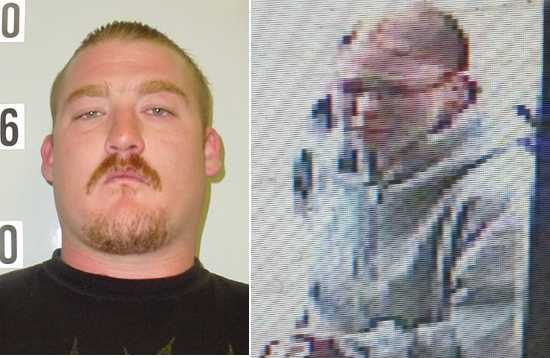
LAKEPORT, Calif. – Police are searching for two Fairfield residents alleged to have been involved in a kidnapping and vehicle theft.
Lakeport Police reported that they are looking for John David Jaquint Jr., 28, and Danielle Weisler, who is believed to be between 25 and 30 years old.
Jaquint is said to be armed and dangerous, according to Lt. Jason Ferguson.
Ferguson said that at 10:20 a.m. Monday Lakeport Police officers responded to a reported vehicle theft from the parking lot of the District Attorney’s Office.
Upon their arrival officers learned that a female reported being kidnapped from Fairfield on Sunday by Jaquint, her estranged boyfriend, and Weisler, Ferguson said.
Ferguson said the alleged victim told the officers that she was held at gunpoint against her will and threatened during the night while in a motel room in Fairfield.
She reported she was driven to Lake County Monday morning, in her vehicle, because both she and Jaquint had court proceedings, according to Ferguson.
The alleged victim told police that as Jaquint left for the courtroom, she exited her vehicle and contacted courthouse security, who in turn contacted police, Ferguson said.
She told officers that Jaquint walked out of court and saw her speaking to security so he got into her vehicle, driven by Weisler, and fled the area, according to Ferguson.
He said the alleged victim described her vehicle as being a 2004 burgundy-colored Volvo sedan bearing California license 6XUZ573 with a cracked front windshield.
The victim reported that Jaquint is in possession of a double barreled shotgun which he keeps in the back seat, Ferguson said.
John David Jaquint Jr. is described as a white male adult, 5 feet 10 inches tall, 210 pounds, bald, with partial sleeve tattoos on both arms and tattoos on his left side chest.
According to the alleged victim Jaquint is affiliated with the Aryan Brotherhood, a white supremacist prison gang, and is considered armed and dangerous.
Danielle Weisler is described as a white female adult, 5 feet 5 inches tall, 180 pounds with blonde hair and dark framed eyeglasses.
As part of the investigation, officers requested a be on the look out for the vehicle through Lake County Central Dispatch, Ferguson said.
The investigation is ongoing and anyone with information is asked to contact the Lakeport Police Department at 707-263-5491.
Note: The original press release incorrectly stated the make of the vehicle. Police reported Monday night that it was, in fact, a late model Volvo sedan.

- Details
- Written by: Lake County News reports
Police arrest two during ‘shoulder tap’ operation
CLEARLAKE, Calif. – Two men were arrested late last week during an operation aimed at individuals who purchase alcohol for minors.
Clearlake residents Moses Scott and Richard Ketchum were arrested during the operation, which took place on Friday, May 3, and involved officers from the Clearlake Police Department and Agents from the Alcoholic Beverage Control.
The two agencies collaborated to conduct “shoulder tap” operations at various businesses in the city of Clearlake, according to Clearlake Police Officer Aaron Winslow.
Winslow explained that shoulder tap operations are law enforcement programs that the ABC and local law enforcement agencies use to deter and detect alcohol-related crimes involving the sale or furnishing of alcoholic beverages to minors.
During the operations, a minor is used as a decoy to solicit the purchase of alcoholic beverages from an adult, he said. Operations are conducted outside ABC-licensed businesses, Winslow said.
During the operation, numerous people were contacted by the minor decoys and Scott and Ketchum were arrested for criminal violations involving the furnishing of alcohol to minors, according to Winslow.
Winslow said Scott was released with a citation and Ketchum was transported to the Lake County Jail for additional violations which were discovered during his arrest.
This project is part of the Department of Alcoholic Beverage Control’s Minor Decoy/ Shoulder Tap Grant Project, funded by the California Office of Traffic Safety through the National Highway Traffic Safety Administration.
- Details
- Written by: Lake County News reports