18 April 2013
City looks at options for future uses of Carnegie Library
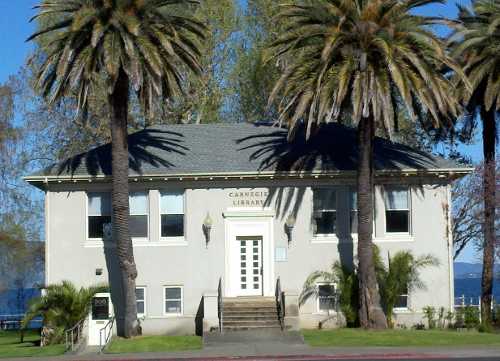
LAKEPORT, Calif. – Surrounded by palm trees on the edge of Clear Lake, the 95-year-old Lakeport Carnegie Library building is one of the county’s most recognizable landmarks.
In 2008, it was listed on the National Register of Historic Places on the local level of significance, with the Friends of the Lake County Museum having submitted the application on its behalf the previous year, according to National Parks Service records.
The library building, which is owned by the city of Lakeport, currently is not open to the public, according to Lakeport City Manager Margaret Silveira.
City staff had been using the building a few years ago before being moved back into the main City Hall building across the street, Silveira said.
She said the city still is using space in the basement of the building, which has Internet access and a main floor just under 1,500 square feet.
Now, the building is the focus of an effort to come up with a new plan for its future.
“Right now we’re just trying to see what interest is out there,” Silveira said.
Scottish-born steel magnate Andrew Carnegie put the fruits of his vast fortune to public use throughout the United States in the form of what came to be known as Carnegie Libraries.
He required two main conditions of communities in order to provide funding – that they provide a suitable library site and agree to continuously support the library through tax funds.
According to a history of the libraries written by Dr. George S. Bobinski and featured at http://www.carnegie-libraries.org/ , between 1889 and 1923 funding provided by Carnegie and his corporation established 1,681 public library buildings in 1,412 communities across the United States.
Lakeport received an $8,000 grant in 1914 to build its library, designed by architects Ward and Blohme and built in the Classical Revival style, according to the Carnegie Libraries of California Web site. The library opened in 1918.
The Carnegie Libraries of California Web site contains a list of the 144 libraries built across California with Carnegie’s donations. Based on that list, 57 of those libraries have been demolished.
An ad hoc committee to the Lakeport Economic Development Advisory Committee met, toured the building and were discussing some ideas with a view to enhancing the building and Library Park as greater attractions, according to LEDAC member Wilda Shock.
However, Shock and Silveira both said that so far there is no plan, with Silveira adding that the city is still open to proposals.
Carol Hays, executive director of the Lakeport Main Street Association, said she currently is completing an application, due May 1, for a grant from the Hart Family Fund for Small Towns, which focuses on communities like Lakeport with populations under 5,000.
“It’s for a consultant who would be giving us a report on the feasibility of what we have in mind, giving us some ideas on best use,” Hays said of the grant funding.
Hays said the grant would not fund any actual construction.
The grants, which “are intended to encourage preservation at the local level by providing seed money for preservation projects in small towns,” usually range between $2,500 and $10,000, and the process to receive one is highly competitive, according to the National Trust for Historic Preservation Web site.
Applications that are not selected are automatically considered for the National Trust Preservation Fund grants, which range between $2,500 and $5,000 and also provide seed money for local historic preservation projects, the organization explained.
Silveira said the library building is in good shape. In 2010 new gold letters were placed on its exterior – the sign lettering had been broken by vandals in 2009 – but otherwise it has had no major issues.
However, one of the questions that the city must answer is the extent to which the building must be modernized to become compliant with federal Americans with Disabilities Act law.
Because the library is on the National Register of Historic Places, it’s not clear if the building would need to be fully ADA-compliant, Hays said.
If it is required, Hays said there will need to be a kitchen and new bathrooms. An elevator also may be required in order to allow greater access to the main floor, which now can only be reached by a steep set of stairs.
“It’s not going to be a small investment,” Hays said.
Hays said there have been some suggestions from local organizations, including having the building be used for meeting space or as a business incubator for small businesses.
Silveira said they are not opposed to the idea of having the building used by private businesses, but the main goal is that it be a community benefit.
“It’s a beautiful setting in the summertime,” she said.
Silveira said she would like to have a slate of suggestions to take to the Lakeport City Council at some point in the future.
Anyone with a proposal or suggestion is invited to send it to Silveira at msilveira@cityoflakeport.com or call 707-263-5615, Extension 32.
Email Elizabeth Larson at elarson@lakeconews.com . Follow her on Twitter, @ERLarson, or Lake County News, @LakeCoNews.
Author Elizabeth Larson
LAKEPORT, Calif. – Surrounded by palm trees on the edge of Clear Lake, the 95-year-old Lakeport Carnegie Library building is one of the county’s most recognizable landmarks.
In 2008, it was listed on the National Register of Historic Places on the local level of significance, with the Friends of the Lake County Museum having submitted the application on its behalf the previous year, according to National Parks Service records.
The library building, which is owned by the city of Lakeport, currently is not open to the public, according to Lakeport City Manager Margaret Silveira.
City staff had been using the building a few years ago before being moved back into the main City Hall building across the street, Silveira said.
She said the city still is using space in the basement of the building, which has Internet access and a main floor just under 1,500 square feet.
Now, the building is the focus of an effort to come up with a new plan for its future.
“Right now we’re just trying to see what interest is out there,” Silveira said.
Scottish-born steel magnate Andrew Carnegie put the fruits of his vast fortune to public use throughout the United States in the form of what came to be known as Carnegie Libraries.
He required two main conditions of communities in order to provide funding – that they provide a suitable library site and agree to continuously support the library through tax funds.
According to a history of the libraries written by Dr. George S. Bobinski and featured at http://www.carnegie-libraries.org/ , between 1889 and 1923 funding provided by Carnegie and his corporation established 1,681 public library buildings in 1,412 communities across the United States.
Lakeport received an $8,000 grant in 1914 to build its library, designed by architects Ward and Blohme and built in the Classical Revival style, according to the Carnegie Libraries of California Web site. The library opened in 1918.
The Carnegie Libraries of California Web site contains a list of the 144 libraries built across California with Carnegie’s donations. Based on that list, 57 of those libraries have been demolished.
An ad hoc committee to the Lakeport Economic Development Advisory Committee met, toured the building and were discussing some ideas with a view to enhancing the building and Library Park as greater attractions, according to LEDAC member Wilda Shock.
However, Shock and Silveira both said that so far there is no plan, with Silveira adding that the city is still open to proposals.
Carol Hays, executive director of the Lakeport Main Street Association, said she currently is completing an application, due May 1, for a grant from the Hart Family Fund for Small Towns, which focuses on communities like Lakeport with populations under 5,000.
“It’s for a consultant who would be giving us a report on the feasibility of what we have in mind, giving us some ideas on best use,” Hays said of the grant funding.
Hays said the grant would not fund any actual construction.
The grants, which “are intended to encourage preservation at the local level by providing seed money for preservation projects in small towns,” usually range between $2,500 and $10,000, and the process to receive one is highly competitive, according to the National Trust for Historic Preservation Web site.
Applications that are not selected are automatically considered for the National Trust Preservation Fund grants, which range between $2,500 and $5,000 and also provide seed money for local historic preservation projects, the organization explained.
Silveira said the library building is in good shape. In 2010 new gold letters were placed on its exterior – the sign lettering had been broken by vandals in 2009 – but otherwise it has had no major issues.
However, one of the questions that the city must answer is the extent to which the building must be modernized to become compliant with federal Americans with Disabilities Act law.
Because the library is on the National Register of Historic Places, it’s not clear if the building would need to be fully ADA-compliant, Hays said.
If it is required, Hays said there will need to be a kitchen and new bathrooms. An elevator also may be required in order to allow greater access to the main floor, which now can only be reached by a steep set of stairs.
“It’s not going to be a small investment,” Hays said.
Hays said there have been some suggestions from local organizations, including having the building be used for meeting space or as a business incubator for small businesses.
Silveira said they are not opposed to the idea of having the building used by private businesses, but the main goal is that it be a community benefit.
“It’s a beautiful setting in the summertime,” she said.
Silveira said she would like to have a slate of suggestions to take to the Lakeport City Council at some point in the future.
Anyone with a proposal or suggestion is invited to send it to Silveira at This email address is being protected from spambots. You need JavaScript enabled to view it. or call 707-263-5615, Extension 32.
Email Elizabeth Larson at This email address is being protected from spambots. You need JavaScript enabled to view it. . Follow her on Twitter, @ERLarson, or Lake County News, @LakeCoNews.

 How to resolve AdBlock issue?



