 How to resolve AdBlock issue?
The elegant irony of Elaine Equi’s lament — what the Germans, I am told, call, “Weltmüdigkeit” (world-weariness) — in her poem, “In an Unrelated,” about the very contemporary phenomenon of “the news cycle,” is that despite what may seem like a grand separation of human beings in the world, we, in the end, have a common sense of collective connection.
In other words, the poet recognizes that we are all in this thing together. This is one splendid use of poetry, to be the “campfire” of our humanity.
In an Unrelated
By Elaine Equi
We have almost nothing left,
no ground in common.
At best, a brand
or maybe a miniseries.
No campfire to gather around.
The big stories—peckish news
gets told in tweets,
gets old so quickly.
In place of one place
a billion tiny customized versions
appear targeted specifically
to your tastes.
You see only what you want to see.
Maybe you always did.
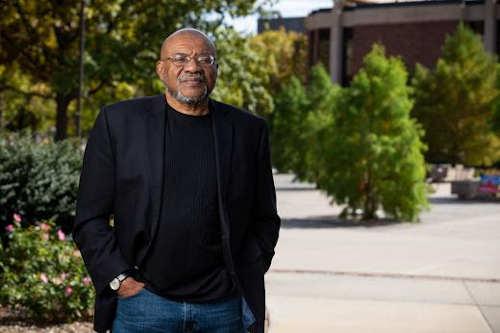
American Life in Poetry does not accept unsolicited manuscripts. It is made possible by The Poetry Foundation, publisher of Poetry magazine. It is also supported by the Department of English at the University of Nebraska-Lincoln. Poem copyright ©2019 by Elaine Equi, “In an Unrelated” from The Intangibles (Coffee House Press, 2019.) Poem reprinted by permission of the author and the publisher. Introduction copyright ©2021 by The Poetry Foundation. The introduction’s author, Kwame Dawes, is George W. Holmes Professor of English and Glenna Luschei Editor of Prairie Schooner at the University of Nebraska.