 How to resolve AdBlock issue?
Arts & Life
- Details
- Written by: Editor
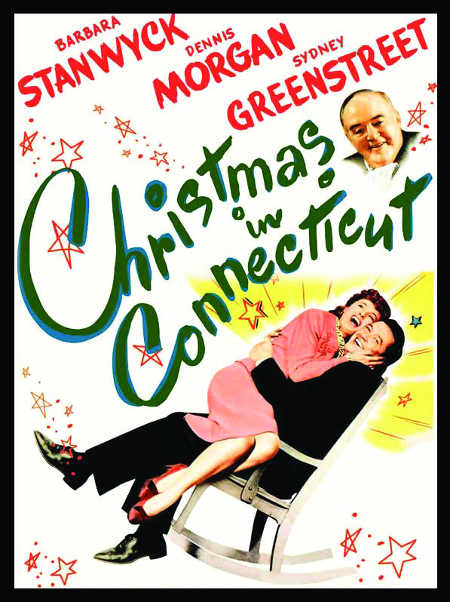
LAKEPORT, Calif. – The 1945 comedy, “Christmas in Connecticut,” starring Barbara Stanwyck and Sydney Greenstreet, screens at the Soper Reese Theatre in Lakeport on Tuesday, Dec. 8, with show times at 1 and 6 p.m.
The story begins with a war hero (Dennis Morgan) who wins a Christmas dinner to be prepared by a popular magazine’s housekeeping expert (Stanwyck) in her lovely rural home in Connecticut.
The publicity stunt, dreamed up by the magazine publisher (Greenstreet), fails to take into account that the expert doesn’t live in Connecticut and she can’t cook.
It’s the perfect screwball farce and a perennial holiday favorite.
The movie is sponsored by John H. Tomkins Tax Consultants and is rated G. Run time is 1 hour, 41 minutes.
Entry to the film is by donation.
The Soper Reese Theatre is located at 275 S. Main St., Lakeport, 707-263-0577, www.soperreesetheatre.com .
- Details
- Written by: Editor

UPPER LAKE, Calif. – Local artist Michelle Price will host a stemware painting party at the Lake County Wine Studio from 2 to 5 p.m. Saturday, Nov. 28.
Price will guide participants in painting their own wineglass and they can opt to paint a glass for themselves or as a gift for a friend.
Paints, tools and a wine glass will be provided along with a glass of wine for sipping for $20 per person.
If participants want to make a matched pair or set of painted glasses, additional stemware will be available for purchase.
Price was born in Lyon, France, lived in New York for several years and then moved to the Bay Area in the early 1970s, where she studied Beaux Arts and obtained a degree in cosmetology, massage therapy and health education. She later graduated from the International Tour Management Institute of San Francisco.
In 2000, Price relocated to Lake County where she became inspired to return to art and developed her own style of expressionism in glass art and acrylic and oil paintings.
Some of her paintings have been influenced by her many years of Latin dancing and specializing in ChaCha, Rumba, Meringue and the Argentine Tango, which Price taught a few years ago with the Reach Out Program. Her artist name, Michou, is her signature on all of her artistic creations.
Price has served on the Arts Council Board of Lakeport and has shown some of her works at the Main Street Gallery and Bell Hill tasting room in Lakeport, Featherbed Railroad B&B in Nice and the Alpine Café in Lucerne. Some of her finished and in progress artwork can be viewed on her Facebook page, Michelle Price Art Creations.
For reservations and additional information, contact Susan Feiler at 707-293-8752.
- Details
- Written by: Ted Kooser
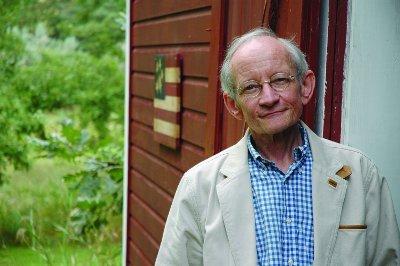
Marge Saiser is a Nebraskan who has written a number of deeply moving poems about love. Here’s one for our holiday season:
Thanksgiving for Two
The adults we call our children will not be arriving
with their children in tow for Thanksgiving.
We must make our feast ourselves,
slice our half-ham, indulge, fill our plates,
potatoes and green beans
carried to our table near the window.
We are the feast, plenty of years,
arguments. I’m thinking the whole bundle of it
rolls out like a white tablecloth. We wanted
to be good company for one another.
Little did we know that first picnic
how this would go. Your hair was thick,
mine long and easy; we climbed a bluff
to look over a storybook plain. We chose
our spot as high as we could, to see
the river and the checkerboard fields.
What we didn’t see was this day, in
our pajamas if we want to,
wrinkled hands strong, wine
in juice glasses, toasting
whatever’s next,
the decades of side-by-side,
our great good luck.
American Life in Poetry is made possible by The Poetry Foundation ( www.poetryfoundation.org ), publisher of Poetry magazine. It is also supported by the Department of English at the University of Nebraska-Lincoln. They do not accept unsolicited submissions. Poem copyright ©2014 by Marjorie Saiser, “Thanksgiving for Two,” (2014). Poem reprinted by permission of Marjorie Saiser. Introduction copyright © 2015 by The Poetry Foundation. The introduction's author, Ted Kooser, served as United States Poet Laureate Consultant in Poetry to the Library of Congress from 2004-2006.
- Details
- Written by: Connel Murray
LAKEPORT, Calif. – On Sunday, Nov. 22, the Lake County Symphony will deliver a program featuring three of the world’s greatest composers of classical music – Bach, Beethoven and Mozart.
The performance will take place beginning at 3 p.m. at Lakeport’s Soper Reese Theatre, 275 S. Main St.
John Parkinson, conductor and music director of the 70-member orchestra, says he was inspired to find compositions that Lake County music lovers would appreciate and to do so he would go to the top of the list of great composers. And he did.
Johann Sebastian Bach, one of the best known names in classical music, is also one of the least-known in both his private life and in the personal construction of his music.
For example, his “Concerto for Flute in C Major” appears to have been recycled from earlier works featuring instruments other than the flute, but in any case his most current arrangement remains a crowd pleaser. The symphony’s Catherine Hall will be the featured soloist.
Ludwig Van Beethoven wrote his “Creatures of Prometheus” as a ballet, the only full-length ballet he ever composed. The theme was based on Greek mythology, wherein the god Prometheus was creator of mankind and all things good about mankind.
The ballet dancers responded to Beethoven’s vivid musical descriptions of their roles. The result was an extremely popular presentation at the time. The symphony will play the noted overture to the piece.
Another less well-known Beethoven piece will also be on the program. It is the “King Stephen Overture” which the composer was commissioned to write commemorating the founder of the Kingdom of Hungary.
Wolfgang Amadeus Mozart, a Lake County favorite since the inception of our symphonic orchestra, will be featured with overtures from two of his works as well as one of his symphonies. They are “The Impresario,” “Il Seraglio” and his “Symphony No. 41,” better known as simply “The Jupiter.”
“Impresario” was described by Mozart as a parody, aimed at singers squabbling over such things as artistic recognition or salary. “It is a comedy in music,” he said.
“Il Seraglio,” however is a real opera with complicated plot lines involving a kidnapping, escape and rescue and all the drama inherent in such a piece.
Finally, the “Jupiter” – named after the Roman god, not the planet – was the last and longest of Mozart’s Symphonies. As such it will be given the final place on the program.
As is traditional the 23 members of the LCSA Youth Orchestra will open the show. This time, and in the spirit of their senior’s music, they will play two pieces by Mozart.
The first is his movement one from “Symphony No. 29, K. 201,” arranged by Janet Farrar-Royce. This is an early symphony by Mozart written when he was only 18. Contrasting themes fit together to create delicacy and vigor.
The second piece by Mozart is the fourth movement, or Rondo, from “Eine Kleine Nachtmusik” often better known as “A Little Night Music.”
According to Sue Condit, music director and conductor of the Youth Symphony, in Mozart’s day many serenades and divertimenti (musical diversions) were written to be played at outdoor evening social events, generally before small gatherings. Mozart’s “Night Music” reflects this tradition.
Admission is $20 for symphony association members and $25 for the public.
As is customary a full rehearsal will take place at 11 a.m. with free admission to young people under 18 while others pay only $5.
Since concerts such as these are limited in Lake County they are very popular – particularly when Mozart is on the program, hence reservations are suggested.
Tickets can be ordered online at www.soperreesetheatre.com or by phone at 707-263-0577.