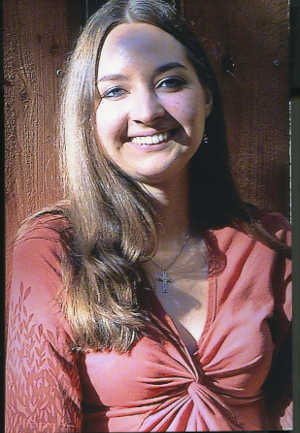
LAKEPORT, Calif. – Local author Heather McIntosh will read from her novel “Tie a Yellow Ribbon” at Lakeport Library at 10 a.m. Saturday, Nov. 22.
“Tie a Yellow Ribbon” tells the story of Kate O’Connell, happy in her world of family and high school friends in 1969 until the love of her life goes missing in action in Vietnam.
McIntosh is a Lake County native who started writing at the age of 6 and grew up writing in Lake County.
“Tie a Yellow Ribbon” is her first published book and she has two more books in progress.
Lakeport Library, located at 1425 N. High St., is open Tuesday, Thursday, Friday and Saturday, 10 a.m. to 5 p.m., and Wednesday, noon to 8 p.m. The phone number is 707-263-8817.
One might venture a guess that lengthy travel in space to a distant planet may involve a certain amount of tedium given the tight confinement of spacecraft.
To bring that concept into focus, think about Sandra Bullock’s lonely odyssey in “Gravity” as she pondered an uncertain fate.
To some degree, a similar providence awaits the audience that straps in for the nearly three-hour journey that is director and co-writer Christopher Nolan’s “Interstellar,” an epic so convoluted and complicated that it easily recalls his muddled “Inception.”
Nolan, co-authoring the screenplay of “Interstellar” with his brother Jonathan, aims once more for a “big event,” as it is plainly clear that he believes his directorial skills will result in a production both grandly visionary and exceptionally replete with vivid imagination.
Stanley Kubrick’s influential, unconventional science-fiction masterpiece “2001: A Space Odyssey,” which was troubled by stilted dialogue, slow pacing and opaque storytelling, seems like an obvious inspiration for Nolan’s latest epic. I wonder, though, what could have been for “Interstellar” if Kubrick, still alive, or Steven Spielberg had been at the helm.
For his part, Nolan is satisfied to unpack a mess of grand messages in his cautionary tale, ranging from the familial bonds shattered by an absentee astronaut father trapped for decades in space travel and pending ecological disaster, to the strains of a society in freefall and the problem of sustaining humanity with little more than failing corn harvests.
Arguably, the vaguely futuristic “Interstellar” is about many things, with none more important than Matthew McConaughey’s Cooper, a former astronaut and engineer now relegated to working as a farmer under harsh Dust Bowl conditions, so brightly and emotionally connected with his young daughter Murph (Mackenzie Foy).
The heartland of America, which could be any of the Plains states, is doomed.
Realizing that Planet Earth faces almost imminent extinction, Cooper locates a remote NASA underground colony, where the brilliant professor Dr. Brand (Michael Caiine) plans a space mission to find another planet capable of maintaining human life.
Dr. Brand’s daughter (Anne Hathaway) is an astronaut who teams with Cooper and two others for an incredible space odyssey, with an objective to discover a wormhole that supposedly exists near Saturn, offering a gateway to other inhabitable worlds.
Space travel gets more complicated by the presence of a black hole that somehow alters the space-time continuum.
It’s as easy for the viewer to get lost as it is for the astronauts to go off-course and end up in a paradoxical world of exploration where each hour represents seven years of life on Earth. Talk about being lost in space.
Considering that time becomes relative, back in the Midwest, Cooper’s children have reached adulthood, with Jessica Chastain as the grown-up daughter, and Casey Affleck as Cooper’s even more petulant oldest child Tom, who is struggling to keep the family farm going since school bureaucrats long ago decided he was not fit for a college education in the family field.
Odd as it may seem, Cooper and his children become relatively the same age in chronological terms. Emotional maturity is another matter.
Even in adulthood, Murph is not forgiving of her father’s long absence, and she seems unaware of his deep longing to return home to reunite with his family.
The age differential eventually shifts to an even greater magnitude, but that’s another story.
Though the action plods along at a leisurely pace, there is artistic brilliance to the planets discovered, one of which resembles a perpetual frozen Minnesota winter, where a stranded astronaut is a surprise character.
Another watery planet might be a surfer’s dream, though it would entail a death wish to conquer the massive waves.
One thing for sure is that Matthew McConaughey is in fine shape, with his comforting words that he hopes will reach his daughter measured in a tone of loving gravity. That seems to be the McConaughey style if you go by his voluble TV commercial for Lincoln automobiles.
The Hans Zimmer score is often loud and bombastic, such that on occasions it nearly obliterates some of the dialogue, while at other times the deafening sounds suggest immediacy to the action that is not fully realized.
Unquestionably, “Interstellar” has plenty of technical intensity and artistic radiance that makes this Nolan work a masterstroke for his ardent admirers.
Others, including this reviewer, recognize the film’s epic merits but take a more jaundiced view of what is essentially a rehash of many science-fiction themes which result in a somewhat pretentious exercise.
Score one for Christopher Nolan if “Interstellar” hits it big at the box office.
Tim Riley writes film and television reviews for Lake County News.
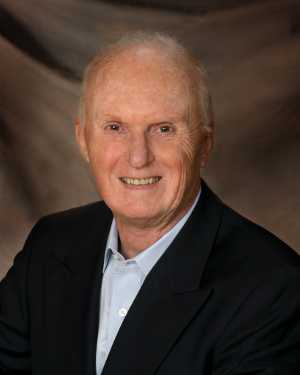
UKIAH, Calif. – Friends of the Mendocino College Library, an affiliate of the Mendocino College Foundation, will host mystery author Waights Taylor Jr. for its third reading in the fall reading series.
He will be reading from his new novel, “Kiss of Salvation” at 7 p.m. Thursday, Nov. 20, in Room 4210, upstairs in the new college library. The college is located at 1000 Hensley Creek Road in Ukiah.
Admission to the event is free.
The setting of 1947 Birmingham, Alabama, cloaks many mysteries under its segregated shroud: glittering social soirées, secret sexual parties, a Machiavellian civic leader, and multiple murders prostitutes in dark alleys.
New York Times best selling author Sheldon Siegel said this about Kiss of Salvation: “'The Kiss of Salvation' takes us back to the dawn of the Civil rights movement in 1947 Birmingham. It’s a murder mystery, a history, and an in-depth study of evolving times in the American South. Deftly written and immensely readable, Taylor paints a picture of a complex era in American culture. Highly recommended.”
Taylor was born in Birmingham and spent his young, formative years growing up in the segregated South.
After graduation from the University of Alabama in 1959 with a bachelor of science degree in aeronautical engineering, his professional career included 24 years in the aviation industry and then 22 years in management consulting.
When his professional career was coming to an end, he turned to writing. He is an author, a poet and a playwright.
His first book, “Alfons Mucha's Slav Epic: An Artist's History of the Slavic People,” was published in 2008.
His first chapbook of poetry and short stories, “Literary Ramblings,” was published in 2010.
His second book, “Our Southern Home: Scottsboro to Montgomery to Birmingham – The Transformation of the South in the Twentieth Century,” was published in October 2011. “Kiss of Salvation” was released in August.
Waights now lives in Santa Rosa.
For more information about the reading or the author, please check the college Web site at www.mendocino.edu or call 707-468-3051.
Jessica Silva is Mendocino College's director of community relations and communication.
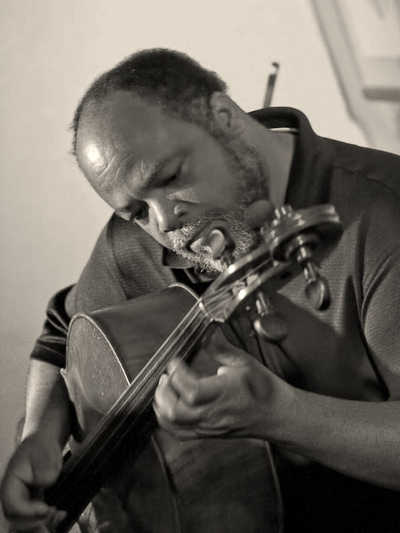
LAKEPORT, Calif. – On Sunday, Nov. 23, Lake County cellist Clovice Lewis will join a list of Romantic era composers in a symphony concert, playing a movement from his just-composed concerto entitled “The Score.”
The November program is officially the “Fall Concert” of the Lake County Symphony and takes place at 3 p.m. at Lakeport’s Soper Reese Theatre, 275 S. Main St.
According to Lewis his piece is written in four movements, each commemorating a portion of an imaginary movie – hence the title – but although the movie may be imaginary, the music is anything but, as concert attendees will learn.
The movement to be played by the orchestra is the third – entitled “Love’s Embrace” – which will feature a cello solo, played by Lewis, who is a regular member of the cello section.
As is traditional the concert will open with the Symphony Youth Orchestra led by conductor Sue Condit. The group has recently been joined by several new members and has been rehearsing intensively for this concert.
Condit has selected two numbers featuring the modified works of a panoply of great composers.
The first is entitled “A Tribute to the Three B’s” arranged by Gerald Anderson and featuring themes from the works of Bach, Beethoven and Brahms.
The second is “A Night at the Symphony” arranged by Sandy Feldstein and featuring trumpet voluntary themes from two noted composers Brahms and Rossini.
Trumpet voluntary only incidentally refers to that instrument, but is actually a style of playing, in this case Brahms’ Symphony No. 1 and Rossini’s “William Tell Overture – the familiar theme music from the “Lone Ranger” radio and television series.
John Parkinson, conductor and music director, has chosen a program made up primarily of composers from the Romantic period including Franz von Suppe a prolific composer who produced more than 30 operettas, one of which – the “banditenstreiche” – proved to be one of his most popular. First debuted in 1911 it was quickly translated into English in a more pronounceable form, “The Jolly Robbers Overture.”
The better-known “Merry Widow Waltz” is drawn from a popular piece written by Franz Lehar which he derived from a comedy entitled simply “The Merry Widow.” Lehar rewrote it as an opera, and Parkinson has selected its overture for the fall concert.
Although Gioachino Rossini is considered by some to be more of a neoclassicist than a Romantic, Parkinson has chosen his Tancredi Overture to help flesh out his program of Romantic composers along with Franz Joseph Haydn’s classical “Symphony No. 95 in C Minor.”
This piece is noted for the fact that it is not only beautiful music, but is also the only one of the composer’s famed Twelve London Symphonies to be written in a minor key.
Advance ticket purchase is recommended and can be made online at www.soperreesetheatre.com or by phone at 707-263-0577.
Tickets are $20 for symphony association members or $25 general admission.
As always there will be an open rehearsal at 11 a.m. at which youths under 18 will be admitted free, while others pay only $5.
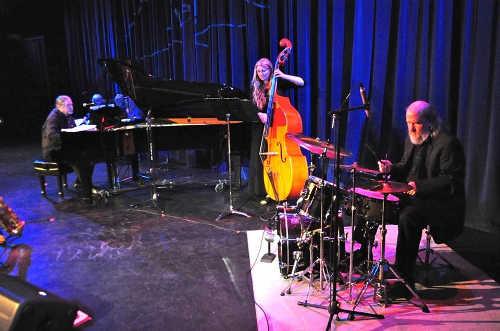
LAKEPORT, Calif. – The Third Friday Live series at the Soper Reese Theatre in Lakeport hosts the cool jazz vibe of the Dorian May Trio at 7 p.m. Friday, Nov. 21.
Tickets are $10 each.
The group consists of Dorian May on piano, his wife Dorothea May on bass and Tom Rickard on drums.
With sounds like those of Oscar Peterson, Bill Evans and Eddie Palmieri, Dorian May’s piano artistry shapes together classic, modern and Latin jazz.
He mixes in Bach harmony, world and poly rhythms and is equally at home in world music and classical music as he is with hard-swinging bebop, Cuban Salsa and down-home blues.
At his shows you will hear anything from classical to TV/movie themes, children’s tunes, traditional jazz, folk songs to Cuban boleros.
May’s diverse experiences in music include a degree in classical piano performance, keyboardist in a touring Emerson, Lake & Palmer tribute band, high-school band director, percussionist/accompanist at world music and jazz festivals, and currently leader and arranger for several Mendocino- and Sonoma-based jazz and Latin bands.
The Soper Reese Theatre is located at 275 S. Main St., Lakeport, 707-263-0577.
Tickets are available online at www.soperreesetheatre.com ; at the box office on Fridays from 10:30 to 5:30; and at The Travel Center, 1265 S. Main St., Lakeport, from 9 a.m. to 5 p.m., Monday through Friday.
As a writer and reader, there’s hardly anything I enjoy more than coming upon fresh new ways of describing things, and here’s a sparkling way of looking at an avalanche, by Marty Walsh, who lives in Maine.
The snow's/feet slip
out from under it and down the mountain slope it comes flat on its back white skirt and billowy petticoats blowing back over its head, whiplashing rickety pine sapling as it passes, bowling boulders left and right until it comes to a juddering sudden heart- thumping stop just shy of the little village in the valley far below.
American Life in Poetry is made possible by The Poetry Foundation ( www.poetryfoundation.org ), publisher of Poetry magazine. It is also supported by the Department of English at the University of Nebraska-Lincoln. Poem copyright 2013 by Marty Walsh, whose most recent book of poems is Furniture Out in the Woods, Marty Walsh, 1999. Poem reprinted from Plainsongs, Vol. XXXIV, No. 1, by permission of Marty Walsh and the publisher. Introduction copyright 2014 by The Poetry Foundation. The introduction's author, Ted Kooser, served as United States Poet Laureate Consultant in Poetry to the Library of Congress from 2004-2006. They do not accept unsolicited manuscripts.

 How to resolve AdBlock issue?