 How to resolve AdBlock issue?
Arts & Life
- Details
- Written by: Kwame Dawes
Alice Friman, in her emotionally complex poem, “The Peach,” describes what appears to be the end of a relationship.
The nature of the relationship is not clear, though Friman’s images of stickiness and running juices suggests a tactile sensuality, that stands in contrast to the final image of snowdrifts and numbness.
It is a short, compact, narrative, that ends with a delicately captured disquiet, captured in the question that ends the poem.
The Peach
By Alice Friman
I stood on a corner eating a peach,
the juice running down my arm.
A corner in Pergos where he left me,
Pergos where I could catch a bus.
What was I supposed to do now
alone, my hands sticky with it
standing on the corner where he
left me a Greek peach, big as a softball,
big as an orange from Spain, but it
wasn’t from Spain, but from Pergos,
where I could see his red truck
disappear around a corner, not
my corner but further up the street,
and only later, months later, back
home when the trees were slick
with ice, their topmost branches
shiny as swords stabbing the heart
out of the sky, the earth chilled under
snowdrifts or as we tend to say, sleeping.
But I don’t know, frozen maybe, numb?
American Life in Poetry does not accept unsolicited manuscripts. It is made possible by The Poetry Foundation, publisher of Poetry magazine. It is also supported by the Department of English at the University of Nebraska-Lincoln. Poem copyright ©2021 by Alice Friman, “The Peach” from The Georgia Review Vol LXXV No. 3. Poem reprinted by permission of the author and the publisher. Introduction copyright ©2022 by The Poetry Foundation. The introduction’s author, Kwame Dawes, is George W. Holmes Professor of English and Glenna Luschei Editor of Prairie Schooner at the University of Nebraska.
- Details
- Written by: Tim Riley
‘ELVIS’ RATED PG-13
Nothing expresses the cinematic style of writer, director and producer Baz Luhrmann more than his Academy Award-winning “Moulin Rouge!,” which brought back the movie musical and cemented his cultlike following.
It’s not far off the mark to note that Luhrmann’s signature blend of fantasy, romance and decadence fuses high and low culture, resulting in a trademark theatrical aesthetic that captivates audiences and ignites imaginations.
The visionary Luhrmann’s artistic touch has turned “Elvis” into an epic, big-screen spectacle with flashy visuals and bold colors that underscore Elvis Presley’s (Austin Butler) ascent to iconic status.
As much as Elvis establishes himself as the King of Rock ‘n Roll, this Luhrmann opus (the film runs 159 minutes) is equally, if not more so, the story of Col. Tom Parker (Tom Hanks), the carnival barker who latched on to the musical sensation from Tupelo, Mississippi.
The rise of Elvis is seen through the machinations of Parker, who proved to be so focused on promotion and manipulation of his meal ticket that he quickly abandoned his touring shows with country and western singer Hank Snow (David Wenham).
The early Elvis was captivated by Black musicians on Memphis’ famous Beale Street juke joints as well as revival tent shows. The blues and gospel music proved to be heavy influences on Elvis’ musical style.
Enamored with Black artists like B.B. King (Kelvin Harrison Jr.), Big Momma Thornton (Shonka Dukureh), and Little Richard (Alton Mason), Elvis took their music mainstream and used his hip-swiveling stage gyrations that made girls scream in ecstasy.
Thinking about how Elvis ended up overweight and dependent on drugs makes more fascinating his meteoric rise in the early days to sex symbol status, and credit goes to Austin Butler’s strong performance as the Elvis that should be remembered.
Though Elvis lived only to the age of 42, his life was stuffed with biographical excess that can’t be unpacked here, and Luhrmann glosses over vast swathes of his career, notably skimming over the decade of lackluster Hollywood musicals.
Since the world is populated with thousands of low-rent Elvis impersonators with minimal talent, judge for yourself how well Austin Butler revives the Elvis mystique. The young actor nails the portrayal of a legend with blazing energy in every musical number.
In the end, it’s sad to think how Col. Parker was a duplicitous, avaricious and contemptuous con artist whose scheming manipulations caused Elvis to be a virtual hostage unable to escape his greedy clutches.
The last chapter of “Elvis” are the Vegas years where Elvis took up residence at the International Hotel, mainly because Parker needed to pay off his considerable gambling debts, while Elvis was falling deeper into a life of despair.
One can’t help but think that after Elvis lost his beloved mother Gladys (Helen Thomson) and his marriage to Priscilla (Olivia DeJonge) crashed and burned, life for the King of Rock 'n Roll was destined to spiral out of control.
The dysfunctional relationship between the King and his grasping promoter that is explored is sadly essential to “Elvis,” but what is most satisfying is the singer’s interaction with the talented Black artists and his rocking musical performances.
‘THE DOCTOR BLAKE MYSTERIES’ ON OVATION TV
Ovation TV bills itself as America’s premier arts network, and yet it also features foreign mystery series. The first season of “The Doctor Blake Mysteries” will begin airing on Thursday, July 7.
This is a period Australian murder mystery series starring Aussie versatile actor Craig McLachlan as the maverick town doctor Lucien Blake, an impulsive risk-taker who’s not afraid to upset the status quo.
The setting is 1959. Dr. Blake has returned to a place he once called home to take over his deceased father’s medical practice set in the gothic gold rush town of Ballart.
Everything seems peaceful on the surface, but seething underneath are the age-old passions of a regional town clashing head-on with the tension and fears of the decade to come.
Haunted by the horrors of war, his own personal loss and changed by his experiences as a POW, the wry, yet very human Dr. Blake undertakes his other role as Police Surgeon with precision and gusto while many find his unpredictable and unconventional manner unnerving.
Ahead of his time, the good doctor looks to the science of forensics and his own understanding of the human heart and mind to help solve the mysteries that inevitably come his way.
In the first episode, when a wayward girl from the local reform school is found dead in Lake Wendouree, Dr. Lucien Blake is immediately suspicious. He shocks the police with his unconventional investigative methods.
Working beside Dr. Blake, helping and at times hindering, are his housekeeper Jean (Nadine Garner); her nephew Danny (Rick Donald), a young Constable; District Nurse Mattie O’Brien (Cate Wolfe); and Chief Superintendent Matthew Lawson (Joel Tobeck).
The original, period murder mystery series “The Doctor Blake Mysteries” will air four episodes back-to-back every Thursday, with season two episodes beginning on Thursday, July 21.
Tim Riley writes film and television reviews for Lake County News.
- Details
- Written by: Elizabeth Larson

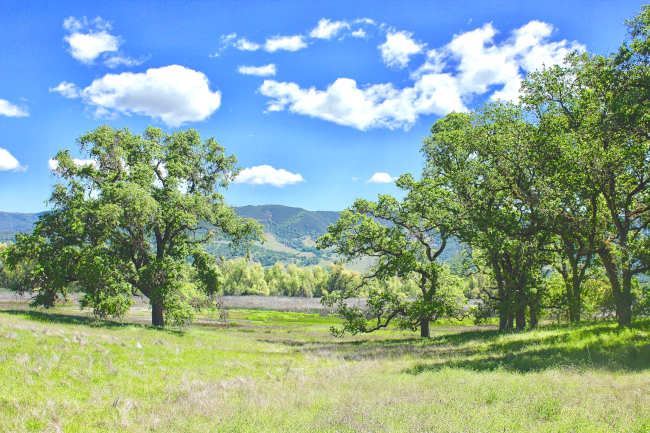
UPPER LAKE, Calif. — The Lake County Land Trust is hosting Georgina Marie Guardado, Lake County’s Poet Laureate for 2020-2024, at a nature Journaling event at the Land Trust’s Rodman Preserve, 63350 Westlake Road in Upper Lake, on Saturday, July 2, starting at 9 a.m.
Dubbed “Nature Journaling Under the Oaks,” the event is a casual, unstructured workshop that features interaction with Georgina Marie and other writers, enjoying the beauty of the ancient Oaks and other features at the preserve.
Bring a chair, writing supplies and a water bottle.
Georgina Marie is the first Mexican-American and youngest to serve in this role for the county.
In June 2021, she was selected as a Poets Laureate Fellow with the Academy of American Poets.
She is the literary coordinator and Poetry Out Loud Coordinator for the Lake County Arts Council, where she also serves as a board member, and poet in residence for The Bloom in Middletown.
She has served as co-editor for the Middletown Art Center’s Resilience and Restore collections of written word, funded by the California Arts Council.
As part of the Broken Nose Collective, an annual chapbook exchange, she created her first poetry chapbook Finding the Roots of Water in 2018 and her second chapbook Tree Speak in 2019.
In 2020, she was an Anne G. Locasio scholar for the Mendocino Coast Writers Conference and is now a member of their board of directors.
For information contact the Lake County Land Trust at
- Details
- Written by: Kwame Dawes
This poem captures one of the peculiar, private deals that we sometimes make in a world that seems to be marching on, completely out of our control.
Some might call it a prayer, or a spell, or a strange vow, characterized by a certain magical hope against reality.
Huey labels it a “fairy tale”, a deeply haunting expression of the familiar fear we have of “the bill” coming due.
Fairy Tale
By Huey
My father cuts off his thumb with a circular saw.
A tiny magical man makes me an offer.
I cannot refuse. My father’s thumb grows back.
The price I have agreed to pay is too great;
I cannot bear to say its name aloud. In the corner
of every room I enter, the tiny magical man
crouches, nameless and cruel. Not today, he says.
Not today. One day, I will enter a room and he will
not be there, and I will know the bill has come due.
A phone will ring. I will answer. A stranger’s voice
will mispronounce my name, apologize,
hesitate. In this brief silence, foolish hope will bloom.
American Life in Poetry does not accept unsolicited manuscripts. It is made possible by The Poetry Foundation, publisher of Poetry magazine. It is also supported by the Department of English at the University of Nebraska-Lincoln. Poem copyright ©2021 by Amorak Huey, “Fairy Tale” from The Southern Review, Vol. 37:3, Summer 2021. Poem reprinted by permission of the author and the publisher. Introduction copyright ©2022 by The Poetry Foundation. The introduction’s author, Kwame Dawes, is George W. Holmes Professor of English and Glenna Luschei Editor of Prairie Schooner at the University of Nebraska.