 How to resolve AdBlock issue?
Business News
- Details
- Written by: Editor
SACRAMENTO – Gov. Jerry Brown has signed a bill by Assemblymember Wesley Chesbro (D-North Coast) to boost California’s growing aquaculture industry.
AB 1886 expands the role of an industry funded aquaculture coordinator within the Department of Fish and Game (DFG).
“Aquaculture is a clean, sustainable industry that has great growth potential in California, especially on the North Coast,” Chesbro said. “The coordinator program is important to the continued growth of California aquaculture, especially when it comes to helping the industry to meet high environmental standards.”
“The California Aquaculture Association requested this legislation and the industry asked for an increase in licensing fees to pay for the expansion of the aquaculture coordinator’s duties,” Chesbro added.
Specifically AB 1886:
- Requires DFG’s aquaculture coordinator to coordinate with California’s Aquaculture Development Committee, which is comprised of industry representatives, state regulators and other stakeholders.
- Increases fees for first time registration and renewal of aquaculture operations and increases the base penalties for engaging in aquaculture without paying registration or renewal fees.
- Requires the DFG to apply revenue from these fees specifically to the aquaculture coordinator program and maintain an up-to-date cost accounting and provide it to the Legislature and the Aquaculture Development Committee.
Greg Dale is the Eureka-based regional manager for Coast Seafoods, which is a major producer of oysters on Humboldt Bay. He is past president of the California Aquaculture Association and currently serves on the Humboldt Bay Harbor, Recreation and Conservation District.
“The aquaculture industry is pleased the governor signed Assemblymember Chesbro’s bill,” Dale said. “The coordinator helps the industry collaborate with the DFG on sustainable aquaculture practices and relay our successes to the public.”
“The California Aquaculture Association offered to pay higher fees to expand the coordinator program and in return require the DFG to increase transparency and accountability,” Dale added. “This legislation ensures revenue from these fees is applied to the aquaculture coordinator program and that an accounting of the program is provided.”
- Details
- Written by: Editor
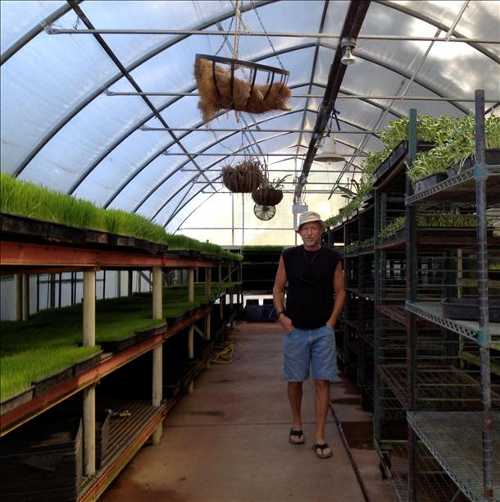
LAKE COUNTY, Calif. – At the height of local produce availability in Lake County, Lake Co-op sourced its CSA boxes from all local farms this past week while adding a new farm’s products to their individual offerings.
The boxes were filled with Bjinje potatoes and eggplants from Bio Farm in Kelseyville; Heirloom cucumbers, tomatoes and basil from Leonardis Organics in Lakeport; and Gala apples from Soda Bay Ranch in Kelseyville.
In the same week, Green Horse Wheatgrass Farm in Kelseyville, one of the largest wheatgrass farms in Northern California, added their products to the Co-op’s online ordering catalog.
Owner Michael Blum gave co-op customers free samples of their pea green sprouts.
One member used the sprouts instead of lettuce for a salad with lemon cucumbers and tomatoes from her CSA box. She added toasted sunflower seeds with a light vinaigrette. “They are so fresh and tasty! They really livened up the salad and felt so nourishing!”
The Blums will be offering the pea green sprouts and flats of wheatgrass to Co-op customers.
Wheatgrass is considered a high energy food and mostly juiced. It can be added to other juices or drank on its own.
According to the Hippocrates Institute, wheatgrass juice “increases red blood-cell count and lowers blood pressure. It cleanses the blood, organs and gastrointestinal tract of debris. Wheatgrass also stimulates metabolism and the body’s enzyme systems by enriching the blood. It also aids in reducing blood pressure by dilating the blood pathways throughout the body.”
Situated in the Red Hills area of Lake County, Green Horse is a family-owned-and-operated certified organic farm.
Michael and Bess Blum live on the farm and do all of the work from planting and harvesting to distributing.
“We’re so fortunate to have such health conscious farmers in Lake County,” said Co-op Chair Janine Smith-Citron, “We hope all of Lake County can enjoy the flavor and health benefits of their products.”
Lake Co-op now has six convenient locations surrounding the lakeside communities – Clearlake, Riviera, Lakeport, Upper Lake, Nice, Lucerne and Clearlake Oaks – as well as two in Lower Lake, one in Hidden Valley, one in Middletown and one in the community of Cobb.
Details on all the Co-op’s drop points can be found at www.lake.coop .
Other recent efforts by the Co-op to increase local consumption of locally produced organic food through their online ordering and distribution system include wholesale sales, sales to the public, weekly subscriptions to favorite products, home/office delivery for $5 (most addresses) and telephone ordering.
Customers of the co-op can place orders from Sunday, 12:01 a.m. to Tuesday, 12:30 p.m., either through a convenient online shopping Web site or by calling 707-993-4270.
Customers can choose from their CSA box (a mix of fruit and vegetables), individual fresh and processed foods, such as oils, breads, cakes, and sea vegetables. Customers pick up their orders at the drop points throughout Lake County on Thursdays.
For a list of all producers, products and drop points, and more information on ordering, visit the co-op’s Web site at www.lakeco-op.org or call 707-993-4270.
- Details
- Written by: Deb Clarke
UPPER LAKE, Calif. – The Northshore Business Association will meet on Wednesday, Sept. 19.
The group will meet at 7 a.m. for breakfast at Judy's Junction, 375 E. Highway 20, in Upper Lake.
The cost is $7, with the meeting and speaker starting at 7:30 a.m.
Each month, the Northshore Business Association has a dynamic speaker to enhance business practices in the area or provide information about Lake County.
Melissa Fulton, chief executive officer of the Lake County Chamber of Commerce, will be the September speaker.
Fulton will provide a recap and the purpose of the collaborative “Summertime Tourism Networking Series” between the Lake County Marketing & Economic Development Program and the Lake County Chamber of Commerce.
The lively series was presented at different venues around the lake and was free to attendees.
The last of the informative tourism series will be on Wednesday, Sept. 19, in Blue Lakes.
Many people have responded to the series in a positive way plus have learned about many activities and events happening around the lake.
Deb Clarke is president of the Northshore Business Association.
- Details
- Written by: Elizabeth Larson
WASHINGTON, D.C. – Congressman Mike Thompson (CA-1) on Monday introduced H.R. 6362, the Revitalizing the Economy of Fisheries (REFI) in the Pacific Act of 2012.
The bipartisan legislation will help alleviate financial hardship that North Coast fishermen are facing due to loan repayments on the 2003 Pacific Coast Groundfish Fishery buyback loan, and ultimately retain fishery jobs and those associated with the fishery including crew members, ship yards, boat mechanics, seafood processors, dock workers, small business owners and others who depend on the fishing industry.
Currently, commercial groundfish fishing on Pacific Coast generates more than $90 million in income and supplies more than 3,000 total full and part-time jobs.
“Our commercial fishers have been diligently repaying their loans, but in these tough times the loan repayments are making it nearly impossible for our commercial fisherman to stay in business,” said Thompson.
“The fishing industry is at the heart of our local economy, and if we do not begin to address this problem, there is a real possibility that our small boat fishers, and the businesses that depend on them, will see even greater economic harm,” Thompson said. “This legislation will save Pacific Coast Groundfish Fishery nearly $2 million per year, allowing more money to be spent on local businesses that support commercial fishing operations and fisherman. Not only will this save local jobs, it will help create jobs.”
“This is the type of legislation that the groundfish fishery has been looking for. It’s clear that Representative Thompson understands the needs of fishermen and we are grateful for his leadership on this extremely important issue,” said Michelle Norvell, Project Manager of the Ft. Bragg Groundfish Association.
“This legislation will have a positive impact on all participants in the Pacific Coast Groundfish fishery but most significantly on the traditional small family fishing operation and historic fishing ports where the groundfish fishery is the mainstay for other fisheries,” said Norvell. “The strength of this legislation is that it resonates well with fishery participants and stakeholders along the west coast, it responds to the immediate needs of the groundfish fishery, and it’s a win for everyone because it aims to preserve jobs and boost the economy.”
In 2003, Congress authorized a $35.7 million buyback loan to the Pacific Coast Groundfish Fishery to help the commercial fishing industry after a collapse in fish stocks.
These buyback loans are designed to help prevent or end overfishing, rebuild stocks of fish and improve the conservation and management of the fishery.
Those fishermen who remained in the fishery have been tasked with repaying the buyback loan. However, while the fishermen have diligently been paying back the loan plus interest, the fees are proving too much for the small businesses to pay and remain in business.
The REFI Pacific Act would help alleviate this financial hardship by extending the loan repayment period from 30 years to 45 years; guaranteeing that the debt obligation paid by the fisherman will not exceed 3 percent of the offloaded value of all the fish harvested, rather than the current 5 percent fee; and allowing the loan to be financed at current interest rates.
Cumulatively, the overall value of the Pacific Coast Groundfish Fishery increased in 2011 to approximately $55 million under the program established though the original buyback loan.
The money saved from this new loan will allow for more money to be spent on local businesses that support commercial fishing operations and fisherman.
The legislation was referred to the House Committee on Natural Resources. The bill has 10 cosponsors.
Thompson represents California’s 1st Congressional District, which includes the Counties of Del Norte, Humboldt, Lake, Mendocino, Sonoma, Napa, and Yolo. He is a senior member of the House Ways and Means Committee and the House Permanent Select Committee on Intelligence. Rep. Thompson is also a member of the fiscally conservative Blue Dog Coalition and sits on the bipartisan, bicameral Congressional Wine Caucus.