How to resolve AdBlock issue?
Business News
- Details
- Written by: Editor
The free, family friendly event will take place from 3 p.m. to 11 p.m.
There will be live music and performances, and a variety of gifts available for last-minute holiday shopping.
A catered dinner will be available for $10, as well as wine from the Terrill Cellars for those age 21 and over.
- Details
- Written by: Editor
The training, provided by Conservation Services Group (CSG) and GC Green, is available through Energy Upgrade California’s Subsidized Contractor Training Program and takes place Jan. 16-23 at the Lakeport One-Stop.
Energy Upgrade California is a new statewide program that saves homeowners money, reduces energy use and creates local green jobs.
The program helps consumers make energy efficient upgrades to their homes by providing rebates and incentives over $4,000.
The Subsidized Contractor Training Program offers contractors, trades people and other motivated individuals the chance to become certified in residential energy assessment and verification, a significant requirement to become an Energy Upgrade California Participating Contractor.
The BPI’s nationally recognized credentialing program identifies individual excellence in “house-as-a-system evaluation,” diagnostics and installation.
Stringent technical standards and requirements mean that BPI certified professionals are in demand – from homeowners, state and utility energy efficiency incentive programs and weatherization assistance programs.
CSG is a BPI training affiliate that educates contractors in the latest techniques in green building and home performance in order to achieve maximum energy efficiency and quality standards. GC Green, a contracting and consulting firm based in California, is partnering with CSG for the training.
“Being associated with such a noteworthy program that promotes green building and reduces energy usage is an honor. We are proud to be hosting these training sessions,” said Lake One-Stop Executive Director Seth DeSimone.
William Kopiecki, a CSG manager based in San Diego, oversees the Subsidized Contractor Training Program.
“For more than 25 years, CSG has been educating contractors to ensure they are delivering top notch work,” Kopiecki said. “Through Energy Upgrade California, we are proud to continue spreading our mission to deliver maximum energy efficiency for homeowners throughout this great state.”
Energy Upgrade California is a collaborative program between the California Energy Commission, the California Public Utilities Commission, utilities and local governments that provides tools to accomplish and promote a “whole house” approach to home efficiency improvements.
Based on “building science” principles, the program emphasizes an integrated approach to energy efficiency, starting with an assessment of current systems to identify solutions that will improve the comfort and energy performance of a home.
For more information, visit www.EnergyUpgradeCA.org.
- Details
- Written by: Editor
In addition to the new employment laws, an order by the National Labor Relations Board (NLRB) is also impacting businesses in California.
By Jan. 31, 2012, most private-sector employers must begin displaying an 11-inch by 17-inch poster that provides information to their employees about unionizing and their right to strike. For more information, watch the CalChamber video.
Unless specified, the following is a list of all new legislation goes into effect on Jan. 1, 2012. The entire list can also be viewed at, www.calchamber.com/newlaws2012.
Credit check
AB 22 prohibits employers and prospective employers, not including certain financial institutions, from obtaining and using consumer credit reports (credit information) about applicants or employees. The prohibition does not apply to “managerial positions,” defined as those who qualify for the executive exemption from overtime.
Pregnancy disability leave
SB 299 requires all employers with five or more employees to continue to maintain and pay for health coverage under a group health plan for an eligible female employee who takes Pregnancy Disability Leave (PDL) up to a maximum of four months in a 12-month period.
Willful misclassification of independent contractors
SB 459 provides new penalties of between $5,000 to $25,000 for the “willful misclassification” of independent contractors.
Written commission agreement
AB 1396 requires employers who have commission pay arrangements to put those agreements into a signed written contract. The written contract must set forth the method by which the commissions will be computed and paid. The bill is effective January 1, 2013. Employers have the entirety of 2012 to bring their commission agreements into compliance.
Notice of pay details
AB 469 requires employers to provide nonexempt employees, at the time of hire, a notice that specifies:
The rate of pay and the basis, whether hourly, salary, piece commission or otherwise, including any overtime rate.
Allowances, if any, claimed as part of the minimum wage, including meal and lodging allowances.
The regular pay day designated by the employer as required under the Labor Code.
The name of the employer, including any “doing business as” names.
The physical address of the employer’s main office or principal place of business and any mailing address, if different.
The telephone of the employer.
The name, address and telephone number of the employer’s workers’ compensation carrier.
Organ and bone marrow donor leave
SB 272 clarifies the implementation of California’s organ and bone marrow donor leave law. The new legislation clarifies that the days of leave are business days, not calendar days, and that the one-year period is measured from the date the employee’s leave begins.
Genetic information
SB 559 amends the Fair Employment and Housing Act (FEHA) to state that employers are prohibited from discriminating against employees on the basis of genetic information.
Gender expression
AB 887 amends the Fair Employment and Housing Act to further define “gender” to include both gender identity and “gender expression” and to make clear that discrimination on either basis is prohibited. AB 887 also amends Government Code relating to dress codes to include that an employee must be allowed to dress consistently with both the employee’s gender identity and gender expression.
E-Verify
AB 1236 allows employers to continue to choose to use E-Verify, but prohibits California state agencies and local governments from passing mandates that require employers to use E-Verify.
Several cities in California passed local ordinances requiring the use of E-Verify in certain circumstances. This new law prohibits such state or local mandates, unless required by federal law or as a condition of receiving federal funds.
Interference with rights under leave laws
AB 592 adds language to the California Family Rights Act (CFRA) and the Pregnancy Disability Leave law (PDL) that makes it unlawful to interfere with or in any way restrain the exercise of rights under these laws.
Administrative penalties
AB 240 allows an employee that alleges a minimum wage violation to recover liquidated damages pursuant to any complaint brought before the Division of Labor Standards Enforcement (DLSE). This new law would allow the Labor Commissioner to also award such damages. Under the new liquidated damages provision, the employee would be entitled to recover an amount equal to the wages unlawfully unpaid, plus interest.
Wage penalties
AB 551 increases the maximum penalty from $50 to $200 per calendar day for each worker paid less than the determined prevailing wage and increases the minimum penalty from $10 to $40 per day for violations of prevailing wage obligations. It also increases the penalty from $25 to $100 per calendar day, per worker, against contractors and subcontractors that fail to respond to a written request for payroll records within 10 days.
Farm labor contractors – wage notices
AB 243 amends the Labor Code to expand the information that must be included on pay statements, but only for farm labor contractors. Employers that are farm labor contractors must now disclose on the itemized payroll statement furnished to their employees, the name and address of all legal entities (for example other growers or other farm labor contractors) that secured the employer’s services.
Agricultural labor relations
SB 126 affects certification of bargaining representatives for agricultural employees. The new law, SB 126, provides that if the Agriculture Labor Relations Board (ALRB) finds employer misconduct that “in addition to affecting the outcome of the election, would render slight the chances of a new election reflecting the free and fair choice of employees,” then the ALRB can certify the labor union as the exclusive bargaining agent for employees.
Insurance Non-Discrimination Act
SB 757 closes an existing loophole and prevents employers that operate in multiple states from discriminating against same-sex couples by not providing the same insurance coverage for domestic partners as they do for spouses.
State contracts – gender or sexual orientation discrimination
SB 117 outlaws the state of California from entering into contracts of more than $100,000 with companies that discriminate against the employees on the basis of gender or sexual orientation with regard to benefits. The new law makes it clear that companies doing business with the state of California cannot deny equal benefits to same-sex spouses.
Apprentice programs
SB 56 changes the audit requirements for apprenticeship programs. This new law eliminates the mandate of random audits during five-year increments, and instead directs the Division to conduct audits of apprenticeship programs generally. It also creates requirements for applications for building and construction trades programs for approval of a new or expanded apprenticeship program.
Safe lifting – hospitals
AB 1136 provides that general acute care hospitals must maintain a safe patient handling policy for patient care units, including trained lift teams or training in safe lifting techniques for staff. The safe patient handling policy must be kept in accordance with the California Occupational Safety and Health Act and should be part of the Injury Illness and Prevention Program (IIPP) of these specific employers.
Workers’ compensation legislation
The governor signed these five workers’ compensation bills that were all supported by CalChamber.
AB 335 – Requires the workers’ compensation administrative director (AD) to work with the Commission on Health and Safety and Workers’ Compensation (CHSWC) to develop regulations regarding notices to injured workers; requires AD and CHSWC to develop and make accessible a booklet written in plain language about the workers’ comp claims process; streamlines and simplifies other notices to employees.
AB 378 – Lowers workers’ compensation costs by establishing guidelines for dispensing compound drugs, the circumstances under which those drugs would be covered and the reimbursement amount, and removes the incentives for physicians to refer patients to pharmacies in which the physician or physician's family has a financial interest.
AB 397 – Seeks to address the underground economy problem by singling out contractors that do not have workers’ compensation coverage but requiring contractors that are exempt from having coverage at the time they are licensed to certify they are still exempt or have gotten coverage at the time of their license renewal.
AB 1168 – Lowers costs for employers and insurers by establishing a fee schedule for vocational experts' services.
AB 1426 – Streamlines the workers’ comp process and eliminates duplicative bureaucracy and inconsistency by eliminating the court administrator position.
The governor also signed a Workers’ Compensation related bill that CalChamber took no position on:
AB 228 – Amends California Insurance Code to authorize the State Compensation Insurance Fund (SCIF) to provide workers’ compensation coverage to a California employer whose California employees temporarily work outside the state and whose injuries while performing out-of-state work might lead to workers’ compensation liability in some other state.
DFEH procedural regulations
Effective Oct. 7, 2011, the Department of Fair Employment and Housing (DFEH) has instituted new regulations relating to procedures for filing, investigating and processing discrimination and harassment claims. Overall, the regulations make it easier for claimants to file their complaints and initiate a DFEH investigation.
- Details
- Written by: Lake County News Reports
NICE, Calif. – Achieving sustainability in winegrape growing “is a journey” that requires “adaptability and resilience,” Ann Thrupp reminded Lake County growers attending the Lake County Winegrape Commission’s 10th annual Sustainable Winegrowing Seminar.
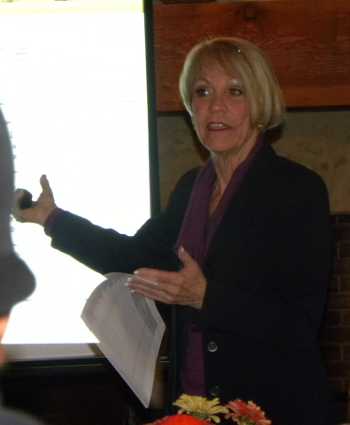
Speaking on “Why Sustainability Matters,” Thrupp delivered the keynote presentation during the recent seminar at Ceàgo Vinegarden.
The workshop was presented by the Commission in conjunction with the California Sustainable Winegrowing Alliance (CSWA).
Thrupp, the sustainability manager for Fetzer and Bonterra Vineyards, joined a handful of qualified speakers who focused on the benefits of sustainability and certification for vineyard operations in Lake County.
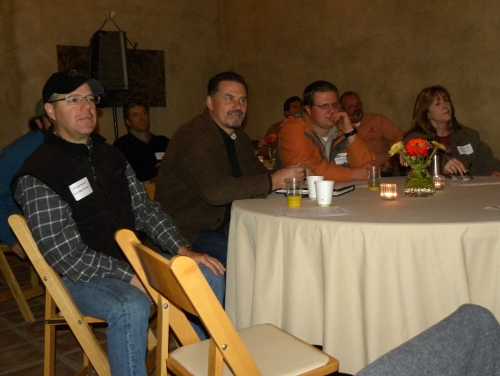
More than 50 winegrape growers and vintners gathered at the site of Jim Fetzer’s biodynamic Ceàgo Vinegarden off Highway 20 to hear the experts talk about the seminar’s topic, “Why Vineyard Certification Matters: What Does Your Vineyard’s Sustainable & Economic Future Look Like?”
Acknowledging that many of Lake County’s winegrape producers already use many of the practices associated with sustainability, presenters encouraged the vineyard managers, owners and workers to pursue certification to validate their work.
Additionally, the experts noted, the reasons for sustainability include benefits to the environment, efficiency in production, and economic gains.
In the series of workshop presentations, speakers repeated Thrupp’s core message about sustainability: It’s a “win-win” situation.
Sustainability is not “a fad” and is seeing increasing involvement, said Thrupp.
There are multiple drivers that are pushing the need for sustainability into the mainstream, she added. These include what she called “producer/grower motivations,” requirements from major food and beverage buyers, media attention, increasing government regulations, and consumer demand.
“Green” consumers are likely to be wine purchasers, she noted.
In a panel discussion entitled “Why We Are CSWA Sustainable,” Thrupp joined moderator Cliff Ohmart, SureHarvest vice president of professional services, and panel members John Adriance, Snows Lake chief officer of operations, and Tim Thornhill, Mendocino Wine Co. partner, to give their perspectives on seeking certification for sustainable winegrape growing.
Answering the question, “Why become certified?” Adriance said the main reason is financial. Retailers are demanding it and customers want it, he told the group of grape growers.
“(Lake County’s) grape growers need to mobilize, get behind this and demonstrate to wineries that as a region we are committed,” he said.
Thornhill agreed, saying sustainability is important to consumers and market leaders. It reduces energy and water use, he added. “Being green is being efficient … Being certified is a good move.”
Rounding out the seminar with more technical aspects of the sustainability issue, CSWA Program Director Lisa Francioni spoke about “From Our Vineyards to California Wineries & Global Markets” and was followed by Judy Luchsinger of QED Consulting, one of only 20 people in the state qualified to audit for certification, offering her advice in a talk entitled “Nuts & Bolts of Vineyard Certification.”
Highlight the morning session with a special presentation, Randy Krag, chair of the Winegrape Commission’s Education Committee, and Paul Zellman, director of the Commission’s education programs, introduced members of the first class of the LCWC Master Vigneron Academy.
The individuals include Alonso Raygoza and Antonio Batres, Beckstoffer Vineyards; Felix Aguilar and Gabriel Martinez, Bella Vista; Jaime Rosas, Lyon Vineyard; Jeronimo Rico, Dorn Vineyard; and Amador Villalobos, Nissen VM-Obsidian Ridge.
Krag explained the importance of the one-year program, stressing the importance of the members seeing all aspects of operations and supervision at various vineyards and wineries.
“The program is in support of the industry and in support of the people who work in the industry,” he said.
The workshop included networking sessions, exhibitor showcases, and sponsorships by SureHarvest, the CSWA, Guillaume Nursery, Rainbow Ag, Cold Creek Compost, Pan American Insurance Agency, Inc, Bob Bartley Pumps Inc, Biobest-USA, SHuR Farms Farming Control Systems, Nova Vine, Napta Soluble Solutions, Sunridge Nurseries and the Wine Institute.
Established in 1991 by the winegrape growers of Lake County, the Lake County Winegrape Commission is a local marketing order. Its primary function is to provide marketing, education, and research programs to Lake County winegrape growers.
For more information about upcoming events and workshops, check the commission’s Web site, www.lakecountywinegrape.org, or call the commission office at 707-995-3421.
For information about the seminar or the Master Vigneron Program, email Zellman at