 How to resolve AdBlock issue?
Business News
- Details
- Written by: Editor
Senate Bill 806, which goes into effect Jan. 1, 2011, allows for the return of wine taken out-of-state where the wine was purchased from a holder of a beer and wine wholesaler's license or an off-sale retail license that only sells wine.
According to Wiggins, SB 806 is “a consumer bill which will allow consumers to return wine to any winemaker without regard to the winemaker's license.”
Existing law only allows consumers to return wine to winegrowers with an ABC Type 02 (winegrower) license. Over the past several years, hundreds of virtual wineries holding a combined Type 17 and Type 20 license sell wine to customers for use out of state.
Wiggins added that “a license category should have no bearing on consumer's ability to return wine. Updating the law to clarify that consumers can return wine to holders of beer and wine wholesaler and off-sale beer and wine licenses will clarify the law and simplify the process for consumers wishing to return wine.”
Schwarzenegger also signed Wiggins’ SB 1096, which likewise goes into effect next January.
SB 1096 makes various technical and code maintenance changes to several provisions of the Alcoholic Beverage Control Act to keep up with modern technology, including existing direct inquiry provisions to include any electronic inquiries from consumers.
Existing law, known as the "tied-house" law, separates the alcoholic beverage industry into three component parts, or tiers, of manufacturer (including breweries, wineries and distilleries), wholesaler, and retailer (both on-sale and off-sale).
According to Wiggins, the complex restrictions of the ABC Act's tied-house laws make it difficult for wine and brandy manufacturers to utilize simple, modern ways of responding to consumer inquiries. She notes that current law “references electronic internet inquiries which could be narrowly construed to prohibit other types of electronic communications - such as texting.”
Under existing law, a response to a direct inquiry from a consumer received by telephone, by mail, by electronic Internet inquiry or in person does not constitute a thing of value or prohibited inducement to the listed on-sale or off-sale retailer. Therefore, SB 1096 is simply intended to modify the current restrictions to include, "electronic inquiry," instead of just "electronic Internet inquiry."
- Details
- Written by: Editor
“I'm taking this action to further protect California homeowners on the brink of foreclosure,” Brown said, “JP Morgan Chase, like GMAC/Ally Financial, has admitted that its review of key foreclosure documents was a ruse.”
“I'm directing Chase to prove it is following the law before it continues foreclosures in California,” Brown added.
California law prohibits lenders from recording notices of default on mortgages made between Jan. 1, 2003, and Dec. 31, 2007, unless, subject to limited exceptions, the lender contacts or tries diligently to contact the borrower to determine eligibility for a loan modification.
A notice of default must include a declaration of compliance with California law.
JP Morgan Chase, the nation's third largest loan servicer, has admitted that employees signed affidavits in 56,000 foreclosure cases nationwide without first personally reviewing the contents of the borrowers' loan files. As a result, those borrowers lost their homes based on affidavits the bank never confirmed were accurate.
This practice strongly suggests that any purported verification by JP Morgan Chase that it complied with California law before beginning foreclosures here is also questionable.
JP Morgan has suspended foreclosures in 23 other states that, unlike California, require a court order for foreclosures.
The company did not issue a statement on Brown's demand.
On Sept. 24, Brown sent a similar letter to Ally Financial Inc., formerly known as GMAC, directing it to prove it is complying with California law or cease foreclosures in California until it can.
The Attorney General's Office reported that is in contact with Ally.
- Details
- Written by: Elizabeth Larson
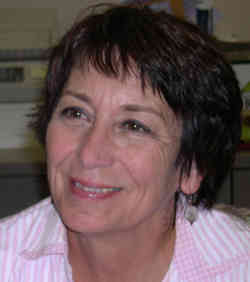
LAKEPORT, Calif. – The Lakeport Main Street Association (LMSA) has named Carol Hays as its new executive director.
She succeeds Jan Bruns, who has retired but remains active with the organization as a board member.
Hays takes up residence at new LMSA headquarters in the Lakeport City Hall.
She's be at her desk on Tuesdays, Wednesdays and Thursdays. She can be reached at 707-263-8843 or
Hays recently moved to Lake County from Mount Vernon, Wash., where she was the director of a nonprofit, historic, performing arts and film theater.
While at the theatre she sat on the board of the downtown merchants association and was a key contributor in the effort to initiate a Main Street program there.
“I spent months researching Northern California before I decided to move to Lakeport,” she said. “This is a unique place full of natural beauty and warm, genuine people. I’m looking forward to working with the entire community toward making it an even better place to live, work and visit.”
Hays grew up in Los Angeles, graduated from UCLA and lived in Washington State for 20 years before coming to Lake County.
She is now enjoying the area’s excellent wineries, great produce at farmers' markets and kayaking on the lake.
The Lakeport Main Street Association was formed to unite businesses in the downtown Lakeport corridor with a common goal.
This goal, ultimately, is to improve and maintain a thriving downtown, thereby attracting diners as well as shoppers to our city.
- Details
- Written by: Editor
“Taxable sales in California last year continued an unprecedented decline as retail sales mirrored the nationwide recession,” said Chairwoman Betty T. Yee of the California Board of Equalization. “Consumer spending fell as Californians experienced a crisis in jobs and housing.”
Taxable sales in California totaled $115.5 billion during the third quarter of 2009, a drop of $20.4 billion (or 15 percent) from the third quarter of 2008. The year-over-year decline in quarterly taxable sales continued for the ninth consecutive quarter. However, the decline was not as steep as the previous quarter, when taxable sales dropped 19 percent on a year-over-year basis.
In the nine-county San Francisco Bay Area, third quarter 2009 taxable sales dropped 14.5 percent, slightly better than the 15 percent statewide drop for the third quarter, and not as steep as the 18.9 percent decline in the Bay Area in the second quarter last year.
Taxable sales in most counties in the First Equalization District declined in the third quarter 2009 on a year-over-year basis: Napa (-17.2%), Yolo (-17%), Mendocino (-15.6%), San Luis Obispo (-16.6%), San Francisco (-16.5), Sonoma (-16.2%), Alameda (-15.6%), Santa Clara (-14.6%), Santa Barbara (-14.6%), San Mateo (-14.4%), San Benito (-13.8%), Monterey (-13.6%), Santa Cruz (-13.6%), Del Norte (-12.5%), Marin (-11.8%), Solano (-11.2%), Contra Costa (-10.6%), Humboldt (-8.6%), and Trinity (-5.5%). Conversely, taxable sales in Colusa County increased 31.3 percent.
Taxable sales declined in the Bay Area’s major cities last year in the third quarter: Oakland declined 20.4 percent, San Francisco declined 16.5 percent, and San Jose declined 16.0 percent. Conversely, the cities of San Juan Bautista and Blue Lake posted increases of more than 30 percent.
In constant dollar terms, taxable sales decreased by 11.7 percent over the same quarter a year ago. The California Taxable Sales Deflator declined by 3.8 percent for the third quarter of 2009. In comparison, the California Consumer Price Index (CPI) declined 1.0 percent.
View all Taxable Sales in California for the Third Quarter of 2009 here: www.boe.ca.gov/news/tsalescont09.htm .
Taxable Sales in California is a quarterly report on retail sales activity in California, as measured by transactions subject to sales and use tax.
It includes data about statewide taxable sales by type of business, as well as data about taxable sales in all California cities and counties from the first quarter of 2000 through the third quarter of 2009, and can be viewed on the BOE Web site at www.boe.ca.gov/news/tsalescont.htm.