 How to resolve AdBlock issue?
Business News
- Details
- Written by: Editor

MIDDLETOWN – The Backyard Garden Oasis Bed and Breakfast has received a Three Diamond rating from AAA.
This prestigious rating was offered by AAA after the bed and breakfast had been in business and provided a beautiful, peaceful environment and excellent service to thousands of visitors to the Middletown and Lake County area over the past 10 years.
Greta Zeit, the owner of Backyard Garden Oasis Bed and Breakfast, built the cottages and the business itself on a sweet, creekside property on Hilderbrand Drive.
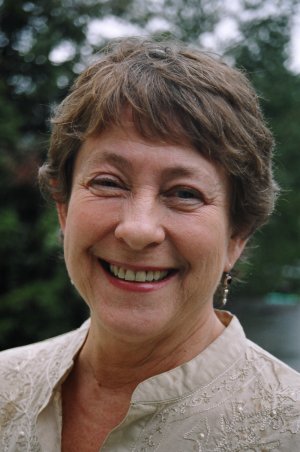
She trained in massage at the School of Shiatsu and Massage at Harbin Hot Springs, and has been providing massage services at the Oasis for the past six years.
Reservations at the Oasis or appointments for massage can be made by calling 987-0505 or by visiting the Web site at www.backyardgardenoasis.com.
{mos_sb_discuss:2}
- Details
- Written by: Editor
The proposed changes involve the establishment of the Calistoga Viticultural Area as well as a revision to American Viticultural Area Regulations.
Sen. Patricia Wiggins (D-Santa Rosa), who represents the premium wine-growing regions of Lake, Mendocino, Napa and Sonoma counties, said that "the proposed TTB regulations will allow deceptive and dishonest wine labels. Consumer protection could be eroded, while the integrity of the wine industry could be challenged."
Assemblymember Noreen Evans (D-Santa Rosa), chair of the Assembly Select Committee on Wine, is principal co-author of the Wiggins measure, Senate Joint Resolution (SJR) 22.
"We must protect consumer confidence in wine labels," said Evans. "California has fought hard to have labels that tell consumers exactly what they get in the bottle. Any muddying of these waters is of great harm to our wine industry."
SJR 22 calls on the TTB to withdraw Notices of Proposed Rulemaking Numbers 77 and 78, saying that they pose a threat not only to California’s wine industry, but to all American wine producers and their ability to trade fairly domestically and internationally.
SJR 22 has been scheduled for hearing by the Senate Governmental Organization Committee on Tuesday, Feb. 12 at the State Capitol.
{mos_sb_discuss:2}
- Details
- Written by: Editor
Pott will be responsible for Langtry’s proposed private championship 18-hole golf course and clubhouse in Lake County.
The proposed Langtry Golf Course project will enhance and preserve the estate’s agricultural tradition and outdoor pursuits which already include world-class bass fishing, mountain biking and hiking trails and equestrian activities.
Pott, a native of Mississippi, brings more than 50 years of experience in the world of golf to Langtry’s efforts.
As a three-time member of winning Ryder Cup teams, a five-time Professional Golf Association Tour winner, including the Bing Crosby National Pro Am (now the AT&T Classic), and a lifetime member of the PGA Tour, Johnny Pott is a golf industry expert.
Since 1972, Pott has been intimately involved in golf course design, construction and operations, and will bring that experience to Langtry.
“We are excited to have such a legendary member of the golf community as part of the Langtry team to construct and operate a golf course that will improve our estate’s outdoor amenities,” said Chuck Doty, President of Langtry Farms.
“Our success as an agricultural enterprise hinges on our ability to improve and expand our vineyard’s production,” Doty said. “The golf course will help us in our effort to make Langtry a wine country and outdoor pursuit destination that will attract industry buyers that can impact substantially our sales and marketing efforts for Lake County agricultural products. Plans for the golf course will employ sustainable development practices to protect and preserve our most valuable asset – our land.”
The addition of golf as another outdoor pursuit is based on Langtry’s aspirations to develop a sustainable business model centered on its existing and expanded agricultural activities. By diversifying operations and enhancing its existing outdoor amenities on the 21,000-acre estate, Langtry will be able to increase production of Lake County agricultural products.
The course is being designed by former PGA player and British Open Champion Tom Weiskopf.
“This project is a unique opportunity to create a core-golf experience without interference from residential development,” said Pott. “I am thrilled to be a part of the project and to be working again with world-class designer Tom Weiskopf to execute a true golf experience in a remarkable setting.”
The golf course, a practice range and a club house will be located on an irrigated pasture area across Butts Canyon Road from the winery. As part of the permitting plans, Langtry is asking to rezone the parcel to rural lands which will ensure land-use consistency across the site. The project will not require any additional water consumption. There is no housing component in the proposal.
“The project is a win-win for Langtry and the community,” said Linda Diehl-Darms, a Middletown business owner. “The golf course project will help provide Langtry with a new amenity to improve its wine sales and in turn, will preserve the agricultural history and character of its land that provides Lake County its charm.”
Following County approvals, the new golf course is expected to open in July 2009.
Langtry Farms LLC is an agricultural estate comprised of approximately 21,000 acres of land in southeastern Lake County and northeastern Napa County, which is used primarily for grape growing and cattle grazing. Langtry Farms is currently developing additional productive uses for the land that complement and enhance the wine making operations, and sales and distribution of Lake County agricultural products.
Visit the farm online at www.langtryfarms.com.
{mos_sb_discuss:2}
- Details
- Written by: Lake County News reports
As a result, SB 780 now heads to the Assembly for consideration.
The Wiggins bill would maintain service and affordable rates by extending the California High-Cost Fund A and High-Cost Fund B programs, currently set to expire next January, through Jan. 1, 2013.
Current state law requires the California Public Utilities Commission to develop programs to ensure that Universal Telephone Service is provided in high-cost areas at affordable rates. These programs are referred to as the High-Cost Fund A and High-Cost Fund B.
The two programs reduce the cost of telephone service to rural and high cost-to-serve customers by subsidizing those costs with surcharges levied on all telephone service. Four years ago, when the Legislature last considered extending the sunset for these programs, the telephone companies estimated that the elimination of these programs would increase basic telephone service rates by $17 a month to $149 a month for the smaller telephone companies.
Fund A provides a source of supplemental revenues to 17 small, rural local telephone companies: Calaveras Telephone Company; California-Oregon Telephone Co.; Citizens Telecommunications Co. of the Golden State; Citizens Telecommunications Co. of Tuolumne; Ducor Telephone Co.; Evans Telephone Co.; Foresthill Telephone Co.; Happy Valley Telephone Co.; Hornitos Telephone Co.; Kerman Telephone Co.; Pinnacles Telephone Co.; the Ponderosa Telephone Co.; Sierra Telephone Co.; Siskiyou Telephone Co.; Verizon West Coast Inc.; the Volcano Telephone Co.; and Winterhaven Telephone Co..
“I am committed to maintaining universal and affordable high-quality service in high-cost areas of the state, particularly where telecommunications competition is limited like it is in my rural district,” Wiggins said. “I am thankful that the overwhelming majority of my colleagues, from both sides of the aisle, supported this bill today.”
Wiggins represents California’s large 2nd Senate District, which includes portions or all of six counties: Humboldt, Lake, Mendocino, Napa, Solano and Sonoma. Visit her Web site at http://dist02.casen.govoffice.com.
{mos_sb_discuss:3}