 How to resolve AdBlock issue?
Business News
- Details
- Written by: BETTER BUSINESS BUREAU
The Mendocino Complex fire has already been named the largest wildfire in California history according to Cal Fire, while the Carr Fire in Shasta County has burned more than 229,000 acres.
Unfortunately, scammers and unethical organizations often use times of tragedy to prey on victims and on the public’s generosity.
Although no scams related to the current wildfires have been reported so far, the Better Business Bureau serving the San Francisco Bay Area and Northern Coastal California has received reports of fraudulent charities soliciting donations and crowdfunding appeals that don’t actually benefit victims after past tragedies.
Similarly to last year’s fires in Napa and Sonoma, those affected by the fires should also be on the lookout for price gouging of hotels and other goods and services. If you encounter a scam or unethical business, report it to your BBB ScamTracker.
The following BBB tips will help you donate wisely to those affected by the devastating California fires:
· Be cautious when giving online. Be cautious about online giving, especially in response to spam messages, emails, and social media pages that claim to link to a relief organization. If you want to give to a charity involved in relief efforts, go directly to the charity’s website.
· Rely on expert opinion when it comes to evaluating a charity. Be cautious when relying on third-party recommendations such as bloggers or other websites, as they may not have fully researched the relief organizations they list. The public can go to www.give.org to research charities and relief organizations and verify that they are accredited by BBB and meet its 20 Standards for Charity Accountability.
· Be wary of claims that 100 percent of donations will assist relief victims. Despite what an organization might claim, charities have fundraising and administrative costs. Even a credit card donation will involve, at a minimum, a processing fee. If a charity claims 100 percent of collected funds will be assisting fire victims, the truth is that the organization is still probably incurring fundraising and administrative expenses. It may use some of its other funds to pay these costs, but the expenses will still be incurred.
· Find out if the charity has an on-the-ground presence in the impacted areas. Unless the charity already has staff in the affected areas, it may be difficult to bring in new aid workers to provide assistance quickly. See if the charity’s website clearly describes what the charity can do to address immediate needs.
· Find out if the charity is providing direct aid or raising money for other groups. Some charities may be raising money to pass along to relief organizations. If so, you may want to consider “avoiding the middleman” and giving directly to those that have a presence in the region. Or, at a minimum, check out the ultimate recipients of these donations to see whether they are equipped to provide aid effectively.
· Gifts of clothing, food or other in-kind donations. In-kind drives for food and clothing, while well intentioned, may not necessarily be the quickest way to help those in need – unless the organization has the staff and infrastructure to distribute such aid properly. Ask the charity about its transportation and distribution plans. Be wary of those who are not experienced in disaster relief assistance.
· A word on crowdfunding sites. Crowdfunding is a method of raising money from a large group of people, typically via the Internet. If you’re thinking about donating to a fire relief appeal on a crowdfunding site, make sure to ask questions. If the organizer is not responsive or not willing to offer a lot of detail, that is a red flag. BBB Wise Giving Alliance notes that crowdfunding websites call for varying degrees of information in order for appeals to be set up, and may take fundraising pages down when questions are raised that can’t be substantiated. However, those requirements alone won’t prevent all fraud. If you decide to contribute via crowdfunding, it is probably best to give to people who you personally know that have posted requests for assistance. For more Give.org tips on crowdfunding, check out this Wise Giving Wednesday post. Crowdfunding website campaigns can do a lot of good, and raise a lot of money, but make sure you do your homework before contributing.
For many communities, recovery will be a long-term activity that can take many months or years to accomplish, depending on the extent of the damage.
Recovery efforts may not begin until the fires have been contained, and those concerned about helping communities bounce back will have many opportunities to help.
If you encounter any scams, make sure to report them to BBB Scam Tracker at www.bbb.org/scamtracker to help warn others.
- Details
- Written by: California Department of Insurance
Assembly Bill 1797, authored by Assemblymember Marc Levine (D-San Rafael), strengthens consumer protections and aims to address critical issues facing wildfire survivors.
"This bill is an important step in the right direction, but it's disappointing that some insurers got the original version of the bill amended so that it no longer requires insurers to provide an annual replacement cost estimate," said Jones. "It is critical that homeowners have enough information annually to make informed insurance coverage decisions to give them the peace of mind that insurance is meant to provide. I thank the governor for signing this bill and Assemblymember Levine for championing it in the Legislature to help homeowners avoid being underinsured in the future."
AB 1797 (Levine) is aimed at making sure that homeowners are given an updated replacement cost estimate for their home.
Current regulations require a complete and comprehensive estimate of the cost to replace a home when a replacement estimate is provided by the insurer, but state law does not mandate that insurers produce or regularly update a replacement cost calculation.
AB 1797 would require insurers to either provide a policyholder with a full replacement cost estimate every other year or apply an inflation factor to the dwelling limit at each renewal and clearly offer the consumer the option to obtain a full replacement cost estimate.
- Details
- Written by: Lake County News Reports
"The Viognier is our signature white wine,” said Rosenthal. “It is an exotic expression of the Viognier grape. Jasmine, honeysuckle, and mango lead to lush and opulent flavors of peaches, apricots, and melon,” and the 2017 vintage is now available for purchase to pair with your favorite summertime meals, or enjoy on its own.
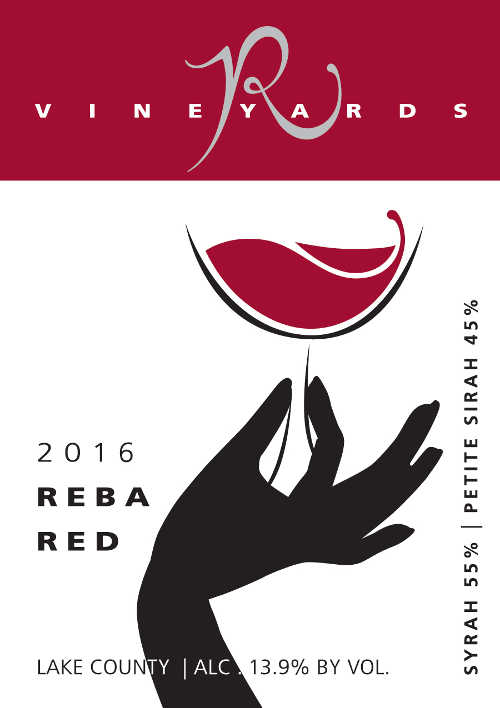
Reba Red – a blend of the 100-percent estate-grown wine grape varietals of Syrah and Petite Sirah – has a silky, slightly juicy mouthfeel framed with flavors of black cherry, black pepper, and dry rose petal leading to a firm lingering finish.
The wine excels when paired with barbecued meats, and the new 2016 vintage of Reba Red debuts a new label.
The 40-acre sustainably-farmed vineyard blocks includes Viognier and Sauvignon Blanc as well the red varietals of Syrah, Petite Sirah, Old Vine Zinfandel (planted in 1937), Cabernet Sauvignon, and Cabernet Franc, and has been in the Rosenthal family since the 1970s.
Dave and Monica Rosenthal launched the R Vineyards wine brand in 2014 utilizing grapes from the family vineyards. R Vineyards produces limited quantities totaling no more than 500 cases per year.
Wines from R Vineyards can be tasted at the Lake County Wine Studio in Upper Lake, or purchased at local markets in Lake County including Bruno’s Shop Smart and Hardester’s Markets or contact Monica directly at
For more information about R Vineyards, follow them on Facebook or visit www.rvineyards.com.
- Details
- Written by: California Department of Food and Agriculture
The event also includes a pre-conference farm tour on Oct. 22.
This conference brings together industry professionals and academic researchers to learn about the latest research and innovative management practices for fertilizing materials.
This year’s conference agenda includes information on nitrogen and irrigation management, as well as micronutrients, drone technology, pest management, cannabis fertilization, grower decision making processes, and more. A poster session will showcase ongoing research projects across California.
A pre-conference farm tour highlighting efficient management practices will be held on Oct. 22 from 1 to 5 p.m.
The tour will depart from Embassy Suites in Seaside, and attendees are scheduled to visit Huntington Farms and Tanimura & Antle.
The tour will focus on the farms’ efforts to implement best management practices for nutrients and irrigation. The farm tour registration is an additional $25.
Early registration for the conference is $190 for both days; currently enrolled students pay $120 for both days.
Late registration begins on Sept. 25, and fees are $220 for both days; students pay $130 for both days.
Continuing education units (CEUs) for Certified Crop Advisers, Pest Control Advisers, and Central Valley growers are being applied for the three days.
To view the agenda, register online, and see the approved CEUs, please visit the conference Web site at www.cdfa.ca.gov/IS/ffldrs/frep/FREPConference.html.
For more information about the 2018 conference, please contact program staff at
Over the past 26 years, FREP has funded more than 220 research projects focusing on nutrient and irrigation management in California cropping systems.
For more information please visit the database of completed and ongoing research at www.cdfa.ca.gov/go/frep.