 How to resolve AdBlock issue?
Business News
- Details
- Written by: Editor
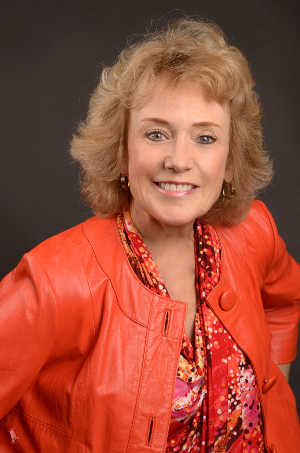
LAKE COUNTY, Calif. – Realtor Associate Elizabeth Davis with Coldwell Banker Towne & Country
obtained Overall Top Producer for Sales and Units, which qualified her for Diamond Society again in 2015.
It's the fourth consecutive year she has won the award.
Davis also continues as top producer for the company for 14 years running.
“Elizabeth has been consistent year after year, in delivering concierge-type service to her sellers and buyers,” said owner/broker Marsha Holder. “She is passionate, reliable and follows through. Her sales in both 2013 and 2014 each exceeded $7 million, and $7.7 million in 2015.”
Davis has served as director on the Lake County Association of Realtors Board for seven years and is an active member of Lakeport Rotary for 24 years.
When asked to what she attributes her success, Davis said, “If you put in the hours in anything in life, and you call people back, you are on your way to being successful. Strategic use of the Internet is certainly essential these days.”
Elizabeth Davis can be reached to 707-350-0090.
- Details
- Written by: Editor
SACRAMENTO – January state revenues fell short of projections included in Gov. Jerry Brown’s budget proposal by $239.8 million, with both the personal income tax and the retail sales and use tax failing to meet projections, State Controller Betty T. Yee reported Wednesday.
“The governor has emphasized the need to be alert to changes in the state’s fiscal fortunes,” said Yee, the state’s chief fiscal officer. “While one month of faltering revenues does not make a trend, I will continue to closely monitor the state’s cash position.”
A month ago, as part of his proposed budget for the fiscal year that starts July 1, the governor estimated January revenues of about $13.24 billion. In fact, collections were closer to $13.0 billion, $239.8 million less than expected.
The corporation tax brought in $362.6 million, 81.1 percent more than estimated, largely the result of fewer refunds than expected. However, this windfall was not enough to erase deficits in the state’s two other major taxes.
Personal income tax receipts of $11.7 billion fell short of projections by 2.5 percent, while sales tax revenue of $738.0 million was shy by 15.2 percent.
Collections also slipped compared to estimates in the budget signed last July for the current fiscal year, falling short by $353.8 million, or 2.7 percent. However, the total for the first seven months of the fiscal year still surpasses projections from last summer by $530.8 million, or 0.8 percent. This surge can be attributed to personal income tax revenue $888.5 million, or 2.0 percent, more than expected.
January revenues were $386.3 million higher than the monthly total a year ago. For the fiscal year so far, revenues are $4.1 billion higher than last year.
Over the past few years, as the state’s economy has strengthened, revenues generally have surpassed expectations. The last time they did not was in September 2015.
This month’s edition of the Controller’s California Fiscal Focus examines the governor’s plan to deal with monthly cash deficits in the budget for the coming fiscal year.
For more details on that and other fiscal trends, see the February newsletter.
The state ended the month of January with $8.3 billion in outstanding loans, which was $857.3 million less than expected in the governor’s proposed budget and $593.9 less than projected in the budget signed last July.
For more details, read the monthly cash report.
- Details
- Written by: Editor
Domestic crude oil inventories reached their highest level for this time of year in nearly eight decades causing prices to remain near their lowest price point since the Great Recession, according to the latest AAA Fuel Gauge Report.
High gasoline inventories and continued production are cited as reasons for keeping prices low across California.
The AAA Fuel Gauge Report showed pump prices are down $0.36 with the average price of unleaded regular at $2.49 per gallon as of Tuesday.
The least expensive fuel can be found in Marysville, where the average price for a gallon of regular is $2.01. The highest price is in Eureka, where the average price is $2.65 a gallon, down $0.13 from the last AAA gas survey.
“February marks the beginning of increasing demand for gasoline and the start of the spring refinery maintenance season. The combination of increased demand and reduced supply historically led to increase prices at the pumps,” said Cynthia Harris, AAA Northern California spokesperson.
“But, unlike previous years, both gasoline and crude oil supplies are at record levels and the West Coast reports ample supply,” Harris added. “This year, absent any major disruptions in supply or productions, the status quo may change as gasoline prices remain low.”
The national average price is $1.73. Tuesday’s price is $0.25 than a month ago, and $0.45 lower than a year ago. Only five states report average prices over the $2 mark. California has the highest price in the contiguous states at $2.49.
Slower-than-expected growth in China, a strengthening U.S. dollar, and ongoing speculation about what, if any, deals OPEC may attempt to broker on production all weigh on the global oil market.
Market fundamentals remain skewed due to oversupply. Geopolitical tensions, even when between OPEC member countries, have had little impact on price due to the market’s current imbalance.
Domestic gasoline and crude oil supply are at record levels. The year’s refinery maintenance ramp-up is expected to reduce gasoline inventories, which could help bring a bit of balance to the gasoline market.
However, this will likely not have the same impact on crude oil. The lower price environment has yet to lead to any real cuts in U.S. production, and to date has only contributed to reports of falling rig counts and the oil and gas sector shedding jobs.
At the close of Friday’s formal trading on the NYMEX, West Texas Intermediate (WTI) was down 83 cents and settled at $30.89 per barrel.
At close of trading Monday, WTI settled at $30.04 per barrel.
- Details
- Written by: Editor
Assembly Speaker Toni G. Atkins has named State Board of Equalization Member Fiona Ma, CPA, to serve on the California Film Commission.
The appointment is effective immediately, with her term of service being two years, or until a replacement is named by the speaker.
The California Film Commission was established to “enhance California’s status as a leader in the motion picture, television and commercial production.”
The commission supports productions of all sizes and budgets; advises productions on film and TV tax credits that they may be eligible for; as well as providing support in production issues like securing permits and shooting locations.
“California is home to Hollywood, mega stars, iconic landmarks, a highly diverse talent pool and great weather. I look forward to actively promoting our brand image as a world class filming destination,” said Ma. “The film industry creates so many jobs, and generates so much economic activity for our state, and I am committed to working with policy makers, industry leaders and community leaders across California to help strengthen the industry and create new jobs for Californians.”
“Fiona will be a great addition to the film commission. Her service in the Assembly, her expertise on tax issues, and her leadership in helping preserve and expand the film tax credit and means that she will be an outstanding voice for California’s most high-profile industry,” said Speaker Atkins.
Ma has a long and extensive track record promoting the film industry. During her time in the Assembly, she coauthored film tax credit legislation each year she served.
She has been a card-carrying member of the Screen Actors Guild (now SAG-AFTRA) since 2007, having appeared in productions filmed in San Francisco.
The film and television industry is one of California’s largest, with more than 107,000 Californians employed in producing film and television.
In addition, economists estimate that for every job directly tied to the film industry, another 2.7 jobs are supported indirectly by vendors, contractors and specialists, bringing the number of jobs supported by the film industry to approximately 250,000 to 300,000 total jobs.
Wages in the film industry are higher than the state average, with an average $89,000 per year on the production side of the industry, increasing to an average of $106,000 in the post-production side of the industry.
The film industry in the United States is estimated to contribute $120 billion to the US economy, making it larger than the auto industry.
The California Film Commission was established in 1985 by then-Governor George Deukmejian, and consists of 26 members. Membership of the committee consists of a mix of appointees by the governor, the Senate Rules Committee, the Speaker of the Assembly, as well as ex officio seats held by various state agency representatives like Department of Parks & Recreation and Department of Transportation.
The commission oversees a number of programs and film offices, which help film producers secure shooting permits, maintain a comprehensive location database, as well as advise filmmakers on issues ranging from animal welfare laws to employee relations.
Visit the California Film Commission online at http://www.film.ca.gov/ .