 How to resolve AdBlock issue?
Opinion
- Details
- Written by: Will Tuttle
This past Thursday evening at the Middletown Area Town Hall meeting, there was a standing-room only crowd of 75 people to discuss Dollar General's plan to erect one of their stores in Middletown.
Like myself, virtually everyone in attendance expressed concern about the devastating consequences of a Dollar General store invading our community.
We were supposed to only ask questions of the three experts – Mark Gilchrease, a representative of Dollar General; Rick Coel, head of Lake County’s Community Development Department; and Joe Dell, the developer who would be leasing the new building to Dollar General.
Their wish is to build a 9,100-square-foot box store on the open land by the stream on the north end of Middletown.
The meeting strongly reinforced my belief that a Dollar General store should not be allowed in Middletown. There are many reasons to oppose this incursion of heavy-handed corporate power and wealth into our sensitive community.
I highly recommend viewing the film documentary entitled “Walmart: The High Cost of Low Price.” It documents the devastating impacts that box-store chains have on local communities, and the same principles that apply to Walmart in larger communities apply to Dollar General, which targets smaller communities like Middletown.
At the meeting, Dollar General informed us of many things: that as a corporation, Dollar General is in the top 200 largest corporations in the U.S., with billions of dollars in sales and thousands of stores.
Its primary goal is increasing its profits and market share, and its representative declared to us on Thursday evening that it is under no obligation to comply with any of the wishes of our community in any way.
It will provide only about a 12 to 16 jobs, and most of them will be part-time, with absolutely no benefits and paying very little.
For this, we get a “store” that specializes in selling cheap foreign-made products that have been documented to be high in toxic plastics and chemicals and that end up soon in trash cans.
Recent studies indicate that 81 percent of products tested at dollar stores contain one or more hazardous chemicals above levels of concern.
Additionally, the presence of Dollar General in our community will put negative pressure on our local merchants, who will not be able to compete with this corporate behemoth that with its enormous buying power can force producers to supply products at cut-throat prices.
This inherently unfair advantage tends to force local businesses to close, and is part of a downward economic spiral that sucks money and resources out of communities and local economies and into the coffers of large financial institutions that are far away. This leads to further unemployment, poverty, stress, and economic and social breakdown.
What we see is a local version of what is happening nationally and internationally.
For the last several decades, U.S. corporations have been building factories in other countries with lower labor rates and more lax environmental, safety, and tax regulations.
Then they import these cheap products to be sold in box chain stores like Dollar General, while cutting US employment opportunities.
Now for Americans it’s more difficult to afford to buy quality products and many of us are reduced to shopping at the very corporate stores that have been devastating our economic landscape, leading to greater drug addiction, alcoholism, family violence and social disintegration.
Let's think globally and act locally! Here in Middletown, Cobb, Hidden Valley Lake and south Lake County, we have a beautiful natural environment and a wealth of talent, intelligence, and creativity.
We have been successfully creating our own local community with a unique character that celebrates and reflects who we are. This is our strength, and it is already attracting people and opportunity, and will continue to do that if we maintain our autonomy.
Traveling North American for 20 years in an RV, I've seen firsthand the devastating homogenization of our culture at the hands of the national chains that make every community look like every other.
The few thriving communities that have maintained their identity have done well, and have done so because they have been successful in keeping the big box chain stores out.
We are facing a serious threat in this Dollar General store that would like to exploit our community and suck dollars generally out of Lake County.
If we work together, we can emerge from this threat wiser, stronger, more united, and more healthy. But it requires us to organize and educate at a grass-roots level.
As is often the case in these things, our local government is not our friend. Rick Coel, who should be protecting our community's integrity and health, has shown that he is only too willing to side with the big bucks being waved around by Dollar General.
Dollar General has also showed us at last Thursday’s meeting that it is not completely honest. When asked if other communities have resisted their invasion, their representative at the meeting said, no, he wasn't aware of that happening. He lives in Grass Valley and is paid by Dollar General to oversee the infiltration of more Dollar General stores in our area.
He is obviously aware that in the town of Alta Sierra, near Grass Valley, the residents are being extremely vocal and organized in their opposition to an invading Dollar General store there.
The Union, the local newspaper, has a recent report with this lead: “Faced with a near-capacity crowd of angry residents, Nevada County officials delayed a decision Wednesday on a proposed Dollar General store in Alta Sierra until next month.”
Additionally, some of the residents of Nice, in northern Lake County, where a Dollar General store has recently been opened, are complaining bitterly about the garish and oversized signage that Dollar General has insisted on.
Do we want the same thing here? And what will it do to traffic flow? What effect will it have on our youth, who will be located, in their school, right across the street from this?
How will it affect our ecology, and the delicate riparian trout habitat of the stream on which the land borders? These chains are notoriously negligent of local culture and ecology.
People from the Bay Area are drawn to come over the hill to experience Middletown, Cobb, Harbin and the other springs and getaways we have here, and a big part of the draw here for them is the unique character of our beautiful and unique town. Why compromise or sacrifice our greatest asset for some toxic plastic trinkets?
At the meeting, it was refreshing to hear each others speak with passion about defending our cottage industries, and our local merchants, and our kids and our ecology. One man, who is just opening a taxi service, spoke of his passion to stop the clear-cutting of trees that is happening in our area. I am delighted that we are blessed to draw such noble hearts to our community.
What Dollar General represents is also a type of clear-cutting. It is not so obvious, though. It is an economic clear-cut, a clear-cutting of our culture. We must not allow it to happen!
Let’s follow the lead of Alta Sierra, and discuss and educate about this, and fill the upcoming Lake County Planning Commission meeting with outspoken residents who care about our quality of life here in southern Lake County.
Dr. Will Tuttle lives in Hidden Valley Lake, Calif.
- Details
- Written by: Michael Tabacchi
The Middletown Area Town Hall (MATH) is thriving as we enter our ninth year as a municipal advisory council.
First, I want to acknowledge the leadership provided by the late Martha Webster during the early formation of the council. Martha was a mentor to me.
What is MATH’s purpose?
We create a forum in which South County residents can participate in the decision-making processes which impact their communities. MATH serves the communities of Anderson Springs, Hidden Valley Lake, Middletown and Cobb.
MATH’s governing board serves to provide a structure for the meetings, facilitate discussion and communicate the membership’s decisions to county officials. We are the area’s liaison to the Board of Supervisors.
During public input sessions, members often express concerns unique to their neighborhoods or inform others of events and developments taking place in their communities.
If there is sufficient interest within the membership, their concerns can be included in future agendas.
Two of MATH’S most recent successes include completion of the Middletown Square Park and the Middletown Community Action Plan (MCAP).
The MCAP positions Middletown to apply for grants designed to improve safety and aesthetics along the State Route 29 corridor.
Ongoing projects include creation of a dog park, road improvements, movies in the park, and promotion of a chili and salsa cook-off fundraiser for our senior center.
Our numbers have grown in recent months. We are consistently seeing new faces and hearing from fresh voices.
Breathing room is provided for the diversity of beliefs and opinions being expressed. Anyone attending our monthly meetings may submit a motion, provide direction on any agenda item and cast their vote. We encourage all area residents to participate in the democratic process.
Although MATH does not endorse specific candidates for elected office, we do host candidate forums and invite elected officials to be guest speakers. This empowers constituents to communicate their concerns to our local, state, and federal officials.
On Friday, April 10, Assemblyman Bill Dodd will be our guest. You are invited to join the conversation which begins at 7 p.m.
What are your hopes or concerns for your community and south Lake County?
If you want to be a contribution to your community and influence its future, MATH is a forum for you to demonstrate this.
Meetings are held on the second Thursday evening beginning at 7 p.m. at the Middletown Community Center, 21256 Washington St.
The MATH email address is
Do the MATH!
Mike Tabacchi of Middletown, Calif., is as MATH Board member.
- Details
- Written by: Glenda Humiston
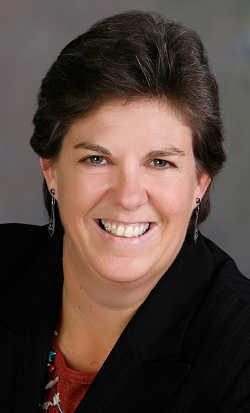
Living in a rural community shouldn’t have to come with a hefty price tag for health care.
Thanks to the Affordable Care Act, it no longer has to.
The Affordable Care Act (ACA) is already making a difference in the lives of millions of rural Americans, including families right here in California.
Prior to the ACA, many rural families had a hard time finding affordable insurance coverage, paying an average of nearly half of their costs out of their own pockets.
Today, thanks to the ACA, families in California can choose from a variety of affordable insurance plans and many will qualify for financial assistance to help them pay for coverage.
To sign up, visit www.healthcare.gov or call 1-800-318-2596 if you need help.
For those who enroll by Feb. 15, coverage will begin on March 1.
But don’t wait too long to sign up for health insurance coverage – the last day to sign up during this open enrollment period is Feb. 15.
Even if you already have coverage through the Marketplace, it pays to go back and review your plan. You may be able to find a plan that saves you money, offers more services, or includes more doctors. In fact, eight in 10 current Marketplace enrollees can get coverage for $100 or less in 2015 after tax credits.
In addition to providing affordable health insurance options for rural families, the ACA also does things to address the underlying challenges to staying healthy in rural America.
Insurance companies are now forbidden from denying you coverage if you have a pre-existing condition and they are required to cover preventive care.
That’s good news for rural Americans who, on average, suffer from higher rates of chronic conditions like diabetes, heart disease, and high blood pressure than those living in urban areas.
It also expands support for the National Health Service Corps, which offers scholarships and loan repayment to doctors and nurses in return for practicing in rural communities.
More than 3,500 Corps members now serve in rural areas, and an average of 86 percent of them will remain in their communities even after completing their service. These investments help keep a steady stream of young, motivated doctors and nurses in rural America.
That’s a good thing because while one in five Americans lives in a rural community, just ten percent of doctors practice there.
The ACA also invests significantly in expanding services at community health centers, where 7.5 million rural Americans get access to primary and preventive care.
That comes on top of the more than $3 billion USDA has invested since 2009 to strengthen health infrastructure in rural areas, build rural hospitals and health clinics, and expanded access to health care in remote areas through telemedicine.
Weeks ago, we announced an additional $10 million in grants to improve access to health care in rural America, including $486,132 to help California Telehealth Network extend telemedicine services linking rural patients in eight California counties to specialty health care services not otherwise available in these rural areas.
The Affordable Care Act gives hardworking rural families in California the financial security and peace of mind they deserve. It makes rural communities stronger and rural families healthier.
Remember you can sign up at www.healthcare.gov or call 1-800-318-2596 for more information.
Glenda Humiston is the California State Director for USDA Rural Development. She oversees the agency's 40-plus programs and invested nearly $1 billion in California's rural communities during fiscal year 2014.
- Details
- Written by: David Sayen
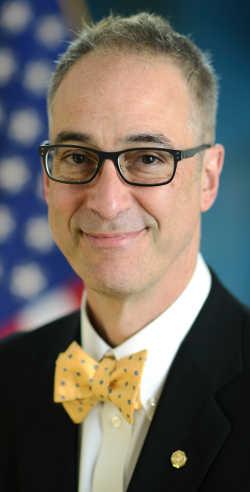
Good news for people with Medicare in 2015: Part B costs will remain the same as in 2014.
Medicare Part B helps pay for doctor bills, outpatient care, durable medical equipment, and other items. It requires a monthly premium and an annual deductible.
I’m happy to report that Part B costs for 2015 will be identical to 2014: $104.90 a month for the premium (for most beneficiaries), and $147 for the deductible.
Most people with Medicare don’t pay any premium for Part A, which helps covers hospital care. But for those who do, the 2015 premium is dropping, from a maximum of $426 per month to $407 per month.
The annual deductible is going up a little, from $1,216 in 2014 to $1,260 in 2015. Once you pay the deductible, Medicare covers your first 60 days of hospitalization with no co-insurance.
Thanks to the Affordable Care Act, people with Medicare no longer have co-pays for a long list of Medicare-covered preventive health services.
Preventive shots and screenings are intended to keep you healthy and to detect disease in the earliest stages, when it’s most treatable.
Medicare’s preventive health services include vaccinations for flu and Hepatitis B; screenings for colorectal, breast, and prostate cancer; screenings and counseling for diabetes and depression; cardiovascular disease screenings; and counseling to help you stop smoking or abusing alcohol.
In addition, you can get a one-time “Welcome to Medicare” visit with your doctor, during the first 12 months you’re enrolled in Part B. During this visit you and your doctor can review your medical and social history, and your physician can recommend specific preventive screenings for you, if needed.
Medicare also now covers an annual “wellness” visit with your doctor. This visit is intended to develop or update a personalized plan to prevent disease or disability based on your current health and risk factors.
Another benefit of the Affordable Care Act is that it’s gradually closing the “donut hole,” or coverage gap, in Medicare Part D, the prescription drug program.
The coverage gap begins after you and your drug plan together have spent a certain amount for covered drugs. In 2015, once you enter the gap, you pay 45 percent of the plan’s cost for covered brand-name drugs and 65 percent of the plan’s cost for covered generic drugs until you reach the end of the gap.
However, not everyone will enter the coverage gap because their drug costs won’t be high enough. (There’s a full explanation of the coverage gap in the “Medicare & You” handbook for 2015, which is online at: http://www.medicare.gov/Pubs/pdf/10050.pdf .) The gap is scheduled to be completely closed by 2020.
Finally, Medicare has expanded its “Blue Button” feature to provide better access to your Medicare claims and personal health information.
With the Blue Button you can download 12-36 months of claims information for Part A and Part B, and 12 months of claims information for Part D.
This information can help you make more informed decisions about your care and give your healthcare providers a more complete view of your health history.
You can find the Blue Button at www.MyMedicare.gov .
Once you’ve used the Blue Button, there are a variety of health applications and services to analyze your health information.
Visit www.bluebuttonconnector.healthit.gov to learn more about these useful tools and how to protect your health information once it’s in your hands.
David Sayen is Medicare’s regional administrator for Arizona, California, Hawaii, Nevada, and the Pacific Territories. You can always get answers to your Medicare questions by calling 1-800-MEDICARE (1-800-633-4227).