 How to resolve AdBlock issue?
Opinion
- Details
- Written by: Roberta Lyons
The recent revelation that the California State Department of Parks and Recreation (DPR) has a “secret” fund of $54 million has plunged the department into chaos and disgusted and angered state park supporters all over the state.
For good reason. The budget deficit that precipitated the proposed closure of 70 state parks, including Lake County’s Anderson Marsh State Historic Park, is $22 million.
So, where does this leave Anderson Marsh State Historic Park?
The Anderson Marsh Interpretive Assoc. (AMIA) is the nonprofit cooperating association with the park that has been working for over a year to make sure that the park does not close.
The original closure date was July 1, but that date has been delayed because AMIA is among the many nonprofits that are in the midst of negotiating an operating agreement with DPR.
AMIA has been fundraising diligently and has been able through local contributions from individuals and other nonprofits, grants from the State Park Foundation and volunteer commitments to establish funding necessary to take over some operations of the park, including opening and closing gates on the weekend, paying for utilities, sanitary facilities, insurance and trail maintenance.
The revelation of the $54 million in hidden monies will not change our efforts.
Even before the budget crisis hit, Anderson Marsh State Historic Park suffered from neglect. Our plan is to continue to negotiate our operating agreement contract which will hopefully be in place within the next few months.
Donors to our effort need to know that all of the funds donated go to AMIA and, in turn, to the park.
Also, unlike the state, apparently, we are not only happy, but are required, to show our “books” to anyone who requests it.
There is no guarantee that the $54 million will go back to state parks and, if it does, there is no guarantee that Anderson Marsh State Historic Park will see any of that money.
If, on the other hand, the state miraculously places that money in the state parks budget, and parks are taken off of the closure list, including our park, we will celebrate.
The money collected so far could go a long way in taking care of some much-needed deferred maintenance problems at the park as well as fund needed improvements.
Having been so critical of DPR on the state level, we need to emphasize that local state park rangers and our sector superintendent, Bill Salata, are very supportive of Anderson Marsh State Historic Park.
Superintendent Salata has a vision for the park and began implementing that vision when he took over the job, only to be halted by the budget crisis and threat of closure.
The important issue remains keeping the park open.
Our supporters and donors need to separate the park from the State Department of Parks.
Anderson Marsh State Historic Park is important for many reasons. It supports valuable wildlife habitat. It provides walking and hiking opportunities for hundreds of people who use the park; many local folks walk there every day.
The park has been the site of the Old Time Bluegrass Festival, which has become an important event for the South County; it is an educational facility for local schools.
The park is all of these things and could be much more but it needs the continued support of local people.
We hope that our supporters don’t give up on our local park because the state park officials at the highest level have failed so miserably.
Roberta Lyons is president of the Anderson Marsh Interpretive Association, based in Lower Lake, Calif.
- Details
- Written by: Judy Thein
Recently I have received numerous inquires concerning my plans for the Clearlake City Council election.
After nearly three decades of public service to the city of Clearlake, I will not be seeking reelection. It is time to rest.
I began my public service career in the early 1980s when I became employed with the city of Clearlake. My long tenure with the city has provided me the landmark honor of becoming the longest serving employee in our city’s history.
When I first walked through the doors of City Hall seeking employment, I never imagined that one day I would ultimately become an elected official, receiving landmark votes twice in our city’s election history. That honor affirmed the trust the citizens of Clearlake placed in me. It was that trust that I carried with me each day of my elected tenure.
In 2004, as I ran for a seat on the Clearlake City Council, I made only one promise. My promise was to always work hard and always work in the best interest of our community. I never forgot that promise.
Each day I would remind myself that the things I did and the decisions I made could have a lasting effect on the lives and well-being of people. I knew I had the ability to impact lives, so I took my elected position seriously.
As the years rolled by as an elected official, the more I did made me want to do more to serve our community. There was always a new challenge around the corner to help make a bigger difference.
This “part-time” council job became a full-time job to me. There were many calls on my time, filling my schedule daily. Soon my whole life revolved around this council job.
Throughout my years on the Clearlake City Council, I have had the privilege of representing our city as a three-time mayor and two-time vice mayor.
I find it difficult to think of the many accomplishments that I was a part of during the last 30 years. It is impossible to sum up these accomplishments at this time.
One of my strongest passions was promoting safety for our seniors, our youth and our communities.
I was privileged to spearhead the Burns Valley Pathway project for senior safety, as I always believed seniors should be valued, supported and appreciated.
When a drunken driving tragedy struck my family, it kindled inside of me a passion to help others. I created the award-winning Team DUI to help educate our entire county on the true realties of driving under the influence with the educational focus on our youth.
Through Team DUI, many lives have been saved and many more will be saved.
During my years on the city council, I advocated for public safety, utilizing my many years of budgeting experience and knowledge to play a key role in building effective teamwork to help provide our police department the necessary resources to maintain public safety within our community.
Throughout my entire tenure on the city council, i never let the fear of challenge keep me from doing what i believed was in the best interest of our city.
I did what I felt was right, respecting individuals’ rights to their opinions. I faced challenges with honesty, integrity and respect, as the key to success was to be true and ethical to my principals.
I never compromised my values to achieve popularity.
My career with the City of Clearlake has been an amazing journey. Regrets after nearly 30 years – I have a few, but too few to mention.
At the end of the day I can reflect on how I served our community, knowing that the office I held was all about helping people, as the heart of our city is the people within.
To all of the citizens of Clearlake and the many wonderful individuals throughout the entire county, please accept my heartfelt gratitude for being part of my life and allowing me the opportunity to be part of the life of our communities.
I will always be proud to call Clearlake my home.
Judy Thein serves on the city council for the city of Clearlake, Calif.
- Details
- Written by: Greg Cornish
During your first election campaign I was a Gary Lewis supporter. You were new on the scene and Gary had accomplished a few things I wanted to see happen. As I sat talking to Gary one day at his election camp, some of the things he said about you started to not add up on how I perceive you. His criticisms of you were not being based in politics and I started looking at him differently.
After you won the election I became quite pleased with the way you conducted yourself on the Board of Supervisors and with your constituency. That's why I prefer local politics not based on parties and affiliations, it makes it easier to vote for people with ideas and vote based on performance rather than platforms.
However, recently, for whatever reason, you seem to not be as interested in hearing what our constituency has to say or to be as involved in the community as you have been in the past.
When the marijuana growers from another county moved in behind my house and started putting up 8-foot fences, burying watering tanks, grading, installing solar and gas generators, and taking up residence under tents, you did not seem too concerned when I contacted you about it via an e-mail.
Now when one of your constituents gives you a long detailed letter about what's going on in their neighborhood and looks to you for help, please understand they will become quite concerned when your answer in a reply e-mail is a short, “‘Yes, these things are popping up all over.’ – Denise Rushing.’”
I stared at that short e-mail for a while and thought, “What the heck?” I really wanted an opinion from you on the subject, and even a short- and long-range plan to deal with it. I thought that was how politicians handled their constituents.
Later that day I stopped by at a neighbor’s house and was talking about your e-mail. They said they had also contacted you with little success concerning a next-door neighbor who was moving in junk cars and generally making a wreck out of the neighborhood.
They received a note from you that said, “Well, you can't tell people how to live.” We were both puzzled because this didn't sound like the Denise Rushing that we come to know. The Denise Rushing we knew wanted to clean up blight and make Lucerne and Nice look a lot better.
After the resounding defeat of Measure D the voters sent a clear message to the Board of Supervisors saying, “Deal with this.” Sixty-six percent of your voting public wants you to crush this problem and give minimal legal rights to people growing marijuana for medical purposes. The voting public wants you to greatly limit collectives growing in the area in any legal way you can.
I may be wrong, but when I see you as a part of the advisory committee and listen to your views in the Board of Supervisors meetings, it appears you are trying to take a position somewhere in the middle.
Now I know you've had a rich full life and probably met many people who grow marijuana for purposes other than medicinal. I realize you probably know that these people would love to game the medical marijuana system or do what I call piggybacking for purposes of profit. Nowhere in Proposition 215 or SB420 does it mention profit.
Please, in all your future dealings I'd love to see you toughen up and become the person you were when you are fighting for your constituents in the water problem in Lucerne at the beginning of your Lake County political career. I genuinely like you and think you are a fine person, and would love to see you return to your fighting form and fight for the majority of your constituency while protecting the rights of the medical marijuana user by pushing back hard against the criminal element wanting to join it.
You've noticed in one of the last Board of Supervisors meetings when the people showed up to testify from Middletown and Kelseyville how frightened and disappointed the real constituency of the Board of Supervisors is.
You've learned that most of the people that are growing marijuana in the neighborhoods are exceeding the amount needed to satisfy their medical requirements.
You've learned that many of these people that are growing marijuana are not being good neighbors. You saw evidence of death and destruction to animals and the potential of death and destruction to human beings because of these bad neighbors.
Now as you said, “You can't tell people how to live.” However, if you want people to listen to your suggestions and be good neighbors you can control how they live by limiting with law.
Cut down the number of plants to the bare legal minimum reducing the need for guard dogs that these people can control, the need for weaponry to protect the large amount of plants and the other suggestions that the urgency ordinance offers. Personally, I see no reason we would ever need to change the urgency ordinance. People needing medicinal marijuana never had a supply problem or demand problem previously.
There is a time to negotiate and perhaps you see your position on the advisory board that of a negotiator.
Please remember that you do not have to play the middle; your constituency would like to see you negotiate for us and we believe due to the 66 percent to 34 percent mandate that you hold all of the cards.
Greg Cornish lives in Nice, Calif.
- Details
- Written by: Kamala D. Harris
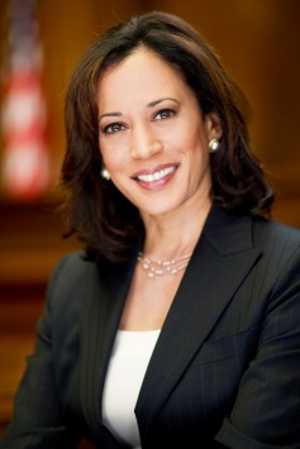
As California Attorney General, I have traveled the state to see how the mortgage crisis continues to impact California families.
I have visited neighborhoods where empty homes are magnets for criminal activity. I have heard the stories of responsible homeowners who lost their family homes – who lost their piece of the American Dream.
For far too long, too many California homeowners have been ensnarled in a long and painful nightmare.
Here in Lake County, there were nearly 3,000 foreclosures between 2008 and 2011. That translates to 1 out of every 12 homes.
We are now at a crossroads.
According to recent estimates, there are as many as 700,000 California households in the “foreclosure pipeline” today – many of them in Lake County. What these homeowners will tell you is that they need relief now.
In particular, they need the flaws in this system to be fixed, such as dual tracking – the dysfunctional practice in which a bank forecloses while the homeowner is negotiating in good faith for a loan modification.
Struggling homeowners also describe another experience that I have heard countless times: They’ll call their banks, only to be connected to a different person each time and someone who is unfamiliar with their situation and doesn’t have their paperwork. They’re continually forced to re-explain their situation and submit, often by fax machine, the same mountain of paperwork.
The solution is the California Homeowner Bill of Rights, which will end dual tracking and give homeowners a single point of contact as they navigate the system and try to keep their homes – a person at the bank who knows the facts of their case, has their paperwork and can get them a decision about their application.
This week, we took a step in the right direction. Key elements of the California Homeowner Bill of Rights passed out of a legislative conference committee.
The next step comes on Monday, when the full Legislature is set to vote on its passage – and it is my hope we’ll do what is right.
The national mortgage settlement we achieved last fall secured a commitment of up to $18 billion for California homeowners from the nation’s five major banks. It was an important first step.
But the protections of that agreement apply only to Californians whose home loans are handled by one of those five banks.
The same common-sense protections should apply across the board, which is why we need the California Homeowner Bill of Rights.
I encourage every Californian to reach out to their legislators and urge them to make sure we pass the California Homeowner Bill of Rights.
This is not a partisan issue. This is a basic issue of fairness – and one that requires action now.
Kamala D. Harris is California’s 32nd attorney general. To see how the California Homeowner Bill of Rights would benefit families in California, visit http://oag.ca.gov/ .