 How to resolve AdBlock issue?
Opinion
- Details
- Written by: Shannon Kimbell-Auth
You’ve seen the commercials about starving children in other parts of the world, but did you know that there are starving children right here in Lake County?
According to a Food and Nutrition Survey in 2010, 18 percent of Lake County residents are living in below poverty conditions and do not have access to a stable source of food throughout the year.
They cope in various ways, including the use of food stamps, free meal programs for children and by using church or community sponsored food pantries.
United Christian Parish (UCP) does not have the only food pantry in the county but I would like to share a little about how it functions as indicative of needs and service in our community.
UCP has always had some kind of food ministry to feed the hungry and we have been proud participants and supporters of the Free Kitchen Project since its inception, but in 2008 we determined we needed to do something more.
As with many other churches, prior to that time we tried to help people on a case by case basis but always felt we were falling short of what people needed.
In response we decided to open a food pantry that would provide one week’s worth of food for any family that needed it.
Further, we would let the families have some choice in the kind of food they received, but they would be limited to using the pantry once every three months.
We offer this service all year round, by appointment Tuesday through Thursday.
In 2008 when we first opened we provided one week’s worth of food for 196 adults and 128 children for a total of 324 people.
By 2011 that number grew to 272 adults and 180 children for an annual total of 452 people.
How were we able to provide a week’s worth of food for 452 people last year, and how can you help feed even more next year?
Our food pantry has in the past been stocked solely by members of the congregation. This year we received several large group donations that enabled us to significantly increase our giving ability.
Students and staff at Terrace Middle School completely stocked our pantry through a food drive before the holidays and throughout the year we received food donations from the Early Lake Lions Club, Kiwanis, Strong Financial customers, Weight Watchers, Konocti Christian Academy and through partnerships with groups such as the Free Kitchen who received grants and food from Sutter Lakeside and Grocery Outlet in addition to others.
In short – we did it through community partnerships.
All this month the “Stop Hunger Now: Lake County CAN!” food drive has been collecting food to help fight hunger not just in Lake County but around the world.
In addition to stocking food pantries around the lake we will be preparing 20,000 meals to ship overseas to a country where the people are not only “food insecure” but are actually dying from starvation.
On Friday, March 30, and Saturday, March 31, the seven United Methodist churches throughout the county will organize all of the food received and distribute it to food pantries in Lakeport, Upper Lake, Clearlake Oaks, Clearlake, Middletown, Lower Lake and Kelseyville.
You can still participate in Stop Hunger Now: Lake County CAN! by bringing a donation of food to the Upper Lake United Methodist Church, 604 Clover Valley Road, from 5:30 p.m. to 8:30 p.m. Friday, March 30, or to Clearlake United Methodist Church, 14521 Pearl Ave., from 1 p.m. to 4 p.m. Saturday, March 31.
You can deliver your food and go, or you can stay to take part in special events planned for the day.
More information is available at www.lakecountycan.org .
Can Lake County make a difference and help stop hunger now? Lake County CAN!
Shannon Kimbell-Auth is pastor of United Christian Parish in Lakeport, Calif.
- Details
- Written by: Nelson Strasser
I am going to leave out most of the story. And, I would add that my troubles were not caused by speculation or risk taking; au contraire, I was trying to consolidate and move to a defensive position financially when I got caught in the housing market debacle.
I pick up the story at the point of my attempt to do a “short sale.”
I contacted a local Realtor, and after entering the date in her company’s computer program, she came up with a value of $140,000. This was about half of my cost for the house and property. However, I had to accept the fact that something is worth what someone else is willing to pay for it.
Fortuitously, I received a cash offer for $120,000, which was just within the 15 percent of appraised value required.
However, The Bank had a separate appraisal for $170,000. The Bank nixed the sale and demanded the Realtor raise the price to their appraisal value, which of course we did.
And, not another person looked at the house, and the short sale period timed out.
I was curious as to why and how The Bank appraisal was so out of line with the market.
The representative for The Bank would not return my calls.
I asked my Realtor to ask the representative why he did not return my calls. He told the Realtor that he was too busy and he would not talk to me by phone, email or any other way. He was just too busy.
I tried to get help from HUD. They could offer no help in this situation.
I emailed my grievances to my Congressman: No word.
After dozens of calls to The Bank, I gave up and attempted to take the next step available: deed in lieu of foreclosure. So, I filled out all the paperwork and submitted it to The Bank.
I was assigned a representative, and was told to vacate the property by Sept. 20, 2011, which I did.
I was told to wait to be contacted for a “walk through.” That call never came.
I called The Bank several times, and my representative finally stopped calling me back.
After three months I called The Bank and was told that my file was with a law firm because there was a lien on the property.
I called the law firm in question and found out that the lien was from Sunrise Bank. So, I got on the net and found that Westamerica Bank had purchased Sunrise Bank.
I called Westamerica and got through to someone who was sympathetic and she promised that she would try to resolve the situation.
This took me, without hyperbole, 10 minutes. It took the person at Westamerica two days to get the error corrected.
Now I figured, I was back on track. So I called The Bank again, and I was told that my paperwork had a “perishable date,” and needed to be redone.
I immediately got the forms and resubmitted the paper work. I did not hear anything for a week and so I called the bank and was told that my file had been closed, and that, according to her computer, I was denied “deed in lieu of” last September. Case closed.
The problem is that my daughter co-signed and, of course, she would like to get the “clock” started for the seven-year period it takes to clear her credit.
So, I called The Bank and they said foreclosure is in the works, and that there is no way to expedite the process, and no way to know when it would take place.
I had accepted my fate and just wanted the nightmare to end. I just wanted to give back a three year old house that was in perfect order.
I asked for nothing, just closure, after a total of two and a half years since the debacle began.
The Bank was rescued by the taxpayers because it was “too big to fail.” I am thinking now that The Bank should have failed because it was too big.
The Bank, by the way, is servicing the loan, they have no stake in the outcome, they are churning fees no matter what, and the government, which is the ultimate guarantor of the loan, is footing the bill.
Those of you who have preached laissez faire (government non-intervention), I would suggest that if you ever had to deal with The Bank, you would start thinking about another French term: guillotine.
Nelson Strasser lives in Lakeport, Calif.
- Details
- Written by: Fr. Leo M. Joseph, O.S.F.
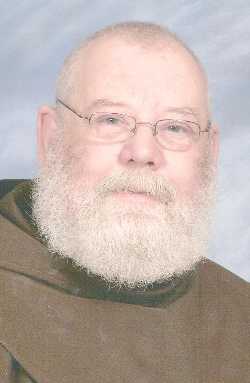
We are what we love. “Rend your hearts and not your garments,” says the prophet Joel.
Lent is a matter of the heart! “Yet even now, says the LORD, return to me with all your heart, with fasting, with weeping, and with mourning; rend your hearts and not your clothing.” This is the church’s Lenten call to repentance, and this is what we are setting out to do in these following 40 days.
First we have to have an authentic understanding of “repentance.”
The Greek word for repentance, “metanoia,” denotes a change of mind, a reorientation, a fundamental transformation of outlook of our vision of the world, and of our own self; and a new way of loving ourselves, loving others, and loving God. In other words: a “change of heart.”
It involves not mere regret of past evil but of our recognition of the distorted vision of our own condition, in which sin, by separating us from God, has reduced us to a divided, autonomous existence, depriving us of both our natural glory and our freedom.
Rather than mere dwelling on human sinfulness, repentance becomes the realization of human insufficiency and limitation.
Repentance then should not be accompanied by a preoccupation with our guilt but by an awareness of our estrangement from God and from each other.
This meaning of repentance replaces its negative connotation with a positive one, focusing on the communion with God that we are aiming for rather than the alienation that we are leaving behind.
Why did Jesus single out prayer, fasting and almsgiving? The Jewish religion in the time of Jesus considered these three practices as the principle works of the religious life. These were seen as the key signs of a pious person, the three great pillars on which a righteous life was based.
But Jesus pointed to the heart of the matter. Why do you pray, fast and give alms? To give glory to God? Or to draw attention to yourself so that others may notice and think highly of you?
Our Lord warns his disciples, and us, of self-seeking glory – the preoccupation with looking good and seeking praise from others.
True piety is something more than feeling good about yourself or looking holy. True piety is loving devotion to God. It is an attitude of awe, reverence, worship and obedience.
So why the ashes? Being strewed with ashes is an ancient sign of humility. It is dust – matter of the earth – which the ancient scriptures, and modern science, tell us we are made of. In other words – dirt!
And humility is definitely a dirty word in our modern culture. The word itself comes from the Latin word for dirt or soil. That’s why we call the soil in our gardens – humus! It’s from the same root word. So humility just means being down to earth, having your feet on the ground. That’s not so bad is it?
It's expressed beautifully in an old Shaker hymn:
'Tis the gift to be simple,
'tis the gift to be free,
'tis the gift to come down
where we ought to be,
and when we find ourselves in the place just right,
'twill be in the valley of love and delight.
When true simplicity is gained
to bow and to bend we shan't be ashamed,
to turn, turn, will be our delight
till by turning, turning we come round right.
That’s the starting point! It is only when we have our feet firmly planted on the ground that we can turn around and rechart our course.
And that’s humility. It is only when we are not so full of ourselves that we can be filled with God.
And that is what Jesus offers us. It is communion with God our loving Father. It is coming home to the loving arms of our Father who awaits us, who longs for us. In God alone we find the fullness of life, happiness and love. God wants to renew us each day and give us new hearts of love and compassion.
Today, we are called to journey with Jesus in a special season of prayer, fasting, almsgiving, as we prepare to celebrate the feast of Easter, our Christian Passover.
We, too, must follow our Lord in the way of the cross in denying ourselves and taking up our own cross in order to share in the victory of Christ's death and resurrection.
The Holy Spirit is ever ready to transform our hearts and to lead us further into God’s life of love and holiness.
Fr. Leo M. Joseph, O.S.F., is parish priest for St. John’s Parish in Lakeport, Calif.
- Details
- Written by: Dr. Lisa Takesue, DVM
When you think about it, many of us have had an encounter with an unowned “community cat” whether it is feral, abandoned, a drifter or one looking for new territory.
My most memorable experience was a large tom that paid occasional visits from a nearby feral colony and often fought with my cats.
After numerous wounds and abscesses my cat Toby contracted Feline AIDS (FIV), which is transmitted via cat-to-cat bite wounds. Two years ago his immune system weakened and I had to euthanize him due to an overwhelming infection.
Many of the people feeding unowned felines may not realize the impact these free-roaming cats have on the populations around them.
Anyone providing food to any cat is considered a “caregiver,” like it or not. Caregivers have good intentions but beyond feeding, many are unwilling or unable to have their cats spayed/neutered, vaccinated, and tested for contagious diseases such as FIV and Feline Leukemia (FeLV).
Once a food source is provided cats will be attracted and will congregate, exhibiting group behaviors such as socializing, breeding, hunting, and fighting. Before you know it, a colony has formed and will grow exponentially if the food source can support it.
The risk of disease is higher in groups of cats since many infectious organisms transmit via saliva, respiratory secretions, and feces. Social grooming, eating/drinking from the same bowl, etc. can transmit the respiratory viruses, Feline Leukemia, and rarely FIV.
Bite wounds can transmit FIV and Rabies, not to mention lots of bacteria. Fecal material can transmit panleukopenia (a parvovirus) and intestinal parasites.
External parasites such as fleas, ticks, and ear mites thrive within cat colonies since they have a smörgåsbord of individuals to feed from.
Many infections and parasites have “carrier” or latent stages, where the individual appears healthy yet can transmit disease to other cats or people.
And worse yet, a pregnant female can transmit FeLV or FIV to her fetuses, so kittens may be born infected and will appear healthy during the first few months of life.
Often caregivers try to befriend and handle unowned cats, putting themselves at risk for bites and scratches.
Anyone trying to pet or catch a cat with unknown vaccination status should be aware of a few health risks.
Cats are now the most frequently reported domestic rabid (infected with rabies) animal in the U.S., and anyone bitten by an unvaccinated cat should take preventative measures against the disease. For some baffling reason rabies vaccination is not required by law for cats in this state or county.
Cat scratches, often a minor painful nuisance, may transmit Bartonella (aka Cat Scratch Disease) a vague illness of fevers, swollen lymph nodes, aching, and malaise.
All this information may seem a bit alarmist or may discourage some from befriending stray cats altogether.
I would like to reinforce, though, that it is not enough for caregivers to just provide food for community cats.
They should make every attempt to get these cats spayed or neutered, tested for FeLV and FIV (and eliminated from the population if carrying either) and vaccinated against rabies, the respiratory viruses, parvovirus and leukemia.
A trap-neuter-return (TNR) program, such as the new Catsnip program sponsored by Lake County veterinarians, helps accomplish these goals by providing a free surgery and rabies vaccine.
In addition, most of the participating hospitals offer discounted pricing – for cats in the program – for the other feline vaccinations and testing.
Let me reiterate from Dr. Jeff Smith’s previous article that only unowned cats qualify for this free program.
Contacts for the program are: north county – Vicki Chamberlain,
Please consider the health of the surrounding human and animal communities when feeding unowned cats.
Lisa Takesue, DVM, works at Main Street Veterinary Clinic in Lakeport, Calif. Her guest commentary is endorsed by her colleagues at Middletown Animal Hospital, Animal Hospital of Lake County, Wasson Memorial Veterinary Clinic and Clearlake Animal Hospital.