 How to resolve AdBlock issue?
Letters
- Details
- Written by: Leona Butts
Did you realize that there will be a new accounting of homeless in Lake County on Jan. 23?. In 2017 Point-In-Time counted 401 people who met the Department of Housing and Urban Development’s description of homeless. As the homeless register, they receive many considerations of value.
More than one-quarter of the total homeless population nationwide lives in California, roughly 114,000. Homeless in California continues to rise at a steady clip.
My question is why, with a county population of around 64,000, do we have so many homeless? There is always the – why is this happening? Can anyone tell us why? Will there be an increase in the 2018 count?
Another stat that seems to be true – do you remember the 2008 vote to build a bullet train, or what is now being called the “train to nowhere,” that was estimated cost was $43 billion? It was anticipated that about one-third of the money to build the bullet-train system would come from the state bond, about one-third from the federal government, and about one-third from private investment.
For the last few years, the estimates have hovered in the mid-$60 billion range. I have picked up reported facts from by Tim Sheehan,
Now with Gov. Brown making California a sanctuary state, how will the financing all turn out? Think on that one for a while.
We can even look at a stat very close to home, actually in your neighborhood and mine. If you care for yourself, family and neighbors, you might want to look at the names on the list of Lake County registered sex offenders. Their addresses and photos are also listed. At this time there are 251 Registered Sex Offenders in a county population of around 64,000. How many such people are not registered?
We are always left with a question.
Leona Butts lives in Clearlake Oaks, Calif.
- Details
- Written by: James C. Walker
These do NOT include automated enforcement with speed and red light cameras. Those expensive cameras are operated by for-profit companies and require the traffic safety engineering parameters of the speed limits and traffic light timing be deliberately mis-engineered to produce enough tickets given to mostly safe drivers for the total fines to even cover the high camera costs.
If speed and red light cameras ticketed only hazardous drivers, no one would object. But then there would be no speed and red light cameras because they would lose too much money, and without profits the ticket camera industry would cease to exist.
James C. Walker is a life member of the National Motorists Association, and board member and executive director of the National Motorists Association Foundation based in Ann Arbor, Mich.
- Details
- Written by: Jeremy Profitt
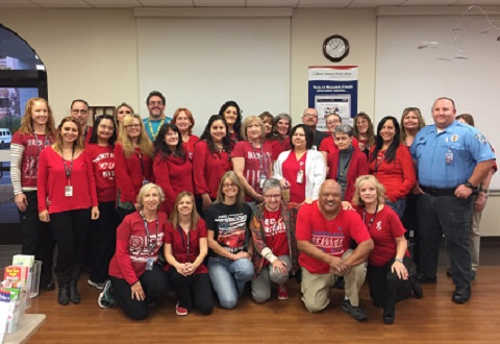
Roughly 22,600 veterans live north of the Golden Gate Bridge in rural areas with 60 percent enrolled in the San Francisco VA Health Care System, or SFVAHCS.
Seventy-three percent of enrolled rural veterans are aged 65-plus and are likely to face complex health care issues that require frequent and ongoing appointments. Eleven percent served in Iraq and/or Afghanistan and 9 percent are women.
Each of these groups face diverse health care needs, and many experience challenges accessing health care while living in rural areas.
Veterans may also experience typical rural health care challenges that are intensified by their combat-related injuries and illnesses.
So how are community partnerships helping the way we serve our rural Veterans?
SFVAHCS is working to improve the service we provide our rural veterans while partnering with our surrounding communities.
SFVAHCS has four community based outpatient clinics, or CBOCs, north of the Golden Gate Bridge: Santa Rosa, Clearlake, Ukiah and Eureka. Each one of these clinics takes tremendous pride serving veterans and their surrounding communities. Community partnerships are fundamental because they allow us to reach more veterans.
Countless staff at various levels collaborate with local community services, hospitals, small clinics and skilled nursing facilities.
“These collaborations allow us to support our Veterans using a holistic approach while sharing information with key community stakeholders and supporting each other,” said Carol Brown, clinic director of the Clearlake CBOC.
Often our veterans’ needs go beyond what we think of as traditional health care.
“A veteran recently moved to the area from out of state. He needed money to register his car so he could apply for a job and find housing, so I reached out to the Lake County United Veterans Council using our emergency veteran support plan. We were able to get his car registered, and a local business provided four new/used tires. With this support, he was able to find a job and get back on his feet,” said Amanda Celli, member services representative at the Clearlake CBOC.
Celli is part of our patient experience/member services team and is often the first person veterans meet when trying to navigate the VA system.
She is deeply rooted in the Clearlake community both as a VA employee and as a community member, serving on the Lake County United Veterans Council as the coalition’s secretary. She is also a Lake County Vet Connect member, providing community services, social networking, benefits and health care resources to our veterans.
“I get to listen to our Veterans with issues or concerns and help set up a game plan to be successful,” said Celli. “Supporting rural veterans is challenging because of the environment and limited resources, but because of our profoundly rooted community partnerships, the community and the VA can work together in supporting our Veterans’ needs.”
These partnerships and passion from staff echo across all our CBOCs. You will often see veterans stopping by their local clinics just to say hello. As much as staff are checking in on our veterans, you will find Veterans are stopping by to check in on our staff. There is no better example of the power of our community partnerships than what happened during the 2017 wildfires.
Within the SFVAHCS - encompassing the Santa Rosa, Eureka, Ukiah and Clearlake VA Clinics - 793 veterans were affected by the fires. Of those, 117 veterans lost their homes or reported fire damage, and 16 SFVAHCS staff members had lost or damaged homes as well.
SFVAHCS staff made more than 5,846 welfare calls to check on veterans throughout the affected communities.
SFVAHCS established phone numbers for veterans to call in for information and to refill medication lost during the evacuations while the Santa Rosa Clinic was closed.
Social workers and mental health staff began moving into the affected fire areas working with county veterans service officers and visited local shelters to provide mental health services, gift cards and information on temporary housing as they assessed the needs of veterans.
Voluntary service began collecting donations and other items needed to help support our evacuated veterans.
“Each time I help our veterans, I’m helping a family member,” said Alta Thurman, a Registered Nurse at the Clearlake VA Clinic.
SFVAHCS would like to thank all of our community partners, including veteran service organizations, community agencies, and the countless community volunteers for their ongoing support.
These collaborations ensures that our rural Veterans receive the help they are looking for when they need it the most.
Jeremy Profitt works for the San Francisco VA Health Care System.
- Details
- Written by: Nicholas A. Pyle
The American Enterprise Institute recently published an analysis of the program in its current state, and the numbers are staggering: " The losses to consumers are large in aggregate for the country, in the order of $2.4 to $4 billion."
This program forces good, American jobs to go overseas, like the moving of the popular Lifesavers candy manufacturing to Canada for cheaper sugar.
It's ironic for Mr. Hayes to speak of "slave labor," especially when the largest sugar producers in Florida are accused of the same thing. The only difference being that this occurred on American soil. The Fanjul sugar barons were brought to court for importing inexpensive migrant workers and "modern-day slavery" to work their sugar cane fields. The Fanjuls, as well as other sugar producers, are known to bank-roll any campaign that is willing to vote in their stead, i.e. Congressman Mike Thompson.
Fortunately, there are still members with integrity, and they introduced the Sugar Policy Modernization Act of 2017, which will produce millions of savings per year for consumers everywhere.
The sugar industry has been coddled since the Spanish-American War, and it’s well past time to stop the American people for footing the bill.
Nicholas A. Pyle is president of the Independent Bakers' Association, based on Washington, DC.