 How to resolve AdBlock issue?
Education
- Details
- Written by: Editor
WASHINGTON, DC – Congressman John Garamendi (D-Fairfield, CA), a grandfather to 11 children and the father of a public school teacher, on Friday voted against H.R. 5, a House Republican bill that would cut more than a billion dollars from public education next year.
“H.R. 5 is a blow to students, children with disabilities, parents, teachers, and everyone in our community who understands that a vibrant economy requires a well-educated workforce,” said Garamendi. “Fortunately, this bill will never be signed into law. The President has promised a veto. I hope we can revisit this issue with a more bipartisan bill.”
H.R. 5 would set back public education in America if it ever becomes law. H.R. 5:
- Cuts funding by over $1 billion next year.
- Prohibits any increases beyond the rate of inflation.
- Eliminates requirements that schools improve the education of English language learners each year.
- Does not ensure equitable spending of federal education funds or that all students have access to good teachers.
- Eliminates funding for afterschool programs.
- Focuses only on math and reading, without support for literacy, STEM, art, music, P.E., or other subjects that provide a well-rounded education.
Groups opposed to H.R. 5 include the U.S. Chamber of Commerce, American Federation of Teachers, National Education Association, League of United Latin American Citizens (LULAC), NAACP Legal Defense and Education Fund, American Association of University Women, Easter Seals, Los Angeles Unified School District, National Center for Learning Disabilities, National PTA, National Association of School Psychologists, and STEM Education Coalition.
Congressman Garamendi has long been an advocate for good public schools. As a State Legislator, authored legislation signed into law that made it easier for students to get to school, improved school safety, created the California Summer School for the Arts and California Summer Science and Technology Academy, incentivized highly skilled math and science teachers to stay in our public schools, and improved training for K-12 science teachers.
As a UC regent and CSU trustee, he voted against every undergraduate tuition increase.
- Details
- Written by: Kathleen Maclay
BERKELEY, Calif. – Responding to the national shortage of data scientists, the University of California, Berkeley’s School of Information (I School) announced the launch of the country’s first fully online Master of Information and Data Science (MIDS) degree program.
“This new degree program is in response to a dramatically growing need for well-trained big data professionals who can organize, analyze, and interpret the deluge of often messy and unorganized data available from the web, sensor networks, mobile devices, and elsewhere,” said AnnaLee Saxenian, dean of the I School.
“These new professionals need an assortment of skills ranging from math, programming, communication to management, statistics, engineering, and social sciences, not to mention a deep curiosity and an ability to translate technical jargon into everyday English,” Saxenian added.
By 2018, the U.S. may face a shortage of up to 190,000 people who have the analytical skills – and another 1.5 million managers and analysts with the know-how – to make wise use of virtual mountain ranges of data for critical decisions in business, energy, intelligence, health care, finance and other fields, said the McKinsey Institute in the June 2011 report, “Big data: The next frontier for innovation, competition and productivity.”
Dean Saxenian, author of “The New Argonauts: Regional Advantage in a Global Economy” and other books about Silicon Valley said, “The online MIDS program is ideal for today’s students, who are likely to have jobs working on globally distributed teams in roles such as data engineer, data architect, data and analytics officer, financial analyst, and director of health analytics.”
With the new program beginning in January 2014, the I School is staking out new master’s degree territory in educating data scientists.
While other institutions provide individual classes, certificates, or associate master’s degrees in data science, the I School has designed a comprehensive and integrated suite of courses that culminate in a capstone course designed to solidify a student’s knowledge of the breadth of data science concepts and skills.
“We are awash with data, but the expertise to analyze and exploit that data is in short supply. The mission of the MIDS degree is to provide that expertise," said Hal Varian, a professor emeritus at the I School and chief economist with Google.
A rigorous new 27-unit program aimed at the working professional, the MIDS program will have one in-person requirement, a one-week immersion at the I School’s home at South Hall, in which students can meet and explore the Bay Area tech environment.
Students will participate in live, face-to-face classes with fellow students and professors via the Web. Classes are small, with no more than 15-20 students. Additional coursework will include lectures, interactive case studies, and collaborative assignments. Classes will use 2U, Inc.’s online platform featuring high-quality I School faculty developed self-paced content and a state-of-the art learning management system.
I School faculty will teach their curriculum alongside experienced data science professionals. Classes will range from an introduction to machine learning (the intersection of computer science and statistics that focuses on finding patterns in data) and data storage and retrieval to the privacy, security and ethics of data.
The I School currently offers a two-year professional master’s degree (MIMS) that prepares students for careers as information management and systems professionals, and a Ph.D. program for scholars interested in developing information management solutions and shaping information policy.
For more information on the MIDS program, please visit http://datascience.berkeley.edu/ , call 855-678-MIDS or follow the program on Twitter at @BerkeleyData.
For more information on UC Berkeley’s I School, please visit http://www.ischool.berkeley.edu .
Kathleen Maclay writes for the UC Berkeley News Center.
- Details
- Written by: Editor
LAKEPORT, Calif. – Lakeport Christian Center Preschool is now accepting applications for its 2013-14 fall registration.
Pricing adjustments have been made that reflect reductions in daycare pricing which make it more feasible for families to register their children in Lakeport Christian Center Preschool/daycare/pre-kindergarten full time.
There are a variety registration options including two-, three-, four- and five-day programs, Monday through Friday.
The facility hours are 7:30 a.m. to 5:30 p.m. and the program is open to ages 2 to 5.
Lakeport Christian Center Preschool is NCO approved.
The program is enriching, exciting and fun for the children and offers a strong foundation for their future.
Lakeport Christian Center Preschool has served this community for over 27 years and has a loving and dedicated staff. Don't miss out, drop by the facility at 175 C St. today or call Director Julie Landrum at 707-262-5520 to get registered.
If you would like to get your child familiar with the program they could immediately join Lakeport Christian Center Preschool Summer Enrichment Program.
Orientation night for the fall program is Tuesday, Aug. 27, at 6:30 p.m. at the preschool facility.
For more information visit www.lcchub.com/preschool-daycare or www.facebook.com/lccpreschool .
- Details
- Written by: Editor
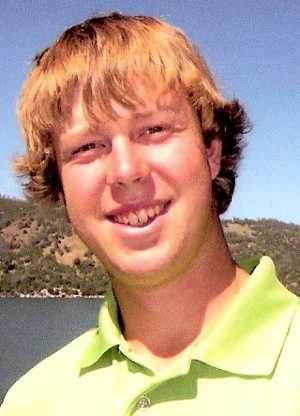
HIDDEN VALLEY LAKE, Calif. – The Hidden Valley Lake Garden Club is happy to announce that Middletown High School senior, Daniel Eagle, is the recipient of the 2013 HVL Garden Club scholarship.
As part of the 2013 community projects for the Hidden Valley Lake Garden Club the members chose to offer a scholarship in the amount of $750 to a graduating high school senior interested in majoring in subjects such as horticulture, landscape, botany, environmental science, floristry, forestry, natural resource management, viticulture, plant science, sustainable agriculture or agriculture production.
Half of the possible points on the applicant’s evaluation relate to participation and leadership in programs and activities and awards, with a heavy emphasis on community service that relates to the major field of study or science or the environment.
Eagle’s leadership roles included group foreman in ag construction and landscape design and team captain of the Middletown High School golf team.
His awards included the following: three years of Honor Roll and Freshman Coaches’ Award for golf. During his golfing tenure at Middletown High School Eagle was a medalist. He completed the following advanced classes: AP Environmental Science, Pre-Calculus and was involved in Future Farmers of America and agriculture classes for four years.
The project for the ag construction and landscape design class was to design and build landscape boxes and to plant them as part of the outdoor beautification of the campus.
As a foreman, Eagle not only considered design elements and plant choice, but also managed a team of high school agriculture students.
“Daniel’s willingness to tackle problems as well as manage the variety of students in class has made him a strong asset to our program. He takes initiative, and is not afraid to dive into any challenge presented,” said his FFA Advisor and Agriculture Department Chair Patricia Pachie.
Eagle plans to attend New Mexico Community College and to participate on their golf team. He would ultimately like to major in horticulture or landscape design, focusing on the design and construction of professional level golf courses. He enjoys and understands golf and likes working out doors.
“Daniel is a competent, serious, hard-working, reliable and pleasant student. I doubt that you will be able to find many students who could give you a better return on your investment,” said Richard Schaut, English instructor at Middletown High school.
For further information regarding the Hidden Valley Lake Garden Club Scholarship Program contact member Marsha Willard at 707-987-2034 or