 How to resolve AdBlock issue?
Education
- Details
- Written by: Editor
The California Community Colleges Chancellor’s Office and the California Employment Development Department (EDD) have teamed up to provide California community college students with free, instant access to more than 82,000 jobs available through CalJOBS, EDD’s Web site of available positions and internships within the state.
The Chancellor’s Office newly redesigned Web site, www.CACareerCafe.com , also will be a portal for employers looking to fill open positions.
Students are able to search for available positions and internships, post resumes and apply for jobs. Employers can post open positions and review resumes and applications.
Other services available on the site include a resume building and archiving wizard, the ability to track and manage all job search activities with customizable student dashboards and equal access to Spanish speakers and the visually impaired.
“This partnership just makes sense on so many levels,” said California Community Colleges Vice Chancellor for Workforce and Economic Development Van Ton-Quinlivan. “The CACareerCafe.com website provides a direct connection between student and employer. If a student needs a job while they are enrolled at a community college they can find one; or once they earn a certificate, graduate, or transfer they’ll have a place to start a new career. It’s all part of doing what matters for jobs and the economy.”
The California Community Colleges is the nation’s largest system of higher education with more than 2.4 million students and is the state’s largest provider of workforce education.
California community colleges educate 80 percent of firefighters, law enforcement personnel and emergency medical technicians and 70 percent of the state’s nurses.
Community colleges offer associate degrees and job training certificates in more than 175 fields. In addition, approximately 25,000 apprentices are educated each year to meet the state’s demand for a skilled workforce.
Attending or graduating from a community college doubles an individual’s chance of finding a job compared to those who failed to complete high school.
“I’m pleased to be partnering with the chancellor’s office on a collaborative effort to connect employers seeking students and students seeking jobs,” said Employment Development Department Director Pam Harris. “The EDD’s newly enhanced CalJOBS online labor exchange system is a great asset for the state and we’re proud it can be leveraged for supporting the valuable work of the www.CACareerCafe.com project.”
- Details
- Written by: Editor
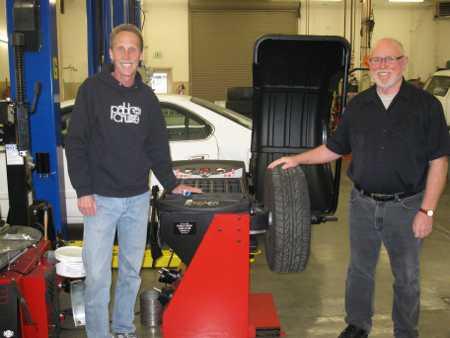
UKIAH, Calif. – The Early Iron Car Club of Ukiah recently donated $3,000 to the Mendocino College Automotive Program.
The donation was used to purchase a brand new Snap On wheel balancer machine, according to automotive professor Doug Boswell.
“Our current wheel balancer is about 20 years old and is a very tired piece of equipment,” said Boswell. “The car club stepped in and provided the necessary funding to purchase a new state-of-the-art machine. When the new machine arrived, the students circled around it and their excitement was contagious. We all appreciate the club’s response to a need. Their donation will help hundreds if not thousands of students over the next 20 years.”
The wheel balancer is an important piece of equipment in the automotive industry because it is required for both small and large automobiles. Most entry level jobs in the auto industry include the ability to use this type of equipment.
Countless students from the auto program are employed in local tire shops and auto dealerships, noted Boswell.
Wayne Briley, president of the Early Iron Car Club, visited the auto program to see the new piece of equipment and shared with Boswell that the funding to purchase the wheel balancer came from the club’s annual “car show” fundraiser.
This year’s car show will be held Sept. 20-22 and includes a variety of events and activities over the three days.
The club is committed to providing scholarships and funding for auto programs to encourage the next generation of auto industry technicians and car club enthusiasts.
For more information about the Mendocino College Automotive Program, contact Doug Boswell at
- Details
- Written by: Editor
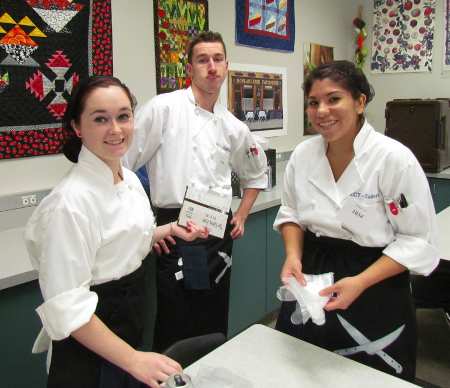
LOWER LAKE, Calif. – Several local students will attend the state Skills USA competition.
In February, the Skills USA Region 1 Competition took place in Petaluma.
Four Lower Lake High students earned gold medals.
Marchal Anderson received the gold for early childhood education, Roy Ingalls Jr. received the gold in MIG welding, Leslie Fernandez received the gold in culinary arts and Alvaro Sepulveda received the gold in automotive service technology.
These students automatically go on to state competition in San Diego in April. The gold medalist at the state level will advance to the national competition in Kansas City in June.
With the help of their ROP teachers and volunteers, each student competed in a skills assessment where they were able to showcase their knowledge.
For example, Anderson demonstrated a project utilizing fine motor skills that she has practiced with a kindergarten class at Lower Lake Elementary School as part of her ECE class with Pam Inman.
Anderson picked the “snowman” project from a creative materials class that she recently took at Yuba College.
In the culinary arts competition, Fernandez demonstrated her knowledge and skills through the production of a four-course menu in a full day competition.
She was rated on organization, knife skills (including breaking down an entire chicken), cooking techniques, creative presentations, sanitation food safety techniques and the quality and flavor of her food.
As a senior, Fernandez will take her experience from Skills USA with her next year as she attends the Art Institute in Sacramento.
For many of these students, it was their first year competing in the Skill USA event. Lower classmen such as Ingalls and Sepulveda have already expressed their desire to continue with the competition next year.
This unique competition allows students to showcase their industry skills and knowledge, while also showcasing their school’s support for Regional Occupational Programs (ROPs).
Upper Lake High School also will be sending students to the next round of competition in San Diego.
Silver medalist Michael Herringshaw and Brandon Perry will join gold medalist Anthony Brackett and Larry Stacy as they defend their robotics title with instructor Gary Madison.
Skills USA is a national nonprofit organization serving teachers and high school and college students who are preparing for careers in trade, technical and skilled service occupations.
In Lake County two high schools have active Skills USA clubs – Lower Lake and Upper Lake high schools. Students participating must learn and practice a trade, with the added requirement of learning presentation and interview skills.
Participation in the Skills USA competition is optional. Teachers at Lower Lake and Upper Lake High spend a tremendous amount of time assisting and encouraging those that want to compete.
Teachers and students will be making the journey to San Diego in April in the hopes of bringing home additional medals.
If you would like to help support them as they represent Lake County, please contact Laura Hutchinson at Lower Lake High School, 707-994-6471m or Gary Madison at Upper Lake High School, 707-275-2338.
- Details
- Written by: Editor
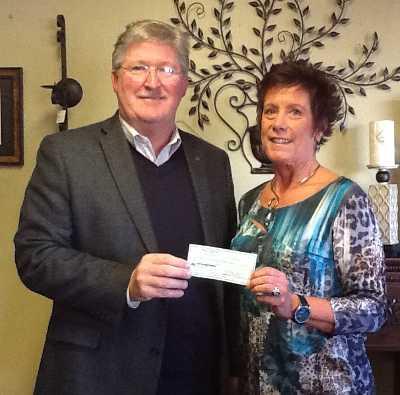
KELSEYVILLE, Calif. – The Imagination Library initiative is gaining momentum thanks to participation from many individuals and organizations throughout the county.
The Konocti Lioness Club has added its support to this literacy program with a $500 donation to the Lake County Literacy Task Force, providing a five-year scholarship to the program for four Lake County infants.
“We are thrilled to be able to offer this donation to support literacy in Lake County,” said Anna Jones, president of the Konocti Lioness Club. “Promoting education is a strong focus of the Lioness Club, as is supporting in-need children of Lake County, and the Imagination Library is a great vehicle for us.”
The Lake County Literacy Task Force, launched two years ago by Superintendent of Schools Wally Holbrook, works to support the community through literacy initiatives, beginning with our youngest residents, to ensure that all children are successful students and productive members of Lake County.
Learning to read is a process that begins at birth. Research shows that students who are successful readers by the age of eight are more successful citizens in their communities.
The Imagination Library was developed in 1995 by Dolly Parton to support literacy in her Tennessee hometown.
Since that time, the program has spread nationwide and was recently adopted as a primary initiative of the Lake County Literacy Task Force.
The goal of the Imagination Library is to ensure that literacy begins at the earliest age possible with the child’s first teacher – the parent.
Children enrolled in the program between the ages of 0-4 will receive a beautiful, hard cover book each month through the mail to read, enjoy and keep in their home.
You can support Lake County’s Imagination Library by sending a donation of $25 to the Lake County Office of Education, c/o Literacy Task Force, 1152 S. Main Street, Lakeport CA., Attention: Imagination Library.
If you have any questions, or if you need further information about this program, please contact Stephanie Wayment at Lake County Office of Education, telephone 707-262-4163 or
Your donation is tax-deductible.