 How to resolve AdBlock issue?
News
- Details
- Written by: Lake County News Reports
Pacific Gas & Electric reported that it will conduct helicopter patrols of distribution lines from 7:30 a.m. to 5 p.m. Monday through Friday in Lake and Mendocino counties.
The patrols are meant to ensure system reliability, PG&E reported.
The goal of the annual patrols is identify fallen tree limbs, vegetation overgrowth, potential fire hazards and other problems. Issues identified during these patrols will be corrected to ensure system safety and reliability.
PG&E patrols and inspects all of its lines annually – more than 100,000 miles of them – to ensure safety and reliability, and to identify equipment in need of repair.
The company said the air inspections allow it to proactively schedule repairs of problems that might otherwise result in power outages.
In rough country, remote areas or areas where there are fewer trees, the most efficient – and sometimes only – way to accomplish this is by helicopter.
- Details
- Written by: Elizabeth Larson
The Lake County International Charter School has received a $10,000 Pacific Gas & Electric Bright Ideas Grant.
The school, which currently has 100 kindergarten through eighth grade students and five teachers, opened its doors in 2005, said Laura Stalker, the school's administrative assistant. Lake County International Charter School is a tuition-free, authorized International Baccalaureate World school.
PG&E reported that it gives out $250,000 in $1,000, $2,500, $5,000 or $10,000 increments to promote environmental stewardship in five categories: educational solar projects, youth energy and environmental programs, renewable energy or science related field trips, green your school projects and professional development/service learning projects/ workforce development programs.
“Teaching environmental stewardship to our students and their families has always been part of our vision and our charter,” said school Director Karl Reichman said.
Reichman said the award will help the school establish its garden education center with a greenhouse, composting bins, rain collection barrel, and environmental education programs that will teach students to work with adults while learning about gardening and the relationship between people, plants and wildlife.
“We already have an environment education program, but it's going to expand that,” said Stalker. “The environmental education portion of the school has always been in the vision but we lacked the funds to implement it as fully as we would like to.
Stalker said the school also wants to start growing native plants that it can sell to support its programs. In addition, the school plans to partner with local agencies for watershed improvement.
“We want to teach the kids that they're connected to each other, wildlife, and how our actions affect the entire globe,” Stalker said.
Part of the school's vision includes growing food for students' meals, said Stalker. “This is just the beginning of that.”
Stalker said the school also will look at its ecological footprint and consider how it can reduce it.
They're also looking at other, larger grants that could assist with everything from further stewardship opportunities to making documentaries, Stalker said.
E-mail Elizabeth Larson at
- Details
- Written by: Lake County News Reports

I have a love/hate relationship with fava beans. Sure they are delicious, and I grab every pod at the grocery store that I see, but all the while I’m grumbling about paying by the pound for something when three quarters of the weight you’re paying for gets thrown away.
My feelings are exacerbated by the fact that fava beans are aren’t cultivated as a cash crop but many times are grown as a “green manure” to improve the soil and kill off weeds. You see, if you want to start a new plot for growing vegetables, the best and most organic way is to plant the entire area heavily with fava beans. The long, thick roots break up the soil and add nitrogen organically making soil conditions ideal for the next crop.
In addition, the plants grow several feet tall which choke off the light to any young weeds, thereby naturally eliminating them. Once the plants have finished growing and producing their “crop,” the beans are harvested and the plants are just mowed down and tilled into the soil, further enriching it for the “real” crops next season.
Fava beans are similar to tomatoes in that they have many different names and even varieties such as horse bean, faba bean, field bean, broad bean (the word “fava” is Italian for broad), pigeon bean, tic bean, and Windsor bean, just to name a few.
Fava beans are just beginning to see a surge in popularity in America and you should expect to find them more in the next few years. They will be gaining a larger slot in the produce section of your local market, as well as being featured more often on restaurant menus. Just you wait and see.
They are available almost year-round but are best in the spring and fall. I haven’t seen any for months but over the last month I’ve noticed they are available locally.
Here in Lake County, you can grow fava beans nine months of the year. Summer is not a good time because fava beans don’t like hot weather. They are frost and drought hardy. They suffer from few pests and diseases, but aphids, chocolate spot, and powdery mildew are the most common problems. A notable feature of fava beans is if they are grown when the temperature is 60 degrees or lower they fix (add) more nitrogen to the soil within a couple of months than any other crop.
When selecting fava beans most folks recommend avoiding discolored beans or ones with any markings, but I disagree with this philosophy for a couple of reasons.
One reason is that I rarely find beans without markings or dark spots even when they are grown in my own garden under my ever-watchful eye. And second, you are going to be throwing away the pod anyway, so marks on it aren’t really of any consequence.
I prefer to be a little simpler in my selection: I look for large, plump, heavy pods that look like giant green beans. I’m not so picky about wilted, discolored, or leathery pods because, again, I’m throwing the pods away. As long as the beans inside still feel plump and firm to gentle pressure, the unattractive pods are doing their job of keeping the bean fresh and safe, so why discriminate because of it?
Fava beans first seem to have appeared in the Neolithic era. There is evidence of people eating fava beans dating back about 7,000 years and were commonly eaten in ancient Rome and Greece. Hey, I just had a thought: prehistoric hunter/gatherers were nomadic people so shouldn’t they be called “Ancient Roam”? OK, back to the point.
Fava beans are a very powerful food. For instance, although fava beans are native to the Mediterranean, a lack of a certain enzyme in some Mediterranean people causes raw fava beans to be deadly to them. This condition is called Favism and it attacks the kidneys and hinders the blood’s capability to carry oxygen. Luckily it only pertains to the raw beans; cooked beans are harmless to most people. However, in an odd twist of fate, people missing this enzyme are resistant to malaria.
If you are taking any kind of MAO inhibitors you should also avoid fava beans since they contain tyramine which, when mixed with MOAI, can result in “Cheese syndrome” which includes high blood pressure, migraines, accelerated heartbeat, and the possibility of stroke.
There is a chemical in fava beans than can actually treat Parkinson’s disease better than its prescription equivalent. (Remember; consult with your doctor first before making any changes in your diet in an effort to treat Parkinson’s. Ask him/her about Levadopa and Fava beans and get the full information.) So not only can fava beans cause strokes or kill, but they can also treat illness. Isn’t that just too cool?
The Greeks have a fascinating relationship with all kinds of beans which I could talk about for days, but I’ll stick to a couple of interesting points about the Fava bean. Pythagoras was so against the fava bean themselves that he wouldn’t let his followers eat them.
Legend says that, when being pursued by people who were going to kill him Pythagoras ran up to a field of fava beans and, because he so hated the beans, he allowed the crowd catch and kill him instead of entering the field and making his escape. Not all Greeks felt the same, some singing praises of the fava bean. Romans mention them in the world’s first cookbook and even sacrificed the beans to the gods. The fava bean was the only bean in the Old World before New World beans were discovered, so when you read in the Bible about beans, read Jack and the Beanstalk, or hear terms like “Bean counter” and “Spill the beans”, you should know that they were all referring to fava beans.
The flavor of fava beans is unique. They are a member of the pea family so there is a (be very careful if you are reading this out loud right now) definite “pea-ness” to their flavor. The best way to describe their flavor is three quarters pea and one quarter green bean. Yet the texture is very similar to a lima bean, another fairly large bean. The pods themselves are gigantic, with foot long pods not being uncommon. They are filled with a moist cottony fluff that cradles the beans.
To prepare, open the bean pod and remove the beans, toss the beans into boiling water for 10 to 15 seconds (blanching) then immediately drop into cold water to stop the cooking (shocking). Drain the beans, and with your thumbnail or a paring knife cut the thick opaque outer skin of the bean and remove the bright green tender bean. You now have the raw bean which is ready to be used just as it is or to be cooked to your preference. The leftover pods are inedible and useless except in the compost pile.
Despite the tedious process to prepare the raw beans being about as easy as getting a teenager to clean their room, they are well worth the work for their flavor and uniqueness. You can add fava beans into many dishes, even replacing the chickpeas in hummus and falafel. You can puree cooked beans into a sauce, or layer them into vegetarian lasagna, add them to a salad or risotto, and I hear they go very well with nice Chianti.
Fava beans do have a slightly grainy structure so getting them on skewers is next to impossible. Some recipes advocate cooking fava beans inside their skins and allow the diners to peel and eat them, but somehow that just seems inhospitable to me, like making a diner shell their own shrimp. There is one exception to this rule for me and that is ...
Grilled fava beans
1 pound fava beans, still in the pod
¼ cup olive oil
Toasted rounds of a French baguette (if toasted on the grill, BONUS POINTS)
Your favorite soft cheese (Chevre or Brie)
Crumbled bacon
Place the whole bean pods in a plastic bag with the olive oil, and shake until well coated. Lay the fava pods on the grill over direct heat. Grill until the pods start to really char (about 10 minutes). Remove and set aside to cool.
Meanwhile, put a dollop of cheese on each toasted French baguette round. Sprinkle with some of the bacon and when the bean pods have cooled enough to handle, remove the pod and the skin off of the bean and press the bean into the cheese on the baguette round and eat.
If you wish to have an interactive experience for your guests, let them remove the beans from the pods and outer skins and insert into the cheese themselves. This recipe would go well with grilled peel and eat shrimp since every body is already getting messy.
Ross A. Christensen is an award-winning gardener and gourmet cook. He is the author of "Sushi A to Z, The Ultimate Guide" and is currently working on a new book. He has been a public speaker for many years and enjoys being involved in the community.
- Details
- Written by: Lake County News Reports
I see people victim
prices rising
gas shortage
and the dollar devalue
Crystal Ball
Peter Tosh circa 1979
As I explained last week, I was able to actually speak with Bob Marley during the Wailer’s second North American Tour in the late 1970s. Though it seemed like a tiny quirk of fate at the time, I believe it was the signal from On High that music journalism was to be an integral part of my career path.
I saw Bob Marley & The Wailers at the famous San Francisco nightclub, the Boarding House. It was a sold-out event. Somehow, as I recall, I ended up with an extra ticket. I think I was stood up.
I remember the power and energy of the Wailer’s set. It was definitely a spiritual experience. What puzzled me was the extreme lack of African Americans in attendance at the event. Black America, conditioned as we were, were slow to warm up to Marley. Indeed, it was the power of FM underground and college radio that fanned Marley’s flame into most sectors of America, one neighborhood at a time.
The founding members of the Wailers were Bob Marley, Peter (McIn)Tosh and Bunny (Livingstone) Wailer. They first toured America in 1973 in the wake of their fist album Catch A Fire. Bunny Wailer quit the tour before it reached America. His place was taken by an early Wailer’s mentor, Joe Higgs. I interviewed Joe Higgs some time ago before he passed away. The ravages of time however have consumed the contents of that interview and it may never again resurface.
The Wailers first tour of America was initially very successful. At the tale end of it they were pegged as the opening act for Sly & The Family Stone who were still riding the wave of their initial thrust. Four dates into the new arrangement, the Wailers were dropped from the tour. They were left stranded in Las Vegas. They left Las Vegas walking ...
Bunny Wailer eventually toured America with his own band and I was able to see his genius at the Oakland Auditorium in the early 1980s. Peter Tosh stayed away from America until the late 1970s himself, never forgetting the conditions of the 1973 tour when he lost 30-odd pounds as a result of his not being able to acquire Ital food, the essential diet staples of his Rastafarian spiritual belief system.
Many of you know that Bob Marley contracted a cancer that seemingly started from a soccer injury to his toenail that morphed into brain cancer. It was a sad day when his passed from this plane on May 11, 1981.
Later that summer, Peter Tosh, Marley’s friend and a full third of the original Wailers triumvirate, toured America. My muse secured me a face-to-face interview with him at the Berkeley Community Theatre. A sanitized version of it was published in PLAYERS Magazine in the January 1982 issue. Here, for the first time is the uncut version:
THOUGHTS FROM TOSH (ME NO WANT NO DEAD MAN'S TITLE)
Peter Tosh, founding member of the original Wailers is currently on the biggest Reggae tour of all time. Recently he played the Berkeley Community Theatre and we were fortunate enough to rap with him and check out his point of view. So now, without any further adieu, some thoughts from Tosh:
T. W: We understand that this is the biggest Reggae tour of all time. You’ve played 12 countries in Europe and are playing fifty-five cities here. How’s it been going so far?
P.T.: Great, mon! All the time.
T.W.: When you and Bunny Wailer left the original Wailers, it was reported that you did so because of bad touring conditions. Since you are here, now, does that mean that touring conditions have improved?
P.T.: Yes, mon, that situation was terrible. It is not to say it is better, because we are people who fight for our rights, to get to our rights. The spiritual environment has remained the same. But, because the message of the music must get out there to the people, we are the ones who must get the message to the people.
T.W.: What musicians are you using for this tour?
P.T.: Fully Fulwood on bass. Santa on drums. Steve Golding on rhythm guitar. Donald Kinsey on lead guitar. The percussionist is Vision, and on keyboards we have Robbie Lyn and Keith Sterling.
T.W.: What kind of sound system and equipment are you using?
P.T.: We have no special equipment. We use anyt’ing. Anyt’ing that makes the sound that we play.
T. W.: Would you tell us of life growing up in Kingston as a boy?
P.T.: Life in Kingston? Same shit still, mon. The same ghetto life with our people caught up in the shitstym (system) and politricks (politics).
T.W.: Were you Rasta even before you grew your Dreadlocks?
P.T.: Yes mon, I was born a Rasta.
T.W.: How is the new government in Jamaica and is it any different from the last one?
P.T.: New government? Same government. Same t’ing.
T.W.: Who is the best dub band in Jamaica now?
P.T.: Best dub band? I don’t know. We don’t compete.
T.W.: On your latest album, Wanted Dread & Alive, one tune, “Nothing But Love,” doesn’t seem to have such a strong Reggae beat. Is that a conscious effort on you part to get Americans into Reggae/Rasta consciousness by giving them a beat they are familiar with, so they can feel the message?
P.T.: Yes, mon. You see, people only see Reggae one way. I am the architect of the music, and I can make my music flexible. I can make people listen to my music by putting in different variations of sounds.
T.W.: How do you like being associated with Rolling Stones Records?
P.T.: So far, it’s been all right.
T. W.: It’s not a strain on you to be associated with the Rolling Stones who have been called hard core dopers?
P.T.: No mon, cause the only association we have is business.
T.W.: We read in the book, Reggae Bloodlines, that you lost your wife in an auto accident, and we were sorry to hear. Have you remarried, or do you have more than one wife, as does fellow Rasta, Jimmy Cliff?
P.T.: I never marry, yes mon. You see, any woman that I take unto myself is my wife. I can’t wait for some guy to come with the contract to make it legal. He no know if I love her.
T.W: How many children to you have?
P.T.: Oh goodness gracious mon, I just make them.
T.W.: Do you think it’s possible for a person born in America to be a Rastafarian?
P.T.: Is it possible? Yes, mon. Why not?
T.W.: Did you write “Legalize It,” while in jail for ganja possession?
P.T.: I have not been in jail. I have been brutalized by the police so I did not have to go to jail.
T.W.: It has been said you were almost beaten to death. Is that true?
P.T.: Yes, mon. Twice.
T.W.: Besides yourself, who are your favorite musicians? Your major influences?
P.T.: Influence? I and I don’t have no influence. Favorite and influence are two different t’ings. I love a musician because of the way he plays his music or the message within his music, but that does not mean that I am influenced by him, cause when you are influenced, that means that you will literally paint a picture from that influence you get from his music.
T.W.: Is there still a ban on imported goods in Jamaica, making it hard for musicians to get quality instruments?
P.T.: Yeh, mon. Same shitstym (system).
T.W.: We know you have to run, Peter. We want to thank you very much. We will be at the concert tonight.
P.T.: Yes, mon, you better be there!
T.W.: We will definitely be there. Ites.
P.T.: Irie.
That then, is the uncut version of the interview I did with Peter Tosh. Sadly, the Wanted Dread & Alive tour was to be his last music tour of America. He did return to New York in 1987 to finalize preparations for his No Nuclear War tour in support of his Grammy awarded CD of the same name. However upon his return to Jamaica, Peter Tosh was murdered in a home invasion robbery. The muse in me still weeps.
Keep prayin’, Keep thinkin’ those kind thoughts!
*****
Upcoming cool events:
The Spinners in Concert, May 16 at Robinson Rancheria Resort & Casino, 1545 E. Highway 20, Nice, telephone.
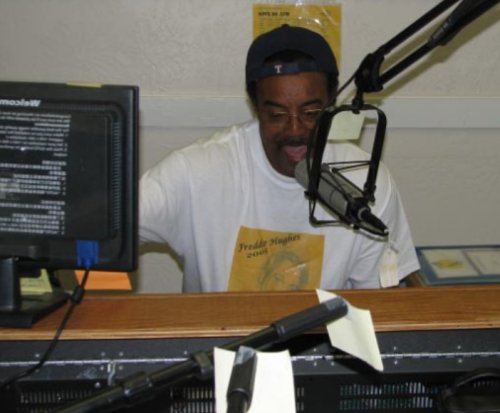
T. Watts is a writer, radio host and music critic. Visit his Web site at www.teewatts.biz.




