 How to resolve AdBlock issue?
News
- Details
- Written by: Jon Meyer
I will get back to the AMT because that still is a major issue that is not going away; however, we need to learn about all the provisions that have just been announced. This law contains important information on the AMT.
I mentioned in an earlier article, when a major new bill is passed, first the headlines, then the basic details and then a bit later the procedures and how this all will work.
We have passed the first step and now are in step two while step three should take a bit of time. Most of these provisions are for tax years 2009 and 2010 but a number do apply to tax year 2008.
First a correction: the federal new homebuyers' credit is for homes purchased BEFORE Dec. 1, 2009. I believe I mentioned the end of the year, which in this case would not be accurate.
The vast majority if the federal stimulus bill affects tax year 2009 and 2010. This means there could be outstanding opportunities available depending on your situation. There are, however two major provisions that effect tax year 2008.
The first concerns net operating losses for small businesses.
A net operating loss is a situation when expenses exceed income. If their expenses are investment or business, then the excess or net operating loss – NOL – can be used as a deduction for other years.
Currently, the federal allows either a carry back of two years or a carry forward. A carry back means that one must amend that return and apply the losses. Generally this means that they will get a refund from that year. It also expends the statute of limitations for that year, so it is a trade off.
The statute of limitations defines how long the Internal Revenue Service or the Franchise Tax Board (FTB) have under normal circumstances to examine your return. Under normal circumstances, the IRS has three years and the FTB has four years. If used, the taxpayer must go back to the second previous year and then apply anything left over to the next year and then into the future. An option to this is to forgo the carry back and just use this loss on future tax returns. I’ve mentioned just the basis; the actual rules are quite a bit more complicated.
There is a new NOL for small businesses. A small business is defined by having gross receipts of under $15 million dollars, and this is an average of year years. Under these new provisions, small businesses that generate an NOL in years either beginning or ending in 2008 will have expanded carry back options. This will allow the businesses more freedom to carry back an NOL, amend a previous tax return and receive a refund.
An affirmative election must be made on the return and there are some traditional rules and complex details so be sure to discuss this with an accountant if you are not familiar with the rules. The state has not conformed to this provision, so there will be timing issues if you have an NOL. This provision has two major benefits, the first is that this allows you to get a refund faster and allows more options to select a carry back year with the highest tax brackets.
The other major change affecting tax year 2008 is the first-time homebuyers' credit. This is an extension of the credit form 2008 with some major change. This applies to purchases made after Jan. 1, 2009, and before Dec. 1, 2009. Remembers that if the purchase is close to either date, make sure escrow begins or ends within the applicable dates. The maximum credit is increased to $8,000 and the repayment provision has been eliminated.
To increase the speed of receiving a refund, you can claim the credit on the 2008 return, even if purchased in 2009. There are three major limitations if you make this election;
You qualify only if neither you nor spouse has owned a principal residence for at least three years as of the date of purchase. You have to live in the residence for at least three years or you have to pay back the credit and the credit will be reduced if your income is $75,000 or more and completely eliminated at $95,000 and for married, the numbers are $150,000 and $170,000.
Not to be out done, California has passed their own version of the credit. As too often happens, the California bill is quite different from the federal provision.
The California credit is for the purchase of a brand new, never-occupied home. The credit is $10,000 and there are no income restrictions. The details are:
1. The credit is available if you purchase a personal residence on or after March 1, 2009 and before March 1, 2010. You must occupy the home as your residence for at least two years or the credit must be paid back. Remember to watch the dates very carefully; when it said after March 1, 2009, that means escrow statement must be dated after that date.
2. You take a third of the credit per year, so if you purchase the home in 2009, you get one-third of the credit on tax years 2009, 2010 and 2011.
3. The seller must provide you with a certificate that they obtain from the Franchise Tax Board within one week of purchase.
4. There is a limited funds for this credit, soothe fact that you qualify and make all the steps properly does not mean that you will actually receive the credit. The FTB has announced that they will have a counter on their website to let people know the status of the fund.
5. So, if you are considering this credit, you should act as fast as possible.
As a reminder, a major part of the California bill is that the sales tax will increase by 1 percent starting April 1.
So we see that of the two major bills passed, the federal stimulus and the California budget bill the federal tends to give some tax breaks while the California bill tends to increase tax. I will write more about these bills in my next article and of course will get back to the Alternative Minimum Tax because it’s still very important and is part of the new federal stimulus bill.
Jon Meyer is a local tax accountant and enrolled agent with more than 25 years experience in tax preparation. The office of Jon the “Tax Man Meyer” also offers retirement planning and insurance options. For more information call 928-5200.
{mos_sb_discuss:4}
- Details
- Written by: Lake County News Reports
Sunshine Week takes place March 15 through 21. It puts the focus on the public's right to know about what its government is doing, at all levels.
Since 2006, the percentage of adults who believe the federal government to be somewhat or very secretive has grown steadily; from 62 percent in 2006 to 74 percent in 2008. The latest survey finds 73 percent characterizing federal government as secretive.
This mood is perhaps buoyed by the nearly eight in 10 adults who think President Barack Obama's Freedom of Information directive calling for a presumption of disclosure is the right thing to do.
“Trust in government has been on the decline for some time in the United States. The previous administration's disclosure policies certainly contributed to public skepticism,” said Jerry Miller, director of the Scripps Survey Research Center at Ohio University. “People now appear more optimistic, but still guarded, about President Obama and the current administration's disclosure practices under the Freedom of Information Act.”
As in previous years' surveys, people see their state and local governments as more open than the federal system. At the state level, 54 percent view government as open, 44 percent as secretive. People also are more trusting of local public officials. More than half, 56 percent, say their local government is very or somewhat open, with 44 percent rating it as very or somewhat open.
“The more open our government, the more inclusive the processes that impact our everyday lives,” noted Rich Boehne, president and chief executive officer of The E.W. Scripps Co.
Two-thirds of adults (67 percent) say they've heard of the federal Freedom of Information Act, and when told about it, slightly more (77 percent) think it is a good law. However, hardly anyone surveyed had ever used it. Nine in 10 adults (94 percent) have never requested information using a FOIA request. None of this, of course, dulls their skepticism about compliance with the law: 61 percent say they believe the federal government only sometimes, rarely or never obeys FOIA law.
“It's heartening there is a reversal in the downward trend of public confidence in the openness of the federal government,” said Andrew Alexander, co-chair of the American Society of Newspaper Editor's FOI Committee.
“But it's sobering to note that more than half of those surveyed said they still believe their government only sometimes, rarely or never abides by disclosure requirements mandated by law,” added Alexander, who is ombudsman at The Washington Post.
The survey of 946 adults was conducted by telephone from Feb. 16 through March 11 by the Scripps Survey Research Center at Ohio University under a grant from the Scripps Howard Foundation. The survey has a margin of error of about 4 percentage points.
The survey has been commissioned by ASNE for Sunshine Week since 2006, Sunshine Week is a non-partisan open government initiative led by ASNE, with print, online and broadcast media; public officials; civic groups and non-profit organizations; public and special libraries; educators and students; religious leaders; and others. It is primarily funded by a grant from the John S. and James L. Knight Foundation.
{mos_sb_discuss:2}
- Details
- Written by: Ross A. Christensen

For me, purchasing shrimp is a moral dilemma. I have to have conversations with a pantheon of deities in order to just put a package of shrimp in my shopping cart.
Why would something as simple and tummy-rubbing as shrimp do this to my already fragile psyche? Because the methods used to get it to my grocer’s seafood case are environmentally detrimental.
Both wild-caught shrimp and farm-raised pose problems that just make me squirm. When I was younger I was Mr. Environmentalist. My school reports were always about natural power sources (that was before it was called “alternative energy” or “green energy”). As a teen, I wrote letters to the leaders of foreign governments about environmental issues and my concerns about their countries’ practices. There is even a law in Minnesota (my homeland) dealing with the proper disposal of toxic chemicals that I was the instigator for and major force behind.
Now I’ll admit in recent years my stance has softened and I’m not walking around with petitions to get free dental care for the whales anymore, but I still consider environmental factors when I go to the grocery store. Deciding what kind of shrimp to buy brings these issues to the front of my mind.
Let’s start with wild-caught shrimp, which has been the bane of environmentalists for a long time. I was once an activist against shrimp trawlers. Shrimp caught by trawl is the worst environmental disaster since the seven plagues. A giant net is dragged behind the boat scooping up everything in its path. Law requires a special escape hatch to allow turtles to escape, but everything else goes in.
When full, the net is pulled in and dumped onto the deck of the boat. The crew then picks through all of the creatures and removes the shrimp individually. Once all the shrimp are pulled out the remaining “bycatch” is dumped back into the ocean, most of it now dead or near death. Seagulls follow these boats because they know that eventually a smorgasbord of dead fish will be served from the back of it.
Shrimp trawlers catch approximately 2 percent of the world’s shrimp but produce one-third of the world’s bycatch. The ratio of sea life caught in the nets that isn’t shrimp but that will inevitably die on the deck of the boat ranges between 5 to 20 pounds of bycatch for every 1 pound of shrimp caught. The thought of up to 20 pounds of sea life dying so I can have 1 pound of shrimp is very distressful to me.
The fact that wild shrimp have to fight for survival makes them have thicker shells (thicker shells mean more flavor), firmer flesh and more complex flavor. There is even a movement starting promoting that wild shrimp be sold with identifiers, like American Viticultural Areas or special regions, similar to what oyster farms did with marketing “Blue Points” and “Hog Island.”
While the flavor of wild shrimp is usually better than farmed shrimp, the quality can vary a great deal. After all, the shrimp has had no standards placed on it until it hits the processor. So now I have to consider ... wild shrimp will most likely (though not definitely) taste better than farmed, but what about all of that wasted sea life?
Farm-raised shrimp was the savior of the ocean when it was first started but the profit caused a problem. It was TOO profitable. Everyone wanted in and shrimp farms sprang up all over. Farming solves the issue of the massive amounts of dead bycatch, but miles and miles of coastal mangrove forests have been cleared to make the shrimp farms. Mangrove forests create intertidal habitats where the trees grow in a great tangle of roots and branches, giving prime breeding and nursery habitat for countless aquatic species. The removal of these forests now leaves these small creatures no place to hide from predators.
The shrimp farms feed the shrimp fish meal until they reach a harvestable size, at about four and a half months. Farm-raised shrimp is not fed for a week prior to harvest, which not only saves money for the farmer but cleans out the digestive tract (sand vein) of the shrimp so they don’t need to be de-veined.
The flavor of farmed shrimp isn’t generally quite as good as wild-caught, but the consistent quality is assured. It is so reliable that a plate full of farm-raised shrimp look like they were cloned. Yet the loss of the intertidal habitat that shrimp farming has caused may result in grave damage to the species that used to breed in them. Though the effects may not be felt for another decade or more, by then it may be too late to repair the damage.
I get a sad chuckle at the idea that the very bycatch that shrimp trawlers throw out as waste into the ocean to rot could be kept and turned into fish meal that the shrimp farmers could then use. I guess it’ll be a while before we live in that world of cooperation. All these issues make me want to become a vegetarian, but when you look into the eyes of a young potato and it just tugs at your heart ...
Shrimp is a lot like fowl. Just like chicken, turkey, guinea hens and hummingbirds all taste differently, shrimp varieties taste different from each other. Where the shrimp lived and what it ate greatly affects the taste. All shrimp are high in calcium, iodine, and protein. The cholesterol levels in shrimp actually improve the levels of LDL to HDL and lowers triglycerides, so in the end shrimp is great food for dieting. But it should be mentioned here that the only seafood species higher in cholesterol than shrimp are squid and caviar. A typical meal of 10 medium/large sized shrimp gives you about half of the American Heart Association’s recommended daily amount.
Personally I believe one of the reasons that shrimp is so popular in American cuisine is because the average person doesn’t know what a poorly cooked shrimp looks or tastes like. When I look at grocery store pre-cooked shrimp I cringe because most of it looks overcooked already. You can tell if shrimp is overcooked by looking at it. Perfectly cooked shrimp will make a “C” or half moon shape. If the shrimp makes a full-circled “O”, or even a full curl like the number nine, that shrimp is overcooked, and though it will still taste like shrimp it will be overly chewy. If you want truly superior tasting shrimp you need to buy it raw with the shell on, cook it in the shell and peel it yourself.
Cooking the shrimp with the shell on will give you more shrimp flavor, but if you want to flavor your shrimp with a traditional Louisiana shrimp boil or Old Bay seasoning you will want to peel the shrimp first.
So with all of this information about shrimp, I bet you’re wondering: when I do buy shrimp, what kind do I purchase? Most of the time I get farm raised tiger shrimp, but once in a while one of the deities in my head get me to purchase wild shrimp. Gotta go with what they recommend.
This recipe will cook a dozen shrimp perfectly.
1 pound (about 25) medium/large shrimp
Fill your largest (2 quarts) pot about 2/3 full with water and add a generous amount of salt, old bay or whatever seasoning you like. Cover, heat to a furious boil, and then add shrimp, replace the cover and immediately turn off the heat. Let sit for 15 to 20 minutes until shrimp is done. (If you don’t know what size your pot is or what size the shrimp is just figure two-thirds water to one-third shrimp; the cooking process for any size shrimp or pot will stay the same.)
Drain the water. You can serve the shrimp immediately hot with melted butter, but if you’re cooking the shrimp ahead you’ll want to throw the shrimp in an ice water bath to chill them down and stop the cooking process.
I’m not a big fan of cocktail sauce since anything you eat with it tastes like cocktail sauce and nothing else, but my daughter loves it so I make it. One day I left her at home with a bunch of shrimp and no cocktail sauce and she called me to get instructions on how to make it!
The following recipe is what I came up with for her to make herself if it ever happens again. It’s very simple, so feel free to add or subtract anything you like (for example, herbs could do some wonders). This recipe is enough for half a pound to a pound of shrimp, depending on how heavy a dipper you are.
Cocktail sauce
2 tablespoons ketchup
1 teaspoon Worcestershire sauce
1 teaspoon lemon juice
1/8 teaspoon prepared horseradish sauce
1 or 2 shots of hot sauce to taste
Mix, chill, serve.
Ross A. Christensen is an award-winning gardener and gourmet cook. He is the author of "Sushi A to Z, The Ultimate Guide" and is currently working on a new book. He has been a public speaker for many years and enjoys being involved in the community.
{mos_sb_discuss:4}
- Details
- Written by: Lake County News Reports
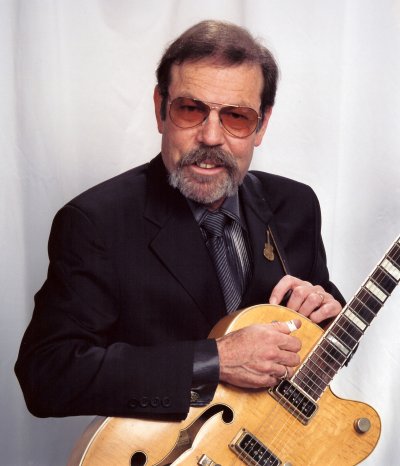
Earlier this week I was surfing for vinyl on Ebay and I came across a collectible copy of the Flamin Groovies album entitled “Now” from 1978. Packed away in my CyberSoulMan arsenal of facts is the knowledge that the Groovies were No. 4 on the San Francisco Chronicle’s Top 100 Bay Area Bands, a list which was published in the Chron’s pink section at dawn of the new millennium. I actually have a copy of that article in my personal archives.
Virtuoso musician Mike Wilhelm, former lead and rhythm guitarist of the group, as some of you well know is a Lake County resident. Wilhelm also played in one of San Francisco’s first psychedelic bands, The Charlatans. This is the man that Jerry Garcia of the Grateful Dead proclaimed was his favorite guitar player way back in uh, nineteen and sixty-seven. I’ve been privileged to become gradually acquainted with him over the last couple of years. Recently he gave me several tracks of music he produced for air play at KPFZ.
So, as kind of a favor in return, I called up Wilhelm to let him know that a nice copy of some of his recorded work was available for bid on Ebay. Just in case there was a gap in his archives. We music aficionados have to stick together you know.
Brother Wilhelm has his stuff together. He already has two copies of “Now.” But the call set the stage, if you will, for a very cool musical dialogue that I would like to share with you.
When I finally realized we were talking some deep cultural Americana information and started taking notes, we were knee deep in a conversation about the great Johnny Otis. Johnny Otis has had an extraordinary music career also. Bandleader, composer, producer – you name it in the world of rhythm and blues, Mr. Otis has done it. He discovered (Little) Esther Phillips, Etta James, Sugar Pie DeSanto and a host of other huge names in R&B. Though he was of Greek ancestry, Johnny Otis always purveyed an African-American persona.
Wilhelm talked about growing up in L.A. and watching the Johnny Otis television show every Friday night in his home. Reminiscing about the rich diversity present in Southern California in his childhood, Wilhelm recalled the other King of Western Swing, Spade Cooley. Cooley had a big band and a Saturday night TV show. Cooley had become an actor through his association with Roy Rogers and parleyed that into a very successful TV show. Throw in Lawrence Welk’s TV show in conjunction with Wilhelm’s parents' classical music collection and stuff he sought out on radio, Mike Wilhelm couldn’t help but be exposed to a lot of great music.
Wilhelm and David Crosby were tight before Crosby joined the Byrds. This was during the pre-rock folk scene days. Crosby was with Les Baxter’s Balladeers at the time.
Wilhelm spoke of playing a gig as a Charlatan at the Fillmore with Arthur Lee & Love. Arthur Lee & Love were once upon a time L.A.’s biggest rock band. Lee wouldn’t tour outside the West Coast. He brought Jim Morrison and the Doors to Elektra Records who soon became L.A.’s biggest band.
The most moving part of Wilhelm’s dialogue was his sharing of how Blues legend Brownie McGee gladly taught Wilhelm licks on the guitar that have continued to further his playing and appreciation of the blues to this day.
Wilhelm told hilarious anecdotes about finally moving to San Francisco’ Japantown in about 1963. Upper crusty white neighborhood on one side, black neighborhood on the other. A mysterious mixture of no man's land in between.
He said that most of the time, he chose to live in the black neighborhoods as the rent was more affordable and it was infinitely easier to rehearse your band in the ‘hood. People wouldn’t call the police if you were too loud. They’d simply knock on your door if you were bothering them.
In Wilhelm’s words, “I functioned well in that milieu. It wasn’t until the rents in the ghetto got as ridiculous as they were in the nice neighborhoods that I moved out. I survived no problem. People would come up and say, 'Hey, gimme 50 cents.' I’d say, 'I ain’t got nothin’ but trouble.' They’d say, 'I heard that' and leave me alone. They didn’t want any of that! I get by that way. Carry a walkin’ stick and dress sharp. People would ask me, 'How can you live down there?' I’d tell ‘em, it’s just like any other neighborhood. You just get to know your neighbors a little bit and it’s probably better in some respects. If you’re rehearsing your band in your dining room and your neighbor’s got to get up in the morning and go to work, he’ll just come over and communicate that to you and let you know when a cool time would be.”
Not wanting to be all take and no give, I told Wilhelm my Percy Mayfield story.
Percy Mayfield was the legendary songwriter and artist who wrote and sang some killer rhythm and blues hits for himself and people like Ray Charles. I stood with him in the alcove of a nightclub one morning from 2 a.m. to 5 a.m. at his behest until his irresponsible booking agent of a ride showed up. I still remember his plaintive plea. “Don’t leave me, little brother.” It was like, my blues duty.
Finally, Wilhelm told me his Jimmy Reed story. It was like two stories in one.
The first was about how Wilhelm had observed Jimmy Reed in a bout of creative professionalism, told the audience he was having technical difficulties. Reed left the stage to relieve himself and returned a few moments later and announced the technical difficulty solved. He then proceeded to wow the crowd.
The second part of the story was near the end of Reed’s performing career. He was sober from booze. Reed was playing and singing magnificently. Between sets, Wilhelm and his friend asked Jimmy Reed to play a certain tune. Reed replied, “I can’t find a recording of that.”
Wilhelm’s friend asked, “What do you mean?”
The blues great replied, “Ever since I quit drinking, I can’t remember my tunes. I’ve had to relearn all my material off records. If I can get that record, I’ll be glad to do it for you next time.”
There it is. The case of the gap in the archives. It’s like a Dr. John song. Right place, wrong time!
Keep prayin’, keep thinkin’ those kind thoughts!
*****
Upcoming cool events:
Konocti Vista Casino presents Andre Williams & Friends, Friday, March 20. 2755 Mission Rancheria Road, Lakeport. 707-262-1900.
Blue Wing Blue Monday Blues: Twice As Good, Monday, March 16, 6:30 p.m. at the Blue Wing Saloon & Café. 9520 Main St., Upper Lake. 707-275-2233.
Calling For Light: A Spring Concert of Poetry and Music. Carolyn Hawley, piano, plays Chopin and original works. Accompaniment to poetry. T. Watts, accompaniment on trumpet. Lake County Poets Laureate Mary McMillan, Sandra Wade, Carolyn Wing Greenlee, James BlueWolf and Jim Lyle. Sunday, March 15, 3 p.m. Galilee Lutheran Church, 8860 Soda Bay Road, Kelseyville. Tickets cost $10 in advance at Watershed Books, Lakeport, and Wild About Books, Clearlake. $15 at the door. Children free. A benefit for KPFZ 88.1 FM.
T. Watts is a writer, radio host and music critic.
{mos_sb_discuss:4}




