 How to resolve AdBlock issue?
News
The Soda Complex has burned a total of 8,652 acres, with 3,043 acres burned by the Mill Fire, which is 93-percent contained, and is the last – and the largest – of the complex' fires to continue burning, according to US Forest Service spokesman Marc Peebles.
Officials expect the complex, located to the north and northwest of Lake Pillsbury on the Mendocino National Forest's Upper Lake Ranger District, to be fully contained Saturday, Peebles said. There are 782 personnel assigned to the fire, a number slightly down from the previous day.
Firefighters on the Mill Fire made good progress holding and performing mop up procedures on containment lines even though hampered by poor visibility due to smoky conditions, Peebles reported. The fire continued to hold with no further advancement into the steep terrain in the southeast portion of the fire.
He said fire suppression repair work continues on numerous portions of the fireline.
Aircraft – used to patrol controlled fire areas and make water drops on the Mill fire – couldn't operate Thursday afternoon due to poor visibility, Peebles reported.
Peebles said excess crews and equipment will begin to be released to assist in other firefighting efforts in California.
Wildfires continue to rage on Forest Service lands in California.
The National Interagency Fire Center reported Friday that there are 15 fire complexes statewide – the Soda Complex among them – burning statewide. Approximately 671,939 acres have been burned in those fires.
On Friday, officials reported that 18-year-old National Park Service firefighter Andrew Palmer, working on the Iron Complex of fires on the Shasta-Trinity National Forest near Redding, died of injuries suffered on the southwest flank of the Eagle Fire late Friday afternoon.
Also late Friday, officials reported that the Yolla Bolly Complex – part of which is on the Mendocino National Forest – has been separated out from the Lime Complex and is once again being managed separately.
Dave Larson’s Rocky Mountain Type 1 Incident Management Team took over management of the complex, which consists of four fires that have burned 64,658 acres. The complex is 15-percent contained.
U.S. Forest Service Chief Abigail Kimbell will visit Redding on Saturday where she'll meet with Pacific Southwest Regional Forester Randy Moore and Shasta-Trinity National Forest Supervisor Sharon Heywood to discuss the wildfire situation in Northern California, the Forest Service reported Friday.
During the visit, Kimbell will meet with firefighters and thank them for their work and discuss rehabilitation of federal lands, along with the effective coordination of resources between local, state and federal partners during this wildfire siege, according to the Forest Service statement.
Air conditions in Lake County Friday continued to be smoky in some areas on Friday, with winds helping to clear away some of the smoke in the late afternoon.
Deputy Air Pollution Control Officer Doug Gearhart said the smoke in the air basin continues to come from the Soda Complex, as well as the Lime Complex farther north, brought here by north to northwest winds.
He said air conditions – trending toward the unhealthy range on Friday – are expected to improve slightly for Saturday and into Sunday, with west to northwest winds developing. Unhealthy air quality conditions may develop and persist should winds shift to a more northerly flow.
For more information about the forest fires visit Forest Service Web site at www.fs.fed.us/r5/mendocino or www.inciweb.org. For information about other fires around the state, visit www.cdf.ca.gov.
E-mail Elizabeth Larson at
{mos_sb_discuss:2}
- Details
- Written by: Elizabeth Larson
David Wayne Howard, 19, was tasered during the incident, according to Chief Deputy James Bauman of the Lake County Sheriff's Office.
Bauman said a training team of two deputies in a patrol car was dispatched to the Robin Hill area on the report of a party in a field late Tuesday night.
The deputies located an intoxicated male adult walking down the middle of the road toward the patrol car, said Bauman.
When they attempted to stop and detain him, Bauman said Howard turned and ran.
“One deputy chased him down and ultimately had to tase him to get him to stop running,” said Bauman.
Lakeport Fire responded to check Howard over before he was taken to the jail, Bauman added.
Howard was arrested on misdemeanor charges of resisting arrest and being drunk in public, and two misdemeanor bench warrants, according to jail records.
E-mail Elizabeth Larson at
{mos_sb_discuss:2}
- Details
- Written by: Elizabeth Larson
THIS STORY HAS BEEN UPDATED
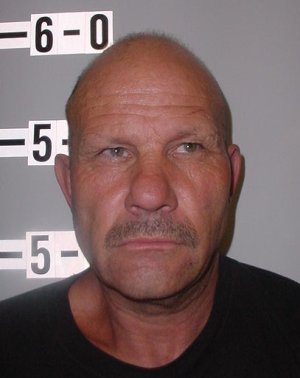
UPPER LAKE – Lake County Sheriff's deputies are seeking a man who allegedly attempted to break into an Upper Lake home this morning and was last seen fleeing law enforcement – in the nude.
Elliott Thomas Brackett, 52, was interrupted Friday morning just before 9 a.m. while allegedly attempting to break into a home in the area of Highway 29 and Highway 20 in Upper Lake, according to a report from Lt. Dave Garzoli of the Lake County Sheriff's Office.
Garzoli reported that deputies found Brackett on the scene – still clothed at that point – and, after a brief struggle, he fled on foot, heading toward the area of Bridge Arbor North and Bridge Arbor South.
There, deputies found Brackett in the water, completely nude, said Garzoli.
Brackett then swam away from detectives, swimming south down the water channel, Garzoli reported.
Officials have continued searching for him since, Garzoli said, but have yet to locate him.
Garzoli said Brackett is considered a danger to the public, and if someone spots him they should contact 911 immediately and report his location.
Chief Deputy James Bauman said the sheriff's department conducted a special phone notification Friday of 2,735 Upper Lake residents, warning them that Brackett was on the loose in the area.
Brackett is described as 5 feet, 11 inches tall and weighs 210 pounds. He is bald and was last seen in the nude.
He was arrested earlier this month by a Lake County Sheriff's deputy on a charge of possessing burglary tools.
That followed his arrest last month by Mendocino County Sheriff's deputies on charges in connection with his alleged involvement in a string of burglaries in Ukiah, as Lake County News has reported.
When Lakeport Police and Mendocino County officials located Brackett – who has been listed as a transient – on June 7 in a tent on 11th Street in Lakeport, he was allegedly found in possession of stolen property that matched items taken during the Ukiah burglaries.
Brackett also was arrested in July of 2007 on suspicion of trying to sell methamphetamine in the parking lot at Hopland Sho-Kah-Wa Casino.
E-mail Elizabeth Larson at
- Details
- Written by: Elizabeth Larson
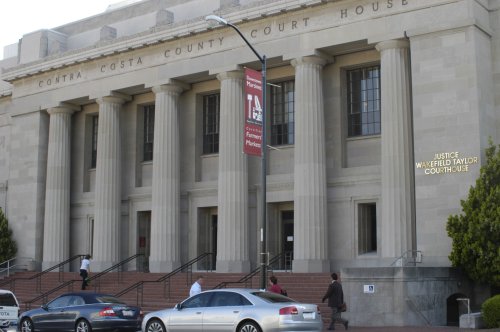
MARTINEZ – The number of bullets in a handgun used to shoot two men fleeing from the Clearlake Park home. An orange jacket and a fourth suspect alleged to have worn it. The lack of blood on a shotgun and a hammer not discovered at a crime scene until a followup investigation.
What all of those things have in common is they're key points of contention between the prosecution and defense in Renato Hughes Jr.'s double murder trial.
Closing arguments in the trial began Thursday in Judge Barbara Zuniga's Martinez courtroom, where the trial was moved after a change of venue was granted.
Lake County District Attorney Jon Hopkins and defense attorney Stuart Hanlon spent the day arguing the merits of their theories about what happened in the early morning hours of Dec. 7, 2005, in the Clearlake Park home of Shannon Edmonds.
One of the irrefutable facts of the case is that Rashad Williams, 21, and Christian Foster, 22, were killed that morning as they ran from Edmonds' house.
Edmonds admitted to shooting them as they fled and, in testimony during the trial, stated he shot Foster once in the back while Foster was down, a statement that would play a key part in Hanlon's arguments Thursday.
Hughes, 23, who wore a light gray suit and sat quietly through the day's proceedings, is being tried for his friends' deaths because the three of them are alleged to have set out to rob Edmonds of his medical marijuana, Hopkins argued.
That opens the door for the provocative act theory, which holds a person responsible for any deaths that result during the commission of a crime – such as an armed robbery – that could result in a lethal response.
Hopkins said Thursday that Hughes also is facing an assault charge because Edmonds was struck with a shotgun, plus an attempted murder charge in the near-fatal beating of 17-year-old Dale Lafferty, the son of Edmonds' girlfriend, Lori Tyler.
The boy was hit in the head repeatedly with a metal bat, which eventually required doctors to perform a procedure similar to a frontal lobotomy to reduce the swelling on his brain, Hopkins said. Lafferty has suffered permanent brain injury.
The other thing the two seasoned attorneys could agree upon is the sad nature of the case.
"There's clearly one thing in this case where there's absolutely no doubt. This case is a tragedy," Hopkins said as he led off closing arguments.
"Anyone involved in this case will never be the same," he added.
Both he and Hanlon would remind the 12-woman jury during the day that their's was a solemn, crucial task – the end of which was justice, not trying to make things right for those involved.
Crucial to achieving a conviction, as Hopkins would explain in a review of legal principles, is the need for jurors to come away from looking at the evidence with an abiding convicting of Hughes' guilt.
That includes showing Hughes was aware that his friends were allegedly intending to commit the robbery, and that in doing so he was aiding and abetting them – resulting in a provocative act.
"In this case there is a great difficulty in determining the facts of the case because of the circumstances surrounding the event," which Hopkins described as a "melee" that affected the perceptions of many of the witnesses.
Edmonds has said he saw two shotguns during the alleged attack by the three men on his family, although only one shotgun was recovered. "That's doesn't mean he's making it up," said Hopkins.
It does, however, require careful analysis of all witnesses and their credibility, based on the circumstances under which their recollections were created, Hopkins said.
Hopkins alleged that Hughes, Foster and Williams were part of a "crime team" that went into the house with the intent to confront someone and steal marijuana, and it ended in a deadly confrontation.
They allegedly broke a sliding glass door to gain entry to the house at 4 a.m., an act not done "for some legal purpose," Hopkins said.
He said the men began screaming and yelling and demanding "weed." They rushed into the home's master bedroom, where Foster allegedly struggled with, and assaulted, Edmonds.
Hughes, meanwhile, allegedly punched Tyler repeatedly in the face, Hopkins asserted. He said Hughes was wearing an orange jacket, a seemingly small detail mentioned in Tyler's 911 call that would have greater import as the two attorneys' arguments developed throughout the day.
Lafferty and his friend, 16-year-old Justin Sutch, got in the fight, with Lafferty originally wielding the bat that Hopkins said wound up in the hands of Williams, who beat Lafferty with it.
Lafferty wasn't doing anything to anybody when he was assaulted, said Hopkins. "He (Williams) just hauls off and creams him at that point."
Hopkins alleged that any reasonable person would know that hitting a person several times in the head with a metal bat will kill, so he asserted that Williams meant to kill the teenager.
The desperate struggle, said Hopkins, could be heard on the audio of a surveillance camera.
During the fray, Edmonds had "some adrenaline rush or something," said Hopkins, after he saw Lafferty's assault.
He said Edmonds threw the men off of him and someone – possible Sutch – held the bedroom door closed while Edmonds retrieved his pistol from a gun safe.
"The physical evidence show that 10 shots were fired," said Hopkins, all of which can be heard on the surveillance tape.
Although Edmonds thought he first shot the pistol in the hallway, it was in the living room where three shell casings were found. He was firing at Foster and Williams as they tried to get out the broken sliding glass door. Edmonds fired another round outside that was found in a pickup tire.
"And he fires three more and three more, in fairly rapid succession," Hopkins said.
When Edmonds later shows the pistol to police, there is one bullet remaining in the chamber and thee more in the magazine, which – in additional to the 10 shots fired – makes for a total of 14 bullets in the pistol, another point that would be argued when Hanlon's turn came.
Hopkins said Edmonds' state of mind can be inferred from the surveillance tape, on which he can be heard screaming. "It was clearly in response to the provocative acts that were happening in his bedroom."
He attacked the testimony Hughes gave during the trial, in which Hughes said he and his friends were at Edmonds' home to buy marijuana.
Hopkins questioned why, if they were buying marijuana at 4 a.m., they had a getaway car with its doors and trunk propped open, and why the car was parked down the street rather than being parked at Edmonds' home.
He also challenged the idea that a fourth person, who Hughes said was with them, could have squeezed into the back seat of Foster's Honda, which had clothes and his college book bag stacked on one of the seats.
If it were an attempt to buy marijuana, Hopkins asked why they broke the window, which experts agreed was shattered from the outside in. They also would have needed more than the $10 found on Williams to buy the drug, Hopkins suggested.
And then there's the matter of the weapons.
"They want us to believe there's no shotgun," said Hopkins. "It takes 47 days to locate a shotgun that could be involved."
That gun – a long-barreled, 12-gauge pump action shotgun with a wooden stock – was found in a field of wild parsley on 14th Street in Clearlake Park. The shirt Hughes wore at the crime scene was found covered with wild parsley burrs, Hopkins added.
In his testimony on the stand last week, Hughes said a fourth man – who he knew only as "Dre" – had been with he and his two friends that night. While Hughes said he had remained in the car outside, only rushing in when he heard a commotion, he said Dre was in the house with Williams and Foster.
"There is no 'Dre,'" said Hopkins. "Mr. Hughes does not make a credible case for his existence."
Sutch had recalled seeing a taller, skinnier man who didn't match Hughes' description and who was wearing the orange jacket. But Hopkins dismissed that testimony, saying Sutch also had stated at one point that a large white man had been involved in the alleged attack as well.
Defense attacks 'gaping holes' in prosecution theory
Hopkins' remarks lasted about two hours. The remainder of the day belonged to Hanlon, who, for more than three and a half hours, argued against Hopkins' statements, pointing to holes big enough to drive a truck through, he said.
Hanlon began by reminding the jurors of the importance of their part in determining Hughes' innocence or guilt. "Other than voting, this is the most intense and important public service you can do."
He emphasized that the law allows people charged with crimes to be cloaked with a presumption of innocence until the prosecution makes a case that leaves jurors with an abiding conviction of the truth of the charges.
"It's clear no one really knows what happened here," said Hanlon.
Hughes, he said, didn't shoot or hurt anyone, and had a minimal role in the incident.
He questioned why blood wasn't found anywhere on the shotgun if Hughes – who had a cut, bleeding hand – had truly carried it from the crime scene to the field where it was found. Just leaving the gun exposed to the elements wouldn't have cleaned away the traces of proteins, said Hanlon.
A woman also reported seeing Hughes run by her home – "running like the devil was chasing him" – but didn't see him carrying a shotgun, Hanlon said.
He agreed with Hopkins that the case was complex, but he accused the district attorney of attempting to shift blame onto Hughes and fit the evidence to fit the provocative act theory.
Merely being at the scene didn't mean Hughes was involved, said Hanlon. "The real issue in this case is, did by client aid and abet?"
The answer, in Hanlon's opinion, was no.
And then there was the issue of the fourth suspect, Dre. "There was always a fourth person there," said Hanlon. "It was clear."
Yet he faulted Clearlake Police investigators for making up their minds early in the investigation that it was a simple home invasion robbery. "That's all they wanted to see and they don't look at the whole picture, which could lead them other places."
Hopkins, he added, was part of forming that initial theory.
Hanlon questioned why witness testimony changed and enlarged over time, with the description of the taller man in the orange jacket beginning to match Hughes over time. He also asked jurors to consider why the clothes of Tyler, Edmonds and the others at the scene weren't tested for DNA evidence.
"You can't do what the police did," he told the jury, as they prepare to decide the case. "They solved it in the first miserable day."
A hammer found at the scene that had a microscopic spot of blood matching Hughes' DNA is another piece of questionable evidence, said Hanlon, because it wasn't discovered during the initial investigation, leaving its validity open to doubt.
Hanlon's defense of his client included a rigorous attack on Edmonds, who he called a drug dealer – who uses children to sell drugs – and a murderer, who shot Foster again while he was on the ground.
"He gets to do whatever he wants," Hanlon said of Edmonds. "Think about it: Is that someone you believe?"
Hanlon also challenged Hopkins' statements about the 14 bullets in Edmonds' pistol. Pulling the pistol out of evidence to show the jury, Hanlon said it could only have held 13 bullets.
On the surveillance tape an 11th shot can be heard, which led Hanlon to assert that Edmonds reloaded the pistol to continue shooting at the fleeing Williams and Foster.
"What you have here is cold-blooded murder by Shannon Edmonds," he said.
Doctors confirmed that one of the four shots that hit Foster in the back was fired while he was face down on the ground, Hanlon said. The bullet entered Foster's back and exited through his shoulder.
"He made a decision – 'I can be the executioner,'" Hanlon said of Edmonds, who he also suggested planted evidence on Foster and Williams to make it appear as if a robbery had taken place.
A key piece of information in Hughes' favor, said Hanlon, is that he wasn't picked out of a photo lineup by the witnesses at the scene.
Even if Hughes aided and abetted in a robbery, Hanlon said it doesn't fit the provocative act charges.
He said Hughes – a graduate of a Catholic high school, who had passed a violence prevention program and was preparing to return to school at San Jose State University – wasn't likely to have committed the crimes of which he stands accused.
Hanlon asked jurors to carefully question the rebuttal arguments that Hopkins will offer. "You cannot convict my client on these types of facts."
Zuniga told jurors that court will resume at 9 a.m. Friday, at which time Hopkins will give his rebuttal to Hanlon's arguments.
The judge will then give jury instructions, with the jury adjourning for the day at 1 p.m. due to a scheduling conflict for one of the jurors.
Jury deliberations to reach a verdict will begin next week.
E-mail Elizabeth Larson at
{mos_sb_discuss:2}
- Details
- Written by: Elizabeth Larson