 How to resolve AdBlock issue?
News
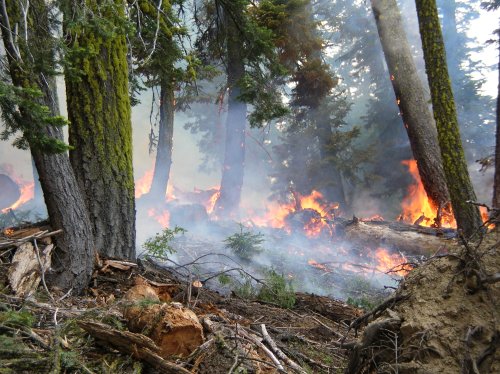
The Mendocino Lightning Complex has burned 41,200 acres, led to the death of a volunteer firefighter, destroyed two homes and injured 24, according to Cal Fire statistics.
After two weeks of firefighting the complex is 40-percent contained, and more personnel continue to arrive, Cal Fire reported. On Saturday a total of 1,749 firefighters were on scene.
Adding that complex to the Walker Fire, 55,700 acres have burned across Mendocino and Lake counties in recent weeks, which doesn't count more than 12,000 more that have burned on the Mendocino National Forest.
On the forest's Upper Lake Ranger District, three of the four fires in the Soda Complex remained active Saturday, with the 2,190-acre Big Fire close to containment, while the Mill and the Monkey Rock fires continue to steadily burn, forest officials reported.
The Soda Complex is 73-percent contained, with 476 personnel assigned to it. Mop up and rehabilitation already is under way in some areas.
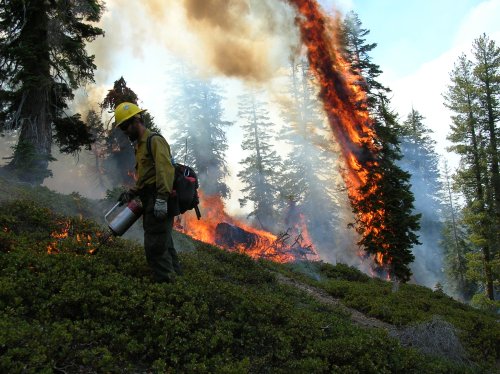
On the Yolla Bolly Complex – which is in the Yolla Bolly-Middle Eel Wilderness in Mendocino, Trinity and Tehama counties – backfires began Saturday to control that series of fires, which has blackened 7,122 acres and is 20-percent contained. Approximately 197 firefighter are assigned to that complex, which officials reported has cost more than $1 million to fight to date.
For more information visit the Forest Service Web site at www.fs.fed.us/r5/mendocino/currentconditions or Cal Fire at www.cdf.ca.gov.
E-mail Elizabeth Larson at
{mos_sb_discuss:2}
- Details
- Written by: Elizabeth Larson
A couple of months ago I had them both sit down and talk it out. The compromise came to this: We switch from carnivore to herbivore every other day.
Unfortunately the two of them are like the yin and yang parts of a hetero symbol, always opposites and very little in common except that they are parts of a whole. So for my first vegetarian dish I announced that I would make eggplant lasagna ...
“Yea! I love eggplant!” from my daughter.
“I hate eggplant!” from my wife.
Oh, this new menu is going to be fun, I think to myself while I beat my head against the refrigerator. Luckily with my foundation in Japanese and Asian cuisine I have a bunch of Buddhist recipes to fall back on. “Tofu steak” has become a regular dinner at our place, with everyone in the house enjoying it as if the name alone pleases everyone: “Tofu” for the vegetarian, and “steak” for the meat eater.
I think the thing that confuses carnivores/omnivores about vegetarians is that vegetarians have dozens of “classes” or castes, so let’s go through and define some of them to avoid confusion.
Vegans eat nothing that has anything to do with animals. This not only includes meat of any animal or sea creature, but also eggs, milk and honey (honey, like milk is a product manufactured by animals). I personally could never even come close to being vegan; either God or Darwinism has chosen to make my anatomy with eyes on the front of my head like a predator and not on the sides of my head like a prey animal, and I can’t go against that evidence. Testosterone just fortified these feelings out of cold, hard steel ... that steel then formed into the shape of a knife that can be used to track down and kill weak autotroph-eating creatures so they can be roasted over a fire and ... Sorry, I don’t know what happened there.
Anyway, lacto-vegetarians don’t eat meat or anything that could have become meat like eggs, however milk and honey are fair game. Ovo-vegetarians don’t eat meat or milk but eggs and honey are permitted. Ovo-lacto-vegetarians don’t eat the flesh of animals but the products they produce like milk, eggs, and honey are edible.
Another vegetarian group called fruitarians eat only beans, seeds, rices, fallen fruit and grains since plants are living things and shouldn’t be killed for food.
This list can also include things like semi-vegetarians who eat seafood or poultry in limited amounts but no beef, or pollo-vegetarians who eat birds but not hoofed animals.
But at this point I’m sure that you get the idea. People limit their food categories in a hundred different ways based on their beliefs about the value of life on the food chain.
My daughter has chosen her own version of vegetarianism that could be called Petting Zoo Vegetarianism. If it’s cute and cuddly it can’t be eaten. Rabbits, lamb, quail, piglets, calves, deer, are all safe in this diet, but vultures and armadillos better run and hide.
I can’t fault any person’s diet since I too have my own eating quirks, and I completely support anyone’s choice to eat whatever they want. Over time, I’m sure that readers will pick up on my dietary oddities.
Vegetarian foods are dominant in many countries due to religious/moral, economic or population reasons. We here in the United States are uniquely spoiled in our view of food. Because of the abundance of land and wealth in our society we think that meat should cover the majority of our dinner plate, while the vegetables and carbs are more for garnish than anything else.
I’ll be the first carnivore to admit that this practice will not last for long. Mankind is going to have to rely on a more plant-based diet in the future to insure that the world can stay fed. Adopting my daughter’s petting zoo vegetarianism and my wife’s every-other-day vegetarian compromise is my contribution to easing the pressure on the planet.
One quick note about the following recipe: I mix wheat flour and rice flour for the coating in this recipe. Why not use one or the other? Wheat flour is good when browning food in oil, however it doesn’t get really crisp; rice flour gets crispy when fried in oil but doesn’t brown well. By combining the two you get the best of both worlds.
Tofu steaks
Ingredients:
One block of extra firm tofu
4 tablespoons flour (I prefer 2 tablespoons wheat flour and 2 tablespoons rice flour, mixed)
6 tablespoons soy sauce
3 tablespoons butter or your favorite oil to fry in.
Your favorite condiments or, for a more authentic Japanese feel, use chopped green onions or chives, finely grated fresh ginger and bonito flakes (if you are avoiding meat you should know that bonito flakes are dried shaved fish).
Set the tofu block on its end and cut downward through its width like you were cutting cards off of a deck, so you get three even steaks (just cutting in half leaves the steaks just a little too thick for my taste, so thirds works out best for me, but feel free to experiment).
Even with extra firm tofu, some of the moisture needs to be squeezed out or the steaks will fall apart during cooking. Lay out all three pieces separately on a kitchen towel or several sheets of paper towels and then lay another towel or several sheets of paper towels over them (about one cup of moisture is going to be squeezed out during this process so stack your paper towels accordingly).
Gently place your heaviest cutting board on top of the towel and weigh it down with some cans of soup or anything with a little weight to it, just not so much that you crush the tofu. Let this sit on your counter top for a minimum of an hour, then remove tofu and wipe up all of that liquid all over the counter top.
Gently spoon one tablespoon of soy sauce over each one of the tofu and let sit until it soaks in (a couple of minutes is all that’s needed), then flip the tofu steaks over and repeat.
Heat your butter or oil in a frying pan on medium high heat while you dredge the tofu steaks in the two-flour mixture. Gently shake off any excess flour and put tofu steaks in the heated pan. Fry until golden brown on both sides and drain momentarily on paper towels. Add condiments and serve.
You could substitute the soy sauce in this recipe for Italian salad dressing, which works quite well. If you’re OK with eating a little meat, you can marinade the steaks in strong chicken broth or even the liquid from a can of tuna for a heartier taste (call it fusion cuisine). Tofu is much like a blank canvas that you can experiment with a lot of different flavors, so have fun!
Ross A. Christensen is an award-winning gardener and gourmet cook. He is the author of "Sushi A to Z, The Ultimate Guide" and is currently working on a new book. He has been a public speaker for many years and enjoys being involved in the community.
{mos_sb_discuss:4}
- Details
- Written by: Ross A. Christensen
The CPUC held a prehearing conference on the increases Monday, June 23, in San Francisco. The rate increases were not opposed by the Lucerne Community Water Organization (LCWO), which formed in 2005 to intervene in a rate increase proposal that year.
LCWO President Craig Bach said he has communicated with the CPUC Division of Ratepayer Advocates (DRA) and the administrative law judge on the case, Douglas M. Long, but the organization made no attempt to intervene in the case.
Third District supervisor Denise Rushing said LCWO and the county have discussed the case, but “we haven't been asked to formally intervene at this point"
Bach said neither he nor the few other people who regularly attend LCWO meetings have had the time to attend San Francisco hearings or announce a local meeting on the current proposal.
The group's next meeting will be at 7 p.m. Thursday, July 10, at the Lucerne Alpine Senior Center, 10th Avenue and Country Club Drive.
In Lucerne, where it has approximately 1,900 customers, Cal Water asks for a $.62 hike per 100 cubic feet. The company says the proposal would increase the average monthly bill for 700 cubic feet of water per month from the current $67.04 to $71.35 in mid-2009.
The company recently announced a scheduled $17.34 monthly surcharge will start when the company's new plant on Highway 20 goes online soon. Company representatives were unable to say exactly how soon, although both July 1 and September 1 have been mentioned as goals. The surcharge will repay an $8 million zero-interest state loan for the plant.
Golden State serves approximately 2,164 customers in the city of Clearlake, covering the lakefront area north to Park Lane, and south into Borax Lake, Country Club and South Olympic, according to Paul Schubert, the Clearlake system manager. Their customers would see a monthly increase of 16 cents per 100 cubic feet.
Golden State's current charge per 100 cubic feet is $3.782, with a service charge of $42.15 for the typical residential 5/8 x 3/4-inch meter. A four cent surcharge per 100 cubic feet covers discounts for participants in the California Alternative Rates for Water (CARW).
The current Cost of Capital (COC) proposals are intended to make the companies' stocks more attractive to investors, according to an announcement from Cal Water, which said the increase will assist the company in “maintaining an investment grade rating.” The applications have been consolidated by the CPUC for procedural reasons, Schubert said.
Golden State Water's parent company, American States Water Co. (NYSE:AWR), reported a drop in 2008 first-quarter earnings of nine cents per share from the same period in 2007.
California Water Service Group (NYSE:CWT) announced 2008 first-quarter net income of $0.2 million and diluted earnings per common share of $0.01, a drop from net income of $1.6 million and diluted earnings per common share of $0.07 for the first quarter of 2007.
The company's April 30 press release noted “a decline in investment income.” Despite that, on January 23, 2008, Cal Water announced a dividend of $0.29250, the highest since 1992, the earliest date on its Web site.
E-mail Sophie Annan Jensen at
{mos_sb_discuss:2}
- Details
- Written by: Sophie Annan Jensen
“Shares of American Water Works have gained 9 percent since its initial offering April 23 ... In the same timeframe, shares of Aqua America Inc. shed 4 percent and shares of California Water Service Group slipped 7 percent,” the June 16 AP story said.
But the cities of Providence, RI, and Trenton, NJ are considering selling all or part of their systems to water corporations.
http://news.moneycentral.msn.com/provider/providerarticle.aspx?feed=AP&date=20080616&id=8782551
In other countries, Inter Press Service reported June 23 that “Water is flowing back into public hands.”
http://www.ipsnews.net/news.asp?idnews=42922
The mayor of Paris said June 2 that the city will discontinue its 100-year-long contracts with the world's two biggest water service companies, Suez and Veolia, as of Dec. 31, 2009.
"We want to offer a better service, at a better price," Mayor Bertrand Delanoë said. "We also promise that prices would be stable."
The story adds “The list of ‘re-municipalisation’ of water services is long, and includes countries as diverse as Mali in West Africa, Uruguay where water has been brought back into the hands of the state at a national level, Buenos Aires and Santa Fe in Argentina, Cochabamba in Bolivia and Hamilton in Canada, besides other cities in France.”
E-mail Sophie Annan Jensen at
{mos_sb_discuss:2}
- Details
- Written by: Sophie Annan Jensen