 How to resolve AdBlock issue?
News
- Details
- Written by: Elizabeth Larson
Anthony C. Lynnott, 19, was injured in the collision, which took place at approximately 2:14 a.m. on Soda Bay Road, according to a report from California Highway Patrol Officer Kevin Domby.
Lynnott was driving his Chevy Yukon westbound along Soda Bay Road east of Clark Drive at an unknown speed when he lost control of the vehicle, Domby reported.
The Yukon crossed into the opposing lane, left the south road edge and collided with an uphill embankment, according to Domby.
When the vehicle rolled over, Lynnott – who Domby said wasn't wearing his seat belt – was ejected onto the roadway.
Domby said the Yukon landed on its wheels, continued toward the road's north edge and hit a guardrail before coming to rest.
Lynnott – who suffered a broken pelvis in the crash – was arrested for driving under the influence before emergency responders flew him to Santa Rosa Memorial Hospital.
CHP Officer Robert Hearn is investigating the collision, Domby reported.
E-mail Elizabeth Larson at
{mos_sb_discuss:2}
- Details
- Written by: Elizabeth Larson
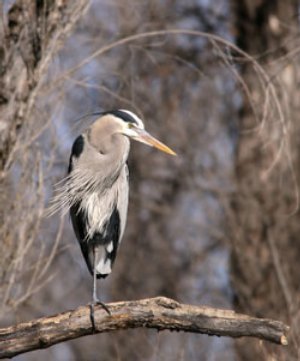
CLEAR LAKE STATE PARK – Wildlife photographer Philip Greene loves herons and egrets.
His photographs have become synonymous with Lake County's annual Heron Festival, where he has been the keynote speaker for 13 of the festival's 14 years.
Greene has traveled across the country to photograph the many varieties of the birds, which are a focus of the popular weekend event.
He does a hilarious impression of the slow walk the birds use while fishing, shares stories of watching males attracting females with gorgeous "nuptial" plumage that males don especially to attract a mate, and succinctly explains why he has spent three decades and thousands of rolls of film documenting the birds.
"They define the space in which you see them so well," he said, pointing out how they often look like the trees in which they nest.
At least 600 people visited the festival Saturday to enjoy trips on the lake to see heron nesting areas, a nature fair, a number of hikes and presentations like Greene's, said Marilyn Waits, president of the Redbud Audubon Society's board of directors.
Waits said last year's event attracted a larger number of out-of-county residents.
Saturday's attendance was likely helped by warm spring weather and clear blue skies.
If Sunday attracts as many people as expected, this year's festival will come close to matching last year's event, which 1,300 people attended, said Waits. The funds generated from the event benefit Redbud Audubon and its educational programs.
This year's festivals came together thanks to the efforts of approximately 99 adult volunteers and 10 high school volunteers, said Waits, who also credit volunteers with growing the event dramatically in recent years.
"It is amazing," said Waits.
It wasn't just wildlife that got special attention Saturday.
Joe Callizo, a botanist who recently moved to Lake County, gave a presentation on the "Wonder of Wildflowers" on Saturday afternoon.
Callizo focused on rare and endangered plants in Lake and Napa counties, as well as plants with limited distribution in just a few North Coast counties.
Many of the plants featured in Callizo's presentation grow in areas that are normally inhospitable to plants – rocky ledges and areas heavy in serpentine soil.
Some of them, however, can be propagated and grown to great effect in gardens – including gorgeous plants like Snow Mountain buckwheat, Adobe lilly and Cobb Mountain lupin, said Callizo.
An interesting fact: the Northern California black walnut also is a rare tree, although it was used as rootstock for domestic walnuts. Callizo said he has only found three populations of the trees, one of them in Morgan Valley near Lower Lake. The trees, he said, are important to protect.
Plants with limited distribution – only in a few counties like Lake and Napa – included the wonderfully named prostrate pussy paws, which can be found near the McLaughlin Mine; serpentine sunflower – which Callizo said was used to improve its cousin the domestic sunflower – green coyote mint and nude monkey flower, so named because its stems have few leaves.
Many visitors to the event started off the morning at the famed Wildflower Brunch, where the Clear Lake State Park Interpretive Association fed as many as 375 people, said association member Neil Towne.
Towne and association member Val Nixon, who retired in December from her job as a ranger with the park, cooked up omelets while offering some spirited singing of "I've Been Working on the Railroad."
Towne said the event benefits the association's Education Pavilion project. The pavilion is planned for the area where the brunch was held, across from the Visitor Center.
Another association member, Leona Butts, was in constant motion at the event, from working at the brunch to fighting the good fight against the state's proposed park closures, which include Clear Lake State Park and Anderson Marsh State Historic Park.
Since January, Butts and husband D.A. have been leading a signature gathering effort to keep the park open. On Saturday, she continued to gather signatures on petitions, with festival visitors – even those visiting the county – signing their name to offer their support to the park. Petitions also will be available Sunday.
Arts and crafts lovers also can find a number of treasures in a vendor fair on the park lawn lining the creek. Local artists including Christian Yeagan, wildlife photographer Lyle Madeson, and Linda Kelly and Sandy Coelho-Davis of The Gourd Gallery offer unique, handcrafted items. Fairfield residents Michael and Lisa Moulthrop traveled to the event to offer hand-crafted carvings of blue herons and other water birds.
More to come on Sunday
The festival continues Sunday with a host of programs for nature lovers.
Waits said a big turnout is expected for Sunday's "Raptor Speak" presentation, offered by Native Bird Connection Curator Jenny Papka.
The group will present a live bird show featuring owls and other birds of prey which were rescued and nursed back to health after having suffered injuries, said Waits. It will be an opportunity for nature lovers to see the raptors up close and personal.
The presentation will take place from 1 p.m. to 2 p.m. and again from 2 p.m. to 3 p.m. in a big tent assembled specially for the presentation next to the Visitor Center.
Pontoon tour boats will leave the boat ramp hourly between 8 a.m. and 3 p.m., with park Visitor Center tours – featuring interpretive displays on the area's wildlife, and natural and cultural resources taking place from 10 a.m. to 4 p.m.
Dr. Harry Lyons will present "Myths and Music of Clear Lake," in which he'll talk about Clear Lake's two-million year existence, with some humor and music thrown in.
Park docent Brad Barnwell will lead an Audubon bird walk from 8:30 a.m. to 10:30 a.m. From 2 p.m. to 3 p.m., Walt Lyon, another park docent, will lead a half-mile hike focusing on the plants used by local Pomo tribes. Retired park rangers Tom and Val Nixon will lead a family nature walk for kids and their parents along the creek trail from 11 a.m. to noon.
From 9 a.m. to 4 p.m., a nature fair featuring exhibit booths will be open. Between 10 a.m. and 4 p.m. there will be a children's activities area and children's heron art show.
The day will end with a performance from 3 p.m. to 4 p.m. by the Lower Lake High School Jazz Band in the nature fair area.
"We don't have fireworks, but we do have jazz," said Waits.
For more information visit the Heron Festival's Web site at www.heronfestival.org.
Clear Lake State Park is located at 5300 Soda Bay Road, Kelseyville.
E-mail Elizabeth Larson at
{mos_sb_discuss:2}
- Details
- Written by: Lake County News reports
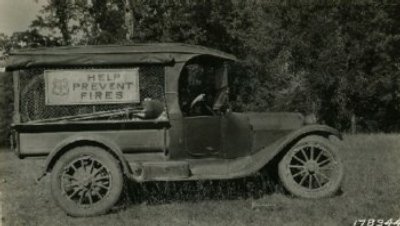
MENDOCINO NATIONAL FOREST – The Mendocino National Forest is celebrating its 100th birthday on July 2 this year and will be holding several events for the public throughout the year to mark the occasion. {sidebar id=66}
On July 2, 1908, the California National Forest was established by an executive order signed by President Theodore Roosevelt. In 1932 the name was changed to the Mendocino National Forest.
According to a summary of the history of the Mendocino National Forest prepared by forest archaeologist Kevin McCormick, he first surveys to determine what area should be included as a "forest reserve" were made in 1902 by Professor Lachie, a forester who was associated with the University of California. He was working under the direction of Gifford Pinchot, the first Chief of the Forest Service in Washington, D.C.
Ultimately, the forest reserve was set aside by President Theodore Roosevelt on February 6, 1907. It was first named the Stony Creek Forest Reserve. One month later, on March 4, 1907, the forest reserve was brought into the national forest system and named the Stony Creek National Forest. Due to the logistics of managing such a large tract of land, a northern portion of the forest was shifted to the Trinity National Forest. The final forest boundaries were agreed upon and President Roosevelt signed an executive order on July 2, 1908, creating the California National Forest.
On July 12, 1932, President Herbert Hoover signed an executive order that changed the name to the Mendocino National Forest "in order to avoid the confusion growing out of the State and a national forest therein having the same name." Apparently having a forest called "California" was confusing to those in Washington, D.C., so a local name was given to the forest.
At one point in the development of the forest there were 81 offices, lookouts and guard stations throughout the forest. As the transportation and communication systems were developed and technology improved (vehicles, telephones, and radios) many of the stations were closed.
Today, the Mendocino National Forest is divided into three Ranger Districts: Covelo, Grindstone and Upper Lake. A few of the original stations, such as Paskenta, Alder Springs, Soda Creek and Eel River, are still being used as work centers and are staffed primarily by summer fire crews.
There are also two units managed by the Mendocino National Forest which are not located within the Forest proper. They are the Genetic Resource and Conservation Center in Chico and the Red Bluff Recreation Area.
The public is invited to visit the national forest during a series of open houses (see accompanying list of open house events) and learn about the history of the national forest, see historical Mendocino National Forest items on display and meet employees.
Other events, Internet web page presentations and historical displays are being planned and will be announced at a later date.
For more information, contact the Mendocino National Forest at 530-934-3316, TTY 530-934-7724.
{mos_sb_discuss:2}
- Details
- Written by: Lake County News Reports
In order to be considered “authentic Marseilles bouillabaisse,” the soup must contain garlic, olive oil, saffron, onions, leeks, tomatoes, fennel seeds and seafood. (If you want to be really authentic, one of the fish in the stew should be a scorpion fish known in France as “rascasse,” but due to its scarcity here in the U.S. it’s not considered vital.)
If you have those base ingredients you can then add anything you want and still consider it authentic Marseilles style. If you don’t use all those base ingredients then you are just making a fish stew.
Many myths talk about the creation of bouillabaisse. The name is rooted in the words “boil” and “reduce”; in French, “bouillir” and “abaisser.” The basic instructions for the stew are, “When it boils then you reduce” or “Quand ça bouille tu baisses.”
The ancient Romans believed it was what Venus (the goddess of love) fed to Vulcan (her husband and god of fire) in order to lull him to sleep, so that she could go have a roll in the hay with the god of war, Mars.
French legend says that the first bouillabaisse was brought from heaven by the angels to give to the three Marys from the Bible when they were shipwrecked on the shores of Camargue, France. That just seems a little cruel; fish stew while on the shore of France ... isn’t that like sending Gilligan a supply of coconuts? Couldn’t the angels have brought them a nice brisket!?
Actually it was created by fishermen as a way to use up the worthless, bony and small fish that they couldn’t sell. The fishermen simply boiled fish in seawater with some garlic, onions and fennel, probably right there on the shore. Tomatoes made it into the stew not long after they were brought back from the new world.
Eventually the stew became popular with restaurants and got jazzed up with saffron and every spice imaginable, including things like orange peel, tarragon and lavender.
The recipe I have included below is very simplified and basic, yet enough to feed four very hungry people and give you a feeling for the authentic Marseilles style.
The seafood to add to this stock should be whatever kind you like. I recommend a half-pound of monkfish, half-pound red snapper, one Dungeness crab (cleaned and quartered), 1 pound of shrimp, and a smattering of clams and mussels. Yes, “smattering” is a unit of measure ... look it up!
Some people like to use salmon in this stew, some people think it’s too oily; I leave that choice up to you, but I would definitely avoid shark ... long story, I’ll tell you later.
After cooking, the seafood is separated from the stew and served on a separate dish from the soup. The soup is served with bread covered with a garlic-saffron sauce or mayonnaise called “Rouille” (which can be quite strong, so care is advised). Recipes for Rouille (which means “rust,” due to the color) are as varied as recipes for bouillabaisse but mayonnaise with garlic, saffron, and red pepper is a good approximation.
Basic yet Authentic Marseilles Bouillabaisse stock
1 onion chopped
1 leek (white part only) chopped
3 tomatoes, chopped
1 clove of garlic, smashed
1 tablespoon parsley, chopped
1/8 teaspoon saffron, rubbed
1/8 teaspoon fennel seed, crushed
1 ½ teaspoon salt
1 bay leaf
2 tablespoons extra virgin olive oil
3 cups water
1 cup clam juice
1 cup white wine
Assorted fish trimmings, shrimp or shell fish shells
Add all ingredients to a pot and bring to a boil, then reduce heat and simmer for 20 minutes. Strain into another pot through a colander, mashing as much liquid out of the leftovers. Discard solids.
Add any desired seafood to the stock and bring to a boil. Simmer for 15 minutes (or until bivalves open).
Traditionally, the ratio of seafood added is two parts fish to one part shellfish and one part bivalves. You can of course alter this to your own preferences.
Ross A. Christensen is an award-winning gardener and gourmet cook. He is the author of "Sushi A to Z, The Ultimate Guide" and is currently working on a new book. He has been a public speaker for many years and enjoys being involved in the community.
{mos_sb_discuss:2}




